• About
  • Masthead
  • License Content
  • Advertise
  • Press Releases
  • Newsroom
  • RSS/Email List
  • 2MM Podcast
  • Write for us
  • Contact Us
2 Minute Medicine
No Result
View All Result

No products in the cart.

Sign in
SUBSCRIBE
  • About
  • Specialties
    • All Specialties, All Recent Reports
    • Cardiology
    • Chronic Disease
    • Dermatology
    • Emergency
    • Endocrinology
    • Gastroenterology
    • Imaging and Intervention
    • Infectious Disease
    • Nephrology
    • Neurology
    • Obstetrics
    • Oncology
    • Ophthalmology
    • Pediatrics
    • Pharma
    • Preclinical
    • Psychiatry
    • Public Health
    • Pulmonology
    • Rheumatology
    • Surgery
    • Rewinds
    • The Scan
  • EvidencePulse™
  • HypeCheck™
  • AI News
  • Classics™
    • 2MM+ Online Access
    • Paperback and Ebook
  • Tools
    • NPI Registry Lookup
    • RVU Search
    • Physician Pay by Specialty
    • ICD-10 Code Lookup
    • FDA Drug Approvals
    • Drug Safety for Breastfeeding/Pregnancy
    • Clinical Guidelines
    • Medical Calculators
    • ECG Reference
      • QTc Calculator
      • Sgarbossa Criteria
      • ECG Axis Calculator
      • AV Block Helper
  • Rankings
    • Medical School Rankings
    • Residency Rankings
  • Partners
    • License Content
    • Advertise with Us
2 Minute Medicine
  • About
  • Specialties
    • All Specialties, All Recent Reports
    • Cardiology
    • Chronic Disease
    • Dermatology
    • Emergency
    • Endocrinology
    • Gastroenterology
    • Imaging and Intervention
    • Infectious Disease
    • Nephrology
    • Neurology
    • Obstetrics
    • Oncology
    • Ophthalmology
    • Pediatrics
    • Pharma
    • Preclinical
    • Psychiatry
    • Public Health
    • Pulmonology
    • Rheumatology
    • Surgery
    • Rewinds
    • The Scan
  • EvidencePulse™
  • HypeCheck™
  • AI News
  • Classics™
    • 2MM+ Online Access
    • Paperback and Ebook
  • Tools
    • NPI Registry Lookup
    • RVU Search
    • Physician Pay by Specialty
    • ICD-10 Code Lookup
    • FDA Drug Approvals
    • Drug Safety for Breastfeeding/Pregnancy
    • Clinical Guidelines
    • Medical Calculators
    • ECG Reference
      • QTc Calculator
      • Sgarbossa Criteria
      • ECG Axis Calculator
      • AV Block Helper
  • Rankings
    • Medical School Rankings
    • Residency Rankings
  • Partners
    • License Content
    • Advertise with Us
Sign in
SUBSCRIBE
2 Minute Medicine
Sign in
Subscribe
2 Minute MedicineFree on Google PlayGet
✦EvidencePulse™by 2 Minute Medicine3 reportsYou askedtop stroke trials 2026Synthesizing medical evidence...Top 2026 stroke trial results:OCEANIC — ischemic stroke: 6.2% vs 8.4%OPTION* — mRS 0–1: 43.6% vs 34.2%ORIENTAL* — mRS 0–2: 58.6% vs 46.6%*Higher sICH in intervention armsParticipants randomizedNOCEANIC12,327OPTION570ORIENTAL564Ask about guidelines or landmark trials...↑Try EvidencePulse™Ask the evidence. Get the signal.Try it now →
Home Health A to Z

Patient Basics: Lymphedema
by2 Minute Medicine
October 30, 2026
in Health A to Z
Reading Time: 6 mins read
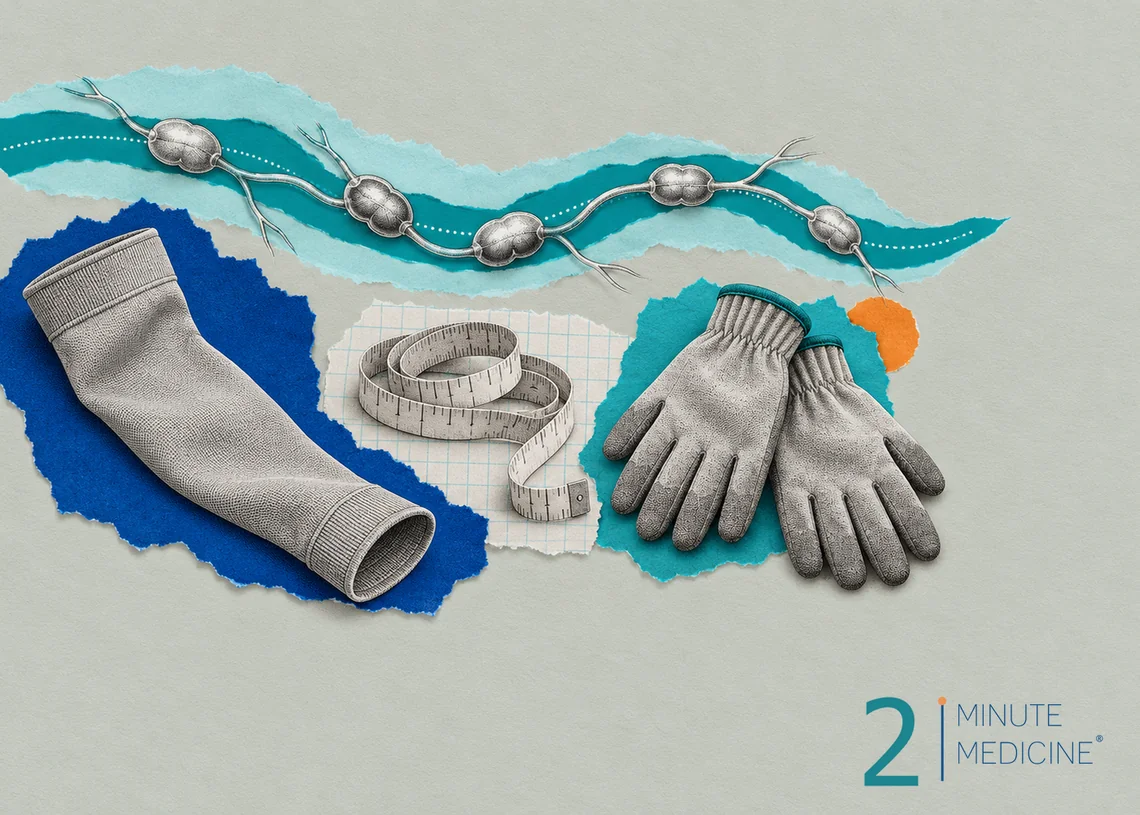
Lymphedema collage: lymph nodes along a teal ribbon, a compression sleeve, a coiled tape measure and gardening gloves
Share on FacebookShare on TwitterShare on LinkedIn

Lymphedema is swelling caused by lymph fluid that builds up under the skin because the body’s lymph system can’t drain it well. It most often affects an arm or a leg. In the US, the most common cause is cancer treatment that removes or damages lymph nodes. Lymphedema usually can’t be cured, but early treatment with compression and special massage keeps it under control for most people.

Key points

  • Lymphedema can start months or even years after cancer surgery or radiation.
  • Early signs are a feeling of heaviness or tightness, and rings, sleeves or shoes that feel snug.
  • Treatment is led by a trained lymphedema therapist and centers on compression, massage, exercise and skin care.
  • Exercise, including lifting weights, is safe and helpful when started slowly.
  • A swollen limb that becomes red, hot and painful may be infected and needs prompt care.

What causes lymphedema

The lymph system is a network of thin vessels and small, bean-shaped glands called lymph nodes, found in the neck, armpits and groin and deep in the chest and belly. It collects extra fluid, proteins and germs from the tissues and carries them back to the blood. When vessels or nodes are missing or damaged, fluid backs up, much like water behind a blocked drain.

Secondary lymphedema

This type is caused by damage from something else. It is far more common.

  • Cancer surgery that removes lymph nodes, such as from the armpit in breast cancer, or from the groin or pelvis in melanoma and cancers of the uterus, cervix, vulva or prostate. Removing many nodes carries a higher risk than removing only one or two (a sentinel node biopsy).
  • Radiation therapy, which can scar lymph nodes and vessels
  • Cancer itself, when a tumor blocks lymph flow
  • Serious infection or injury, including repeated bouts of cellulitis (a skin infection)
  • Obesity, which can overload the lymph system, especially in the legs
  • Long-standing vein problems in the legs

Worldwide, a common cause is a parasite infection spread by mosquitoes in tropical countries. It is very rare in the US.

Primary lymphedema

This rare type happens when the lymph system doesn’t form normally. It is often caused by gene changes and can run in families. It may show up at birth, around puberty, or later in adulthood, most often in the legs.

Symptoms

  • Swelling in part or all of an arm or leg, including the fingers or toes
  • A heavy, full or tight feeling
  • Aching or discomfort
  • Rings, watches, sleeves or shoes that feel tighter
  • Less bending at the wrist, elbow, knee or ankle
  • Skin that feels thick or hard over time

Early on, pressing the swollen skin leaves a dent and the swelling goes down overnight. Over time the tissue can harden, and swelling no longer goes away with rest. Lymphedema can also affect the breast, chest, face, neck or genitals after cancer treatment in those areas.

RELATED REPORTS

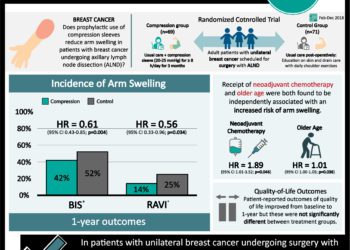
#VisualAbstract: Use of prophylactic compression sleeves reduces arm swelling in patients with breast cancer undergoing axillary lymph node dissection

Compression sleeves used prophylactically decrease arm swelling after breast cancer surgery

How it’s diagnosed

Most lymphedema is diagnosed from your history and an exam. Your doctor or therapist will measure both limbs with a tape measure or a special scanner and compare them. After breast cancer surgery, some centers check arm measurements on a schedule so swelling can be caught early.

Other tests can help:

  • Ultrasound to rule out a blood clot, which also causes a swollen limb
  • Bioimpedance, a painless test that sends a tiny electric current through the limb to measure fluid
  • Lymphoscintigraphy, a scan that tracks a small amount of tracer as it moves through the lymph vessels
  • Tests for heart, kidney, liver or thyroid problems, which can cause swelling too

How lymphedema is treated

Decongestive therapy

The main treatment is called complete decongestive therapy. It is done by a certified lymphedema therapist, usually a physical or occupational therapist with special training. It has two phases. First, several weeks of treatment shrink the swelling. Then you keep up a home routine to hold the gains. It includes:

  • Manual lymphatic drainage, a gentle massage that moves fluid toward working lymph vessels
  • Compression bandaging, with layers of short-stretch bandages worn day and night during the first phase
  • Exercise that uses the muscles to pump lymph fluid along
  • Skin care to keep skin clean, moist and free of cracks

Compression garments and pumps

Once swelling is down, a fitted compression sleeve, glove or stocking keeps it from coming back. They need to be refitted and replaced every few months as they stretch out. Since 2024, Medicare covers compression garments for lymphedema. Some people also use a pneumatic compression pump at home, a device that inflates a sleeve in waves.

Surgery

Some people may be candidates for surgery at specialist centers. Options include connecting lymph vessels to small veins so fluid can drain, moving healthy lymph nodes from another part of the body, and removing hardened fatty tissue with liposuction in long-standing cases. Compression is usually still needed afterward.

Water pills (diuretics) don’t help lymphedema and are not recommended for it.

Living with lymphedema

  • Stay active. Walking, swimming and strength training done slowly and steadily are safe and may reduce symptoms. Wear your compression garment while exercising if your therapist advises it.
  • Keep a healthy weight. Extra weight makes lymphedema harder to control.
  • Protect your skin. Moisturize daily, wear gloves for gardening and cleaning, use insect repellent, and treat small cuts with soap, water and antibiotic ointment.
  • Avoid sunburn and very hot tubs or saunas, which can increase swelling.
  • Ask your therapist about wearing compression on long flights.
  • When you can, have blood draws, shots and blood pressure checks on the unaffected arm. Talk with your doctor if that isn’t possible.

When to see a doctor

  • New swelling, heaviness or tightness in an arm, leg or other area, especially after cancer treatment
  • Swelling that gets worse even with treatment
  • Pain, tingling or a change in skin color in the limb

Get care the same day if the swollen area becomes red, hot or painful, or you develop a fever or chills. These are signs of cellulitis, which needs antibiotics right away. Call 911 if you have sudden shortness of breath or chest pain.

Common questions about lymphedema

Can you get rid of lymphedema?

Mild swelling soon after surgery sometimes fades on its own. Lasting lymphedema usually doesn’t go away, but treatment can shrink it a lot and keep it stable for years. Starting care at the first signs, before the tissue hardens, gives the best results and makes daily care easier.

What is the difference between lymphedema and edema?

Edema is any swelling from extra fluid in the tissues. It often comes from heart, kidney or vein problems, or from standing a long time, and it usually affects both legs. Lymphedema is swelling caused by a blocked or damaged lymph system, and it is often on one side.

What causes lymphedema in the legs?

In the US, common causes are obesity, long-standing vein problems and cancer treatment in the groin or pelvis, such as for melanoma or cancers of the uterus, cervix or prostate. Primary lymphedema also tends to affect the legs. Swelling in both legs can have other causes, such as heart or kidney disease.

How do I know if a lymphedema bandage is too tight?

Signs include throbbing or a pulse you can feel under the wrap, numbness, tingling, new pain, or fingers or toes that turn pale, blue or cold. If any of these happen, loosen or remove the bandage and call your therapist. Wraps should feel firm and snug, never painful.

Can I do lymphatic drainage massage on myself?

Yes, once a trained therapist teaches you. Self-massage uses light, slow strokes that gently stretch the skin rather than pressing deep into muscle. It starts near the neck or trunk to clear a path, then works toward the swollen area. Ask your therapist to check your technique now and then.

Questions to ask your doctor

  • What is my risk of lymphedema after my cancer treatment?
  • Can you refer me to a certified lymphedema therapist?
  • Which compression garment should I wear, and when?
  • Which exercises are safe for me?
  • What should I do at the first sign of infection?

Learn more

  • Lymphedema and cancer treatment (National Cancer Institute)
  • Lymphedema (MedlinePlus, U.S. National Library of Medicine)

This guide is general information and doesn’t replace advice from your own doctor. Last updated October 2026.

Tags: Lymphedema
Previous Post

Patient Basics: Leg Strain

Next Post

Patient Basics: Major Depression

RelatedReports

#VisualAbstract: Use of prophylactic compression sleeves reduces arm swelling in patients with breast cancer undergoing  axillary lymph node dissection
StudyGraphics

#VisualAbstract: Use of prophylactic compression sleeves reduces arm swelling in patients with breast cancer undergoing axillary lymph node dissection

August 23, 2022
Pimecrolimus effective first-line treatment for atopic dermatitis
Oncology

Compression sleeves used prophylactically decrease arm swelling after breast cancer surgery

February 7, 2022
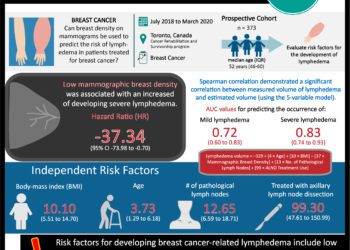
#VisualAbstract: Low mammographic breast density may be associated with an increased risk of developing severe lymphedema
StudyGraphics

#VisualAbstract: Low mammographic breast density may be associated with an increased risk of developing severe lymphedema

December 30, 2020
High incidence of bilateral lower extremity inflammatory lymphedema in air force trainees
Chronic Disease

High incidence of bilateral lower extremity inflammatory lymphedema in air force trainees

January 29, 2015
Next Post
Major depression collage of a thoughtful man by a window with soft light, a cup of tea and a small potted plant

Patient Basics: Major Depression

Jet lag collage: a sleepy young man, a globe, a small airplane on a dotted teal flight path and a rising sun

Patient Basics: Jet Lag

Kaposi sarcoma collage: a foot with small flat dark patches, a magnifying glass, a pill organizer and a blood vessel

Patient Basics: Kaposi Sarcoma (Kaposi's Sarcoma)

✦ EvidencePulse™ by 2 Minute Medicine 3 reports You asked top stroke trials 2026 Synthesizing medical evidence... Top 2026 stroke trial results: OCEANIC — ischemic stroke: 6.2% vs 8.4% OPTION* — mRS 0–1: 43.6% vs 34.2% ORIENTAL* — mRS 0–2: 58.6% vs 46.6% *Higher sICH in intervention arms Participants randomizedN OCEANIC 12,327 OPTION 570 ORIENTAL 564 Ask about guidelines or landmark trials... Try EvidencePulse™ Get the signal. Try it now → Physician-trained medical AI by 2 Minute Medicine

2MM+ All Access

Full details →
$4.99 /month

3-day free trial · cancel anytime

  • ✓100+ physician-written reports
  • ✓EvidencePulse™ + HypeCheck™
  • ✓Ad-free reading + newsletters
Start 3-day free trial

Then $4.99/month. Manage renewal in your account.

2 Minute Medicine® is an award winning, physician-run, expert medical media company. Our content is curated, written and edited by practicing health professionals who have clinical and scientific expertise in their field of reporting. Our editorial management team is comprised of highly-trained MD physicians. Join numerous brands, companies, and hospitals who trust our licensed content.

Recent Reports

  • Pelacarsen lowers lipoprotein(a) but does not reduce major cardiovascular events in patients with established cardiovascular disease
  • Durvalumab plus enfortumab vedotin was approved for perioperative treatment of muscle-invasive bladder cancer
  • CDC reports 5,412 confirmed measles cases in the United States in 2026
License Content
Terms of Use | Disclaimer
Cookie Policy

Get the app

Read 2 Minute Medicine on iPhone, iPad and Android.

Download on the App StoreGet it on Google Play
QR code for www.2minutemedicine.com/app
On a computer? Scan this with your phone’s camera.
2MM+ All Access Full details →

The medical literature, distilled daily.

Monthly plan selected: $4.99 /month.

$4.99/month

3-day free trial · cancel anytime

Start 3-day free trial

Then $4.99/month. Manage renewal in your account.

Yearly plan selected: $49.90 /year.

$49.90/year

2 months free

Start 3-day free trial

Then $49.90/year.

Membership benefits

  • ✓100+ new physician-written study summaries monthly, 12,000+ searchable
  • ✓AI EvidencePulse™ + HypeCheck™
  • ✓Ad-free reading + newsletters
  • ✓FDA drug approvals + clinical calculators

Already a member? Sign in

  • Get the app
  • About
  • Specialties
    • All Specialties, All Recent Reports
    • Cardiology
    • Chronic Disease
    • Dermatology
    • Emergency
    • Endocrinology
    • Gastroenterology
    • Imaging and Intervention
    • Infectious Disease
    • Nephrology
    • Neurology
    • Obstetrics
    • Oncology
    • Ophthalmology
    • Pediatrics
    • Pharma
    • Preclinical
    • Psychiatry
    • Public Health
    • Pulmonology
    • Rheumatology
    • Surgery
    • Rewinds
    • The Scan
  • EvidencePulse™
  • HypeCheck™
  • AI News
  • Classics™
    • 2MM+ Online Access
    • Paperback and Ebook
  • Tools
    • NPI Registry Lookup
    • RVU Search
    • Physician Pay by Specialty
    • ICD-10 Code Lookup
    • FDA Drug Approvals
    • Drug Safety for Breastfeeding/Pregnancy
    • Clinical Guidelines
    • Medical Calculators
    • ECG Reference
      • QTc Calculator
      • Sgarbossa Criteria
      • ECG Axis Calculator
      • AV Block Helper
  • Rankings
    • Medical School Rankings
    • Residency Rankings
  • Partners
    • License Content
    • Advertise with Us
No Result
View All Result

© 2026 2 Minute Medicine, Inc. - Physician-written medical news.