

Patient Basics: Polycystic Kidney Disease (PKD)
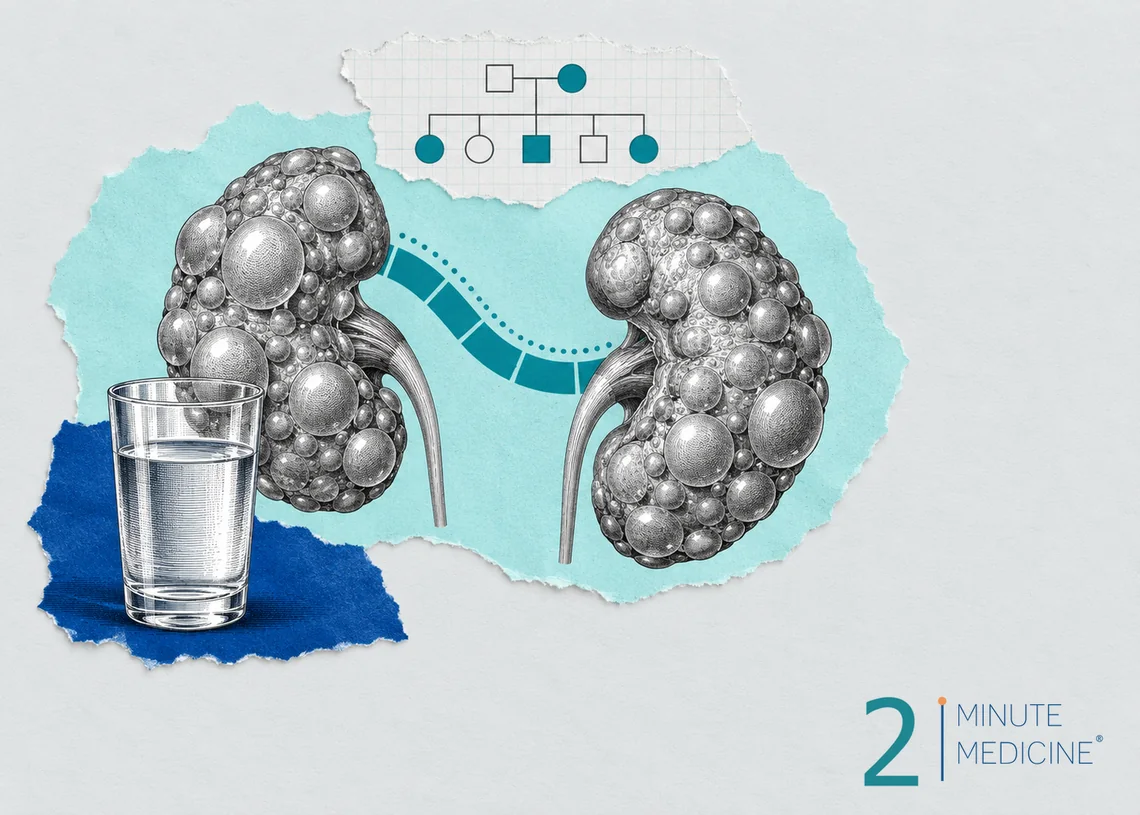
Polycystic kidney disease (PKD) is an inherited condition in which many fluid-filled sacs (cysts) grow in both kidneys. Over many years, the cysts enlarge the kidneys and crowd out healthy tissue. This leads to high blood pressure and, in many people, kidney failure. There is no cure yet, but blood pressure control, plenty of water and a medicine called tolvaptan can slow it down.
Key points
- The common adult form passes from parent to child. Each child of a parent with it has a 1 in 2 chance of inheriting it.
- A rare form affects babies and young children.
- Early signs include high blood pressure, back or side pain, blood in the urine, kidney stones and urinary infections.
- Tolvaptan is the only FDA-approved medicine that slows the adult form.
- About half of people with the adult form need dialysis or a transplant by around age 60. Many others keep enough kidney function for life.
Types of polycystic kidney disease
- Autosomal dominant PKD (ADPKD). This is by far the most common type and one of the most common inherited diseases. Only one changed gene, usually PKD1 or PKD2, is needed to cause it. PKD1 tends to cause more severe disease than PKD2. Symptoms usually begin between ages 30 and 50, although cysts can be seen earlier. About 1 in 10 people with ADPKD have no family history, because the gene change is new.
- Autosomal recessive PKD (ARPKD). This rare type happens when a child inherits a changed gene from both parents, who usually have no symptoms. It is often found before birth or in infancy. Babies may have very large kidneys, breathing problems at birth and liver scarring.
Polycystic kidney disease symptoms
- High blood pressure, often the first sign, sometimes in the 20s or 30s
- Pain or a heavy feeling in the back, side or belly
- Blood in the urine, when a cyst bursts
- Kidney stones
- Urinary or kidney cyst infections, with fever, side pain or burning when you pee
- Peeing often, including at night
- A larger belly, from big kidneys or liver
- Later, tiredness, nausea, itching and swelling as kidney function falls
PKD can affect other parts of the body too. Liver cysts are very common, especially in women, and are usually harmless. Some people get bulges in blood vessels in the brain (aneurysms), heart valve problems, hernias, or small pouches in the colon wall.
How it’s diagnosed
- Ultrasound is the usual first test. Doctors look at how many cysts there are for a person’s age.
- MRI or CT measures total kidney size, which helps predict how fast the disease may progress.
- Genetic testing helps when scans are unclear, when a young relative wants to donate a kidney, or for family planning.
- Blood and urine tests check creatinine, eGFR, protein and blood in the urine.
- A brain scan (MRA) may be offered to people with a family history of brain aneurysm or bleeding in the brain.
If PKD runs in your family, talk with your doctor or a genetic counselor before testing. In the US, a federal law protects you from genetic discrimination in health insurance and most jobs, but not in life, disability or long-term care insurance.
Polycystic kidney disease medications and treatment
Slowing the disease
- Tolvaptan. This pill blocks a hormone (vasopressin) that drives cyst growth. It is used for adults with ADPKD whose kidneys are likely to decline quickly. It causes strong thirst and frequent peeing, including at night. Rarely it causes serious liver injury, so you will need regular liver blood tests, monthly at first.
- Blood pressure control. ACE inhibitors such as lisinopril or ARBs such as losartan are usually first choice. Younger adults with good kidney function may be given a lower target than usual.
- Water. Drinking plenty of water through the day lowers vasopressin. Ask your kidney doctor how much is right for you.
- Diet. Eat less salt, avoid too much protein, and aim for a healthy weight.
- Avoid ibuprofen and naproxen for regular use. They can harm the kidneys.
Managing symptoms and complications
- Pain. Acetaminophen is usually the safer choice for pain relief. For severe pain from large cysts, a doctor can drain them or remove them with keyhole surgery.
- Infections. Cyst infections need antibiotics that can get inside cysts, sometimes for several weeks.
- Kidney stones. Extra fluids and sometimes medicine help prevent new stones.
- Blood in the urine. This usually stops on its own within a few days with rest and fluids.
If the kidneys fail
Dialysis or a kidney transplant takes over the kidneys’ work. PKD doesn’t come back in a transplanted kidney.
Protecting your kidneys with PKD
You can’t prevent an inherited disease, but you can lower its impact:
- Check your blood pressure at home and take medicines as prescribed.
- Drink water through the day and limit salt.
- Stay active, keep a healthy weight and don’t smoke.
- Ask before playing contact sports if your kidneys or liver are enlarged.
- Plan pregnancy with your doctors. High blood pressure raises the risk of preeclampsia.
- Ask about genetic counseling if you want children. IVF with embryo testing can avoid passing the gene on.
When to see a doctor
- Blood in your urine, even if it goes away
- Back or side pain with fever, chills or burning when you pee, which may mean a kidney infection
- High blood pressure readings at home
- A parent, brother or sister with PKD, if you want to know whether you have it
Call 911 for a sudden, severe headache, a stiff neck, confusion or fainting, which can be signs of a bleeding brain aneurysm. Also get emergency care for heavy bleeding with clots, being unable to pee, or a high fever with side pain and vomiting.
Common questions about polycystic kidney disease
Is polycystic kidney disease dominant or recessive?
Both forms exist. The common adult form (ADPKD) is dominant, so one copy of the gene from either parent causes it, and each child has a 1 in 2 chance. The rare childhood form (ARPKD) is recessive. Both parents must pass on a gene, and each child has a 1 in 4 chance.
Does everyone with polycystic kidney disease need dialysis?
No. Many people, especially those with the PKD2 gene, keep enough kidney function for life. Others reach kidney failure, often in their 50s or 60s. Kidney size on MRI and the gene involved help your doctor estimate your outlook and decide whether tolvaptan makes sense.
Is a kidney cyst the same as polycystic kidney disease?
No. Simple kidney cysts are common with age and are usually harmless. PKD means many cysts in both kidneys, usually with a family history. If a scan shows one or two cysts and your kidneys work normally, you most likely don’t have PKD, but ask your doctor.
Questions to ask your doctor
- Which type of PKD do I have, and how fast is it likely to progress?
- Am I a candidate for tolvaptan?
- What blood pressure target should I aim for?
- How much water should I drink each day?
- Should my children or siblings be tested, and when?
Learn more
- Polycystic kidney disease (National Institute of Diabetes and Digestive and Kidney Diseases)
- Polycystic kidney disease (MedlinePlus, U.S. National Library of Medicine)
This guide is general information and doesn’t replace advice from your own doctor. Last updated October 2026.






 Get the app