

Patient Basics: Torn Meniscus (Meniscus Tear)
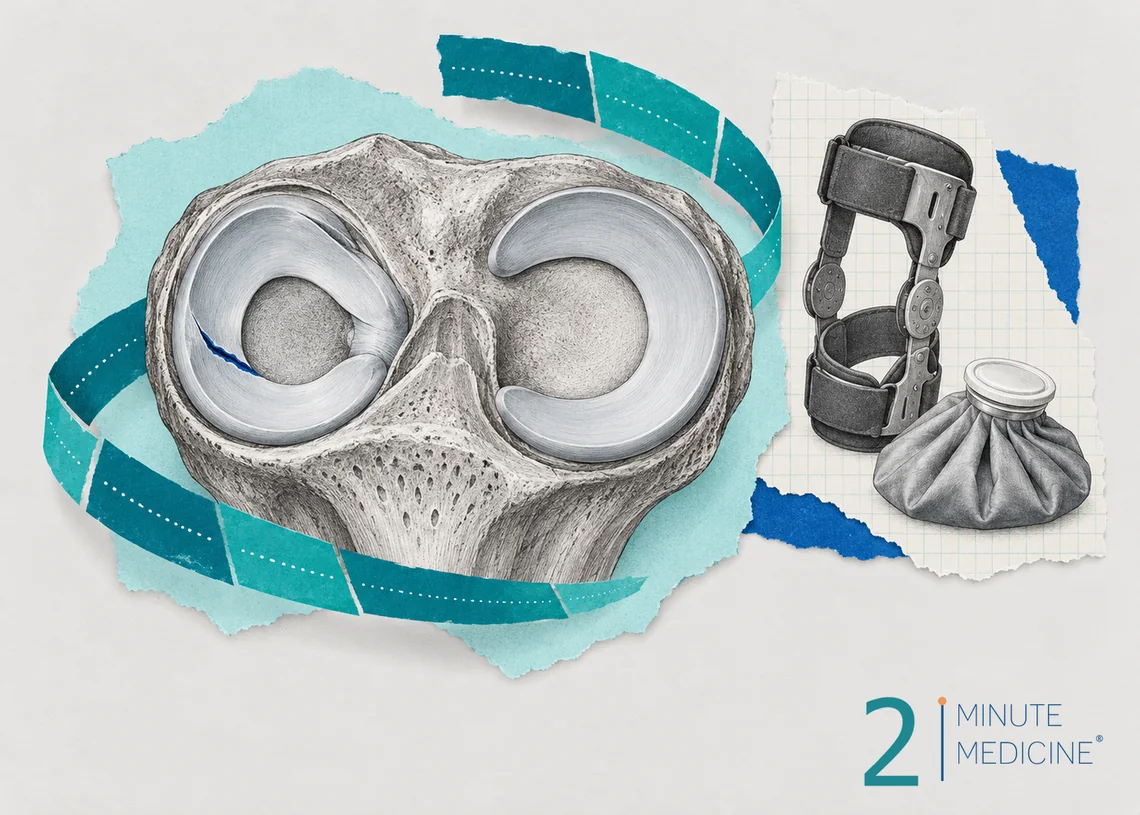
A torn meniscus (meniscus tear) is a rip in one of the two rubbery, C-shaped pads of cartilage that cushion the knee between the thighbone and the shinbone. It can happen all at once when you twist the knee, or slowly through wear as you get older. Many tears get better with rest and physical therapy. Some need surgery, especially if the knee locks.
Key points
- Young athletes usually tear a meniscus by twisting. After about age 40, tears often come from wear and can follow a simple squat.
- Common symptoms are pain along the side of the knee, swelling over a day or two, stiffness, and catching or locking.
- An MRI shows the tear, but many people over 50 have tears on MRI that cause no symptoms.
- For tears from wear, physical therapy often works as well as surgery.
- A knee that locks and won’t straighten may need surgery soon.
What the meniscus does
Each knee has two menisci. The medial meniscus sits on the inner side and the lateral meniscus on the outer side. They spread your body weight across the joint, absorb shock and help keep the knee steady. Only the outer edge of each meniscus has a good blood supply. The inner part has very little, so tears there can’t heal well by themselves.
What causes a torn meniscus
- Twisting injuries. Pivoting or turning sharply with the foot planted, as in soccer, basketball, football, tennis or skiing. A meniscus tear often happens along with a torn ACL, a key ligament in the knee.
- Deep squatting, kneeling or heavy lifting, especially with a twist.
- Wear and tear. With age, the meniscus becomes thinner and weaker. It can tear during ordinary moves, such as getting up from a squat. These degenerative tears often come with knee arthritis.
Tears come in different shapes. A large bucket-handle tear leaves a flap that can flip into the joint and jam it.
Torn meniscus symptoms
- A popping feeling when the injury happens
- Pain on the inner or outer side of the knee, worse with twisting or squatting
- Swelling and stiffness that build over 1 to 2 days
- A catching or clicking feeling
- Locking, where the knee gets stuck and won’t fully straighten
- The knee giving way
Many people can still walk, and even keep playing, right after the injury. Pain and swelling often get worse over the next day.
How a meniscus tear is diagnosed
- Exam. Your doctor presses along the joint line and bends and turns your knee to see if this causes pain or a click.
- X-rays. These don’t show the meniscus, but they check for arthritis or a broken bone.
- MRI. This shows the meniscus and other soft tissues. Tears are common on MRI in middle-aged and older adults who have no knee pain, so your doctor will match the scan to your symptoms.
Torn meniscus treatment
Home care
- Avoid activities that cause pain, especially twisting and deep squats. Use crutches if walking hurts.
- Ice the knee for 15 to 20 minutes a few times a day.
- Use a compression wrap and raise your leg to cut swelling.
- Pain relievers such as ibuprofen, naproxen or acetaminophen can help. Ask your doctor first if you have kidney disease or stomach ulcers, or take blood thinners.
Physical therapy
Exercises strengthen the thigh, hamstring and hip muscles and bring back full motion. This takes the load off the meniscus. Many people, especially with tears from wear, improve as much with a few months of therapy as they would with surgery.
Injections
A steroid shot into the knee may ease pain for a while, especially when arthritis is also present.
Surgery
Meniscus surgery is done through small cuts with a tiny camera (arthroscopy). There are two main types:
- Repair. The surgeon stitches the torn edges together. This works best for younger people with tears in the outer part, where blood supply helps healing. Recovery is longer, but the knee keeps its cushion.
- Partial meniscectomy. The surgeon trims away the torn piece. Recovery is quicker, but losing part of the meniscus may raise the chance of arthritis later, so surgeons remove as little as possible.
Surgery is usually advised for a locked knee, a tear that can be repaired in a young, active person, a tear along with an ACL injury, or symptoms that last despite about 3 months of therapy.
Recovery time
- Without surgery: many people feel much better in 6 to 8 weeks, though full recovery can take a few months.
- After trimming: walking within days and back to most activities in about 4 to 6 weeks.
- After repair: several weeks on crutches, often with a brace, and 4 to 6 months before returning to sports.
You’re ready for sports when the knee has full motion, no swelling, and strength close to your other leg.
Lowering your risk
- Keep your thigh and hip muscles strong.
- Warm up before sports, and learn safe ways to land, cut and pivot.
- Avoid deep squats and kneeling if your knees already hurt.
- Keep a healthy weight to ease the load on your knees.
When to see a doctor
- Knee pain or swelling that lasts more than a few days
- Catching, clicking or giving way
- Trouble putting weight on the leg
Get urgent care if the knee is locked and won’t straighten, swells a lot right after an injury, looks deformed, or if your foot is numb or cold. After surgery, get care right away for calf pain and swelling, fever or chest pain.
Common questions about a torn meniscus
Can a torn meniscus heal on its own?
Sometimes. Small tears in the outer edge, where there is blood supply, can heal. Tears in the inner part usually don’t heal, but symptoms often settle over weeks to months with rest and physical therapy. Many people end up with a knee that works well without surgery.
Can you walk on a torn meniscus?
Usually yes. Most people can walk, though it may hurt, especially when turning or using stairs. Avoid twisting, squatting and sports until your doctor checks it. If the knee locks, gives way often, or you can’t bear weight, use crutches and get seen soon.
Do I need surgery for a torn meniscus?
Most people don’t. Physical therapy is usually tried first, especially for tears from wear. Surgery makes sense for a locked knee, a repairable tear in a young and active person, a tear along with an ACL injury, or pain and catching that last despite several months of therapy.
What happens if a torn meniscus is left untreated?
Many tears settle down without treatment. Larger tears can keep causing pain, swelling, catching or locking, and a damaged meniscus may add to arthritis over the years. A torn meniscus isn’t dangerous, but ongoing symptoms are worth getting checked. Physical therapy can still help months after the injury.
Questions to ask your doctor
- What kind of tear do I have, and where is it?
- Can I treat it with physical therapy first?
- If I need surgery, would it be a repair or trimming?
- How long until I can return to sports or work?
- What can I do to protect my knee from arthritis?
Learn more
- Knee injuries and disorders (MedlinePlus, U.S. National Library of Medicine)
This guide is general information and doesn’t replace advice from your own doctor. Last updated October 2026.






 Get the app