

Patient Basics: Uveitis
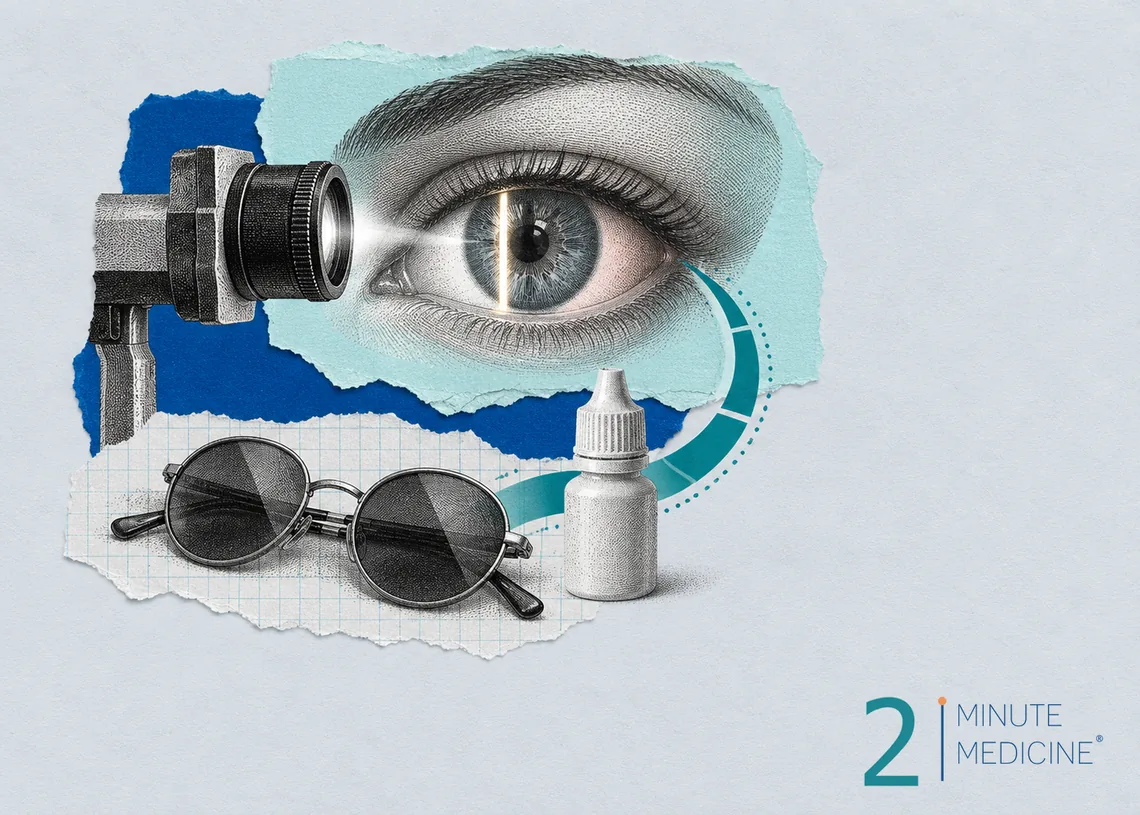
Uveitis is inflammation inside the eye, in the uvea, the middle layer of the eye that includes the colored iris. It can cause a red, painful eye, blurred vision and strong sensitivity to light. Without prompt treatment it can damage vision for good, so see an eye doctor the same day if you have these symptoms.
Key points
- Uveitis can affect one or both eyes and can start suddenly or slowly.
- Many cases have no known cause. Others are linked to arthritis, bowel disease, sarcoidosis or an infection.
- Steroid eye drops are the most common treatment, often with drops that widen the pupil.
- Uveitis often comes back, so follow-up visits matter even after the eye feels better.
- It’s different from pink eye, which rarely causes pain or blurry vision.
Types of uveitis
Doctors name uveitis by where the inflammation sits.
- Anterior uveitis (iritis). Inflammation at the front of the eye, around the iris. It’s the most common type and usually causes pain, redness and light sensitivity.
- Intermediate uveitis. Affects the gel in the middle of the eye (vitreous). It mostly causes floaters and blurry vision.
- Posterior uveitis. Affects the back of the eye, including the choroid and retina. It may be painless but can threaten sight.
- Panuveitis. Involves all layers of the eye.
What causes uveitis
In many people no cause is found. When one is found, it’s usually one of these:
- Immune and inflammatory diseases. These include ankylosing spondylitis and other spine arthritis, often in people with the HLA-B27 gene, along with psoriatic arthritis, reactive arthritis, Crohn’s disease, ulcerative colitis, sarcoidosis, Behçet’s disease and multiple sclerosis.
- Juvenile idiopathic arthritis (JIA). In children with this arthritis, uveitis often causes no symptoms, so they need regular eye checks.
- Infections. Examples are herpes viruses (including shingles), toxoplasmosis, syphilis, tuberculosis, Lyme disease and, in people with weak immune systems, cytomegalovirus (CMV).
- Eye injury or surgery.
- Medicines, rarely, including some cancer immunotherapy drugs.
Uveitis symptoms
- Eye redness, often worst around the colored part of the eye
- Aching eye pain, sometimes with a brow ache
- Pain or squinting in bright light
- Blurred or cloudy vision
- Dark spots or strands that drift across your vision (floaters)
- A small or oddly shaped pupil
Pink eye (conjunctivitis) usually causes a gritty feeling, crusting or discharge, with clear vision. Uveitis usually has no discharge, but brings pain deep in the eye, light sensitivity and blurring.
How uveitis is diagnosed
An eye doctor (ophthalmologist) uses a slit lamp, a microscope with a bright, thin beam of light, to look for inflammatory cells floating inside the eye. They also check the pressure in your eye and widen your pupils with drops to look at the retina and optic nerve. A painless scan of the retina (OCT) can show swelling at the center of vision. A dye test may show leaky blood vessels.
If the uveitis is severe, keeps coming back, affects both eyes or the back of the eye, you may need blood tests and a chest X-ray. These check for conditions such as HLA-B27-related arthritis, sarcoidosis, syphilis, tuberculosis or Lyme disease. You may be referred to a rheumatologist.
How uveitis is treated
The goals are to calm the inflammation quickly, ease pain, protect vision and treat any underlying cause.
- Steroid eye drops, such as prednisolone, are used for anterior uveitis. At first you may need them every hour or two while awake. The dose is lowered slowly over weeks. Don’t stop them suddenly, because the inflammation can flare.
- Dilating drops, such as cyclopentolate or atropine, relax the muscles inside the eye to ease pain and keep the iris from sticking to the lens. They make vision blurry and bright light uncomfortable while you use them.
- Steroid shots around or into the eye, or a slow-release implant, treat inflammation further back in the eye.
- Steroid pills are used for severe uveitis or when both eyes are involved.
- Immune-suppressing medicines, such as methotrexate, mycophenolate or adalimumab, help control long-lasting uveitis and let you use fewer steroids.
- Antiviral or antibiotic medicine treats uveitis caused by an infection.
Steroids in or on the eye can raise eye pressure and speed up cataracts, so you’ll have regular pressure checks while using them.
Possible complications
- Swelling of the center of the retina (macular edema), a common cause of vision loss in uveitis
- Glaucoma, from high eye pressure
- Cataracts
- The iris sticking to the lens
- Scarring or detachment of the retina
Most of these can be treated, especially when found early.
Living with uveitis
Some people have a single episode. Others have flares that come back, or inflammation that lasts for years. Learn the early signs of a flare, such as redness or light sensitivity, and call your eye doctor right away when they start. Keep all your follow-up visits, even when your eye feels fine. If you take immune-suppressing medicine, you’ll need regular blood tests. Sunglasses help with light sensitivity.
When to see a doctor
See an eye doctor the same day, or go to an emergency department, for:
- A red, painful eye with light sensitivity or blurred vision
- Sudden floaters, flashes of light or a shadow in your vision
- Sudden loss of vision
- Eye pain after an eye injury or surgery
If your child has juvenile idiopathic arthritis, follow the eye exam schedule your doctor recommends, even without symptoms.
Common questions about uveitis
Is uveitis serious?
It can be. Uveitis is a leading cause of preventable vision loss, mostly from complications like retinal swelling, glaucoma and cataracts. Most people keep good vision when treatment starts early and they keep up with follow-up visits. Back-of-the-eye uveitis tends to be more serious than iritis.
Can uveitis go away on its own?
Mild iritis sometimes settles without treatment, but it’s risky to wait. Untreated inflammation can cause the iris to stick, raise eye pressure or damage the retina. Treatment shortens the episode and protects your sight, so see an eye doctor rather than waiting it out.
How long does uveitis last?
A single episode of anterior uveitis usually improves within days of starting drops and settles in about 6 to 8 weeks. Uveitis that lasts longer than 3 months is called chronic. Some people have repeated flares over many years, especially with HLA-B27 or arthritis.
Is uveitis contagious?
No. Uveitis itself doesn’t spread from person to person, even when an infection inside the body is the cause. That sets it apart from many cases of pink eye. You can go to work or school while you’re being treated.
Questions to ask your doctor
- What type of uveitis do I have?
- Do I need tests to look for a cause?
- How should I taper my eye drops?
- What side effects should I watch for?
- What signs mean a flare is starting?
Learn more
This guide is general information and doesn’t replace advice from your own doctor. Last updated October 2026.







 Get the app