• About
  • Masthead
  • License Content
  • Advertise
  • Submit Press Release
  • RSS/Email List
  • 2MM Podcast
  • Write for us
  • Contact Us
2 Minute Medicine
No Result
View All Result

No products in the cart.

SUBSCRIBE
  • Specialties
    • All Specialties, All Recent Reports
    • Cardiology
    • Chronic Disease
    • Dermatology
    • Emergency
    • Endocrinology
    • Gastroenterology
    • Imaging and Intervention
    • Infectious Disease
    • Nephrology
    • Neurology
    • Obstetrics
    • Oncology
    • Ophthalmology
    • Pediatrics
    • Pharma
    • Preclinical
    • Psychiatry
    • Public Health
    • Pulmonology
    • Rheumatology
    • Surgery
  • Tools
    • EvidencePulse™
    • RVU Search
    • NPI Registry Lookup
  • Pharma
  • AI News
  • The Scan+
  • Classics™+
    • 2MM+ Online Access
    • Paperback and Ebook
  • Rewinds
  • Partners
    • License Content
    • Submit Press Release
    • Advertise with Us
  • Account
    • Subscribe
    • Sign-in
    • My account
2 Minute Medicine
  • Specialties
    • All Specialties, All Recent Reports
    • Cardiology
    • Chronic Disease
    • Dermatology
    • Emergency
    • Endocrinology
    • Gastroenterology
    • Imaging and Intervention
    • Infectious Disease
    • Nephrology
    • Neurology
    • Obstetrics
    • Oncology
    • Ophthalmology
    • Pediatrics
    • Pharma
    • Preclinical
    • Psychiatry
    • Public Health
    • Pulmonology
    • Rheumatology
    • Surgery
  • Tools
    • EvidencePulse™
    • RVU Search
    • NPI Registry Lookup
  • Pharma
  • AI News
  • The Scan+
  • Classics™+
    • 2MM+ Online Access
    • Paperback and Ebook
  • Rewinds
  • Partners
    • License Content
    • Submit Press Release
    • Advertise with Us
  • Account
    • Subscribe
    • Sign-in
    • My account
SUBSCRIBE
2 Minute Medicine
Subscribe
Home All Specialties Obstetrics

Preterm birth associated with decreased fertility

byDenise PongandLeah Hawkins Bressler, MD, MPH
February 15, 2015
in Obstetrics
Reading Time: 3 mins read
0
Share on FacebookShare on Twitter

1. Women who were born at <34 weeks gestation had decreased fecundability.

2. The cumulative probability of conception within 12 menstrual cycles among women born at <34 weeks was 48%.

Evidence Rating Level: 2 (Good)

Study Rundown: Preterm birth, defined as delivery prior to 37 weeks, is a major source of morbidity and mortality. It is associated with complications including cardiovascular and respiratory abnormalities, intracranial hemorrhage and infection. As medicine has advanced, a greater proportion of premature infants survive into adulthood, but they may suffer from long-term morbidities such as neurodevelopmental delay. Prior studies suggest that gestation <32 weeks and very low birth weight are associated with decreased future birth rates and prolonged time to pregnancy (TTP). It has been hypothesized that this is due to incomplete maturation of the hypothalamic-pituitary-ovarian axis in vivo in infants delivered prematurely. In the present work, authors sought to determine fecundability, the cycle-specific probability of conception, and found that women born at les than 34 weeks gestation had decreased fecundability compared to their peers delivered at term.

Strengths included prospective, population-based study design and adjustment for several confounders known to be associated with fecundability. Limitations included small sample size, use of last menstrual period for pregnancy dating and rounding of gestational age, which may predispose to misclassification. Differences in menstrual intervals (variable follicular phases), prior pregnancies (proven fertility) and time attempting pregnancy (potential marker of infertility) in the <34 week group may confound associations. Studies with more precise estimation of gestational age in both planned and unplanned pregnancies are needed to better understand the impact of preterm birth on fertility.

Click to read the study in Human Reproduction

RELATED REPORTS

Maternal exposure to environmental stressors is associated with decreased odds of infant survival among preterm infants

2 Minute Medicine Rewind March 2, 2026

Both high and low maternal hemoglobin levels increase neonatal risk

Relevant Reading: The probability of giving birth among women who were born preterm or with impaired fetal growth

Study Author, Cathrine Wildenschild, MHSc, talks to 2 Minute Medicine: Aarhus University Hospital, Department of Clinical Epidemiology, PhD Candidate.

“Our study shows that women born at a gestational age below 34 weeks take a longer time to conceive than women who were born at term. This information may be useful for clinicians counseling such women, in providing a possible explanation for a delay in conception.”

In-Depth [prospective cohort]: This study assessed the relationship between current fecundability and prior gestational age at birth in women aged 18-40 years attempting spontaneous pregnancy. The sample population was comprised of women born at <34 weeks (n=19), 34-36 weeks (n=89), 47-41 weeks (n=2463) and ≥42 weeks (n=243). The primary outcome of interest was time to pregnancy, defined as the number of menstrual cycles required to achieve pregnancy.

Women born at <34 weeks experienced decreased fecundability compared to women born at term (FR 0.37, CI 0.17-0.81). The cumulative probabilities of conception within 3, 6 and 12 menstrual cycles were 12%, 28% and 48% respectively among women born at <34 weeks, compared with 47%, 67% and 84% in women born at >37 weeks.

Image: PD

©2015 2 Minute Medicine, Inc. All rights reserved. No works may be reproduced without expressed written consent from 2 Minute Medicine, Inc. Inquire about licensing here. No article should be construed as medical advice and is not intended as such by the authors or by 2 Minute Medicine, Inc.

Tags: fecunditypreterm birth
Previous Post

Prolonged resuscitation of pediatric drowning patients unlikely to result in good outcomes

Next Post

HPV vaccination not associated with increase in STIs

RelatedReports

Prenatal antidepressant exposure may increase risk of poor motor development
Obstetrics

Maternal exposure to environmental stressors is associated with decreased odds of infant survival among preterm infants

March 5, 2026
Few older adolescents meet recommended levels of physical activity
Weekly Rewinds

2 Minute Medicine Rewind March 2, 2026

March 2, 2026
Large proportion of late preterm infants and older admitted to the NICU
Hematology

Both high and low maternal hemoglobin levels increase neonatal risk

February 2, 2026
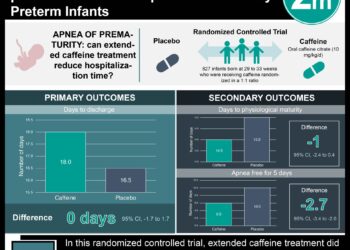
#VisualAbstract: Extended Caffeine Does Not Reduce Hospitalization Time for Apnea in Moderately Preterm Infants
StudyGraphics

#VisualAbstract: Extended Caffeine Does Not Reduce Hospitalization Time for Apnea in Moderately Preterm Infants

May 21, 2025
Next Post
HPV vaccination not associated with increase in STIs

HPV vaccination not associated with increase in STIs

Cranial radiotherapy associated with increased risk of anterior hypopituitarism

Perfusion-guided endovascular stroke treatment improves outcomes

Decline in adolescent sleep duration over past 20 years

Decline in adolescent sleep duration over past 20 years

2 Minute Medicine® is an award winning, physician-run, expert medical media company. Our content is curated, written and edited by practicing health professionals who have clinical and scientific expertise in their field of reporting. Our editorial management team is comprised of highly-trained MD physicians. Join numerous brands, companies, and hospitals who trust our licensed content.

Recent Reports

  • Amazon Health Services expands generative artificial intelligence assistant to all United States customers
  • Atezolizumab may improve disease-free survival in mismatch repair deficiency locally advanced colon cancer
  • Statins do not increase breast cancer risk in postmenopausal women
License Content
Terms of Use | Disclaimer
Cookie Policy
Privacy Statement (EU)
Disclaimer

The Classics in Medicine Paperback Released!

Over the past 30 years, the transition from print to digital media has contributed to an exponential increase in medical literature. In response, 2 Minute Medicine presents 160+ authoritative, physician-written summaries of the most cited landmark trials in medicine.

amazon-logo_blackGet-it-on-iBooks-badge

Click anywhere to close this announcement

  • Specialties
    • All Specialties, All Recent Reports
    • Cardiology
    • Chronic Disease
    • Dermatology
    • Emergency
    • Endocrinology
    • Gastroenterology
    • Imaging and Intervention
    • Infectious Disease
    • Nephrology
    • Neurology
    • Obstetrics
    • Oncology
    • Ophthalmology
    • Pediatrics
    • Pharma
    • Preclinical
    • Psychiatry
    • Public Health
    • Pulmonology
    • Rheumatology
    • Surgery
  • Tools
    • EvidencePulse™
    • RVU Search
    • NPI Registry Lookup
  • Pharma
  • AI News
  • The Scan
  • Classics™
    • 2MM+ Online Access
    • Paperback and Ebook
  • Rewinds
  • Partners
    • License Content
    • Submit Press Release
    • Advertise with Us
  • Account
    • Subscribe
    • Sign-in
    • My account
No Result
View All Result

© 2026 2 Minute Medicine, Inc. - Physician-written medical news.