• About
  • Masthead
  • License Content
  • Advertise
  • Press Releases
  • Newsroom
  • RSS/Email List
  • 2MM Podcast
  • Write for us
  • Contact Us
2 Minute Medicine
No Result
View All Result

No products in the cart.

Sign in
SUBSCRIBE
  • About
  • Specialties
    • All Specialties, All Recent Reports
    • Cardiology
    • Chronic Disease
    • Dermatology
    • Emergency
    • Endocrinology
    • Gastroenterology
    • Imaging and Intervention
    • Infectious Disease
    • Nephrology
    • Neurology
    • Obstetrics
    • Oncology
    • Ophthalmology
    • Pediatrics
    • Pharma
    • Preclinical
    • Psychiatry
    • Public Health
    • Pulmonology
    • Rheumatology
    • Surgery
    • Rewinds
    • The Scan
  • EvidencePulse™
  • HypeCheck™
  • AI News
  • Classics™
    • 2MM+ Online Access
    • Paperback and Ebook
  • Tools
    • NPI Registry Lookup
    • RVU Search
  • Partners
    • License Content
    • Advertise with Us
2 Minute Medicine
  • About
  • Specialties
    • All Specialties, All Recent Reports
    • Cardiology
    • Chronic Disease
    • Dermatology
    • Emergency
    • Endocrinology
    • Gastroenterology
    • Imaging and Intervention
    • Infectious Disease
    • Nephrology
    • Neurology
    • Obstetrics
    • Oncology
    • Ophthalmology
    • Pediatrics
    • Pharma
    • Preclinical
    • Psychiatry
    • Public Health
    • Pulmonology
    • Rheumatology
    • Surgery
    • Rewinds
    • The Scan
  • EvidencePulse™
  • HypeCheck™
  • AI News
  • Classics™
    • 2MM+ Online Access
    • Paperback and Ebook
  • Tools
    • NPI Registry Lookup
    • RVU Search
  • Partners
    • License Content
    • Advertise with Us
Sign in
SUBSCRIBE
2 Minute Medicine
Sign in
Subscribe
2 Minute MedicineFree on Google PlayGet
✦ EvidencePulse™ by 2 Minute Medicine 2026 evidence scan 3 reports You asked top stroke trials 2026 Synthesizing medical evidence... Top 2026 stroke trial results: OCEANIC — ischemic stroke: 6.2% vs 8.4% OPTION* — mRS 0–1: 43.6% vs 34.2% ORIENTAL* — mRS 0–2: 58.6% vs 46.6% *Higher sICH in intervention arms Participants randomizedN OCEANIC 12,327 OPTION 570 ORIENTAL 564 Ask about guidelines or landmark trials... ↑ Try EvidencePulse™ Ask the evidence.
Get the signal.
Try it now → Physician-trained medical AI by 2 Minute Medicine
Home All Specialties Chronic Disease

SARS-CoV-2 may be more transmissible than SARS-CoV and Middle Eastern respiratory syndrome coronavirus

byVineeth BhogadiandArnav Agarwal, MD
June 30, 2020
in Chronic Disease, Emergency, Infectious Disease, Public Health, Pulmonology
Reading Time: 3 mins read
Radiological findings of COVID-19 pneumonia in Wuhan, China
Share on FacebookShare on TwitterShare on LinkedIn

1. SARS-CoV-2 is more transmissible in households compared to SARS-CoV and MERS-CoV.

2. Individuals aged over 60 years were the most susceptible to household transmission of SARS-CoV-2.

Evidence Rating Level: 2 (Good)

Study Rundown: While the transmissibility of the disease has been extensively modeled at population and individual levels, comparatively little is known about transmissibility within households and with other close contacts. This retrospective cohort study utilized a contact tracing dataset from the Guangzhou Center for Disease Control and Prevention (CDC) to estimate the secondary attack rate of COVID-19 among household and non-household contacts. The study identified a higher secondary attack rate among household contacts at the same residential address as compared to other close contacts. Additionally, older individuals aged over 60 years were at higher risk of household infection compared to younger age groups. This study was limited to only analyzing the patient characteristics and transmission of cases reported to the Guangzhou CDC, limiting generalizability of findings to other health care settings and locations with different quarantine and isolation strategies. Furthermore, infection transmission to asymptomatic carriers could not be reliably quantified due to testing of close contacts occurring only twice at 14 days apart. Overall, this study highlights the importance of testing close contacts of COVID-19 cases to facilitate isolation during the incubation period. For physicians, these findings underline the importance of encouraging mild cases to isolate away from their families to limit transmission within households.

Click to read the study in The Lancet Infectious Disease

Relevant Reading: Characteristics of Household Transmission of COVID-19

RELATED REPORTS

Ensitrelvir associated with reduced risk of Covid-19 among household contacts

The Scan by 2 Minute Medicine®: Fall boosters, mosquitoes, skin awareness, and Hollywood healing

In-Depth [retrospective cohort]: The study population included 195 unrelated close contact groups (215 primary cases, 134 secondary or tertiary cases and 1964 uninfected close contacts) identified from 349 laboratory confirmed COVID-19 cases reported to the Guangzhou CDC between January 7 and February 18, 2020. A close contact was defined as an individual who had unprotected close contact (within 1m) of a confirmed case within two days of symptom onset. Close contacts were quarantined and followed for 14 days with nasal swabs tested by reverse transcriptase-polymerase chain reaction (RT-PCR) on days 1 and 14. Household contacts were identified either on the basis of residential address or individuals who were family members and close relatives of positive cases.

Assuming a mean incubation period of 5 days and a maximum infectious period of 13 days with no case isolation, the secondary attack rate among household contacts was 12.4% (95% CI 9.8 to 15.4) when defined on the basis of close relatives, and 17.1% (95% CI 13.3 to 21.8) when defined on the basis of residential address. Longer incubation periods were associated with lower secondary attack rates; longer infectious periods were associated with higher secondary attack rates. Secondary attack rates varied from 11.4% (95% CI 9.0 to 14.2) to 18.0% (13.9 to 23.0). Compared to the oldest age group (over 60 years), the risk of household infection was lower in individuals under 20 years (OR 0.23, 95% CI 0.11 to 0.46), followed by adults aged 20-59 years (OR 0.64, 95% CI 0.43 to 0.97). The estimated local reproductive number (R) was 0.5 (95% CI 0.41 to 0.64) in Guangzhou, with decline in person-to-person transmissibility over time; the projected local R, without isolation and appropriate quarantine efforts was 0.6 (95% CI 0.49 to 0.74).

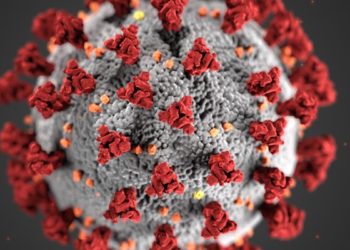
Image: PD

©2020 2 Minute Medicine, Inc. All rights reserved. No works may be reproduced without expressed written consent from 2 Minute Medicine, Inc. Inquire about licensing here. No article should be construed as medical advice and is not intended as such by the authors or by 2 Minute Medicine, Inc.

Tags: CoronavirusMiddle East Respiratory Syndrome coronavirusSARS-CoV-2
Previous Post

Prognostic value of functional capacity in different exercise protocols for heart disease

Next Post

#VisualAbstract: Clinical characteristics, outcomes, and risk factors for mortality in patients with cancer and COVID-19 in Hubei, China

RelatedReports

Novel coronavirus identified from patients with pneumonia in Wuhan, China
Infectious Disease

Ensitrelvir associated with reduced risk of Covid-19 among household contacts

May 26, 2026
The Scan by 2 Minute Medicine®:  Ultra-Trail du Mont-Blanc, Taylor Swift, NBA rookie Chet Holmgren and Magic Mushrooms!
The Scan by 2 Minute Medicine®

The Scan by 2 Minute Medicine®: Fall boosters, mosquitoes, skin awareness, and Hollywood healing

August 28, 2025
Being overweight and obese associated with increased incidence of chronic kidney disease
Chronic Disease

Worsening kidney function observed following SARS-CoV-2 infection in children

May 23, 2025
Novel coronavirus identified from patients with pneumonia in Wuhan, China
Hematology

Increased blood–urea–nitrogen-to-albumin ratio associated with increased mortality in coronavirus disease

February 10, 2025
Next Post
#VisualAbstract: Clinical characteristics, outcomes, and risk factors for mortality in patients with cancer and COVID-19 in Hubei, China

#VisualAbstract: Clinical characteristics, outcomes, and risk factors for mortality in patients with cancer and COVID-19 in Hubei, China

Temporal estimates of case-fatality rate for COVID-19 outbreaks in Canada and the United States

Prescription of antibiotics for acute respiratory infections increasing

Three-day amoxicillin course effective for chest-indrawing pneumonia in Malawi children

✦ EvidencePulse™ by 2 Minute Medicine 2026 evidence scan 3 reports You asked top stroke trials 2026 Synthesizing medical evidence... Top 2026 stroke trial results: OCEANIC — ischemic stroke: 6.2% vs 8.4% OPTION* — mRS 0–1: 43.6% vs 34.2% ORIENTAL* — mRS 0–2: 58.6% vs 46.6% *Higher sICH in intervention arms Participants randomizedN OCEANIC 12,327 OPTION 570 ORIENTAL 564 Ask about guidelines or landmark trials... Try EvidencePulse™ Get the signal. Try it now → Physician-trained medical AI by 2 Minute Medicine

2MM+ All Access

Full details →
$4.99 /month

3-day free trial · cancel anytime

  • ✓100+ physician-written reports
  • ✓EvidencePulse™ + HypeCheck™
  • ✓Ad-free reading + newsletters
Start 3-day free trial

Then $4.99/month. Manage renewal in your account.

NPI Lookup · Free

Look up any US clinician

Search by name or NPI number, live from the CMS NPI Registry.

  • OIG exclusion check
  • Licenses and specialties
  • No account needed
Open NPI Lookup →

2 Minute Medicine® is an award winning, physician-run, expert medical media company. Our content is curated, written and edited by practicing health professionals who have clinical and scientific expertise in their field of reporting. Our editorial management team is comprised of highly-trained MD physicians. Join numerous brands, companies, and hospitals who trust our licensed content.

Recent Reports

  • WGS Oncodetect showed higher recurrence sensitivity than WES Oncodetect in colorectal cancer
  • Stool biomarkers may be effective in the evaluation of necrotizing enterocolitis in preterm infants
  • Tarlatamab plus durvalumab improved survival versus durvalumab alone in extensive-stage small cell lung cancer in interim phase 3 results
License Content
Terms of Use | Disclaimer
Cookie Policy

Get the app

Read 2 Minute Medicine on iPhone, iPad and Android.

Download on the App StoreGet it on Google Play
QR code for www.2minutemedicine.com/app
On a computer? Scan this with your phone’s camera.
2MM+ All Access Full details →

The medical literature, distilled daily.

Monthly plan selected: $4.99 /month.

$4.99/month

3-day free trial · cancel anytime

Start 3-day free trial

Then $4.99/month. Manage renewal in your account.

Yearly plan selected: $49.90 /year.

$49.90/year

2 months free

Start 3-day free trial

Then $49.90/year.

Membership benefits

  • ✓100+ physician-written reports
  • ✓AI EvidencePulse™ + HypeCheck™
  • ✓Ad-free reading + newsletters
  • ✓NPI watchlist + bulk NPI verification

Already a member? Sign in

  • Get the app
  • About
  • Specialties
    • All Specialties, All Recent Reports
    • Cardiology
    • Chronic Disease
    • Dermatology
    • Emergency
    • Endocrinology
    • Gastroenterology
    • Imaging and Intervention
    • Infectious Disease
    • Nephrology
    • Neurology
    • Obstetrics
    • Oncology
    • Ophthalmology
    • Pediatrics
    • Pharma
    • Preclinical
    • Psychiatry
    • Public Health
    • Pulmonology
    • Rheumatology
    • Surgery
    • Rewinds
    • The Scan
  • EvidencePulse™
  • HypeCheck™
  • AI News
  • Classics™
    • 2MM+ Online Access
    • Paperback and Ebook
  • Tools
    • NPI Registry Lookup
    • RVU Search
  • Partners
    • License Content
    • Advertise with Us
No Result
View All Result

© 2026 2 Minute Medicine, Inc. - Physician-written medical news.