• About
  • Masthead
  • License Content
  • Advertise
  • Submit Press Release
  • RSS/Email List
  • 2MM Podcast
  • Write for us
  • Contact Us
2 Minute Medicine
No Result
View All Result

No products in the cart.

SUBSCRIBE
  • Specialties
    • All Specialties, All Recent Reports
    • Cardiology
    • Chronic Disease
    • Dermatology
    • Emergency
    • Endocrinology
    • Gastroenterology
    • Imaging and Intervention
    • Infectious Disease
    • Nephrology
    • Neurology
    • Obstetrics
    • Oncology
    • Ophthalmology
    • Pediatrics
    • Pharma
    • Preclinical
    • Psychiatry
    • Public Health
    • Pulmonology
    • Rheumatology
    • Surgery
  • Tools
    • EvidencePulse™
    • RVU Search
    • NPI Registry Lookup
  • Pharma
  • AI News
  • The Scan+
  • Classics™+
    • 2MM+ Online Access
    • Paperback and Ebook
  • Rewinds
  • Partners
    • License Content
    • Submit Press Release
    • Advertise with Us
  • Account
    • Subscribe
    • Sign-in
    • My account
2 Minute Medicine
  • Specialties
    • All Specialties, All Recent Reports
    • Cardiology
    • Chronic Disease
    • Dermatology
    • Emergency
    • Endocrinology
    • Gastroenterology
    • Imaging and Intervention
    • Infectious Disease
    • Nephrology
    • Neurology
    • Obstetrics
    • Oncology
    • Ophthalmology
    • Pediatrics
    • Pharma
    • Preclinical
    • Psychiatry
    • Public Health
    • Pulmonology
    • Rheumatology
    • Surgery
  • Tools
    • EvidencePulse™
    • RVU Search
    • NPI Registry Lookup
  • Pharma
  • AI News
  • The Scan+
  • Classics™+
    • 2MM+ Online Access
    • Paperback and Ebook
  • Rewinds
  • Partners
    • License Content
    • Submit Press Release
    • Advertise with Us
  • Account
    • Subscribe
    • Sign-in
    • My account
SUBSCRIBE
2 Minute Medicine
Subscribe
Home All Specialties Oncology

Trastuzumab emtansine improves outcomes in residual HER2-positive breast cancer
byMichaela DowlingandKiera Liblik
March 7, 2025
in Oncology, Pharma
Reading Time: 3 mins read
0
Share on FacebookShare on Twitter

1. In this randomized controlled trial, adjuvant trastuzumab emtansine (T-DM1) reduced invasive disease events in patients with residual human epidermal growth factor receptor 2 (HER2)-positive breast cancer following neoadjuvant therapy.

2. T-DM1 treatment improved overall survival as compared to trastuzumab therapy.

Evidence Rating Level: 1 (Excellent)

Study Rundown: In patients with HER2-positive early breast cancer, treatment commonly includes neoadjuvant chemotherapy with agents like trastuzumab, a HER2-targeted therapy. However, over half of these patients exhibit residual disease at surgery, which correlates with higher risks of recurrence and mortality. The KATHERINE trial sought to improve outcomes in this population by evaluating T-DM1 as an adjuvant therapy compared to trastuzumab. After a median follow-up of 8.4 years, adjuvant treatment with T-DM1 had fewer overall invasive disease events including distant recurrence, locoregional recurrence, and contralateral breast cancer, but it did not reduce the probability of CNS recurrence. Patients treated with T-DM1 had improved overall survival and reduced breast cancer-specific and post-invasive disease mortality compared to those receiving trastuzumab. However, Subgroup analysis revealed that patients with IHC 3+ tumors derived greater benefit from T-DM1, while those with ISH-amplified or IHC 2+ tumors experienced less benefit. Despite its efficacy, T-DM1 was associated with higher rates of adverse events, including serious and grade ≥3 events. Nonetheless, fewer patients in the T-DM1 group discontinued treatment before an invasive disease event or death compared to the trastuzumab group. The study was limited in evaluating specific subpopulations, such as patients in the ypT1mic subgroup and Black patients, due to small sample sizes and event rates. Overall, the findings demonstrate that T-DM1 improves both invasive disease-free survival and overall survival in patients with residual HER2-positive breast cancer after neoadjuvant therapy.

Click here to read the study in NEJM

Relevant Reading: Trastuzumab Emtansine for Residual Invasive HER2-Positive Breast Cancer

RELATED REPORTS

Illumina’s billion cell atlas tries to solve artificial intelligence’s data bottleneck in biology

AstraZeneca moves to own multimodal oncology AI with Modella

NVIDIA and Lilly put $1B behind AI as core drug infrastructure

In-Depth [randomized controlled trial]: This randomized controlled trial investigated both the efficacy and safety profile of T-DM1 as adjuvant therapy in patients with residual HER2-positive breast cancer after neoadjuvant therapy. Patients were eligible if they were diagnosed with HER2-positive breast cancer, had received at least six cycles of neoadjuvant taxane-based chemotherapy and trastuzumab over a minimum of nine weeks, and had residual cancer in the breast or axilla at surgery. Following randomization, 743 patients were included in each treatment group for the intention-to-treat analysis, with safety data available for 740 patients in the T-DM1 group and 720 in the trastuzumab group. T-DM1 was associated with greater invasive disease-free survival when compared to the trastuzumab group (unstratified hazard ratio for invasive disease or death, 0.54; 95% confidence interval [CI], 0.51-0.87; p = 0.003). At the seven-year follow-up, invasive disease or death had occurred in 146 (19.7%) patients in the T-DM1 group and 239 (32.2%) patients in the trastuzumab group. Among the IHC 3+ cohort, 82.8% of T-DM1 patients and 66.5% of trastuzumab patients achieved seven-year invasive disease-free survival (hazard ratio, 0.47; 95% CI, 0.37–0.60). In the IHC 2+ cohort, invasive disease-free survival was 72.4% for T-DM1 and 68.0% for trastuzumab (hazard ratio, 0.84; 95% CI, 0.56–1.25). Overall survival at 7 years was 89.1% in the T-DM1 group and 84.4% in the trastuzumab group (unstratified hazard ratio for death, 0.66; CI, 0.51-0.97; p = 0.003). As well, T-DM1 patients had lower rates of non-CNS distant recurrence (14.7% vs. 21.5%), locoregional occurrence (2.2% vs. 6.2%), and contralateral breast cancer (0.9% vs. 2.6%). However, T-DM1 patients experienced higher rates of serious adverse events (12.7% vs. 8.1%) and grade 3 or higher adverse events (26.1% vs. 15.7%) than trastuzumab patients. Overall, these findings underscore the potential of T-DM1 as an effective adjuvant treatment for patients with residual HER2-positive breast cancer following neoadjuvant therapy.

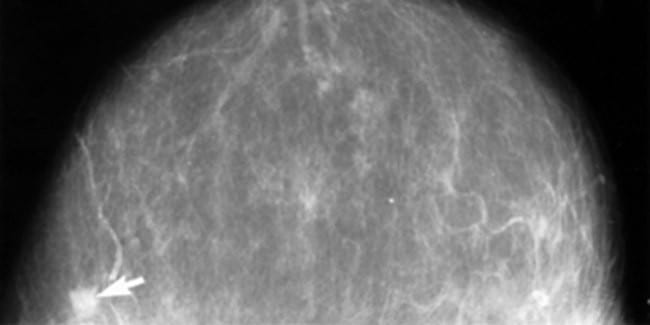
Image: PD

©2025 2 Minute Medicine, Inc. All rights reserved. No works may be reproduced without expressed written consent from 2 Minute Medicine, Inc. Inquire about licensing here. No article should be construed as medical advice and is not intended as such by the authors or by 2 Minute Medicine, Inc.

Tags: Breast CancerHER2 breast canceroncologyPharmatrastuzumab emtansine
Previous Post

Mpox cases in Africa continued to increase following WHO emergency declarations

Next Post

#VisualAbstract: First-Line Sugemalimab Plus Chemotherapy Provides Survival Benefit in Advanced Gastric Cancer

RelatedReports

CRISPR-mediated gene activation rescues obesity caused by haploinsufficiency [PreClinical]
AI Roundup

Illumina’s billion cell atlas tries to solve artificial intelligence’s data bottleneck in biology

January 23, 2026
Patients with advanced adenomas are at increased risk of developing colorectal cancer
AI Roundup

AstraZeneca moves to own multimodal oncology AI with Modella

January 21, 2026
Tramadol use linked with increased risk of hypoglycemia hospitalizations
AI Roundup

NVIDIA and Lilly put $1B behind AI as core drug infrastructure

January 20, 2026
2MM: AI Roundup- AI Cancer Test, Smarter Hospitals, Faster Drug Discovery, and Mental Health Tech [May 2nd, 2025]
AI Roundup

2MM: AI Roundup – Lilly and NVIDIA’s $1B AI lab, Illumina’s Billion Cell Atlas, AstraZeneca’s Modella deal, and Claude for Healthcare [Jan 19th, 2026]

January 19, 2026
Next Post
#VisualAbstract: First-Line Sugemalimab Plus Chemotherapy Provides Survival Benefit in Advanced Gastric Cancer

#VisualAbstract: First-Line Sugemalimab Plus Chemotherapy Provides Survival Benefit in Advanced Gastric Cancer

Antiarrhythmic drugs have no survival benefit in shock-refractory out-of-hospital cardiac arrest

Intraosseous drug administration does not improve survival in out of hospital cardiac arrest

Socioeconomically disadvantaged neighborhoods linked to increased rehospitalization rates

Intraosseous and intravenous vascular access are equally effective for ROSC following out-of-hospital cardiac arrest

2 Minute Medicine® is an award winning, physician-run, expert medical media company. Our content is curated, written and edited by practicing health professionals who have clinical and scientific expertise in their field of reporting. Our editorial management team is comprised of highly-trained MD physicians. Join numerous brands, companies, and hospitals who trust our licensed content.

Recent Reports

  • An electronic intervention may increase chances of benzodiazepine cessation
  • Fremanezumab reduces migraine frequency in children and adolescents with episodic migraine
  • Illumina’s billion cell atlas tries to solve artificial intelligence’s data bottleneck in biology
License Content
Terms of Use | Disclaimer
Cookie Policy
Privacy Statement (EU)
Disclaimer

© 2025 2 Minute Medicine, Inc. - Physician-written medical news.

  • Specialties
    • All Specialties, All Recent Reports
    • Cardiology
    • Chronic Disease
    • Dermatology
    • Emergency
    • Endocrinology
    • Gastroenterology
    • Imaging and Intervention
    • Infectious Disease
    • Nephrology
    • Neurology
    • Obstetrics
    • Oncology
    • Ophthalmology
    • Pediatrics
    • Pharma
    • Preclinical
    • Psychiatry
    • Public Health
    • Pulmonology
    • Rheumatology
    • Surgery
  • Tools
    • EvidencePulse™
    • RVU Search
    • NPI Registry Lookup
  • Pharma
  • AI News
  • The Scan
  • Classics™
    • 2MM+ Online Access
    • Paperback and Ebook
  • Rewinds
  • Partners
    • License Content
    • Submit Press Release
    • Advertise with Us
  • Account
    • Subscribe
    • Sign-in
    • My account
No Result
View All Result

© 2025 2 Minute Medicine, Inc. - Physician-written medical news.