• About
  • Masthead
  • License Content
  • Advertise
  • Submit Press Release
  • RSS/Email List
  • 2MM Podcast
  • Write for us
  • Contact Us
2 Minute Medicine
No Result
View All Result

No products in the cart.

SUBSCRIBE
  • Specialties
    • All Specialties, All Recent Reports
    • Cardiology
    • Chronic Disease
    • Dermatology
    • Emergency
    • Endocrinology
    • Gastroenterology
    • Imaging and Intervention
    • Infectious Disease
    • Nephrology
    • Neurology
    • Obstetrics
    • Oncology
    • Ophthalmology
    • Pediatrics
    • Pharma
    • Preclinical
    • Psychiatry
    • Public Health
    • Pulmonology
    • Rheumatology
    • Surgery
  • Tools
    • EvidencePulse™
    • RVU Search
    • NPI Registry Lookup
  • Pharma
  • AI News
  • The Scan+
  • Classics™+
    • 2MM+ Online Access
    • Paperback and Ebook
  • Rewinds
  • Partners
    • License Content
    • Submit Press Release
    • Advertise with Us
  • Account
    • Subscribe
    • Sign-in
    • My account
2 Minute Medicine
  • Specialties
    • All Specialties, All Recent Reports
    • Cardiology
    • Chronic Disease
    • Dermatology
    • Emergency
    • Endocrinology
    • Gastroenterology
    • Imaging and Intervention
    • Infectious Disease
    • Nephrology
    • Neurology
    • Obstetrics
    • Oncology
    • Ophthalmology
    • Pediatrics
    • Pharma
    • Preclinical
    • Psychiatry
    • Public Health
    • Pulmonology
    • Rheumatology
    • Surgery
  • Tools
    • EvidencePulse™
    • RVU Search
    • NPI Registry Lookup
  • Pharma
  • AI News
  • The Scan+
  • Classics™+
    • 2MM+ Online Access
    • Paperback and Ebook
  • Rewinds
  • Partners
    • License Content
    • Submit Press Release
    • Advertise with Us
  • Account
    • Subscribe
    • Sign-in
    • My account
SUBSCRIBE
2 Minute Medicine
Subscribe
Home All Specialties Neurology

Use of mobile devices for calming associated with increased emotional reactivity in some children

byVincent SoandAlex Gipsman, MD
January 2, 2023
in Neurology, Pediatrics, Psychiatry
Reading Time: 3 mins read
0
Share on FacebookShare on Twitter


1. In a prospective longitudinal study, the use of mobile devices for calming was associated with altered emotional reactivity and executive functioning in young boys.

2. The association of mobile device use with altered emotional reactivity and executive functioning was increased in children with higher surgency temperament characteristics.

Evidence Rating Level: 2 (Good)

Study Rundown: Early childhood is a critical time for developing neurocognitive processes such as executive functioning (EF) and emotional reactivity (ER). Deficits in these neurocognitive domains are prominent in disorders such as attention deficit/hyperactivity disorder (ADHD). Previous research suggests that television time and total screen time may lead to deficits in EF, although the use of mobile devices that provide on-demand handheld access has been not been rigorously studied. This study addressed this shortcoming by enrolling parent-child pairs in a prospective cohort study to evaluate the association between parent-reported frequency of use of mobile devices to calm children when upset and EF and ER measures at baseline, 3-month, and 6-month follow-up. In males, the use of mobile devices to calm was associated with lower EF (at baseline) and higher ER measures (at all time points). The association between mobile screen use and altered EF and ER was also present in children with higher temperamental surgency. Significant limitations of this study include the use of a single question to measure mobile device use and the short follow-up period. In general, this study provides evidence that frequent mobile screen use for calming young children may alter neurocognitive processes such as executive functioning and emotional reactivity, and alternative calming methods may be more appropriate.

Click here to read the article in JAMA Pediatrics

RELATED REPORTS

Higher ultra-processed food intake in young children is associated with adverse early behavioural outcomes

Second-stage cesarean and operative vaginal deliveries are associated with similar neurodevelopmental outcomes in children

Tylenol in the Spotlight: Pregnancy, Autism, and Evolving Guidance on Acetaminophen use

Relevant Reading: Risk factors for internalizing and externalizing problems in the preschool years: systematic literature review based on the child behavior checklist

In-Depth [prospective cohort]: Following enrollment, 422 parent-child pairs were recruited and included English-speaking parents of typically developing children aged 3 to 5 years. Data collection occurred at baseline (T1), with 3-month (T2) and 6-month follow-up (T3). The primary exposure was the frequency of device use for calming purposes as assessed by the Comprehensive Assessment of Family Media Exposure (CAFE) survey. Parent-reported outcomes included (1) executive functioning measured by the Behavior Rating Inventory of Executive Function–Preschool Version (BRIEF-P) scales, and (2) emotional reactivity measured by the Child Behavior Checklist–Preschool (CBCL-P) scale. Covariates included age, sex, race, ethnicity, preschool or childcare enrollment, prematurity, parental demographics, and childhood temperament. A child’s surgent temperament was evaluated using the parent-measured Rothbart Child Behavior Questionnaire–Very Short Form. Both BRIEF-P and CBCL-P scales showed within-person stability over time. When data were stratified by sex, there was no significant correlation between mobile use and EF or ER measures at any time point in female participants. In contrast, males had a correlation between EF measures and the use of devices at T1 (r =0.33, 95% CI, 0.21-0.46; P<0.001), but not T2 or T3 timeframes. ER was also correlated with mobile use at all time points in males. When results were stratified by child temperament, children with high surgency traits, use of devices to calm at the T2 time point was associated with higher ER at the T3 timepoint (r = 0.11; 95% CI, 0.01-0.22).

Image: PD

©2023 2 Minute Medicine, Inc. All rights reserved. No works may be reproduced without expressed written consent from 2 Minute Medicine, Inc. Inquire about licensing here. No article should be construed as medical advice and is not intended as such by the authors or by 2 Minute Medicine, Inc.


Tags: ADHDchildhood developmentemotional functioningmobile devices
Previous Post

Transform-Us! reduces sedentary behavior and adiposity indicators in children

Next Post

The 2 Minute Medicine Podcast Episode 5

RelatedReports

Adolescent mothers in protective care more likely to have their children placed in care
Chronic Disease

Higher ultra-processed food intake in young children is associated with adverse early behavioural outcomes

March 12, 2026
Prenatal antidepressant exposure may increase risk of poor motor development
Chronic Disease

Second-stage cesarean and operative vaginal deliveries are associated with similar neurodevelopmental outcomes in children

February 4, 2026
Majority of pediatric medication-related visits to emergency department are preventable
Career Development

Tylenol in the Spotlight: Pregnancy, Autism, and Evolving Guidance on Acetaminophen use

September 25, 2025
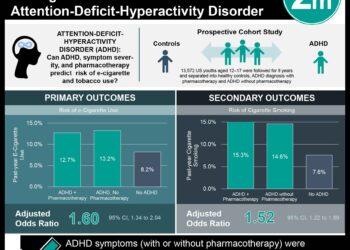
#VisualAbstract: Higher Nicotine Consumption Observed Among Youth with Attention-Deficit-Hyperactivity Disorder
StudyGraphics

#VisualAbstract: Higher Nicotine Consumption Observed Among Youth with Attention-Deficit-Hyperactivity Disorder

April 16, 2025
Next Post

The 2 Minute Medicine Podcast Episode 5

Updated sports physical form not required in most states

Return to sport following COVID-19 may improve adolescent athlete wellbeing

Compliance-linked incentives increase infant immunizations rates in rural India

Meta-analysis details short-term outcomes of SARS-CoV-2 mRNA vaccine-associated myopericarditis in adolescents and young adults

2 Minute Medicine® is an award winning, physician-run, expert medical media company. Our content is curated, written and edited by practicing health professionals who have clinical and scientific expertise in their field of reporting. Our editorial management team is comprised of highly-trained MD physicians. Join numerous brands, companies, and hospitals who trust our licensed content.

Recent Reports

  • Apolipoprotein E mimetic peptide CN-105 may be safe and feasible for delirium prevention in older surgical patients
  • Emergency department screening tool predicts firearm violence risk
  • The risk of thiazide-associated hyponatremia may be greatest in older women
License Content
Terms of Use | Disclaimer
Cookie Policy
Privacy Statement (EU)
Disclaimer

The Classics in Medicine Paperback Released!

Over the past 30 years, the transition from print to digital media has contributed to an exponential increase in medical literature. In response, 2 Minute Medicine presents 160+ authoritative, physician-written summaries of the most cited landmark trials in medicine.

amazon-logo_blackGet-it-on-iBooks-badge

Click anywhere to close this announcement

  • Specialties
    • All Specialties, All Recent Reports
    • Cardiology
    • Chronic Disease
    • Dermatology
    • Emergency
    • Endocrinology
    • Gastroenterology
    • Imaging and Intervention
    • Infectious Disease
    • Nephrology
    • Neurology
    • Obstetrics
    • Oncology
    • Ophthalmology
    • Pediatrics
    • Pharma
    • Preclinical
    • Psychiatry
    • Public Health
    • Pulmonology
    • Rheumatology
    • Surgery
  • Tools
    • EvidencePulse™
    • RVU Search
    • NPI Registry Lookup
  • Pharma
  • AI News
  • The Scan
  • Classics™
    • 2MM+ Online Access
    • Paperback and Ebook
  • Rewinds
  • Partners
    • License Content
    • Submit Press Release
    • Advertise with Us
  • Account
    • Subscribe
    • Sign-in
    • My account
No Result
View All Result

© 2026 2 Minute Medicine, Inc. - Physician-written medical news.