2 Minute Medicine Rewind December 1st, 2025
1. For adults with idiopathic sudden sensorineural hearing loss and acute tinnitus, short-course inpatient personalized acoustic therapy may increase long-term tinnitus remission in patients with severe hearing loss.
Evidence Rating Level: 1 (Excellent)
Idiopathic sudden sensorineural hearing loss frequently presents with acute tinnitus, yet evidence for acoustic therapy remains limited. This two-stage multicenter trial randomized 213 adults with recent-onset idiopathic sudden sensorineural hearing loss and bothersome tinnitus at 19 hospitals in China to 10 days of international standard care (systemic steroids), Chinese standard care (steroids plus batroxobin), or either regimen combined with daily inpatient personalized acoustic therapy. The primary endpoint was short-term tinnitus remission; secondary outcomes included validated tinnitus questionnaires, visual analogue scales for tinnitus and hearing loss, mood, sleep, and quality of life. Over the initial 10 days, tinnitus remission and changes in all secondary measures did not differ significantly between any of the four groups. During six-month follow-up, patients with severe hearing loss who continued home-based acoustic therapy had higher tinnitus remission (45.5% vs 20.0%), without consistent advantages in other domains, suggesting a delayed, severity-dependent benefit.
1. Sertraline appears to be the safest selective serotonin reuptake inhibitor option for patients taking hydrocodone because it is associated with a lower risk of opioid overdose than other selective serotonin reuptake inhibitors.
Evidence Rating Level: 2 (Good)
Hydrocodone is widely prescribed for pain and is often co-prescribed with selective serotonin reuptake inhibitors (SSRIs), raising concern for pharmacokinetic and pharmacodynamic interactions that may increase overdose risk. This target-trial emulated, population-based cohort study used four United States claims databases (2004–2022) to identify 1.49 million adults receiving hydrocodone who initiated sertraline, citalopram, escitalopram, fluoxetine, or paroxetine. Opioid overdose leading to hospitalization or emergency department visit was ascertained using validated diagnosis codes. Propensity score matching weights balanced 168 baseline covariates, and weighted Cox models estimated pairwise hazard ratios in on-treatment and 60-day intention-to-treat analyses. Over a median 28-day on-treatment follow-up, 1500 overdoses occurred; weighted incidence was 6.1 per 1000 person-years for sertraline versus 7.2–7.9 for other SSRIs. Compared with sertraline, overdose risk was higher with citalopram, escitalopram, fluoxetine, and paroxetine (hazard ratios 1.17–1.29), while risks were similar across non-sertraline SSRIs. Sensitivity and subgroup analyses, including alternate overdose definitions and high-risk strata (other opioid use, substance use disorders, concomitant central nervous system depressants), were consistent with the primary findings.
Analysis of arrhythmia and its risk factors in patients with COVID-19
1. In hospitalized adults with coronavirus disease 2019 and no structural heart disease, cardiac arrhythmias were common and were strongly associated with myocardial injury and poor blood sugar control, particularly in patients with diabetes.
Evidence Rating Level: 2 (Good)
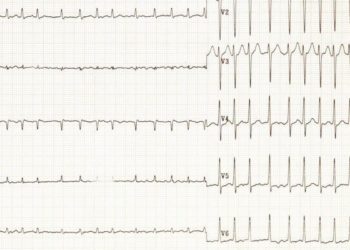
Coronavirus disease 2019 (COVID-19) is increasingly recognized to cause cardiovascular complications, including myocardial injury and clinically significant arrhythmias. This single-center retrospective cross-sectional study analyzed 324 PCR-confirmed adult COVID-19 inpatients (2020–2022) without known structural heart disease at the Second Hospital of Shanxi Medical University. Investigators collected demographics, vital signs, coagulation indices, metabolic parameters, cardiac biomarkers, 12-lead and Holter ECGs, and echocardiographic measurements. Arrhythmias were identified and patients were divided into arrhythmia (n=257) and non-arrhythmia (n=67) groups. Arrhythmias occurred in nearly 80% of patients, predominantly tachyarrhythmias; atrial fibrillation (18%) and atrial flutter (13%) were the most common, while sinus bradycardia was the most frequent bradyarrhythmia. Compared with controls, patients with arrhythmias had higher heart rates, longer PT and APTT, higher blood glucose, uric acid, serum potassium, hs-TnI, NT-proBNP, larger aortic root and left-sided chamber dimensions, lower LVEF and FS, and more diabetes. Multivariate logistic regression identified elevated heart rate, prolonged PT, higher hs-TnI, greater end-systolic volume, higher serum potassium, hyperglycemia, and diabetes as independent risk factors for arrhythmia, with a combined ROC AUC of 0.773.
1. Coronary artery bypass grafting is associated with a very high risk of early new-onset atrial fibrillation (AF), whereas percutaneous coronary intervention (PCI) carries a much lower but steadily accumulating risk of atrial fibrillation over the subsequent two years.
Evidence Rating Level: 2 (Good)
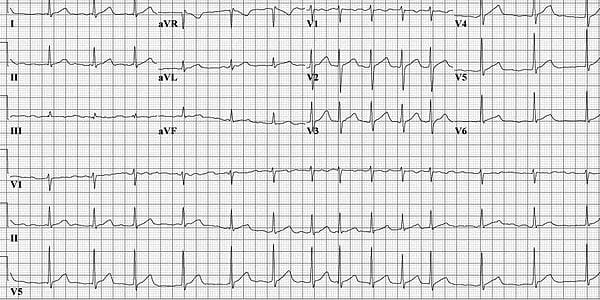
AF is a common arrhythmia in ischemic heart disease, and new-onset AF after coronary revascularization is linked to stroke and mortality. This prospective, multicenter observational cohort study evaluated the 24-month cumulative incidence of AF after isolated coronary artery bypass grafting (CABG) versus PCI in a real-world population without prior AF. At three tertiary Swedish centers, 246 patients (123 CABG, 123 PCI; mean age 67 years, predominantly male) underwent intensive rhythm surveillance: continuous in-hospital monitoring with daily 12-lead ECG and handheld single-lead ECG recordings three times daily for 30 days, followed by 2-week handheld ECG periods at 3, 12 and 24 months. The primary endpoint was new-onset AF within 24 months. At 30 days, AF incidence was 56% after CABG and 2% after PCI; by 24 months, this increased to 58% and 6%, respectively. AF after CABG occurred almost entirely within the first month, whereas post-PCI AF accumulated more gradually, mainly between 12 and 24 months. Thromboembolic events, myocardial infarction and major bleeding were rare in both groups. Overall, CABG was associated with a high early AF burden, while PCI carried a lower but persistent longer-term AF risk.
1. Single CRP measurements can be highly misleading due to large within-person variability, especially at higher values; repeat testing and cautious interpretation are essential.
Evidence Rating Level: 2 (Good)
This large retrospective cohort study examined within-individual variation in C-reactive protein (CRP) levels using real-world primary care data from the UK. Because CRP guides diagnostic and therapeutic decisions in inflammatory and infectious conditions, understanding its biological and analytical variability is critical. The authors extracted CRP results and clinical covariates from the IQVIA Medical Research Database, including 472,811 patients with at least four CRP measurements. CRP values were log-transformed, and within-individual variation was quantified using a random-effects regression model to derive a coefficient of variation (CV). The overall within-individual CV was 1.60, markedly higher than values reported in prior controlled studies (median 0.41). Variation increased substantially with higher median CRP levels, particularly above 10 mg/L. Subgroup analyses showed higher CVs in women, younger and older age groups, individuals with low BMI, and those with comorbidities such as COPD, CKD, heart failure, and cancer. Sensitivity analyses confirmed consistent findings. The authors conclude that CRP demonstrates far greater real-world variability than previously recognized. This has important implications for diagnosis and monitoring: single CRP values may misclassify disease severity or treatment thresholds, particularly at higher CRP levels, and repeat testing or cautious interpretation is warranted.
Image: PD
©2025 2 Minute Medicine, Inc. All rights reserved. No works may be reproduced without expressed written consent from 2 Minute Medicine, Inc. Inquire about licensing here. No article should be construed as medical advice and is not intended as such by the authors or by 2 Minute Medicine, Inc.