
• About
  • Masthead
  • License Content
  • Advertise
  • Press Releases
  • Newsroom
  • RSS/Email List
  • 2MM Podcast
  • Write for us
  • Contact Us
2 Minute Medicine
No Result
View All Result

No products in the cart.

Sign in
SUBSCRIBE
  • About
  • Specialties
    • All Specialties, All Recent Reports
    • Cardiology
    • Chronic Disease
    • Dermatology
    • Emergency
    • Endocrinology
    • Gastroenterology
    • Imaging and Intervention
    • Infectious Disease
    • Nephrology
    • Neurology
    • Obstetrics
    • Oncology
    • Ophthalmology
    • Pediatrics
    • Pharma
    • Preclinical
    • Psychiatry
    • Public Health
    • Pulmonology
    • Rheumatology
    • Surgery
    • Rewinds
    • The Scan
  • EvidencePulse™
  • HypeCheck™
  • AI News
  • Classics™
    • 2MM+ Online Access
    • Paperback and Ebook
  • Tools
    • Medical Calculators
    • Clinical Guidelines
    • Physician Pay by Specialty
    • FDA Drug Approvals
    • RVU Search
    • ICD-10 Code Lookup
    • Drug Safety for Breastfeeding/Pregnancy
    • ECG Reference
      • QTc Calculator
      • Sgarbossa Criteria
      • ECG Axis Calculator
      • AV Block Helper
    • NPI Registry Lookup
  • Rankings
    • Medical School Rankings
    • Residency Rankings
  • Partners
    • License Content
    • Advertise with Us
2 Minute Medicine
  • About
  • Specialties
    • All Specialties, All Recent Reports
    • Cardiology
    • Chronic Disease
    • Dermatology
    • Emergency
    • Endocrinology
    • Gastroenterology
    • Imaging and Intervention
    • Infectious Disease
    • Nephrology
    • Neurology
    • Obstetrics
    • Oncology
    • Ophthalmology
    • Pediatrics
    • Pharma
    • Preclinical
    • Psychiatry
    • Public Health
    • Pulmonology
    • Rheumatology
    • Surgery
    • Rewinds
    • The Scan
  • EvidencePulse™
  • HypeCheck™
  • AI News
  • Classics™
    • 2MM+ Online Access
    • Paperback and Ebook
  • Tools
    • Medical Calculators
    • Clinical Guidelines
    • Physician Pay by Specialty
    • FDA Drug Approvals
    • RVU Search
    • ICD-10 Code Lookup
    • Drug Safety for Breastfeeding/Pregnancy
    • ECG Reference
      • QTc Calculator
      • Sgarbossa Criteria
      • ECG Axis Calculator
      • AV Block Helper
    • NPI Registry Lookup
  • Rankings
    • Medical School Rankings
    • Residency Rankings
  • Partners
    • License Content
    • Advertise with Us
Sign in
SUBSCRIBE
2 Minute Medicine
Sign in
Subscribe
2 Minute MedicineFree on Google PlayGet
✦EvidencePulse™by 2 Minute Medicine3 reportsYou askedtop stroke trials 2026Synthesizing medical evidence...Top 2026 stroke trial results:OCEANIC — ischemic stroke: 6.2% vs 8.4%OPTION* — mRS 0–1: 43.6% vs 34.2%ORIENTAL* — mRS 0–2: 58.6% vs 46.6%*Higher sICH in intervention armsParticipants randomizedNOCEANIC12,327OPTION570ORIENTAL564Ask about guidelines or landmark trials...↑Try EvidencePulse™Ask the evidence. Get the signal.Try it now →
Home Health A to Z

Patient Basics: Malignant Hyperthermia
by2 Minute Medicine
October 30, 2026
in Health A to Z
Reading Time: 5 mins read
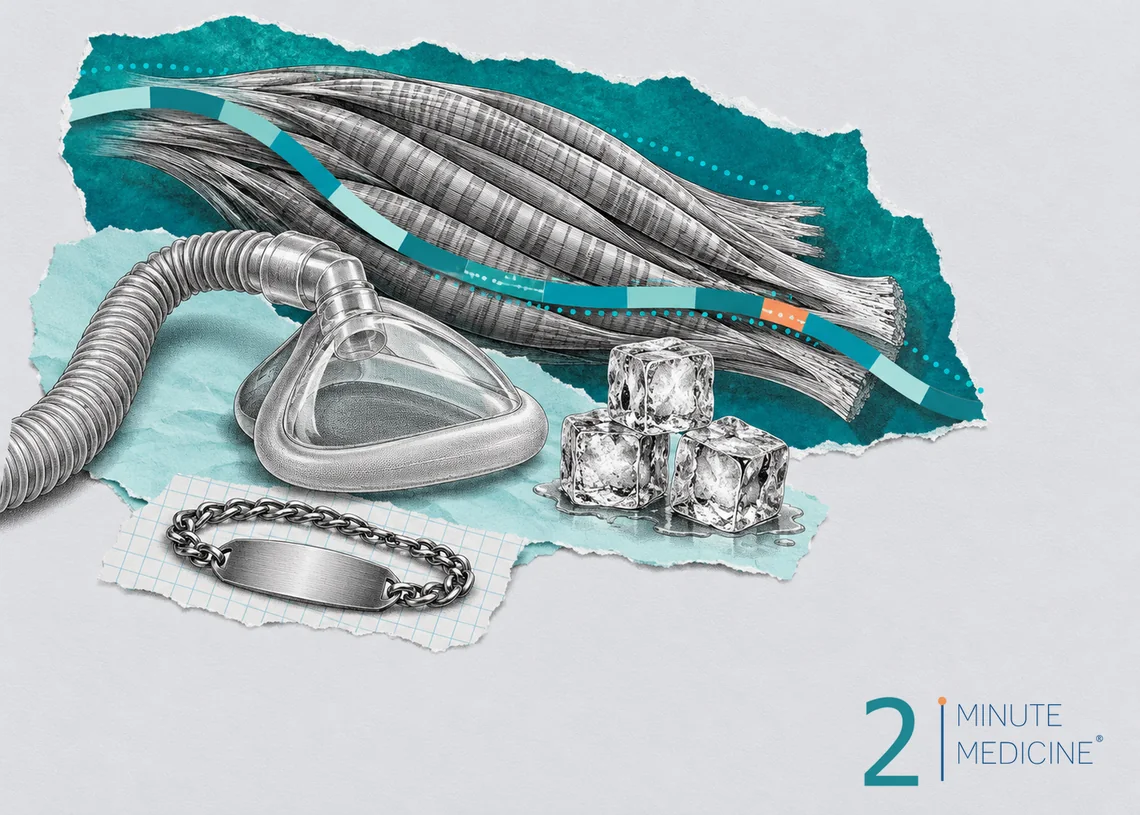
Malignant hyperthermia collage: an anesthesia mask, a bundle of muscle fibers, ice cubes and a blank medical alert bracelet
Share on FacebookShare on TwitterShare on LinkedIn

Malignant hyperthermia (MH) is a rare, inherited reaction to certain anesthesia drugs used during surgery. In people who carry the gene change, these drugs make the muscles burn energy out of control. Heart rate, body heat and acid in the blood rise fast. It is life-threatening but treatable, and people who know they are at risk can have surgery with anesthesia that won’t set it off.

Key points

  • MH is triggered by anesthetic gases (such as sevoflurane, desflurane and isoflurane) and the muscle relaxant succinylcholine.
  • The earliest signs are usually a rise in carbon dioxide in the breath, a fast heartbeat and stiff muscles. High fever often comes later.
  • A drug called dantrolene stops the reaction. Operating rooms that use trigger drugs keep it on hand.
  • You can have a normal anesthetic once or more and still react the next time.
  • If you or a blood relative has had MH, tell every surgeon, dentist and anesthesia team before any procedure.

What causes malignant hyperthermia

Muscles contract when calcium is released inside muscle cells. In people with MH susceptibility, a gene change, most often in a gene called RYR1, makes the calcium gate leaky. Trigger drugs open it wide. Calcium floods the cells, the muscles tighten and the body’s energy use shoots up. That makes heat, carbon dioxide and acid.

MH runs in families. Each child of a parent with the gene change has a 1 in 2 chance of inheriting it. Most people who carry it look and feel healthy and have no idea until they react to anesthesia, or until a relative does. A few rare muscle diseases, such as central core disease, also carry a higher risk.

Trigger drugs

  • Inhaled anesthetic gases: sevoflurane, desflurane, isoflurane and the older drug halothane
  • Succinylcholine, a fast-acting muscle relaxant

Many other anesthesia medicines don’t trigger MH. These include propofol, nitrous oxide, opioid pain medicines, other muscle relaxants and local numbing medicines used by dentists. The sleep aid doxylamine succinate is a different drug from succinylcholine and is not an MH trigger.

Malignant hyperthermia symptoms

MH usually starts in the operating room, while you’re under anesthesia. It can begin within minutes of the trigger drug or later in the surgery. Less often it starts in the first hour or so afterward, in the recovery room. Because you’re asleep, the anesthesia team spots it on the monitors.

Early signs

  • A rising level of carbon dioxide in the breath, often the very first sign
  • A fast heartbeat
  • Stiff muscles, including a jaw that clenches tight after succinylcholine
  • Fast breathing, if the person is breathing on their own

Later signs

  • A body temperature that climbs quickly, sometimes above 104°F (40°C)
  • Sweating and hot, flushed or blotchy skin
  • An irregular heartbeat
  • Dark brown, cola-colored urine from muscle breakdown, which can harm the kidneys
  • High potassium and high acid levels in blood tests

How malignant hyperthermia is treated

The team acts at once:

RELATED REPORTS

No Content Available
  • They stop the trigger gas and switch to anesthesia that doesn’t trigger MH.
  • They give dantrolene through a vein. It calms the muscles by stopping the calcium leak. More doses are given until the signs settle.
  • They raise the oxygen flow so the lungs blow off extra carbon dioxide.
  • They cool the body with ice packs and cold IV fluids if the temperature is high.
  • They treat high potassium and any irregular heartbeat.

Afterward, the person stays in intensive care for at least a day. The reaction can flare again, so dantrolene is often continued, and blood and urine are checked for muscle breakdown and kidney strain. Before dantrolene, MH was often fatal. With fast treatment, most people now recover fully.

How to know if you’re at risk

Most people learn they are at risk after a reaction during surgery, or because a close relative had one. Unexplained death or a severe reaction during anesthesia in a family member is a warning sign too.

  • Genetic testing on a blood or saliva sample looks for changes in RYR1 and related genes. A positive result confirms the risk. A negative result doesn’t fully rule it out, because not every gene change is known.
  • A muscle biopsy test (the caffeine-halothane contracture test) checks how a small piece of thigh muscle reacts to trigger drugs in the lab. Only a few centers do it.

Until you’re tested, doctors treat close relatives of someone with MH as if they’re at risk.

Living with MH risk

  • Tell every surgeon, dentist and anesthesia team, including for minor procedures and colonoscopies.
  • Wear a medical alert bracelet or carry a card in case you need emergency surgery.
  • Have surgery where the team is ready for MH. They’ll use non-triggering drugs and a machine flushed clean of anesthetic gas.
  • Tell your blood relatives so they can be tested or flagged.
  • Be careful with very hard exercise in hot weather. A few people with these gene changes have had heat stroke or severe muscle breakdown during intense exercise.

Common questions about malignant hyperthermia

How long does malignant hyperthermia last?

With prompt dantrolene, the main reaction usually settles within minutes to a few hours. The person then needs at least 24 hours of close watching in intensive care, because signs can return. Muscle soreness and weakness can last several days.

If I had anesthesia before with no problems, can I still have MH?

Yes. Many people who react had one or more normal anesthetics first. A trigger doesn’t set off MH every time, so a past smooth surgery doesn’t prove you are free of the gene change. Your family history matters more.

Can malignant hyperthermia happen outside the hospital?

Classic MH happens during anesthesia. Rarely, people with the same gene changes have had heat stroke or severe muscle breakdown during hard exercise in hot weather. Some have had stiff, painful muscles in the heat. Tell your doctor if this happens to you.

Does avoiding trigger drugs prevent MH?

Yes. Anesthesia that leaves out the trigger gases and succinylcholine prevents MH reactions in almost all cases. People at risk have surgery this way every day, including outpatient and dental procedures.

Questions to ask your doctor

  • Should I have genetic testing for MH, and where?
  • Which anesthesia will you use, and is dantrolene on hand?
  • Can my surgery be done at an outpatient center?
  • Which relatives should be tested?
  • Are there limits on exercise or heat for me?

Learn more

  • Malignant hyperthermia (MedlinePlus, U.S. National Library of Medicine)
  • Malignant hyperthermia: genetics (MedlinePlus Genetics)

This guide is general information and doesn’t replace advice from your own doctor. Last updated October 2026.

Tags: Malignant Hyperthermia
Previous Post

Patient Basics: Medication Allergy

Next Post

Patient Basics: Mesothelioma

RelatedReports

No Content Available
Next Post
Lymphoma collage: a young man with teal lymph nodes along his neck and collarbone, a white blood cell and a folded blanket

Patient Basics: Lymphoma Overview

Malaria collage of an engraved mosquito, a draped bed net, a small globe, red blood cells and a bottle of insect repellent

Patient Basics: Malaria

Leukemia collage: engraved red and white blood cells drifting from a bone cross-section, with a rack of blank test tubes

Patient Basics: Leukemia (Overview)

✦ EvidencePulse™ by 2 Minute Medicine 3 reports You asked top stroke trials 2026 Synthesizing medical evidence... Top 2026 stroke trial results: OCEANIC — ischemic stroke: 6.2% vs 8.4% OPTION* — mRS 0–1: 43.6% vs 34.2% ORIENTAL* — mRS 0–2: 58.6% vs 46.6% *Higher sICH in intervention arms Participants randomizedN OCEANIC 12,327 OPTION 570 ORIENTAL 564 Ask about guidelines or landmark trials... Try EvidencePulse™ Get the signal. Try it now → Physician-trained medical AI by 2 Minute Medicine

2MM+ All Access

Full details →
$4.99 /month

3-day free trial · cancel anytime

  • ✓100+ physician-written reports
  • ✓EvidencePulse™ + HypeCheck™
  • ✓Ad-free reading + newsletters
Start 3-day free trial

Then $4.99/month. Manage renewal in your account.

2 Minute Medicine® is an award winning, physician-run, expert medical media company. Our content is curated, written and edited by practicing health professionals who have clinical and scientific expertise in their field of reporting. Our editorial management team is comprised of highly-trained MD physicians. Join numerous brands, companies, and hospitals who trust our licensed content.

Recent Reports

  • Pediatric mental health care utilization varied by climate vulnerability and historical redlining
  • The Scan by 2 Minute Medicine®: Light therapy offers hope for seasonal depression, measles cases highlight vaccination gaps, prostate screening guidelines evolve, and social media use affects young adults’ mental health
  • HMS1005 showed generally good tolerability and improved glucose measures in topline phase 1b results
License Content
Terms of Use | Disclaimer
Cookie Policy

Get the app

Read 2 Minute Medicine on iPhone, iPad and Android.

Download on the App StoreGet it on Google Play
QR code for www.2minutemedicine.com/app
On a computer? Scan this with your phone’s camera.
2MM+ All Access Full details →

The medical literature, distilled daily.

Monthly plan selected: $4.99 /month.

$4.99/month

3-day free trial · cancel anytime

Start 3-day free trial

Then $4.99/month. Manage renewal in your account.

Yearly plan selected: $49.90 /year.

$49.90/year

2 months free

Start 3-day free trial

Then $49.90/year.

Membership benefits

  • ✓100+ new physician-written study summaries monthly, 12,000+ searchable
  • ✓AI EvidencePulse™ + HypeCheck™
  • ✓Ad-free reading + newsletters
  • ✓FDA drug approvals + clinical calculators

Already a member? Sign in

  • Get the app
  • About
  • Specialties
    • All Specialties, All Recent Reports
    • Cardiology
    • Chronic Disease
    • Dermatology
    • Emergency
    • Endocrinology
    • Gastroenterology
    • Imaging and Intervention
    • Infectious Disease
    • Nephrology
    • Neurology
    • Obstetrics
    • Oncology
    • Ophthalmology
    • Pediatrics
    • Pharma
    • Preclinical
    • Psychiatry
    • Public Health
    • Pulmonology
    • Rheumatology
    • Surgery
    • Rewinds
    • The Scan
  • EvidencePulse™
  • HypeCheck™
  • AI News
  • Classics™
    • 2MM+ Online Access
    • Paperback and Ebook
  • Tools
    • Medical Calculators
    • Clinical Guidelines
    • Physician Pay by Specialty
    • FDA Drug Approvals
    • RVU Search
    • ICD-10 Code Lookup
    • Drug Safety for Breastfeeding/Pregnancy
    • ECG Reference
      • QTc Calculator
      • Sgarbossa Criteria
      • ECG Axis Calculator
      • AV Block Helper
    • NPI Registry Lookup
  • Rankings
    • Medical School Rankings
    • Residency Rankings
  • Partners
    • License Content
    • Advertise with Us
No Result
View All Result

© 2026 2 Minute Medicine, Inc. - Physician-written medical news.


