

Patient Basics: Urethritis
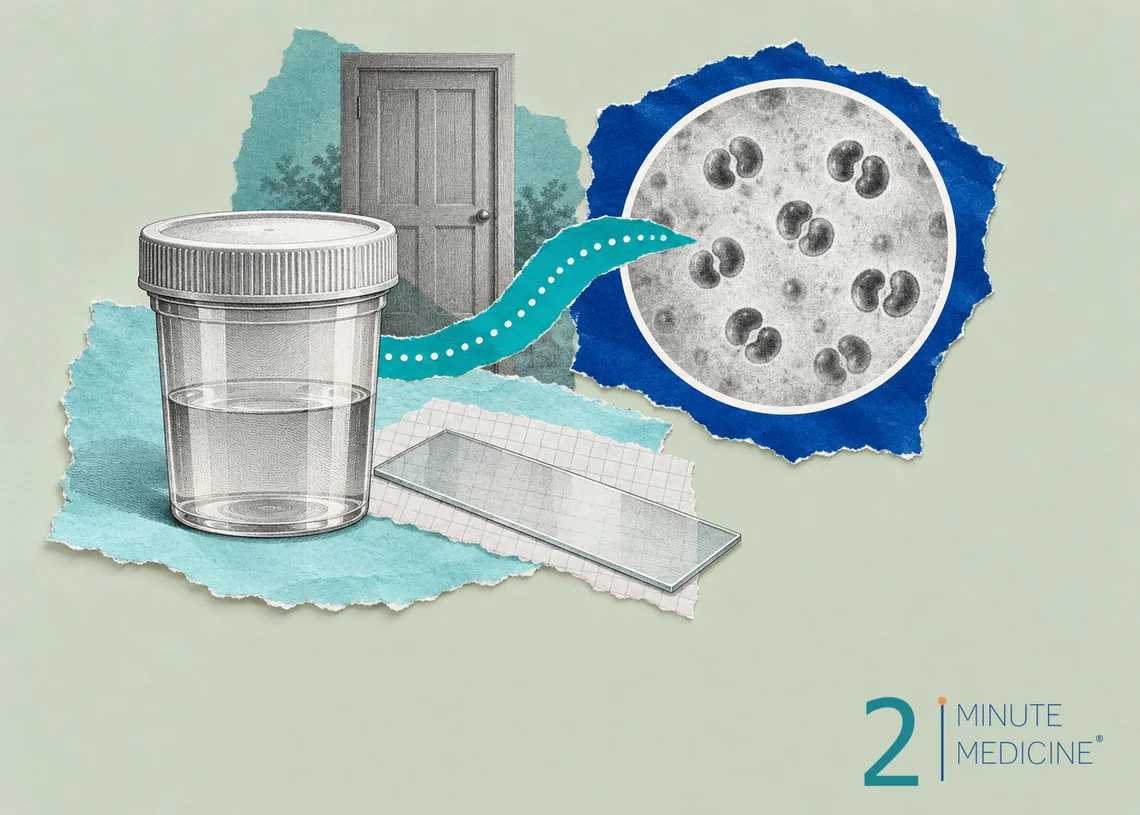
Urethritis means the urethra, the narrow passage urine flows through on its way out of the body, is inflamed. It usually causes burning when you urinate, and in men often a discharge from the tip of the penis. Most cases come from a sexually transmitted infection (STI), such as gonorrhea or chlamydia. Antibiotics cure it, and sex partners need treatment too.
Key points
- Gonorrhea and chlamydia are the most common causes. Other germs, such as Mycoplasma genitalium and trichomonas, cause some cases.
- Many people, especially women, have mild symptoms or none at all.
- A urine test can find the cause. Testing for other STIs, including HIV and syphilis, is usually offered.
- Avoid sex until you and your partners have finished treatment and symptoms are gone.
- Untreated urethritis can lead to problems such as painful swelling of the testicles or pelvic infection.
What causes urethritis
Doctors sort urethritis into two groups, because the treatment differs.
- Gonococcal urethritis is caused by gonorrhea.
- Nongonococcal urethritis (NGU) covers everything else. Chlamydia is the most common cause. Mycoplasma genitalium, trichomonas, the herpes simplex virus and some other germs are less common causes. In many cases no germ is found.
These infections spread through vaginal, anal or oral sex. Urethritis can also be part of reactive arthritis, a condition that causes joint pain and red eyes after certain infections.
Chemical urethritis
Soaps, bubble baths, scented wipes, douches, spermicides and some lubricants can irritate the urethra. This causes burning and a frequent urge to urinate, usually without discharge. It isn’t an infection and doesn’t spread to partners. Stopping the product is the treatment, and symptoms usually settle within a few days to a week. A urinary catheter or other injury can cause similar irritation. Your doctor may still test for STIs, since they can cause the same burning.
Urethritis symptoms
In men, the urethra runs the length of the penis. In women, it is short and opens just above the vagina. Symptoms usually start a few days to a few weeks after contact.
In men
- Burning or pain when urinating
- Discharge from the tip of the penis. It is often thick and yellow-green with gonorrhea, and thinner and clear or cloudy with other causes
- Itching or irritation inside the penis
- Stains on underwear
In women
- Burning when urinating, or needing to urinate often
- Unusual vaginal discharge
- Pain in the lower belly or during sex
In women, urethritis often happens alongside an infection of the cervix and can be mistaken for a bladder infection.
How it’s diagnosed
Expect questions about your symptoms and sexual history, and possibly a quick look at the genitals. Tests can include:
- A urine test. You’ll be asked to collect the first part of your stream, without cleaning first, ideally at least an hour after you last urinated. The lab checks it for gonorrhea, chlamydia and sometimes trichomonas.
- A swab of any discharge, of the vagina, or of the throat or rectum if you’ve had oral or anal sex. A sample of discharge can also be looked at under a microscope for a quick answer.
- Blood tests for HIV and syphilis.
Because results can take a few days, many clinics start treatment at the same visit.
Urethritis treatment
- Gonorrhea is treated with a single shot of the antibiotic ceftriaxone. If chlamydia hasn’t been ruled out, a week of doxycycline pills is added.
- Chlamydia and most other NGU are treated with doxycycline pills for 7 days. Azithromycin is sometimes used instead, for example during pregnancy.
- Symptoms that persist or return may mean Mycoplasma genitalium or trichomonas, which need different antibiotics, or reinfection from an untreated partner.
Take all of your medicine, even if you feel better. Don’t share it with partners. They need their own testing and treatment.
Partners
Anyone you’ve had sex with in the 60 days before your symptoms or diagnosis should be tested and treated. In many states, your doctor can give you medicine or a prescription to pass to your partner, which is called expedited partner therapy. Avoid sex for 7 days after single-dose treatment, or until you’ve finished a 7-day course, and until your partners are treated too.
Possible complications
- Epididymitis. Infection of the coiled tube behind the testicle causes pain and swelling in the scrotum.
- Pelvic inflammatory disease. In women, infection can spread to the uterus and fallopian tubes and affect fertility.
- Reactive arthritis, with painful joints and red eyes.
- Higher risk of HIV. Inflammation makes HIV easier to catch and pass on.
- Spread through the body. Rarely, gonorrhea spreads into the blood and joints.
Lowering your risk
- Use condoms every time you have sex with a new or non-monogamous partner.
- Get tested regularly if you have new or multiple partners, and ask partners to get tested too.
- Get retested about three months after treatment for gonorrhea or chlamydia, since reinfection is common.
- Some people at high risk of bacterial STIs can take a dose of doxycycline within three days after sex (doxy-PEP). Ask your doctor whether it makes sense for you.
When to see a doctor
- Burning when you urinate, or discharge from the penis or vagina
- A partner tells you they have an STI
- Symptoms that don’t clear within a week after treatment, or that come back
- Pain or swelling in a testicle, pelvic pain, fever, joint pain or red eyes
Common questions about urethritis
Does urethritis go away on its own?
Chemical urethritis usually does once you stop using the irritating product. Urethritis from an infection may seem to fade, but the germs often stay. They can still spread to partners and lead to problems such as epididymitis or pelvic inflammatory disease, so get tested and treated rather than waiting.
How long does urethritis last?
With the right antibiotic, symptoms usually improve within a few days and clear within about a week. Chemical urethritis often settles within a few days of stopping the irritant. If burning or discharge lasts more than a week after treatment, go back, since a different germ or a new infection may be the cause.
Is urethritis curable?
Yes. Antibiotics cure the infections behind most urethritis, including gonorrhea and chlamydia. Herpes is the exception, because medicine controls outbreaks but can’t clear the virus. You can catch urethritis again, so make sure partners are treated and use condoms with new partners.
Can you cure urethritis naturally?
No home remedy cures urethritis caused by an infection. Drinking plenty of water and avoiding scented soaps can ease the burning, and that may be all chemical urethritis needs. Infections need antibiotics, and waiting can affect fertility or pass the infection to partners.
Questions to ask your doctor
- What is causing my urethritis?
- Which other STI tests should I have?
- How and when should my partner be treated?
- When is it safe to have sex again?
- When should I be tested again?
Learn more
- Urethritis (MedlinePlus, U.S. National Library of Medicine)
This guide is general information and doesn’t replace advice from your own doctor. Last updated October 2026.






 Get the app