
• About
  • Masthead
  • License Content
  • Advertise
  • Press Releases
  • Newsroom
  • RSS/Email List
  • 2MM Podcast
  • Write for us
  • Contact Us
2 Minute Medicine
No Result
View All Result

No products in the cart.

Sign in
SUBSCRIBE
  • About
  • Specialties
    • All Specialties, All Recent Reports
    • Cardiology
    • Chronic Disease
    • Dermatology
    • Emergency
    • Endocrinology
    • Gastroenterology
    • Imaging and Intervention
    • Infectious Disease
    • Nephrology
    • Neurology
    • Obstetrics
    • Oncology
    • Ophthalmology
    • Pediatrics
    • Pharma
    • Preclinical
    • Psychiatry
    • Public Health
    • Pulmonology
    • Rheumatology
    • Surgery
    • Rewinds
    • The Scan
  • EvidencePulse™
  • HypeCheck™
  • AI News
  • Classics™
    • 2MM+ Online Access
    • Paperback and Ebook
  • Tools
    • Medical Calculators
    • Clinical Guidelines
    • Physician Pay by Specialty
    • FDA Drug Approvals
    • RVU Search
    • ICD-10 Code Lookup
    • Drug Safety for Breastfeeding/Pregnancy
    • ECG Reference
      • QTc Calculator
      • Sgarbossa Criteria
      • ECG Axis Calculator
      • AV Block Helper
    • NPI Registry Lookup
  • Rankings
    • Medical School Rankings
    • Residency Rankings
  • Partners
    • License Content
    • Advertise with Us
2 Minute Medicine
  • About
  • Specialties
    • All Specialties, All Recent Reports
    • Cardiology
    • Chronic Disease
    • Dermatology
    • Emergency
    • Endocrinology
    • Gastroenterology
    • Imaging and Intervention
    • Infectious Disease
    • Nephrology
    • Neurology
    • Obstetrics
    • Oncology
    • Ophthalmology
    • Pediatrics
    • Pharma
    • Preclinical
    • Psychiatry
    • Public Health
    • Pulmonology
    • Rheumatology
    • Surgery
    • Rewinds
    • The Scan
  • EvidencePulse™
  • HypeCheck™
  • AI News
  • Classics™
    • 2MM+ Online Access
    • Paperback and Ebook
  • Tools
    • Medical Calculators
    • Clinical Guidelines
    • Physician Pay by Specialty
    • FDA Drug Approvals
    • RVU Search
    • ICD-10 Code Lookup
    • Drug Safety for Breastfeeding/Pregnancy
    • ECG Reference
      • QTc Calculator
      • Sgarbossa Criteria
      • ECG Axis Calculator
      • AV Block Helper
    • NPI Registry Lookup
  • Rankings
    • Medical School Rankings
    • Residency Rankings
  • Partners
    • License Content
    • Advertise with Us
Sign in
SUBSCRIBE
2 Minute Medicine
Sign in
Subscribe
2 Minute MedicineFree on Google PlayGet
✦EvidencePulse™by 2 Minute Medicine3 reportsYou askedtop stroke trials 2026Synthesizing medical evidence...Top 2026 stroke trial results:OCEANIC — ischemic stroke: 6.2% vs 8.4%OPTION* — mRS 0–1: 43.6% vs 34.2%ORIENTAL* — mRS 0–2: 58.6% vs 46.6%*Higher sICH in intervention armsParticipants randomizedNOCEANIC12,327OPTION570ORIENTAL564Ask about guidelines or landmark trials...↑Try EvidencePulse™Ask the evidence. Get the signal.Try it now →
Home Health A to Z

Patient Basics: Mitral Valve Prolapse

by2 Minute Medicine
October 30, 2026
in Health A to Z
Reading Time: 6 mins read
Mitral valve prolapse collage of an engraved heart with a parachute-like valve, a stethoscope and a calm woman
Share on FacebookShare on TwitterShare on LinkedIn

Mitral valve prolapse (MVP) happens when the flaps of a valve on the left side of the heart bulge backward as the heart pumps. It affects about 2 or 3 people in 100. Most people with MVP never have symptoms or need treatment, but some develop a leak that needs regular checks.

Key points

  • MVP is often found when a doctor hears a click through a stethoscope.
  • An ultrasound of the heart (echocardiogram) confirms it and shows whether the valve leaks.
  • Most people need only a heart checkup every few years.
  • A badly leaking valve can be repaired, often with surgery and sometimes through a tube in a blood vessel.
  • Most people with MVP no longer need antibiotics before dental work.

How the mitral valve works

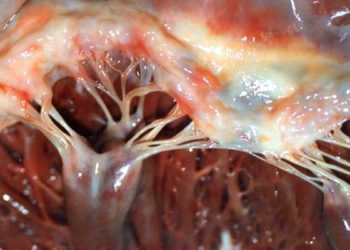
The heart has four chambers and four valves. The mitral valve sits between the upper left chamber (left atrium) and the lower left chamber (left ventricle). It has two thin flaps called leaflets. Strong cords tie the leaflets to the heart wall, like the lines on a parachute. When the lower chamber squeezes to send blood out to the body, the leaflets snap shut so blood can’t flow back up.

In MVP (a prolapsed mitral valve), one or both leaflets are thickened, floppy or too large. When the heart squeezes, they bow back into the upper chamber. If they don’t seal well, some blood leaks backward. Doctors call this leak mitral regurgitation.

What causes mitral valve prolapse

In most people, the valve tissue is a little thicker and stretchier than normal. This often runs in families. MVP is also more common in people with connective tissue disorders, such as Marfan syndrome and Ehlers-Danlos syndrome. In older adults, the cords holding the valve can stretch or snap, which makes a leak worse.

Symptoms

Most people with MVP feel fine. When symptoms happen, they may include:

  • A pounding, fluttering or skipping heartbeat (palpitations)
  • Feeling tired (fatigue)
  • Shortness of breath during activity or when lying flat, mostly when the leak is large
  • Dizziness
  • Chest discomfort that is not linked to effort

Some people with MVP also have anxiety, fast heartbeats when standing or other symptoms that doctors once grouped as “MVP syndrome.” Research hasn’t shown that the valve itself causes these, but they are real and can be treated.

RELATED REPORTS

Quick Take: Left ventricular mechanical dispersion predicts arrhythmic risk in mitral valve prolapse

2 Minute Medicine Rewind February 18, 2019

How it’s diagnosed

  • Listening to your heart. MVP often makes a clicking sound, sometimes followed by a whooshing sound (a murmur) from the leak.
  • Echocardiogram. This painless ultrasound shows the valve moving and measures any leak. It is the main test. Sometimes the probe is passed down the throat for a clearer view (transesophageal echo).
  • Electrocardiogram (ECG) records the heart’s rhythm.
  • Heart monitor. A small device worn for a day to a few weeks can catch skipped or fast beats.
  • Heart MRI is sometimes used to measure a leak or look for scarring in the heart muscle.

Treatment

No leak or a small leak

Most people need no treatment. Your doctor will repeat the echocardiogram every few years, or sooner if symptoms change. Regular exercise is safe for most people with MVP. If you have a large leak or rhythm problems, ask your doctor about any limits.

Palpitations

Cutting back on caffeine and alcohol and getting enough sleep can help. If the fluttering bothers you, a beta blocker, such as metoprolol or atenolol, can calm the heartbeat.

A large leak

Over time, a big leak makes the heart work harder and can stretch it. Doctors usually advise fixing the valve when the leak is severe and causing symptoms, or when tests show the heart starting to strain. Options include:

  • Valve repair surgery. The surgeon trims or reshapes the leaflets, replaces broken cords and often adds a ring to tighten the valve. Repair works very well for MVP and is usually preferred to replacing the valve. It can sometimes be done through small cuts or with robotic tools.
  • Valve replacement. If repair isn’t possible, the valve is replaced with a mechanical valve or one made from animal tissue.
  • Clip repair through a vein. For people who are too frail for surgery, a doctor can thread a tube from a vein in the groin to the heart and clip the leaflets together where they leak (transcatheter edge-to-edge repair).

Rhythm problems

A large leak can stretch the upper chamber and lead to atrial fibrillation, an irregular rhythm that raises the risk of stroke. It is treated with medicines to control the heart rate and blood thinners. Rarely, MVP is linked to dangerous rhythms from the lower chambers. People with fainting spells or a family history of sudden death may need closer testing.

Living with mitral valve prolapse

  • Keep your follow-up visits, even if you feel well.
  • Brush, floss and see a dentist regularly. Healthy gums lower the chance of a heart valve infection.
  • Keep your blood pressure in a healthy range, since high pressure can make a leak worse.
  • Most people with MVP can have a healthy pregnancy. If you have a large leak, talk to your heart doctor before getting pregnant.

Antibiotics before dental work are now advised only for people at the highest risk, such as those who’ve had a valve repaired or replaced with artificial material, or a past heart valve infection.

When to see a doctor

  • You become short of breath with less activity than before
  • Your legs or ankles swell (edema), which can mean a large leak is straining the heart
  • You get tired much more easily than before
  • Palpitations become frequent or last longer
  • You have a fever that won’t go away, especially after dental work

Call 911 if you faint, have chest pain with sweating or shortness of breath, or have signs of a stroke such as a drooping face, weak arm or slurred speech.

Common questions about mitral valve prolapse

Is mitral valve prolapse serious?

Usually not. Most people with mitral valve prolapse have a normal life span and never need treatment. A small number develop a large leak, heart rhythm problems or, rarely, a valve infection, which is why regular checkups and an echocardiogram every few years matter.

Can mitral valve prolapse cause anxiety or panic attacks?

Studies haven’t shown that the valve causes anxiety. Both are common, so many people have both, and palpitations can feel alarming. Anxiety and panic attacks can be treated with counseling, medicine or both, and treating them often eases the fluttering feeling too.

Is mitral valve prolapse a lifelong condition?

Yes, it is a long-term (chronic) condition, because the floppy valve tissue doesn’t return to normal. That rarely means lifelong treatment or limits on daily life, though. Many people’s valves stay the same for decades, and most need only a checkup every few years.

Does mitral valve prolapse get worse with age?

It can. Many people’s valves stay stable for years, but the leak tends to grow slowly with age, and the cords holding the valve can stretch or snap. That’s why repairs for mitral valve prolapse are more common in older adults, and why checkups continue for life.

Is mitral valve prolapse genetic?

It can be. Mitral valve prolapse often runs in families, and researchers have found several genes linked to it. If you have it, your parents, brothers, sisters and children may want an echocardiogram, especially if anyone in the family had a severe leak or sudden heart problems.

Questions to ask your doctor

  • Does my valve leak, and how much?
  • How often should I have an echocardiogram?
  • Are there any activities I should avoid?
  • Which symptoms should make me call you before my next visit?
  • If I need surgery one day, can my valve be repaired instead of replaced?

Learn more

  • Mitral valve prolapse (MedlinePlus, U.S. National Library of Medicine)
  • Heart valve diseases (National Heart, Lung, and Blood Institute)

This guide is general information and doesn’t replace advice from your own doctor. Last updated October 2026.
Tags: Mitral Valve Prolapse
Previous Post

Patient Basics: Migraine

Next Post

Patient Basics: Male Infertility

RelatedReports

Quick Take: Left ventricular mechanical dispersion predicts arrhythmic risk in mitral valve prolapse
Cardiology

Quick Take: Left ventricular mechanical dispersion predicts arrhythmic risk in mitral valve prolapse

February 23, 2019
Weekly Rewinds

2 Minute Medicine Rewind February 18, 2019

February 21, 2019
Next Post
Male infertility collage: a microscope, a glass dish with tiny sperm cells, a blank calendar page and a sprouting acorn

Patient Basics: Male Infertility

Melanoma collage: a magnifying glass over an even mole and an uneven one on skin, with a sun hat and sunglasses

Patient Basics: Melanoma

Collage for Meniere's disease: a woman in calm profile, an engraved inner ear, a spiraling teal ribbon and a salt shaker

Patient Basics: Meniere's Disease

✦ EvidencePulse™ by 2 Minute Medicine 3 reports You asked top stroke trials 2026 Synthesizing medical evidence... Top 2026 stroke trial results: OCEANIC — ischemic stroke: 6.2% vs 8.4% OPTION* — mRS 0–1: 43.6% vs 34.2% ORIENTAL* — mRS 0–2: 58.6% vs 46.6% *Higher sICH in intervention arms Participants randomizedN OCEANIC 12,327 OPTION 570 ORIENTAL 564 Ask about guidelines or landmark trials... Try EvidencePulse™ Get the signal. Try it now → Physician-trained medical AI by 2 Minute Medicine

2MM+ All Access

Full details →
$4.99 /month

Billed monthly · cancel anytime

  • ✓100+ physician-written reports
  • ✓EvidencePulse™ + HypeCheck™
  • ✓Ad-free reading + newsletters
Join 2MM+

Renews at $4.99/month. Manage renewal in your account.

2 Minute Medicine® is an award winning, physician-run, expert medical media company. Our content is curated, written and edited by practicing health professionals who have clinical and scientific expertise in their field of reporting. Our editorial management team is comprised of highly-trained MD physicians. Join numerous brands, companies, and hospitals who trust our licensed content.

Recent Reports

  • Black-White mortality gap narrowed from 1993 to 2023, cross-sectional study shows
  • A combination of preoperative imaging findings and clinical parameters may more accurately determine cytoreduction score in peritoneal mesothelioma
  • Inclisiran reduced major adverse cardiovascular events in topline phase 3 ORION-4 results
License Content
Terms of Use | Disclaimer
Cookie Policy

Get the app

Read 2 Minute Medicine on iPhone, iPad and Android.

Download on the App StoreGet it on Google Play
QR code for www.2minutemedicine.com/app
On a computer? Scan this with your phone’s camera.
2MM+ All Access Full details →

The medical literature, distilled daily.

Monthly plan selected: $4.99 /month.

$4.99/month

Billed monthly · cancel anytime

Join 2MM+

Then $4.99/month. Manage renewal in your account.

Yearly plan selected: $49.90 /year.

$49.90/year

2 months free

Join 2MM+

Then $49.90/year.

Membership benefits

  • ✓100+ new physician-written study summaries monthly, 12,000+ searchable
  • ✓AI EvidencePulse™ + HypeCheck™
  • ✓Ad-free reading + newsletters
  • ✓FDA drug approvals + clinical calculators

Already a member? Sign in

  • Get the app
  • About
  • Specialties
    • All Specialties, All Recent Reports
    • Cardiology
    • Chronic Disease
    • Dermatology
    • Emergency
    • Endocrinology
    • Gastroenterology
    • Imaging and Intervention
    • Infectious Disease
    • Nephrology
    • Neurology
    • Obstetrics
    • Oncology
    • Ophthalmology
    • Pediatrics
    • Pharma
    • Preclinical
    • Psychiatry
    • Public Health
    • Pulmonology
    • Rheumatology
    • Surgery
    • Rewinds
    • The Scan
  • EvidencePulse™
  • HypeCheck™
  • AI News
  • Classics™
    • 2MM+ Online Access
    • Paperback and Ebook
  • Tools
    • Medical Calculators
    • Clinical Guidelines
    • Physician Pay by Specialty
    • FDA Drug Approvals
    • RVU Search
    • ICD-10 Code Lookup
    • Drug Safety for Breastfeeding/Pregnancy
    • ECG Reference
      • QTc Calculator
      • Sgarbossa Criteria
      • ECG Axis Calculator
      • AV Block Helper
    • NPI Registry Lookup
  • Rankings
    • Medical School Rankings
    • Residency Rankings
  • Partners
    • License Content
    • Advertise with Us
No Result
View All Result

© 2026 2 Minute Medicine, Inc. - Physician-written medical news.


