• About
  • Masthead
  • License Content
  • Advertise
  • Press Releases
  • Newsroom
  • RSS/Email List
  • 2MM Podcast
  • Write for us
  • Contact Us
2 Minute Medicine
No Result
View All Result

No products in the cart.

Sign in
SUBSCRIBE
  • About
  • Specialties
    • All Specialties, All Recent Reports
    • Cardiology
    • Chronic Disease
    • Dermatology
    • Emergency
    • Endocrinology
    • Gastroenterology
    • Imaging and Intervention
    • Infectious Disease
    • Nephrology
    • Neurology
    • Obstetrics
    • Oncology
    • Ophthalmology
    • Pediatrics
    • Pharma
    • Preclinical
    • Psychiatry
    • Public Health
    • Pulmonology
    • Rheumatology
    • Surgery
    • Rewinds
    • The Scan
  • EvidencePulse™
  • HypeCheck™
  • AI News
  • Classics™
    • 2MM+ Online Access
    • Paperback and Ebook
  • Tools
    • NPI Registry Lookup
    • RVU Search
    • ICD-10 Code Lookup
    • Medical School Rankings
    • FDA Drug Approvals
    • Drug Safety for Breastfeeding/Pregnancy
    • Clinical Guidelines
    • Medical Calculators
    • ECG Reference
      • QTc Calculator
      • Sgarbossa Criteria
      • ECG Axis Calculator
      • AV Block Helper
  • Partners
    • License Content
    • Advertise with Us
2 Minute Medicine
  • About
  • Specialties
    • All Specialties, All Recent Reports
    • Cardiology
    • Chronic Disease
    • Dermatology
    • Emergency
    • Endocrinology
    • Gastroenterology
    • Imaging and Intervention
    • Infectious Disease
    • Nephrology
    • Neurology
    • Obstetrics
    • Oncology
    • Ophthalmology
    • Pediatrics
    • Pharma
    • Preclinical
    • Psychiatry
    • Public Health
    • Pulmonology
    • Rheumatology
    • Surgery
    • Rewinds
    • The Scan
  • EvidencePulse™
  • HypeCheck™
  • AI News
  • Classics™
    • 2MM+ Online Access
    • Paperback and Ebook
  • Tools
    • NPI Registry Lookup
    • RVU Search
    • ICD-10 Code Lookup
    • Medical School Rankings
    • FDA Drug Approvals
    • Drug Safety for Breastfeeding/Pregnancy
    • Clinical Guidelines
    • Medical Calculators
    • ECG Reference
      • QTc Calculator
      • Sgarbossa Criteria
      • ECG Axis Calculator
      • AV Block Helper
  • Partners
    • License Content
    • Advertise with Us
Sign in
SUBSCRIBE
2 Minute Medicine
Sign in
Subscribe
2 Minute MedicineFree on Google PlayGet
✦EvidencePulse™by 2 Minute Medicine3 reportsYou askedtop stroke trials 2026Synthesizing medical evidence...Top 2026 stroke trial results:OCEANIC — ischemic stroke: 6.2% vs 8.4%OPTION* — mRS 0–1: 43.6% vs 34.2%ORIENTAL* — mRS 0–2: 58.6% vs 46.6%*Higher sICH in intervention armsParticipants randomizedNOCEANIC12,327OPTION570ORIENTAL564Ask about guidelines or landmark trials...↑Try EvidencePulse™Ask the evidence. Get the signal.Try it now →
Home Weekly Rewinds

2 Minute Medicine Rewind April 25, 2016

byKyle HoffmanandDavid Ouyang
April 28, 2016
in Weekly Rewinds
Reading Time: 5 mins read
Share on FacebookShare on TwitterShare on LinkedIn

Patient Outcomes When Housestaff Exceed Eight Hours per Week

Over a decade ago, the Accreditation Council for Graduate Medical Education began restricting resident hours. However, the restrictions and their consequences in terms of patient care have not been studied to a sufficient degree. This retrospective cohort study investigates the patient care effects of housestaff working more than 80 hours per week. Over a calendar year, 4,767 admissions into a housestaff-run general medicine service at a large academic institution were monitored and categorized by whether or not the admitting residents had worked 80 or more hours during the patient’s hospitalization. Using the electronic health record, the investigators were able to audit the housestaff hours, as well as look at outcomes, such as ICU transfers, in-hospital mortality, length of stay, and 30-day readmission rate. 40.9% of the admissions were handled by housestaff that had worked more than 80 hours during that week. There was not a statistically significant difference in the rate of in-hospital mortality, with rates of 3.18% for those admitted by housestaff exceeding 80 hours vs. 2.42% for those who were not (p = 0.115), or a significant difference in the rate of 30-day readmission (13.7% vs. 12.8%, p = 0.395) between the two categories of patients. However, the study led to the conclusion that there was a higher length of stay (5.12 vs. 4.66 days, p = 0.048) as well as a higher rate of ICU transfers (3.18% vs. 2.38% , p = 0.029) in patients managed by residents working more than 80 hours in that week,. Looking at the outcomes as a composite, there was a significant increase in the rate of these events, 19.2% vs. 16.7% (p=0.031), for the patients admitted by the residents who had worked more.

One-Year Risk of Stroke After Transient Ischemic Attack or Minor Stroke

Though there were studies as recently as 2003 on the risk of future stroke or acute coronary syndrome following a transient ischemic attack (TIA) or minor stroke, since then, management of TIA has changed drastically. This study aimed to re-examine the profiles of these patients, the etiology of their attack, their 1- and 5-year outcomes, as well as improve the risk-assessment process. From 61 sites that had a specified system for managing TIA patients, including the use of a stroke specialist, this study enrolled 4,789 participants who, within seven days of admission, had a TIA or a minor stroke that scored 0 or 1 on the modified Rankin scale. It was observed that the average age of these patients was 66.1 years, 60% of them were male, and 70% had hypertension as part of their medical history. Other common historical aspects were dyslipidemia (69.9%) and smoking, either presently or in the past (46.5%). Of the 78.4% of patients observed by a stroke specialist within 24 hours of symptom onset, 33.4% were observed to have acute brain infarction, 23.2% had one extra or intracranial stenosis with occlusion of greater than 50% of the vessel, and 10.4% were found to have atrial fibrillation. The one-year event rate was shown to be 6.2% (95% CI, 5.5 to 7.0) for a major cardiovascular event and a 12% 1-year event rate was shown for future TIA or stroke. Multiple factors were associated with a more than doubled risk of future stroke, including atherosclerosis in large arteries, multiple brain infarctions, and a score of 6 or 7 on the ABCD scale. This analysis showed lower risks of cardiovascular events than previous studies and confirmed that the ABCD risk stratification was accurate in evaluating risk, but should not be used to preclude those with an ABCD score of less than 4 from urgent evaluation.

Association of Pembrolizumab with Tumor Response and Survival Among Patients with Advanced Melanoma

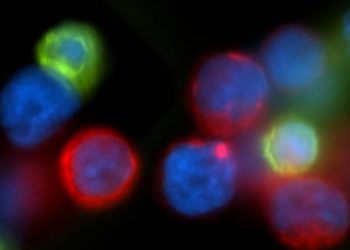
Programmed cell death protein 1 (PD-1) is an immune checkpoint inhibitor that diminishes the effects of T-cells on chronic inflammation. This study examined the safety and efficacy of pembrolizumab, a monoclonal IgG antibody against PD-1 that was administered with doses of 10 mg/kg every 2 weeks, 10 mg/kg every 3 weeks, or 2 mg/kg every 3 weeks, in 655 patients with advanced melanoma. The main result being examined was objective response rate, using the Response Evaluation Criteria in Solid Tumors, but other end points were observed including length of response, toxicity, progression-free survival, and overall survival. The objective response rate was shown to be 35% (95% CI, 30 to 37%) and 44% of those who responded did so for at least one year with 74% having an ongoing response at the time of data collection concluding. Additionally, 35% (95% CI, 31 to 39%) of all participants in the study and 52%  (95% CI, 43 to 60%) of participants who had never had treatment had a year of progression-free survival, with the overall survival shown to be 23 months (95% CI, 20 to 29 months) for the study as a whole and 31 months (95% CI, 24 to not reached) for the group that hadn’t been treated previously. 4% of patients, however, had to discontinue treatment and 14% had at least one grade 3 or 4 adverse event. Overall, this article broadly exemplifies the effects of pembrolizumab on advanced melanoma patients.

RELATED REPORTS

Enfortumab vedotin plus pembrolizumab associated with improved survival in bladder cancer

Enfortumab vedotin plus pembrolizumab is more effective than platinum-based chemotherapy in metastatic urothelial carcinoma

Efficacy and Tolerability of Evolocumab vs. Ezetimibe in Patients with Muscle-related Statin Intolerance

Statins, or HMG-CoA reductase inhibitors, are a common pharmacological therapy used to reduce low-density lipoprotein cholesterol (LDL-C) and, in turn, limit atherosclerosis. Muscle-related adverse events occur in a significant proportion of those prescribed statins, though, and result in these patients being unable to take the recommended doses. This two-stage randomized study aimed to examine the efficacy of two nonstatin drugs, evolocumab and ezetimibe, in 511 patients with uncontrolled LDL-C who had reported intolerance to at least two statins. First, the patients were randomized to atorvastatin or a placebo for 24 weeks and then, after a two week wash-out period, participants who had muscle-related symptoms while on the atorvastatin were randomized to ezetimibe or evolocumab arms for the subsequent 24 weeks, evaluating for the mean percentage change in LDL-C in these patients from baseline to the mean of the values at weeks 22 and 24. 42.6% percent of participants were seen to have the adverse muscle events while on atorvastatin in the first phase of the trial and, with a mean LDL-C level of 219.9 mg/dL (SD, 72), these participants went on to the second phase. When comparing baseline to the mean of weeks 22 and 24, ezetimibe had a mean percent LDL-C change of -16.7% (95% CI, -20.5% to -12.9%) and a mean absolute change of -21 mg/dL while evolocumab yielded a mean percent change of -54.5% (95% CI, -57.2 to -51.8%) and a mean absolute change of -106.8 mg/dL. This resulted in a difference of -37.8% change for evolocumab relative to ezetimibe, as well as an absolute difference of -75.8 mg/dL. However, 28.8% of ezetimibe patients reported muscle symptoms, as did 20.7% of evolocumab patients. In conclusion, evolocumab resulted in a more significant reduction of LDL-C levels as compared to ezetimibe after 24 weeks in patients with intolerance to statins. Further research for long-term effects is still needed.

FDA approvedFor melanoma: Tudriqev (vusolimogene oderparepvec-wtpg), Aug 6, 2026→

Image: PD

©2016 2 Minute Medicine, Inc. All rights reserved. No works may be reproduced without expressed written consent from 2 Minute Medicine, Inc. Inquire about licensing here. No article should be construed as medical advice and is not intended as such by the authors or by 2 Minute Medicine, Inc.

Tags: melanomaPembrolizumabstrokeTIA
Previous Post

Worse quality of care amongst Puerto Rican Hispanics compared with continental US Hispanics

Next Post

Night shift work associated with risk of coronary heart disease

RelatedReports

Antibody therapy collage: a round cell ringed by Y-shaped antibodies with teal beads, beside an IV drip chamber and tubing
Oncology

Enfortumab vedotin plus pembrolizumab associated with improved survival in bladder cancer

August 27, 2026
Chronic Disease

Enfortumab vedotin plus pembrolizumab is more effective than platinum-based chemotherapy in metastatic urothelial carcinoma

July 9, 2026
Preoperative bilateral breast imaging may reduce contralateral cancer recurrence
Oncology

Sacituzumab govitecan plus pembrolizumab improves survival in advanced triple-negative breast cancer

January 28, 2026
Atrial fibrillation collage: an engraved heart with teal upper chambers, paper sparks and a dotted teal ribbon around it
Weekly Rewinds

2 Minute Medicine Rewind November 3rd, 2025

January 13, 2026
Next Post

Night shift work associated with risk of coronary heart disease

Transcatheter aortic valve replacement provides only minor benefit to quality of life

Transcatheter aortic-valve replacement noninferior to surgery in intermediate-risk patients: The PARTNER 2 study

Natural language processing may automate data extraction from radiologic reports

✦ EvidencePulse™ by 2 Minute Medicine 3 reports You asked top stroke trials 2026 Synthesizing medical evidence... Top 2026 stroke trial results: OCEANIC — ischemic stroke: 6.2% vs 8.4% OPTION* — mRS 0–1: 43.6% vs 34.2% ORIENTAL* — mRS 0–2: 58.6% vs 46.6% *Higher sICH in intervention arms Participants randomizedN OCEANIC 12,327 OPTION 570 ORIENTAL 564 Ask about guidelines or landmark trials... Try EvidencePulse™ Get the signal. Try it now → Physician-trained medical AI by 2 Minute Medicine

2MM+ All Access

Full details →
$4.99 /month

3-day free trial · cancel anytime

  • ✓100+ physician-written reports
  • ✓EvidencePulse™ + HypeCheck™
  • ✓Ad-free reading + newsletters
Start 3-day free trial

Then $4.99/month. Manage renewal in your account.

NPI Lookup · Free

Look up any US clinician

Search by name or NPI number, live from the CMS NPI Registry.

  • OIG exclusion check
  • Licenses and specialties
  • No account needed
Open NPI Lookup →

2 Minute Medicine® is an award winning, physician-run, expert medical media company. Our content is curated, written and edited by practicing health professionals who have clinical and scientific expertise in their field of reporting. Our editorial management team is comprised of highly-trained MD physicians. Join numerous brands, companies, and hospitals who trust our licensed content.

Recent Reports

  • Intraosseous cefuroxime (Ceftin) may improve tissue delivery compared to intravenous administration during total knee arthroplasty
  • 2 Minute Medicine Rewind November 2, 2026
  • Early mitral valve surgery may improve long-term survival in asymptomatic severe mitral regurgitation
License Content
Terms of Use | Disclaimer
Cookie Policy

Get the app

Read 2 Minute Medicine on iPhone, iPad and Android.

Download on the App StoreGet it on Google Play
QR code for www.2minutemedicine.com/app
On a computer? Scan this with your phone’s camera.
2MM+ All Access Full details →

The medical literature, distilled daily.

Monthly plan selected: $4.99 /month.

$4.99/month

3-day free trial · cancel anytime

Start 3-day free trial

Then $4.99/month. Manage renewal in your account.

Yearly plan selected: $49.90 /year.

$49.90/year

2 months free

Start 3-day free trial

Then $49.90/year.

Membership benefits

  • ✓100+ physician-written reports
  • ✓AI EvidencePulse™ + HypeCheck™
  • ✓Ad-free reading + newsletters
  • ✓NPI watchlist + bulk NPI verification

Already a member? Sign in

  • Get the app
  • About
  • Specialties
    • All Specialties, All Recent Reports
    • Cardiology
    • Chronic Disease
    • Dermatology
    • Emergency
    • Endocrinology
    • Gastroenterology
    • Imaging and Intervention
    • Infectious Disease
    • Nephrology
    • Neurology
    • Obstetrics
    • Oncology
    • Ophthalmology
    • Pediatrics
    • Pharma
    • Preclinical
    • Psychiatry
    • Public Health
    • Pulmonology
    • Rheumatology
    • Surgery
    • Rewinds
    • The Scan
  • EvidencePulse™
  • HypeCheck™
  • AI News
  • Classics™
    • 2MM+ Online Access
    • Paperback and Ebook
  • Tools
    • NPI Registry Lookup
    • RVU Search
    • ICD-10 Code Lookup
    • Medical School Rankings
    • FDA Drug Approvals
    • Drug Safety for Breastfeeding/Pregnancy
    • Clinical Guidelines
    • Medical Calculators
    • ECG Reference
      • QTc Calculator
      • Sgarbossa Criteria
      • ECG Axis Calculator
      • AV Block Helper
  • Partners
    • License Content
    • Advertise with Us
No Result
View All Result

© 2026 2 Minute Medicine, Inc. - Physician-written medical news.