• About
  • Masthead
  • License Content
  • Advertise
  • Submit Press Release
  • RSS/Email List
  • 2MM Podcast
  • Write for us
  • Contact Us
2 Minute Medicine
No Result
View All Result

No products in the cart.

Sign in
SUBSCRIBE
  • About
  • Specialties
    • All Specialties, All Recent Reports
    • Cardiology
    • Chronic Disease
    • Dermatology
    • Emergency
    • Endocrinology
    • Gastroenterology
    • Imaging and Intervention
    • Infectious Disease
    • Nephrology
    • Neurology
    • Obstetrics
    • Oncology
    • Ophthalmology
    • Pediatrics
    • Pharma
    • Preclinical
    • Psychiatry
    • Public Health
    • Pulmonology
    • Rheumatology
    • Surgery
  • Tools+
    • EvidencePulse™
    • HypeCheck™
    • NPI Registry Lookup
    • RVU Search
  • Pharma
  • AI Roundup
  • The Scan+
  • Classics™+
    • 2MM+ Online Access
    • Paperback and Ebook
  • Rewinds
  • Partners
    • License Content
    • Advertise with Us
2 Minute Medicine
  • About
  • Specialties
    • All Specialties, All Recent Reports
    • Cardiology
    • Chronic Disease
    • Dermatology
    • Emergency
    • Endocrinology
    • Gastroenterology
    • Imaging and Intervention
    • Infectious Disease
    • Nephrology
    • Neurology
    • Obstetrics
    • Oncology
    • Ophthalmology
    • Pediatrics
    • Pharma
    • Preclinical
    • Psychiatry
    • Public Health
    • Pulmonology
    • Rheumatology
    • Surgery
  • Tools+
    • EvidencePulse™
    • HypeCheck™
    • NPI Registry Lookup
    • RVU Search
  • Pharma
  • AI Roundup
  • The Scan+
  • Classics™+
    • 2MM+ Online Access
    • Paperback and Ebook
  • Rewinds
  • Partners
    • License Content
    • Advertise with Us
Sign in
SUBSCRIBE
2 Minute Medicine
Sign in
Subscribe
EvidencePulse™ by 2 Minute Medicine 2026 evidence scan 3 reports You asked top stroke trials 2026 Synthesizing medical evidence... Top 2026 stroke trial results: OCEANIC — ischemic stroke: 6.2% vs 8.4% OPTION* — mRS 0–1: 43.6% vs 34.2% ORIENTAL* — mRS 0–2: 58.6% vs 46.6% *Higher sICH in intervention arms Participants randomizedN OCEANIC 12,327 OPTION 570 ORIENTAL 564 Ask about guidelines or landmark trials... ↑ Try EvidencePulse™ Ask the evidence.
Get the signal.
Try it now → Physician-trained medical AI by 2 Minute Medicine
Home All Specialties Chronic Disease

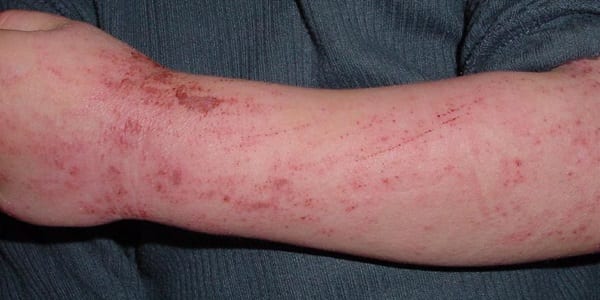
Upadacitinib monotherapy is effective for patients with moderate-to-severe atopic dermatitis
byNeel MistryandTeddy Guo
June 15, 2021
in Chronic Disease, Dermatology, Pediatrics
Reading Time: 3 mins read
Topical pimecrolimus use for atopic dermatitis not linked to malignancy
Share on FacebookShare on TwitterShare on LinkedIn

1. The proportion of patients with EASI ≥75% was significantly greater in the upadacitinib 30 mg and 15 mg groups than the placebo group.

2. Both upadacitinib doses were well tolerated, with the most common adverse events being acne and upper respiratory tract infection.

Evidence Rating Level: 1 (Excellent)

Study Rundown: Upadacitinib is an oral Janus kinase (JAK) inhibitor that has been approved for the treatment of moderate to severe rheumatoid arthritis. However, its use for treatment of other immune-mediated diseases is currently under investigation. This randomized controlled trial aimed to assess the efficacy and safety of upadacitinib compared with placebo for the treatment of moderate-to-severe atopic dermatitis in adolescents and adults. Coprimary efficacy endpoints were proportion of patients with ≥ 75% improvement in Eczema Area and Severity Index (EASI) score from baseline and patients with validated Investigator’s Global Assessment for Atopic Dermatitis (vIGA-AD) response at week 16. Secondary endpoints included proportion of patients with Worst Pruritus Numerical Rating Scale (WP-NRS) ≥ 4, and those with EASI ≥ 90%. According to study results, monotherapy with upadacitinib had a positive benefit-risk profile in adolescents and adults with moderate-to-severe atopic dermatitis. More specifically, both coprimary endpoints were significantly improved with upadacitinib monotherapy while having a comparable safety profile to placebo. A major strength of this study was the inclusion of separate randomized controlled trials (RCTs) with different age groups (adolescents and adults) given the disease burden of atopic dermatitis in each cohort. These findings indicate the potential for upadacitinib to improve treatment in patients with moderate-to-severe atopic dermatitis.

Click to read the study in The Lancet

Relevant Reading: Trial of Upadacitinib and Adalimumab for Psoriatic Arthritis

RELATED REPORTS

Brepocitinib becomes first oral therapy approved for adult dermatomyositis

2MM: Pharma Roundup – mRNA flu vaccine debuts, RAS inhibition extends pancreatic cancer survival, and new therapies advance for dermatomyositis and Tourette syndrome

In-depth [randomized controlled trial]: Between Aug 13, 2018, and Dec 23, 2019, 1093 patients were assessed for eligibility in the Measure Up 1 (MU1) study, and 1143 patients were assessed in the Measure Up 2 (MU2) study (between July 27, 2019, and Jan 17, 2020). Included patients were adolescents (aged 12-17 years) and adults (aged 18-75 years) with moderate-to-severe atopic dermatitis (defined by ≥ 10% of body surface area affected by atopic dermatitis, EASI ≥ 16, vIGA-AD ≥ 3, and WP-NRS ≥ 4). Patients were randomly assigned to receive oral upadacitinib 15 mg, 30 mg, or placebo once daily for 16 weeks. Altogether, 847 patients in MU1 and 836 patients in MU2 were included in the efficacy and safety analyses.

In MU1, the mean participant age was 34.0 years (standard deviation [SD] 15.7) and 54% were male; whereas in MU2, the mean age was 33.6 years (SD 15.5) and 56% were male. At week 16, coprimary endpoints were met for both trials. The proportion of patients with EASI ≥ 75% for MU1 was significantly greater in the upadacitinib 30 mg (80%) and 15 mg (70%) groups than the placebo (16%) group. This was also the case for patients in MU2, with 73% of patients in upadacitinib 30 mg and 60% in upadacitinib 15 mg having EASI ≥ 75%, compared to 13% in the placebo group. The proportion of patients who achieved a vIGA-AD response at week 16 was also significantly higher in the upadacitinib 30 mg (62%) and 15 mg (48%) groups than the placebo (8%) group (MU1). In MU2, vIGA-AD responses were highest in upadacitinib 30 mg (52%) followed by 15 mg (39%) and placebo (5%). Both upadacitinib doses were well-tolerated with the most frequently reported adverse event being acne (17% upadacitinib 30 mg MU1 vs. 15% upadacitinib 30 mg MU2).

Image: PD

©2021 2 Minute Medicine, Inc. All rights reserved. No works may be reproduced without expressed written consent from 2 Minute Medicine, Inc. Inquire about licensing here. No article should be construed as medical advice and is not intended as such by the authors or by 2 Minute Medicine, Inc.


Tags: atopic dermatitisdermatologyEczemaJAKJAK inhibitormoderate-to-severe atopic dermatitisupadacitinib
Previous Post

Smoking cessation may result in improved mental health outcomes and reduced stress

Next Post

#VisualAbstract: Shorter antibiotic therapy for prosthetic joint infection caused worse outcomes

RelatedReports

A healthcare professional contemplates while surrounded by images of a human silhouette, a hospital, and a physician interacting with a child and parent, indicating pediatric care.
Chronic Disease

Brepocitinib becomes first oral therapy approved for adult dermatomyositis

September 18, 2026
A variety of pharmaceutical items including a vial, capsule, molecule model, pill blister pack, petri dish with a pipette, and a graph, symbolizing drug development.
Pharma Roundup

2MM: Pharma Roundup – mRNA flu vaccine debuts, RAS inhibition extends pancreatic cancer survival, and new therapies advance for dermatomyositis and Tourette syndrome

September 15, 2026
Eczema more prevalent among older adults than previously thought
Cardiology

Atopic dermatitis activity is not associated with cardiovascular risk

April 2, 2026
Implementation of pneumococcal vaccine programs linked to decreased antibiotic prescription
All Specialties

Oral remibrutinib hits Phase 3 primary endpoint for inducible hives

March 5, 2026
Next Post
#VisualAbstract: Ziltivekimab antagonism of IL-6 reduces inflammation and thrombosis in patients with atherosclerotic risk factors

#VisualAbstract: Shorter antibiotic therapy for prosthetic joint infection caused worse outcomes

Association between well-being and compliance with COVID-19 preventive measures by healthcare professionals

Colleges can support students with chronic medical conditions

Decreased wellbeing of first-year university students during the initial COVID-19 lockdown

EvidencePulse™ by 2 Minute Medicine 2026 evidence scan 3 reports You asked top stroke trials 2026 Synthesizing medical evidence... Top 2026 stroke trial results: OCEANIC — ischemic stroke: 6.2% vs 8.4% OPTION* — mRS 0–1: 43.6% vs 34.2% ORIENTAL* — mRS 0–2: 58.6% vs 46.6% *Higher sICH in intervention arms Participants randomizedN OCEANIC 12,327 OPTION 570 ORIENTAL 564 Ask about guidelines or landmark trials... ↑ Try EvidencePulse™ Get the signal. Try it now → Physician-trained medical AI by 2 Minute Medicine

2MM+ All Access

Full details →
$4.99 /month

3-day free trial · cancel anytime

  • ✓100+ physician-written reports
  • ✓EvidencePulse™ + HypeCheck™
  • ✓Ad-free reading + newsletters
Start 3-day free trial

Then $4.99/month. Manage renewal in your account.

NPI Lookup · Free

Look up any US clinician

Search by name or NPI number, live from the CMS NPI Registry.

  • OIG exclusion check
  • Licenses and specialties
  • No account needed
Open NPI Lookup →

2 Minute Medicine® is an award winning, physician-run, expert medical media company. Our content is curated, written and edited by practicing health professionals who have clinical and scientific expertise in their field of reporting. Our editorial management team is comprised of highly-trained MD physicians. Join numerous brands, companies, and hospitals who trust our licensed content.

Recent Reports

  • Preoperative self-preparation for total knee arthroplasty is multifactorial and can be optimized by targeting external support and internal motivation
  • Artificial intelligence (AI)-powered mental health app demonstrated improved social well-being among users
  • Children with intellectual and developmental disabilities have increased risks of depression and anxiety
License Content
Terms of Use | Disclaimer
Cookie Policy
2MM+ All Access Full details →

The medical literature, distilled daily.

Monthly plan selected: $4.99 /month.

$4.99/month

3-day free trial · cancel anytime

Start 3-day free trial

Then $4.99/month. Manage renewal in your account.

Yearly plan selected: $49.90 /year.

$49.90/year

2 months free

Start 3-day free trial

Then $49.90/year.

Membership benefits

  • ✓100+ physician-written reports
  • ✓AI EvidencePulse™ + HypeCheck™
  • ✓EvidencePulse™ Deep research reports
  • ✓Ad-free reading + newsletters
  • ✓NPI watchlist + bulk NPI verification

Already a member? Sign in

  • About
  • Specialties
    • All Specialties, All Recent Reports
    • Cardiology
    • Chronic Disease
    • Dermatology
    • Emergency
    • Endocrinology
    • Gastroenterology
    • Imaging and Intervention
    • Infectious Disease
    • Nephrology
    • Neurology
    • Obstetrics
    • Oncology
    • Ophthalmology
    • Pediatrics
    • Pharma
    • Preclinical
    • Psychiatry
    • Public Health
    • Pulmonology
    • Rheumatology
    • Surgery
  • Tools
    • EvidencePulse™
    • HypeCheck™
    • NPI Registry Lookup
    • RVU Search
  • Pharma
  • AI Roundup
  • The Scan
  • Classics™
    • 2MM+ Online Access
    • Paperback and Ebook
  • Rewinds
  • Partners
    • License Content
    • Advertise with Us
No Result
View All Result

© 2026 2 Minute Medicine, Inc. - Physician-written medical news.