Early surgical valve replacement offers survival benefit in asymptomatic, very severe aortic stenosis
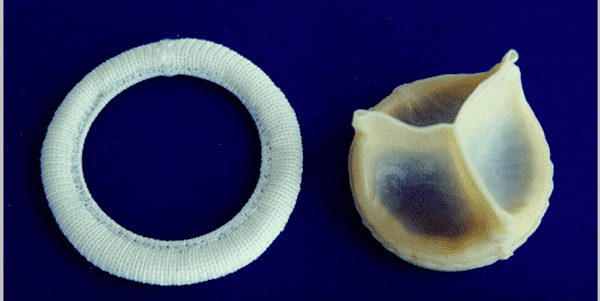
1. This randomized controlled trial involving subjects with asymptomatic, very severe aortic stenosis demonstrated that over a ten-year period, early surgical valve replacement reduced the risk of operative mortality and cardiovascular death as compared to conservative care.
2. Early surgical valve replacement was also associated with lower all-cause mortality and fewer heart-failure hospitalizations than conservative care.
Evidence Rating Level: 1 (Excellent)
Study Rundown: Current standard practice recommends aortic surgical valve replacement only for patients with symptomatic aortic stenosis. However, various clinical trials have suggested potential benefit to surgical intervention in the asymptomatic phase of disease. This randomized controlled trial, titled the RECOVERY trial, assessed morbidity and mortality over ten years in individuals with asymptomatic aortic stenosis receiving either early surgery or conservative care. Enrolled patients had very severe aortic stenosis as defined by echocardiographic metrics, but no classic symptoms of the disease. The primary endpoint was operative mortality or death from cardiovascular causes, while secondary endpoints included all-cause mortality and hospitalization for heart failure. The cumulative incidence of operative mortality or death from cardiovascular causes was one percent in the early-surgery group, compared to nearly twenty percent of patients in the conservative-care group. All-cause mortality in the early surgery group was less than half of the mortality in the conservative care group. About one in five conservative-care patients were hospitalized for heart failure versus none in the early-surgery group. Strengths of this study included a long follow-up period with low attrition and use of intention-to-treat analyses for primary endpoints. The study was limited by the open-label design, which renders especially non-fatal outcomes suggestible to ascertainment bias. Patients in the study were also younger and had fewer comorbidities than the typical aortic stenosis patient, limiting generalizability. Overall, the results of the RECOVERY trial suggest that preemptive surgical valve replacement may provide clinical benefit in those with asymptomatic, very severe aortic stenosis.
Click to read the study in NEJM
Relevant Reading: Transcatheter Aortic-Valve Replacement for Asymptomatic Severe Aortic Stenosis
In-Depth [randomized controlled trial]: This randomized controlled study, titled the RECOVERY trial, compared the morbidity and mortality of early surgical intervention versus conservative management over 10 years in individuals with asymptomatic very severe aortic stenosis. Eligibility criteria included an aortic-valve area of no more than 0.75 cm2 with either a peak aortic jet velocity of at least 4.5 m2 or a mean transaortic gradient of at least 50 mm Hg. Patients with any aortic stenosis symptoms, a left ventricular ejection fraction less than 50%, certain valvular diseases, history of cardiac surgery, or ineligible surgical candidates were excluded. A total of 145 patients were randomly assigned in a 1:1 ratio to either undergo surgical aortic-valve replacement within 2 months or receive conservative care. Patient characteristics were generally well-balanced between groups, though the early-surgery group had more patients with diabetes or bicuspid aortic valves, and the conservative-care group had more patients with degenerative or rheumatic valve disease. Participants were followed for a minimum of 10 years, with only one patient in each group lost to follow-up. Approximately half of the surgical group received a mechanical valve and half received a biologic prosthesis, with no operative mortality in any patient. Amongst those receiving conservative care, 85% went on to receive surgical or trans-catheter valve replacements. Intention-to-treat analyses demonstrated that 24% of the conservative-care group died from cardiovascular causes, compared to 3% of the early-surgery group (hazard ratio [HR], 0.10; 95% CI, 0.02 to 0.43; p=0.002; number needed to treat, 6). The cumulative incidence of operative mortality and death from cardiovascular causes was 1% at 10 years in the early-surgery group and 19% in the conservative-care group. All-cause mortality was also significantly lower in the early-surgery group (HR, 0.42; 95% CI, 0.21 to 0.86). Notable amongst secondary end points was the incidence of hospitalization for heart failure, which was 19% in the conservative-care group and 0% in the early-surgery group. Overall, the RECOVERY trial provides evidence that early surgical valve replacement in asymptomatic patients with very severe aortic stenosis offers long-term clinical benefit over conservative management.
Image: PD
©2026 2 Minute Medicine, Inc. All rights reserved. No works may be reproduced without expressed written consent from 2 Minute Medicine, Inc. Inquire about licensing here. No article should be construed as medical advice and is not intended as such by the authors or by 2 Minute Medicine, Inc.