• About
  • Masthead
  • License Content
  • Advertise
  • Submit Press Release
  • RSS/Email List
  • 2MM Podcast
  • Write for us
  • Contact Us
2 Minute Medicine
No Result
View All Result

No products in the cart.

SUBSCRIBE
  • Specialties
    • All Specialties, All Recent Reports
    • Cardiology
    • Chronic Disease
    • Dermatology
    • Emergency
    • Endocrinology
    • Gastroenterology
    • Imaging and Intervention
    • Infectious Disease
    • Nephrology
    • Neurology
    • Obstetrics
    • Oncology
    • Ophthalmology
    • Pediatrics
    • Pharma
    • Preclinical
    • Psychiatry
    • Public Health
    • Pulmonology
    • Rheumatology
    • Surgery
  • Tools
    • EvidencePulse™
    • RVU Search
    • NPI Registry Lookup
  • Pharma
  • AI News
  • The Scan+
  • Classics™+
    • 2MM+ Online Access
    • Paperback and Ebook
  • Rewinds
  • Partners
    • License Content
    • Submit Press Release
    • Advertise with Us
  • Account
    • Subscribe
    • Sign-in
    • My account
2 Minute Medicine
  • Specialties
    • All Specialties, All Recent Reports
    • Cardiology
    • Chronic Disease
    • Dermatology
    • Emergency
    • Endocrinology
    • Gastroenterology
    • Imaging and Intervention
    • Infectious Disease
    • Nephrology
    • Neurology
    • Obstetrics
    • Oncology
    • Ophthalmology
    • Pediatrics
    • Pharma
    • Preclinical
    • Psychiatry
    • Public Health
    • Pulmonology
    • Rheumatology
    • Surgery
  • Tools
    • EvidencePulse™
    • RVU Search
    • NPI Registry Lookup
  • Pharma
  • AI News
  • The Scan+
  • Classics™+
    • 2MM+ Online Access
    • Paperback and Ebook
  • Rewinds
  • Partners
    • License Content
    • Submit Press Release
    • Advertise with Us
  • Account
    • Subscribe
    • Sign-in
    • My account
SUBSCRIBE
2 Minute Medicine
Subscribe
Home All Specialties Cardiology

A dual-chamber leadless pacemaker provided reliable long-term atrioventricular synchrony
byDavid XiangandKiera Liblik
July 11, 2023
in Cardiology, Chronic Disease
Reading Time: 2 mins read
0
Share on FacebookShare on Twitter

1. In the prospective study, a dual-chamber leadless pacemaker system met primary safety endpoints at three-month follow-up.

2. The dual-chamber leadless pacemaker system provided atrial pacing and reliable atrioventricular synchrony for three months after implantation.

Evidence Rating Level: 1 (Excellent)

Study Rundown: Conventional pacemakers consist of a surgically implanted pulse generator with transvenous leads. Recently, a modular dual-chamber leadless pacemaker system with bidirectional communication and a fixation mechanism enabling the placement of a right atrial leadless packer was developed. However, there remains a gap in knowledge as to understanding the safety and performance of this dual-chamber leadless pacemaker system in humans. Overall, this study found that a leadless dual-chamber pacemaker with bidirectional wireless communication met the primary safety and performance endpoints at three months in patients with standard indications for dual-chamber pacing. This study was limited by its single-group nature, which precluded direct comparison, and with only short-term follow-up data reported. Nevertheless, these study’s findings are significant, as they demonstrate that this leadless dual chamber pacemaker system provided safety and performance at three months in patients with indications for dual chamber pacing.

Click to read the study in NEJM

Relevant Reading: Infections Associated with Resterilized Pacemakers and Defibrillators

RELATED REPORTS

Two scores for risk stratification of adults presenting with syncope may be effective at identifying those with low risk

Resuscitative endovascular balloon occlusion of the aorta may not improve outcomes in adults with non-traumatic out-of-hospital cardiac arrest

Invasive management for non-ST-segment elevation myocardial infarction in frail patients may not improve mortality

In-Depth [single-group multicenter study]: This prospective, multicenter, single-group study was conducted to study the leadless pacemaker system. Patients who had a standard indication for dual-chamber pacing and an age of at least 18 years were eligible for the study. Patients who had a mechanical tricuspid valve prosthesis, inferior vena cava filter, preexisting pacing or defibrillation leads, and electrically active implantable medical devices were excluded from the study. The primary outcome measured was freedom from complications through 90 days, as well as a combination of adequate atrial capture threshold (≤3.0 V at 0.4 msec) and atrial sensing amplitude (P wave of ≥1.0 mV) at the three-month visit. Outcomes in the primary analysis were assessed via an adaptive design for sample size reestimation and a multiple imputation method based on logistic regression. Based on the primary analysis, the primary safety endpoint was met in 271 patients (90.3%; 95% Confidence Interval [CI], 87.0 to 93.7), which exceeded the performance goal of 78% (p<0.001). The first primary performance endpoint was met in 90.2% of the patients (95% CI, 86.8 to 93.6), which exceeded the performance goal of 82.5% (p<0.001). At least 70% atrioventricular synchrony was achieved in 97.3% of the patients (95% CI, 95.4 to 99.3), which exceeded the performance goal of 83% (p<0.001). In summary, the present study demonstrates that the dual-chamber leadless pacemaker met the primary safety endpoint and provided atrial pacing and reliable atrioventricular synchrony for three months after implantation.

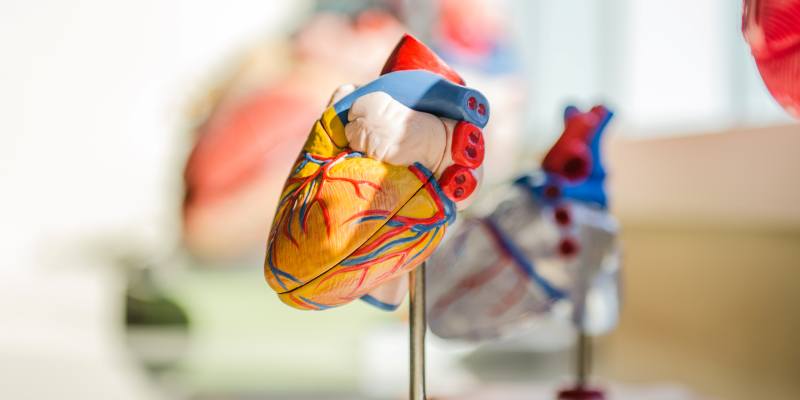
Image: PD

©2023 2 Minute Medicine, Inc. All rights reserved. No works may be reproduced without expressed written consent from 2 Minute Medicine, Inc. Inquire about licensing here. No article should be construed as medical advice and is not intended as such by the authors or by 2 Minute Medicine, Inc.

Tags: atrioventricular synchronycardiologychronic diseasedual-chamber leadless pacemakerhealth technologyPacemaker
Previous Post

Early versus late post-stroke anticoagulation in patients with atrial fibrillation results in similar outcomes

Next Post

Dobutamine may reduce cerebral blood flow when administered

RelatedReports

Computed tomography improves diagnostic certainty in the emergency department
Cardiology

Two scores for risk stratification of adults presenting with syncope may be effective at identifying those with low risk

May 29, 2026
Antiarrhythmic drugs have no survival benefit in shock-refractory out-of-hospital cardiac arrest
Cardiology

Resuscitative endovascular balloon occlusion of the aorta may not improve outcomes in adults with non-traumatic out-of-hospital cardiac arrest

May 14, 2026
PCI not superior to medical therapy alone in stable coronary disease: The COURAGE study
Cardiology

Invasive management for non-ST-segment elevation myocardial infarction in frail patients may not improve mortality

April 30, 2026
Novel coronavirus identified from patients with pneumonia in Wuhan, China
Cardiology

COVID-19 vaccination is associated with reduced risk of new-onset atrial fibrillation following COVID-19 infection

April 29, 2026
Next Post

Dobutamine may reduce cerebral blood flow when administered

Several factors influenced the mental health of healthcare workers during the COVID-19 pandemic

#VisualAbstract: Mirikizumab as Induction and Maintenance Therapy for Ulcerative Colitis

#VisualAbstract: Mirikizumab as Induction and Maintenance Therapy for Ulcerative Colitis

2 Minute Medicine® is an award winning, physician-run, expert medical media company. Our content is curated, written and edited by practicing health professionals who have clinical and scientific expertise in their field of reporting. Our editorial management team is comprised of highly-trained MD physicians. Join numerous brands, companies, and hospitals who trust our licensed content.

Recent Reports

  • Two scores for risk stratification of adults presenting with syncope may be effective at identifying those with low risk
  • Use of procalcitonin in neonatal late-onset sepsis may reduce the duration of antibiotic therapy without increase in mortality
  • A novel therapy targeting γ-aminobutyric acid is safe and may be effective in major depressive disorder
License Content
Terms of Use | Disclaimer
Cookie Policy
Privacy Statement (EU)
Disclaimer
  • Specialties
    • All Specialties, All Recent Reports
    • Cardiology
    • Chronic Disease
    • Dermatology
    • Emergency
    • Endocrinology
    • Gastroenterology
    • Imaging and Intervention
    • Infectious Disease
    • Nephrology
    • Neurology
    • Obstetrics
    • Oncology
    • Ophthalmology
    • Pediatrics
    • Pharma
    • Preclinical
    • Psychiatry
    • Public Health
    • Pulmonology
    • Rheumatology
    • Surgery
  • Tools
    • EvidencePulse™
    • RVU Search
    • NPI Registry Lookup
  • Pharma
  • AI News
  • The Scan
  • Classics™
    • 2MM+ Online Access
    • Paperback and Ebook
  • Rewinds
  • Partners
    • License Content
    • Submit Press Release
    • Advertise with Us
  • Account
    • Subscribe
    • Sign-in
    • My account
No Result
View All Result

© 2026 2 Minute Medicine, Inc. - Physician-written medical news.