• About
  • Masthead
  • License Content
  • Advertise
  • Press Releases
  • Newsroom
  • RSS/Email List
  • 2MM Podcast
  • Write for us
  • Contact Us
2 Minute Medicine
No Result
View All Result

No products in the cart.

Sign in
SUBSCRIBE
  • About
  • Specialties
    • All Specialties, All Recent Reports
    • Cardiology
    • Chronic Disease
    • Dermatology
    • Emergency
    • Endocrinology
    • Gastroenterology
    • Imaging and Intervention
    • Infectious Disease
    • Nephrology
    • Neurology
    • Obstetrics
    • Oncology
    • Ophthalmology
    • Pediatrics
    • Pharma
    • Preclinical
    • Psychiatry
    • Public Health
    • Pulmonology
    • Rheumatology
    • Surgery
    • Rewinds
    • The Scan
  • EvidencePulse™
  • HypeCheck™
  • AI News
  • Classics™
    • 2MM+ Online Access
    • Paperback and Ebook
  • Tools
    • NPI Registry Lookup
    • RVU Search
  • Partners
    • License Content
    • Advertise with Us
2 Minute Medicine
  • About
  • Specialties
    • All Specialties, All Recent Reports
    • Cardiology
    • Chronic Disease
    • Dermatology
    • Emergency
    • Endocrinology
    • Gastroenterology
    • Imaging and Intervention
    • Infectious Disease
    • Nephrology
    • Neurology
    • Obstetrics
    • Oncology
    • Ophthalmology
    • Pediatrics
    • Pharma
    • Preclinical
    • Psychiatry
    • Public Health
    • Pulmonology
    • Rheumatology
    • Surgery
    • Rewinds
    • The Scan
  • EvidencePulse™
  • HypeCheck™
  • AI News
  • Classics™
    • 2MM+ Online Access
    • Paperback and Ebook
  • Tools
    • NPI Registry Lookup
    • RVU Search
  • Partners
    • License Content
    • Advertise with Us
Sign in
SUBSCRIBE
2 Minute Medicine
Sign in
Subscribe
2 Minute MedicineFree on Google PlayGet
✦ EvidencePulse™ by 2 Minute Medicine 2026 evidence scan 3 reports You asked top stroke trials 2026 Synthesizing medical evidence... Top 2026 stroke trial results: OCEANIC — ischemic stroke: 6.2% vs 8.4% OPTION* — mRS 0–1: 43.6% vs 34.2% ORIENTAL* — mRS 0–2: 58.6% vs 46.6% *Higher sICH in intervention arms Participants randomizedN OCEANIC 12,327 OPTION 570 ORIENTAL 564 Ask about guidelines or landmark trials... ↑ Try EvidencePulse™ Ask the evidence.
Get the signal.
Try it now → Physician-trained medical AI by 2 Minute Medicine
Home All Specialties Cardiology

Comparisons of invasive versus conservative management in chronic kidney disease in the ISCHEMIA-CKD trials
byMichael WongandAlex Chan
July 7, 2022
in Cardiology, Chronic Disease, Nephrology
Reading Time: 2 mins read
Being overweight and obese associated with increased incidence of chronic kidney disease
Share on FacebookShare on TwitterShare on LinkedIn

1. Following invasive or conservative management of chronic coronary disease, patients with chronic kidney disease (CKD) stage 5 were found to have a significantly higher 3-year cumulative incidence of death and nonfatal myocardial infarction than patients with CKD stage 1.

2. In patients who received either conservative or invasive management of chronic coronary disease, there was no significant difference in 3-year cumulative incidence of death or nonfatal myocardial infarction between the two groups across the different stages of chronic kidney disease.

3. Invasive management versus conservative management of chronic coronary disease was associated with significant improvement of quality-of-life parameters 1 year following randomization, as measured by the Seattle Angina Questionnaire summary score, in patients with CKD stages 1, 2, and 3, but not in CKD stages 4 and 5.

Evidence Rating Level: 2 (Good)

Previous trials comparing invasive versus conservative management of patients with chronic coronary disease (CCD) typically exclude or involve very few patients with severe kidney disease. Thus, current treatment guidelines for CCD are not based on evidence that includes varying levels of kidney function. Prior studies have found that decreased kidney function is associated with higher risks of invasive procedures and increased rates of cardiovascular events. Given this, kidney function often influences treatment decisions, and it is important to investigate for any heterogeneity of treatment benefit based on existing kidney function. The International Study of Comparative Health Effectiveness with Medical and Invasive Approaches (ISCHEMIA) trial recruited patients with varying levels of kidney function. This study is a post-hoc analysis of the ISCHEMIA and ISCHEMIA-CKD trials. The ISCHEMIA trial recruited participants with CCD and randomized them in a 1:1 ratio to either invasive or conservative management. Invasive management included coronary angiography followed by revascularization with either percutaneous intervention or a coronary artery bypass graft in addition to guideline-directed medical therapy (GDMT), while the conservative management group received GDMT only. 5956 participants were included in this analysis with 1889 (32%), 2551 (43%), 738 (12%), 311 (5%), 467 (8%) patients in CKD stages 1, 2, 3, 4, and 5 respectively. The primary clinical outcome was death or nonfatal myocardial infarction (MI), while the primary quality of life (QoL) outcome was based on the Seattle Angina Questionnaire (SAQ) summary score at 1 year after randomization. Patients with CKD stage 5 were found to have a significantly greater 3-year cumulative incidence of death and MI than patients with CKD stage 1 (p<.001). However, in terms of heterogeneity of treatment benefit, there was no significant difference in death or MI between the invasive and conservative management groups across the spectrum of kidney disease (p=.62). With respect to QoL, invasive management was associated with a significant improvement in QoL parameters in patients with CKD stages 1-3 (p<.001), but this significant improvement was not present in patients with CKD stages 4 and 5. Study findings, as with the ISCHEMIA trial, may be used to further inform practitioners during shared decision making with patients on the relative efficacy of invasive versus conservative management at different stages of disease.

Click here to read the study in JAMA Cardiology

RELATED REPORTS

Apixaban (Eliquis) is associated with reduced rates of ischemic stroke and bleeding in patients with atrial fibrillation and advanced chronic kidney disease compared with warfarin (Coumadin)

2 Minute Medicine Rewind September 7, 2026

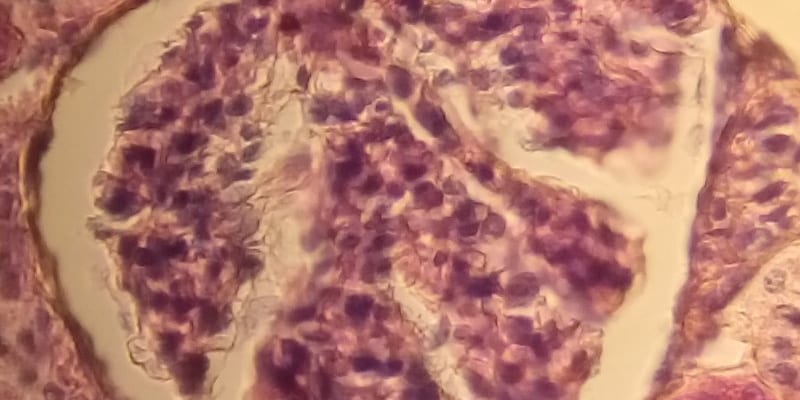
Image: PD

©2022 2 Minute Medicine, Inc. All rights reserved. No works may be reproduced without expressed written consent from 2 Minute Medicine, Inc. Inquire about licensing here. No article should be construed as medical advice and is not intended as such by the authors or by 2 Minute Medicine, Inc.

Tags: chronic kidney diseaseCKDnephrology
Previous Post

High dose dexamethasone does not improve survival in patients with hypoxemic respiratory failure due to COVID-19

Next Post

Community-based and health-care based smoking cessation intervention models have similar efficacy

RelatedReports

A detailed illustration of a kidney and glomeruli, with a pill depicted, representing treatment for kidney-related conditions. It suggests a focus on chronic kidney disease.
Nephrology

Apixaban (Eliquis) is associated with reduced rates of ischemic stroke and bleeding in patients with atrial fibrillation and advanced chronic kidney disease compared with warfarin (Coumadin)

September 9, 2026
Long-term outcomes for off-pump and on-pump CABG are similar
Weekly Rewinds

2 Minute Medicine Rewind September 7, 2026

September 7, 2026
Blood type correlates with egg reserve in infertile women
Nephrology

Perioperative vitamin C supplementation may not reduce bleeding in percutaneous renal biopsy patients

July 10, 2026
Fish oil and aspirin did not reduce arteriovenous fistula failure: The FAVOURED trail
Chronic Disease

An intradialytic exercise intervention did not improve dialysis adequacy

May 18, 2026
Next Post
Smoking during pregnancy associated with aerobic fitness of children

Community-based and health-care based smoking cessation intervention models have similar efficacy

COVID-19 epidemiologic characteristics in Wuhan, China [Classics Series]

Meeting families, demographic information affect child abuse work-up

Sleep problems may be associated with adolescents receiving welfare services

✦ EvidencePulse™ by 2 Minute Medicine 2026 evidence scan 3 reports You asked top stroke trials 2026 Synthesizing medical evidence... Top 2026 stroke trial results: OCEANIC — ischemic stroke: 6.2% vs 8.4% OPTION* — mRS 0–1: 43.6% vs 34.2% ORIENTAL* — mRS 0–2: 58.6% vs 46.6% *Higher sICH in intervention arms Participants randomizedN OCEANIC 12,327 OPTION 570 ORIENTAL 564 Ask about guidelines or landmark trials... Try EvidencePulse™ Get the signal. Try it now → Physician-trained medical AI by 2 Minute Medicine

2MM+ All Access

Full details →
$4.99 /month

3-day free trial · cancel anytime

  • ✓100+ physician-written reports
  • ✓EvidencePulse™ + HypeCheck™
  • ✓Ad-free reading + newsletters
Start 3-day free trial

Then $4.99/month. Manage renewal in your account.

NPI Lookup · Free

Look up any US clinician

Search by name or NPI number, live from the CMS NPI Registry.

  • OIG exclusion check
  • Licenses and specialties
  • No account needed
Open NPI Lookup →

2 Minute Medicine® is an award winning, physician-run, expert medical media company. Our content is curated, written and edited by practicing health professionals who have clinical and scientific expertise in their field of reporting. Our editorial management team is comprised of highly-trained MD physicians. Join numerous brands, companies, and hospitals who trust our licensed content.

Recent Reports

  • An electronic health record tool for exercise prescription may reduce fall rate among older adults
  • Optogenetic therapy may partially restore vision in retinitis pigmentosa
  • An artificial intelligence system for human papillomavirus-positive dual stain cervical cancer screening reads p16-Ki67 slides
License Content
Terms of Use | Disclaimer
Cookie Policy

Get the app

Read 2 Minute Medicine on iPhone, iPad and Android.

Download on the App StoreGet it on Google Play
QR code for www.2minutemedicine.com/app
On a computer? Scan this with your phone’s camera.
2MM+ All Access Full details →

The medical literature, distilled daily.

Monthly plan selected: $4.99 /month.

$4.99/month

3-day free trial · cancel anytime

Start 3-day free trial

Then $4.99/month. Manage renewal in your account.

Yearly plan selected: $49.90 /year.

$49.90/year

2 months free

Start 3-day free trial

Then $49.90/year.

Membership benefits

  • ✓100+ physician-written reports
  • ✓AI EvidencePulse™ + HypeCheck™
  • ✓Ad-free reading + newsletters
  • ✓NPI watchlist + bulk NPI verification

Already a member? Sign in

  • Get the app
  • About
  • Specialties
    • All Specialties, All Recent Reports
    • Cardiology
    • Chronic Disease
    • Dermatology
    • Emergency
    • Endocrinology
    • Gastroenterology
    • Imaging and Intervention
    • Infectious Disease
    • Nephrology
    • Neurology
    • Obstetrics
    • Oncology
    • Ophthalmology
    • Pediatrics
    • Pharma
    • Preclinical
    • Psychiatry
    • Public Health
    • Pulmonology
    • Rheumatology
    • Surgery
    • Rewinds
    • The Scan
  • EvidencePulse™
  • HypeCheck™
  • AI News
  • Classics™
    • 2MM+ Online Access
    • Paperback and Ebook
  • Tools
    • NPI Registry Lookup
    • RVU Search
  • Partners
    • License Content
    • Advertise with Us
No Result
View All Result

© 2026 2 Minute Medicine, Inc. - Physician-written medical news.