

• About
  • Masthead
  • License Content
  • Advertise
  • Submit Press Release
  • RSS/Email List
  • 2MM Podcast
  • Write for us
  • Contact Us
2 Minute Medicine
No Result
View All Result

No products in the cart.

SUBSCRIBE
  • Specialties
    • All Specialties, All Recent Reports
    • Cardiology
    • Chronic Disease
    • Dermatology
    • Emergency
    • Endocrinology
    • Gastroenterology
    • Imaging and Intervention
    • Infectious Disease
    • Nephrology
    • Neurology
    • Obstetrics
    • Oncology
    • Ophthalmology
    • Pediatrics
    • Pharma
    • Preclinical
    • Psychiatry
    • Public Health
    • Pulmonology
    • Rheumatology
    • Surgery
  • Tools
    • EvidencePulse™
    • RVU Search
    • NPI Registry Lookup
  • Pharma
  • AI News
  • The Scan+
  • Classics™+
    • 2MM+ Online Access
    • Paperback and Ebook
  • Rewinds
  • Podcasts
  • Partners
    • License Content
    • Submit Press Release
    • Advertise with Us
  • Account
    • Subscribe
    • Sign-in
    • My account
2 Minute Medicine
  • Specialties
    • All Specialties, All Recent Reports
    • Cardiology
    • Chronic Disease
    • Dermatology
    • Emergency
    • Endocrinology
    • Gastroenterology
    • Imaging and Intervention
    • Infectious Disease
    • Nephrology
    • Neurology
    • Obstetrics
    • Oncology
    • Ophthalmology
    • Pediatrics
    • Pharma
    • Preclinical
    • Psychiatry
    • Public Health
    • Pulmonology
    • Rheumatology
    • Surgery
  • Tools
    • EvidencePulse™
    • RVU Search
    • NPI Registry Lookup
  • Pharma
  • AI News
  • The Scan+
  • Classics™+
    • 2MM+ Online Access
    • Paperback and Ebook
  • Rewinds
  • Podcasts
  • Partners
    • License Content
    • Submit Press Release
    • Advertise with Us
  • Account
    • Subscribe
    • Sign-in
    • My account
SUBSCRIBE
2 Minute Medicine
Subscribe
Home All Specialties Oncology

Gilteritinib more effective than salvage chemotherapy for FLT3-mutated acute myeloid leukemia

byThomas SuandDeepti Shroff
November 23, 2019
in Oncology
Reading Time: 3 mins read
0
Share on FacebookShare on Twitter

1. In this phase 3 trial, patients with relapsed or refractory acute myeloid leukemia who received gilteritinib had a longer median overall survival and a higher likelihood of complete remission versus chemotherapy. After factoring in therapy duration, serious adverse events also occurred less frequently in the gilteritinib group.

2. Despite these statistically significant improvements, long-term survival remained poor, indicating the need for further research into the timing and toxicity of intervention.

Evidence Rating Level: 1 (Excellent)

Study Rundown: FMS-like tyrosine kinase 3 (FLT3) is involved in the proliferation and differentiation of hematopoietic stem cells. When constitutively activated through mutation as in roughly 30% of patients with acute myeloid leukemia (AML), the enzyme sparks uncontrolled growth and adversely affects survival. Given the ineffectiveness of salvage chemotherapy as a second-line treatment for AML that is refractory to standard chemotherapy, FLT3 inhibitors have been a welcome addition to the arsenal of treatment options. However, issues have arisen with their selectivity and single-agent potency, stressing the continued need for a powerful molecule that demonstrates strong activity against both mutation subtypes (ITD and TKD) yet spares other essential kinases. This randomized study aimed to confirm the safety and efficacy of one such candidate, gilteritinib, in the treatment of relapsed or refractory FLT3-mutated AML. Patients treated with gilteritinib experienced both a longer median overall survival and a higher likelihood of complete remission with full or partial hematologic recovery compared to those who received salvage chemotherapy. The exposure-adjusted rate of adverse events of grade 3 or higher was also significantly lower in the gilteritinib group, with some of the most common events in both groups being febrile neutropenia, anemia, and thrombocytopenia. However, long-term survival rates remained poor in both groups. These promising findings beg further research into the timing of FLT3 intervention as well as its role in the grand scheme of potential treatments.

Click here to read the study in NEJM

Relevant Reading: FLT3 inhibitors in acute myeloid leukemia

RELATED REPORTS

Adjuvant everolimus does not improve survival for patients with resected renal cell carcinoma

Quizartinib improves overall median survival in patients with acute myeloid leukemia

#VisualAbstract Ponatinib with FLAG-IDA is a feasible and active treatment strategy in patients with blast-phase chronic myeloid leukaemia

In-Depth [randomized controlled trial]: This randomized phase 3 trial recruited 371 adult patients from 107 centers in 14 countries and assigned them in a 2:1 ratio to gilteritinib or chemotherapy, respectively. 60.6% of all patients had relapsed AML while the remainder had primary refractory disease. 83.8% had previously been treated with anthracyclines but not FLT3 inhibitors. Bone marrow and blood samples were collected for screening, and over 90% of patients were found to possess in tandem duplication (ITD) mutations. Overall survival for patients in the gilteritinib group was 9.3 months versus 5.6 months for those in the chemotherapy group (two-sided P<0.001; hazard ratio for death, .64; 95% confidence interval [CI], 0.49 to 0.83). 34% of patients who were administered gilteritinib had complete remission with full or partial hematologic recovery compared to 15.3% in the chemotherapy group (risk difference, 18.6 percentage points; 95% CI, 9.8 to 27.4). After 1 year, 37.1% of patients remained alive in the gilteritinib group compared to 16.7% in the chemotherapy group. This pattern of increased survival was consistent across multiple subgroups. In the gilteritinib group, treatment duration was longer and more variable (median, 18 weeks; interquartile range [IQR], 9 to 34) compared to chemotherapy (median, 4 weeks; IQR, 4 to 3). After adjusting for exposure, the incidence rate of adverse events of grade 3 or higher was 19.34/patient-year in the gilteritinib group and 42.44/patient-year in the chemotherapy group.

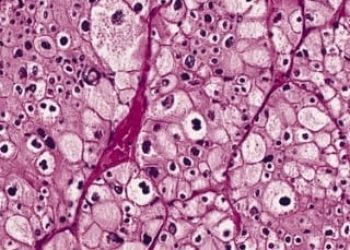
Image: PD

©2019 2 Minute Medicine, Inc. All rights reserved. No works may be reproduced without expressed written consent from 2 Minute Medicine, Inc. Inquire about licensing here. No article should be construed as medical advice and is not intended as such by the authors or by 2 Minute Medicine, Inc.

Tags: acute myeloid leukemiaFLT3 inhibitorsgilteritinibtyrosine kinase inhibitor
Previous Post

Elexacaftor-tezacaftor-ivacaftor is efficacious in treating cystic fibrosis patients with Phe508del-minimal function genotypes

Next Post

#VisualAbstract: Previsit Screening for Parental Vaccine Hesitancy

RelatedReports

Pediatric renal and thyroid cancer rates increase
Chronic Disease

Adjuvant everolimus does not improve survival for patients with resected renal cell carcinoma

October 10, 2023
Surgical site anesthetic infusion may enhance analgesia after mastectomy
Chronic Disease

Quizartinib improves overall median survival in patients with acute myeloid leukemia

May 25, 2023
#VisualAbstract Ponatinib with FLAG-IDA is a feasible and active treatment strategy in patients with blast-phase chronic myeloid leukaemia
StudyGraphics

#VisualAbstract Ponatinib with FLAG-IDA is a feasible and active treatment strategy in patients with blast-phase chronic myeloid leukaemia

June 12, 2022
Delaying intrathecal therapy in leukemia may preclude need for cranial radiotherapy
Chronic Disease

Ivosidenib and azacitidine provide significant benefits in IDH1-mutated acute myeloid leukemia

May 13, 2022
Next Post
#VisualAbstract: Previsit Screening for Parental Vaccine Hesitancy

#VisualAbstract: Previsit Screening for Parental Vaccine Hesitancy

Intrauterine Zika virus infection associated with significant fetal brain abnormalities

Dengue fever vaccine candidate (TAK-003) offers significant protection in trials

Myeloperoxidase upregulation in epileptogenesis seen on molecular imaging

Mortality from neurodegenerative disease may be higher among former professional soccer players

2 Minute Medicine® is an award winning, physician-run, expert medical media company. Our content is curated, written and edited by practicing health professionals who have clinical and scientific expertise in their field of reporting. Our editorial management team is comprised of highly-trained MD physicians. Join numerous brands, companies, and hospitals who trust our licensed content.

Recent Reports

  • Association between atrial fibrillation and both the in-hospital mortality and disease severity in acute pancreatitis: insights from a multicenter study
  • Effect of adjuvant carboplatin intensified chemotherapy versus standard chemotherapy on survival in women with high risk, early stage, triple negative breast cancer (CITRINE): randomised, open label phase 3 trial
  • Machine learning models effectively screened for Parkinson’s disease using smile videos
License Content
Terms of Use | Disclaimer
Cookie Policy
Privacy Statement (EU)
Disclaimer

© 2025 2 Minute Medicine, Inc. - Physician-written medical news.

  • Specialties
    • All Specialties, All Recent Reports
    • Cardiology
    • Chronic Disease
    • Dermatology
    • Emergency
    • Endocrinology
    • Gastroenterology
    • Imaging and Intervention
    • Infectious Disease
    • Nephrology
    • Neurology
    • Obstetrics
    • Oncology
    • Ophthalmology
    • Pediatrics
    • Pharma
    • Preclinical
    • Psychiatry
    • Public Health
    • Pulmonology
    • Rheumatology
    • Surgery
  • Tools
    • EvidencePulse™
    • RVU Search
    • NPI Registry Lookup
  • Pharma
  • AI News
  • The Scan
  • Classics™
    • 2MM+ Online Access
    • Paperback and Ebook
  • Rewinds
  • Podcasts
  • Partners
    • License Content
    • Submit Press Release
    • Advertise with Us
  • Account
    • Subscribe
    • Sign-in
    • My account
No Result
View All Result

© 2025 2 Minute Medicine, Inc. - Physician-written medical news.