• About
  • Masthead
  • License Content
  • Advertise
  • Submit Press Release
  • RSS/Email List
  • 2MM Podcast
  • Write for us
  • Contact Us
2 Minute Medicine
No Result
View All Result

No products in the cart.

SUBSCRIBE
  • About
  • Specialties
    • All Specialties, All Recent Reports
    • Cardiology
    • Chronic Disease
    • Dermatology
    • Emergency
    • Endocrinology
    • Gastroenterology
    • Imaging and Intervention
    • Infectious Disease
    • Nephrology
    • Neurology
    • Obstetrics
    • Oncology
    • Ophthalmology
    • Pediatrics
    • Pharma
    • Preclinical
    • Psychiatry
    • Public Health
    • Pulmonology
    • Rheumatology
    • Surgery
  • Tools+
    • EvidencePulse™
    • HypeCheck™
    • NPI Registry Lookup
    • RVU Search
  • Pharma
  • AI Roundup
  • The Scan+
  • Classics™+
    • 2MM+ Online Access
    • Paperback and Ebook
  • Rewinds
  • Partners
    • License Content
    • Submit Press Release
    • Advertise with Us
  • Account
    • Subscribe
    • My account
    • Cart
    • Sign-in
2 Minute Medicine
  • About
  • Specialties
    • All Specialties, All Recent Reports
    • Cardiology
    • Chronic Disease
    • Dermatology
    • Emergency
    • Endocrinology
    • Gastroenterology
    • Imaging and Intervention
    • Infectious Disease
    • Nephrology
    • Neurology
    • Obstetrics
    • Oncology
    • Ophthalmology
    • Pediatrics
    • Pharma
    • Preclinical
    • Psychiatry
    • Public Health
    • Pulmonology
    • Rheumatology
    • Surgery
  • Tools+
    • EvidencePulse™
    • HypeCheck™
    • NPI Registry Lookup
    • RVU Search
  • Pharma
  • AI Roundup
  • The Scan+
  • Classics™+
    • 2MM+ Online Access
    • Paperback and Ebook
  • Rewinds
  • Partners
    • License Content
    • Submit Press Release
    • Advertise with Us
  • Account
    • Subscribe
    • My account
    • Cart
    • Sign-in
SUBSCRIBE
2 Minute Medicine
Subscribe
EvidencePulse™ by 2 Minute Medicine 2026 evidence scan 3 reports You asked top stroke trials 2026 Synthesizing medical evidence... Top 2026 stroke trial results: OCEANIC — ischemic stroke: 6.2% vs 8.4% OPTION* — mRS 0–1: 43.6% vs 34.2% ORIENTAL* — mRS 0–2: 58.6% vs 46.6% *Higher sICH in intervention arms Participants randomizedN OCEANIC 12,327 OPTION 570 ORIENTAL 564 Ask about guidelines or landmark trials... ↑ Try EvidencePulse™ Ask the evidence.
Get the signal.
Try it now → Physician-trained medical AI by 2 Minute Medicine
Home All Specialties Cardiology

Individualized glycemic control for type 2 diabetes may save the U.S. billions annually
byEvelyn NguyenandDeepti Shroff
December 12, 2017
in Cardiology, Chronic Disease, Endocrinology, Nephrology, Neurology, Ophthalmology, Public Health
Reading Time: 3 mins read
Pediatric DKA associated with recent acute care visits
Share on FacebookShare on Twitter

1. Individualized glycemic control for type 2 diabetic patients could save the United States billions of dollars annually compared to uniform glycemic control.

2. Although individualized control increased complications (resulting in slightly decreased life expectancy), it created more quality-adjusted life-years (QALYs) due to reduced medications and hypoglycemic events.

Evidence Rating Level: 2 (Good)

Study Rundown: The cost of diabetes in the United States is approximately $245 billion per year, which makes cost reduction important.  For type 2 diabetes, intensive glycemic control has been shown to be an economical standard of care.  However, there is growing evidence that intensive control may be harmful, prompting the American Diabetes Association (ADA) to advise that glycemic goals be customized.  The authors compared individualized control against uniform intensive control in terms of cost-effectiveness and applied data from the National Health and Nutrition Examination Survey (NHANES) 2011-2012 to a Monte Carlo-based Markov model to estimate average lifetime costs, life-years, and QALYs of 569 diabetic patients.  It was estimated that compared to uniform intensive control, individualized control had a cost savings of $13,547 per patient, which is $234 billion when extrapolated to the 17.3 million adults ≥30 years of age with diabetes.  Although individualized control increased complications (resulting in slightly decreased life expectancy), it created more QALYs as a result of reduced medications and hypoglycemic events.  These results suggested that compared to uniform intensive control, using individualized glycemic control for type 2 diabetic adults may decrease cost and improve quality of life.  The authors advised that further research is necessary to investigate the advantages and disadvantages of using individualized glycemic control.

A strength of this study is that it is gives an estimate of the economic implications of individualized glycemic control, which was not previously investigated by other studies.  A limitation of the study is that it did not factor in the effects of early compared to later intensive glycemic control.

Click to read the study in Annals of Internal Medicine

RELATED REPORTS

Higher coffee intake is associated with lower visceral fat despite similar body mass index

A healthy lifestyle may reduce risk of infection in patients with type 2 diabetes

Resistance training is associated with lower risk of type 2 diabetes

Relevant Reading: Cost-effectiveness of intensive glycemic control, intensified hypertension control, and serum cholesterol level reduction for type 2 diabetes

In-Depth [cost analysis study]: Using data from NHANES 2011-2012, researchers found patients with self-reported diabetes who were ≥30 years old at the time of their diagnosis.  This age criteria was used to detect patients with probable type 2 diabetes.  Patients with ≥4 missing inputs for the Monte Carlo-based Markov model or had medication data that could not be identified were eliminated, resulting in 569 qualifying participants.  Sixty-one was the average age, and half of the patients were female.  Uniform intensive goals for glycemic control are considered HbA1c level <7.0%.  ADA guidelines stipulate that individualized goals be more or less stringent than this.  The authors used the assumption that more and less stringent goals are an HbA1c level <6.5% and less than 8.0%, respectively.  Age and comorbidity factors were used to determine in which group patients should be placed. Complications were identified as a self-reported history of an albumin-creatinine ratio >300 mg/g, angina pectoris, congestive heart failure, coronary heart disease, dialysis in the past year, myocardial infarction, retinopathy, stroke, or a diabetic complication occurring at some point during the simulation.  Calculated costs included hospital and medication use, complications, and supplies and tests used for self-monitoring.  Individualized control cost $105,307 compared to $118,854 for uniform control, which was largely due to medication cost differences ($34,521 compared to $48,763).  Individualized control reduced life expectancy (20.63 compared to 20.73 years) but created more QALYs (16.68 compared to 16.58).

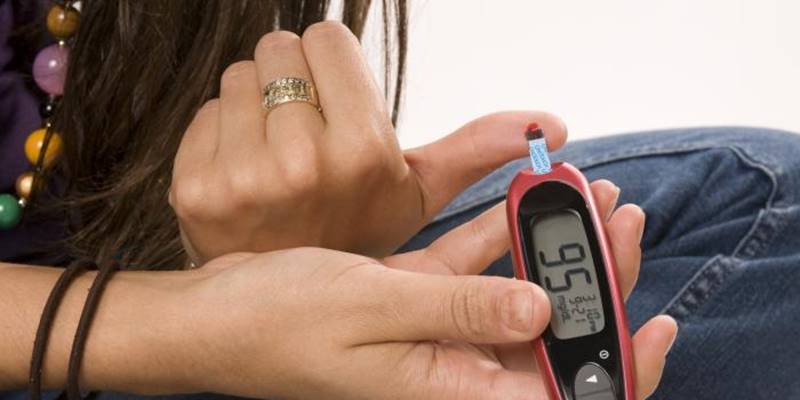
Image: PD

©2017 2 Minute Medicine, Inc. All rights reserved. No works may be reproduced without expressed written consent from 2 Minute Medicine, Inc. Inquire about licensing here. No article should be construed as medical advice and is not intended as such by the authors or by 2 Minute Medicine, Inc.


Tags: healthcare coststype 2 diabetes
Previous Post

Declining blood pressure in elderly associated with subcortical microinfarcts

Next Post

Use of carotid artery stenting increased amongst older patients in the US despite results from CREST trial

RelatedReports

Chronic Disease

Higher coffee intake is associated with lower visceral fat despite similar body mass index

September 8, 2026
Reduced gestational weight gain with lifestyle intervention
Chronic Disease

A healthy lifestyle may reduce risk of infection in patients with type 2 diabetes

September 2, 2026
Exercise improves aromatase inhibitor-induced arthralgia in breast cancer survivors
Chronic Disease

Resistance training is associated with lower risk of type 2 diabetes

July 2, 2026
Endocrinology

Biweekly glucagon-like peptide-1 receptor agonist bofanglutide improves glycemic control

June 29, 2026
Next Post
No long-term outcome differences between stenting versus surgery for carotid stenosis

Use of carotid artery stenting increased amongst older patients in the US despite results from CREST trial

Antidepressant use associated with increased risk of subsequent mania

Paternal SSRI usage correlates with increased ADHD rate in offspring

Variability in interpretation of breast biopsy slides associated with low verification of atypia and ductal carcinoma in situ

2 Minute Medicine Rewind December 11, 2017

EvidencePulse™ by 2 Minute Medicine 2026 evidence scan 3 reports You asked top stroke trials 2026 Synthesizing medical evidence... Top 2026 stroke trial results: OCEANIC — ischemic stroke: 6.2% vs 8.4% OPTION* — mRS 0–1: 43.6% vs 34.2% ORIENTAL* — mRS 0–2: 58.6% vs 46.6% *Higher sICH in intervention arms Participants randomizedN OCEANIC 12,327 OPTION 570 ORIENTAL 564 Ask about guidelines or landmark trials... ↑ Try EvidencePulse™ Ask the evidence.
Get the signal.
Try it now → Physician-trained medical AI by 2 Minute Medicine

2MM+ All Access

Full details →
$4.99 /month

5-day free trial · cancel anytime

  • ✓100+ physician-written reports
  • ✓EvidencePulse™ + HypeCheck™
  • ✓Ad-free reading + newsletters
Start 5-day free trial

Then $4.99/month. Manage renewal in your account.

2 Minute Medicine® is an award winning, physician-run, expert medical media company. Our content is curated, written and edited by practicing health professionals who have clinical and scientific expertise in their field of reporting. Our editorial management team is comprised of highly-trained MD physicians. Join numerous brands, companies, and hospitals who trust our licensed content.

Recent Reports

  • High maternal egg-peanut intake not associated with reduced infant allergy
  • The rotavirus vaccine (ROTASIIL) may reduce the incidence of hospitalization for rotavirus gastroenteritis in children
  • Emergency department triaging decisions supported by artificial intelligence (AI) led to improved triaging accuracy and patient flow
License Content
Terms of Use | Disclaimer
Cookie Policy
Cleantalk Pixel
2MM+ All Access Full details →

The medical literature, distilled daily.

Monthly plan selected: $4.99 /month.

$4.99/month

5-day free trial · cancel anytime

Start 5-day free trial

Then $4.99/month. Manage renewal in your account.

Yearly plan selected: $49.90 /year.

$49.90/year

2 months free · only $4.16/month

Start 5-day free trial

Then $49.90/year. Manage renewal in your account.

Membership benefits

  • ✓100+ physician-written reports
  • ✓AI EvidencePulse™ + HypeCheck™
  • ✓Ad-free reading + newsletters

Already a member? Sign in

  • About
  • Specialties
    • All Specialties, All Recent Reports
    • Cardiology
    • Chronic Disease
    • Dermatology
    • Emergency
    • Endocrinology
    • Gastroenterology
    • Imaging and Intervention
    • Infectious Disease
    • Nephrology
    • Neurology
    • Obstetrics
    • Oncology
    • Ophthalmology
    • Pediatrics
    • Pharma
    • Preclinical
    • Psychiatry
    • Public Health
    • Pulmonology
    • Rheumatology
    • Surgery
  • Tools
    • EvidencePulse™
    • HypeCheck™
    • NPI Registry Lookup
    • RVU Search
  • Pharma
  • AI Roundup
  • The Scan
  • Classics™
    • 2MM+ Online Access
    • Paperback and Ebook
  • Rewinds
  • Partners
    • License Content
    • Submit Press Release
    • Advertise with Us
  • Account
    • Subscribe
    • My account
    • Cart
    • Sign-in
No Result
View All Result

© 2026 2 Minute Medicine, Inc. - Physician-written medical news.