

• About
  • Masthead
  • License Content
  • Advertise
  • Submit Press Release
  • RSS/Email List
  • 2MM Podcast
  • Write for us
  • Contact Us
2 Minute Medicine
No Result
View All Result

No products in the cart.

SUBSCRIBE
  • Specialties
    • All Specialties, All Recent Reports
    • Cardiology
    • Chronic Disease
    • Dermatology
    • Emergency
    • Endocrinology
    • Gastroenterology
    • Imaging and Intervention
    • Infectious Disease
    • Nephrology
    • Neurology
    • Obstetrics
    • Oncology
    • Ophthalmology
    • Pediatrics
    • Pharma
    • Preclinical
    • Psychiatry
    • Public Health
    • Pulmonology
    • Rheumatology
    • Surgery
  • Tools
    • EvidencePulse™
    • RVU Search
    • NPI Registry Lookup
  • Pharma
  • AI News
  • The Scan+
  • Classics™+
    • 2MM+ Online Access
    • Paperback and Ebook
  • Rewinds
  • Partners
    • License Content
    • Submit Press Release
    • Advertise with Us
  • Account
    • Subscribe
    • Sign-in
    • My account
2 Minute Medicine
  • Specialties
    • All Specialties, All Recent Reports
    • Cardiology
    • Chronic Disease
    • Dermatology
    • Emergency
    • Endocrinology
    • Gastroenterology
    • Imaging and Intervention
    • Infectious Disease
    • Nephrology
    • Neurology
    • Obstetrics
    • Oncology
    • Ophthalmology
    • Pediatrics
    • Pharma
    • Preclinical
    • Psychiatry
    • Public Health
    • Pulmonology
    • Rheumatology
    • Surgery
  • Tools
    • EvidencePulse™
    • RVU Search
    • NPI Registry Lookup
  • Pharma
  • AI News
  • The Scan+
  • Classics™+
    • 2MM+ Online Access
    • Paperback and Ebook
  • Rewinds
  • Partners
    • License Content
    • Submit Press Release
    • Advertise with Us
  • Account
    • Subscribe
    • Sign-in
    • My account
SUBSCRIBE
2 Minute Medicine
Subscribe
Home All Specialties Chronic Disease

KLKB1 gene editing therapy reduces kallikrein levels in hereditary angioedema
byNhat Hung (Benjamin) LamandKiera Liblik
February 5, 2024
in Chronic Disease, Rheumatology
Reading Time: 3 mins read
0
Share on FacebookShare on Twitter

1. In this randomized controlled trial, gene-editing therapy targeting the kallikrein B1 gene (KLKB1) led to a significant reduction in plasma kallikrein levels among adults with hereditary angioedema (HA).

2. Trial participants also saw a reduction in angioedema attacks in the following 16 weeks and had no severe adverse events. 

Evidence Rating Level: 1 (Excellent)

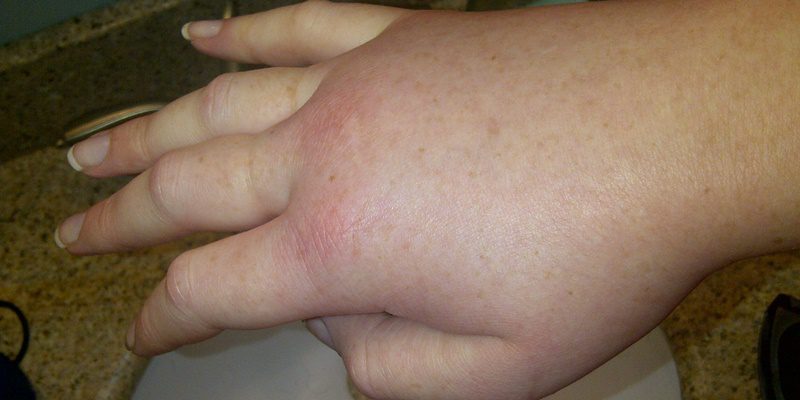
Study Rundown: HA is a rare autosomal dominant genetic disease characterized by unpredictable and potentially fatal attacks of swelling in the gastrointestinal tract, the larynx, and tissues throughout the body. The pathophysiology of HA involves the dysregulated production of bradykinin, leading to its hyperactivity and increased contact activation pathway. Plasma kallikrein, the precursor of which is encoded by KLKB1, is a key enzyme in bradykinin activation and a validated therapeutic target for HA. This current study was a phase one trial investigating NTLA-2002, an in vivo liver-targeting CRISPR-Cas9 therapy designed to permanently downregulate KLKB1 through gene editing for adults with HA. NTLA-2002 at escalating doses was not associated with dose-limiting toxicity or serious adverse events. It resulted in dose-dependent reductions in total plasma kallikrein. Correspondingly, NTLA-2002 recipients were observed to have reduced angioedema attacks from baseline at week 16. Given its early phase, this study was limited by its small size, limited duration, and lack of placebo control or randomization. Nevertheless, the results demonstrated that NTLA-2002 may be safe in providing long-term management of HA.

Click here to read the study in NEJM

Relevant Reading: Inhibition of Prekallikrein for Hereditary Angioedema

RELATED REPORTS

The addition of leflunomide (Arava) to prednisone (Deltasone) may not improve rate of remission in Takayasu arteritis

2 Minute Medicine Rewind July 6, 2026

Guselkumab (Tremfya) strengthens its case for protecting joints in psoriatic arthritis

In-Depth [randomized controlled trial]: This study was the phase one open-label dose-escalation portion of the combined phase one/two trial of NTLA-2002 in adult HA patients. Patients 18 years of age or older with a diagnosis of type one or type two HA and a history of at least three attacks within 90 days before screening were eligible for inclusion. Exclusion criteria included a concurrent diagnosis of other types of angioedema and a history of hypersensitivity to the lipid nanoparticle component of NTLA. Three patients received a single dose of 25mg of NTLA-2002, four received 50mg, and three received 75mg. The primary outcome of this trial was the safety and adverse effect profile of NTLA-2002. Patients’ angioedema symptom diary and samples for pharmacodynamic and pharmacokinetic assessments were obtained throughout. No dose-limiting toxicity was observed, while the most common adverse events were infusion-related reactions (in 70% of patients) and fatigue (in 60%). No severe adverse events (grade 3 or higher) were reported. Elevations in alanine aminotransferase and aspartate aminotransferase levels were observed in 60% of patients but were all low-grade and transient. Notably, total plasma kallikrein level was reduced from baseline in treated patients in a dose-dependent manner: mean percentage change of -67% among the 25mg recipients, -84% among the 50mg recipients, and -95% among the 75mg group. By 16 weeks, the mean percentage change in the number of angioedema attacks per month from baseline was -91% for the 25mg recipients, -97% for the 50mg recipients, and -80% for the 75mg recipients for an overall average of -95%. In summary, these results showed that NTLA-2002 had an acceptable safety profile for adults with HA and could offer a potential long-lasting management of this condition.

Image: PD

©2024 2 Minute Medicine, Inc. All rights reserved. No works may be reproduced without expressed written consent from 2 Minute Medicine, Inc. Inquire about licensing here. No article should be construed as medical advice and is not intended as such by the authors or by 2 Minute Medicine, Inc.

Tags: angioedemachronic diseaseCRISPR-Cas9 gene-editing therapygene therapyhereditary angioedemaimmunologykallikreinKLKB1KLKB1 gene editing therapyNTLA-2002rheumatology
Previous Post

Updated Outcomes of Sacituzumab Govitecan in Resistant Advanced Urothelial Carcinoma

Next Post

Lower risk of adverse outcomes secondary to hypertension observed at higher ages in elderly

RelatedReports

Lower target oxygen saturation in extremely preterm infants appears safe
Chronic Disease

The addition of leflunomide (Arava) to prednisone (Deltasone) may not improve rate of remission in Takayasu arteritis

July 10, 2026
Obstetric scoring systems overestimate cases of severe sepsis
All Specialties

2 Minute Medicine Rewind July 6, 2026

July 7, 2026
Brodalumab effective in treating active psoriatic arthritis
Chronic Disease

Guselkumab (Tremfya) strengthens its case for protecting joints in psoriatic arthritis

June 5, 2026
2 Minute Medicine: Pharma Roundup: Price Hikes, Breakthrough Approvals, Legal Showdowns, Biotech Expansion, and Europe’s Pricing Debate [May 12nd, 2025]
Cardiology

2 Minute Medicine: Pharma Roundup – New oral gonorrhea antibiotic Nuzolvence (zoliflodacin), late‑December cardiovascular and oncology drug approvals, first targeted complement inhibitor therapy for HSCT‑TMA (Yartemlea), and antibody‑drug conjugate (ADC) safety concerns with ifinatamab deruxtecan (I‑DXd) [January 2026]

January 26, 2026
Next Post
Prevalence of hypertension among adolescents varies by race and BMI

Lower risk of adverse outcomes secondary to hypertension observed at higher ages in elderly

Exercise intervention linked to reduced functional decline among elderly patients admitted to the hospital

Yoga And Mindfulness As Potential Treatment Adjuncts For Schizophrenia

The Scan by 2 Minute Medicine®:  Ultra-Trail du Mont-Blanc, Taylor Swift, NBA rookie Chet Holmgren and Magic Mushrooms!

The Scan by 2 Minute Medicine®: Stroke in Young Patients with Lupus, At-home Cervical Screening, Vaccinated and Acne Free! A Future Possibility, The Rise of a New Synthetic Opioid

2 Minute Medicine® is an award winning, physician-run, expert medical media company. Our content is curated, written and edited by practicing health professionals who have clinical and scientific expertise in their field of reporting. Our editorial management team is comprised of highly-trained MD physicians. Join numerous brands, companies, and hospitals who trust our licensed content.

Recent Reports

  • Praziquantel (Biltricide) is associated with higher cure rate than albendazole (Zentel) in the treatment of clonorchiasis
  • Use of semaglutide for weight control among women of reproductive age is more common in those using hormonal contraception
  • Contaminated drinking water is associated with increased risk of uterine cancer
License Content
Terms of Use | Disclaimer
Cookie Policy
Privacy Statement (EU)
Disclaimer
  • Specialties
    • All Specialties, All Recent Reports
    • Cardiology
    • Chronic Disease
    • Dermatology
    • Emergency
    • Endocrinology
    • Gastroenterology
    • Imaging and Intervention
    • Infectious Disease
    • Nephrology
    • Neurology
    • Obstetrics
    • Oncology
    • Ophthalmology
    • Pediatrics
    • Pharma
    • Preclinical
    • Psychiatry
    • Public Health
    • Pulmonology
    • Rheumatology
    • Surgery
  • Tools
    • EvidencePulse™
    • RVU Search
    • NPI Registry Lookup
  • Pharma
  • AI News
  • The Scan
  • Classics™
    • 2MM+ Online Access
    • Paperback and Ebook
  • Rewinds
  • Partners
    • License Content
    • Submit Press Release
    • Advertise with Us
  • Account
    • Subscribe
    • Sign-in
    • My account
No Result
View All Result

© 2026 2 Minute Medicine, Inc. - Physician-written medical news.