• About
  • Masthead
  • License Content
  • Advertise
  • Submit Press Release
  • RSS/Email List
  • 2MM Podcast
  • Write for us
  • Contact Us
2 Minute Medicine
No Result
View All Result

No products in the cart.

SUBSCRIBE
  • About
  • Specialties
    • All Specialties, All Recent Reports
    • Cardiology
    • Chronic Disease
    • Dermatology
    • Emergency
    • Endocrinology
    • Gastroenterology
    • Imaging and Intervention
    • Infectious Disease
    • Nephrology
    • Neurology
    • Obstetrics
    • Oncology
    • Ophthalmology
    • Pediatrics
    • Pharma
    • Preclinical
    • Psychiatry
    • Public Health
    • Pulmonology
    • Rheumatology
    • Surgery
  • Tools+
    • EvidencePulse™
    • HypeCheck™
    • NPI Registry Lookup
    • RVU Search
  • Pharma
  • AI Roundup
  • The Scan+
  • Classics™+
    • 2MM+ Online Access
    • Paperback and Ebook
  • Rewinds
  • Partners
    • License Content
    • Submit Press Release
    • Advertise with Us
  • Account
    • Subscribe
    • My account
    • Cart
    • Sign in
2 Minute Medicine
  • About
  • Specialties
    • All Specialties, All Recent Reports
    • Cardiology
    • Chronic Disease
    • Dermatology
    • Emergency
    • Endocrinology
    • Gastroenterology
    • Imaging and Intervention
    • Infectious Disease
    • Nephrology
    • Neurology
    • Obstetrics
    • Oncology
    • Ophthalmology
    • Pediatrics
    • Pharma
    • Preclinical
    • Psychiatry
    • Public Health
    • Pulmonology
    • Rheumatology
    • Surgery
  • Tools+
    • EvidencePulse™
    • HypeCheck™
    • NPI Registry Lookup
    • RVU Search
  • Pharma
  • AI Roundup
  • The Scan+
  • Classics™+
    • 2MM+ Online Access
    • Paperback and Ebook
  • Rewinds
  • Partners
    • License Content
    • Submit Press Release
    • Advertise with Us
  • Account
    • Subscribe
    • My account
    • Cart
    • Sign in
SUBSCRIBE
2 Minute Medicine
Subscribe
EvidencePulse™ by 2 Minute Medicine 2026 evidence scan 3 reports You asked top stroke trials 2026 Synthesizing medical evidence... Top 2026 stroke trial results: OCEANIC — ischemic stroke: 6.2% vs 8.4% OPTION* — mRS 0–1: 43.6% vs 34.2% ORIENTAL* — mRS 0–2: 58.6% vs 46.6% *Higher sICH in intervention arms Participants randomizedN OCEANIC 12,327 OPTION 570 ORIENTAL 564 Ask about guidelines or landmark trials... ↑ Try EvidencePulse™ Ask the evidence.
Get the signal.
Try it now → Physician-trained medical AI by 2 Minute Medicine
Home All Specialties Cardiology

Moderately accelerated cardiac pacing may be beneficial in patients with heart failure with preserved ejection fraction
byGursharan SohiandYuchen Dai
February 5, 2023
in Cardiology, Chronic Disease
Reading Time: 3 mins read
Atrial fibrillation-specific management increases days alive and out of hospital
Share on FacebookShare on Twitter

1. Quality of life at one year was improved in patients with heart failure with preserved ejection fraction (HFpEF) who had accelerated cardiac pacing versus those who had usual care cardiac pacing.

2. Accelerated pacing was also associated with lowered B-type natriuretic peptide (BNP) levels and increased activity.

Level of Evidence Rating: 1 (Excellent)

Study Rundown: Heart failure with preserved ejection fraction (HFpEF) is an increasingly common source of morbidity, with very few specific modalities available for treatment. While pharmacologically reducing cardiac pacing with beta-blockers is effective for heart failure with reduced ejection fraction, it is no longer recommended in HFpEF. In the myPACE trial, researchers attempted to determine whether actually accelerating cardiac pacing in patients with HFpEF improves outcomes compared to usual care.

100 patients in total were included in the study, with 48 in the intervention arm and 52 in the usual care arm. The baseline, pre-intervention heart rate was 65 beats per minute (bpm) in each group. After a median follow-up duration of 378 days, patient-reported quality of life as measured by the MLHFQ was significantly higher in the accelerated pacing group compared to the usual care group. MLHFQ scores decreased in the usual care group, reflecting a worse quality of life, while they increased over time in the accelerated pacing group. The paced intervention was also significantly associated with increased levels of reported physical activity compared to declines in the usual care group.

This randomized controlled trial by Infeld et al demonstrated considerable benefit to personalized, accelerated cardiac pacing in individuals with a pacemaker and HFpEF. This relationship was postulated to be secondary to improved cardiac contractility and relaxation in patients with slightly higher-paced heart rates, leading to improved hemodynamics and an overall better quality of life. Strengths of this study include the randomized, blinded design, which does well to control for confounding. Additionally, the magnitude of the associations found in this trial is remarkable and lends strength to the trial’s conclusions. Limitations include the relatively small sample size and intention-to-treat analysis, which may have overestimated treatment effects to some degree. Certainly, these results are promising and should be further interrogated in a more broad setting.

RELATED REPORTS

Frailty in older adults with atrial fibrillation is multifactorial and associated with metabolic and cognitive factors

Increased rapid eye movement (REM) sleep is associated with lower risks of several chronic diseases

Apixaban (Eliquis) is associated with reduced rates of ischemic stroke and bleeding in patients with atrial fibrillation and advanced chronic kidney disease compared with warfarin (Coumadin)

Click here to read this study in JAMA Cardiology

Relevant reading: European Society of Cardiology Quality Indicators for the care and outcomes of cardiac pacing: developed by the Working Group for Cardiac Pacing Quality Indicators in collaboration with the European Heart Rhythm Association of the European Society of Cardiology

In-Depth [randomized controlled trial]: A prospective, single-center, parallel-group randomized controlled trial was conducted with the trial protocol published a priori. Patients with stage B or C heart failure with an ejection fraction greater than 50% who had a pacemaker (predominantly atrial, conduction system or biventricular pacing) were eligible. The accelerated cardiac pacing intervention was derived from an algorithm which accounts for average resting heart rate by height and ejection fraction. The usual care group was paced at 60 beats per minute (bpm). The study’s primary outcome was patient-reported quality of life as determined by the Minnesota Living with Heart Failure Questionnaire (MLHFQ).

The baseline median heart rate in the intervention group was 65 bpm (interquartile range 61-70), and in the control group was also 65 (65-70).  At one month, the mean change in MLHFQ score was -0.6 points (standard deviation 9.1) in the control group and was lowered by 3.5 points (10.6) after a year. Conversely, the mean quality of life score was improved by 10.9 (13.7) points at one month and 15.0 (15.5) and one year in the accelerated pacing group. With regards to secondary outcomes, pro-BNP levels were decreased after one month in the paced group and increased in the usual care group (p = 0.02). Additionally, levels of physical activity were also significantly higher in the intervention group at one month (p = 0.02), demonstrating a decline from the baseline in the control group.

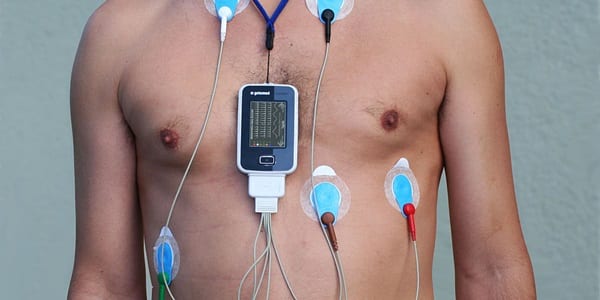
Image: PD

©2023 2 Minute Medicine, Inc. All rights reserved. No works may be reproduced without expressed written consent from 2 Minute Medicine, Inc. Inquire about licensing here. No article should be construed as medical advice and is not intended as such by the authors or by 2 Minute Medicine, Inc.

Tags: atrial fibrillationHFpEF (heart failure with preserved ejection fractionmyPACEpacingquality of life
Previous Post

Impact of COVID-19 on pediatric asthma-related healthcare utilization in New York City

Next Post

2 Minute Medicine Rewind February 6, 2023

RelatedReports

Cardiology

Frailty in older adults with atrial fibrillation is multifactorial and associated with metabolic and cognitive factors

September 30, 2026
Cardiology

Increased rapid eye movement (REM) sleep is associated with lower risks of several chronic diseases

September 23, 2026
Nephrology

Apixaban (Eliquis) is associated with reduced rates of ischemic stroke and bleeding in patients with atrial fibrillation and advanced chronic kidney disease compared with warfarin (Coumadin)

September 9, 2026
Long-term outcomes for off-pump and on-pump CABG are similar
Weekly Rewinds

2 Minute Medicine Rewind September 7, 2026

September 7, 2026
Next Post
Prevalence of hypertension among adolescents varies by race and BMI

2 Minute Medicine Rewind February 6, 2023

Wide-ranging health benefits from outdoor adult walking groups

Exercise may be as effective as pharmacotherapy in managing osteoarthritis pain

Antioxidants, omega-3 lack benefit in age-related macular degeneration

Age-related macular degeneration may be associated with depression risk

EvidencePulse™ by 2 Minute Medicine 2026 evidence scan 3 reports You asked top stroke trials 2026 Synthesizing medical evidence... Top 2026 stroke trial results: OCEANIC — ischemic stroke: 6.2% vs 8.4% OPTION* — mRS 0–1: 43.6% vs 34.2% ORIENTAL* — mRS 0–2: 58.6% vs 46.6% *Higher sICH in intervention arms Participants randomizedN OCEANIC 12,327 OPTION 570 ORIENTAL 564 Ask about guidelines or landmark trials... ↑ Try EvidencePulse™ Get the signal. Try it now → Physician-trained medical AI by 2 Minute Medicine

2MM+ All Access

Full details →
$4.99 /month

3-day free trial · cancel anytime

  • ✓100+ physician-written reports
  • ✓EvidencePulse™ + HypeCheck™
  • ✓Ad-free reading + newsletters
Start 3-day free trial

Then $4.99/month. Manage renewal in your account.

2 Minute Medicine® is an award winning, physician-run, expert medical media company. Our content is curated, written and edited by practicing health professionals who have clinical and scientific expertise in their field of reporting. Our editorial management team is comprised of highly-trained MD physicians. Join numerous brands, companies, and hospitals who trust our licensed content.

Recent Reports

  • Low-dose radiotherapy may be effective as a short-term therapeutic option in knee osteoarthritis
  • Physician edits to artificial intelligence (AI)-generated messages to patients were associated with different response time burdens
  • Male sex is associated with higher mortality among patients with hepatocellular carcinoma
License Content
Terms of Use | Disclaimer
Cookie Policy
Cleantalk Pixel
2MM+ All Access Full details →

The medical literature, distilled daily.

Monthly plan selected: $4.99 /month.

$4.99/month

3-day free trial · cancel anytime

Start 3-day free trial

Then $4.99/month. Manage renewal in your account.

Yearly plan selected: $49.90 /year.

$49.90/year

2 months free

Start 3-day free trial

Then $49.90/year.

Membership benefits

  • ✓100+ physician-written reports
  • ✓AI EvidencePulse™ + HypeCheck™
  • ✓Ad-free reading + newsletters

Already a member? Sign in

  • About
  • Specialties
    • All Specialties, All Recent Reports
    • Cardiology
    • Chronic Disease
    • Dermatology
    • Emergency
    • Endocrinology
    • Gastroenterology
    • Imaging and Intervention
    • Infectious Disease
    • Nephrology
    • Neurology
    • Obstetrics
    • Oncology
    • Ophthalmology
    • Pediatrics
    • Pharma
    • Preclinical
    • Psychiatry
    • Public Health
    • Pulmonology
    • Rheumatology
    • Surgery
  • Tools
    • EvidencePulse™
    • HypeCheck™
    • NPI Registry Lookup
    • RVU Search
  • Pharma
  • AI Roundup
  • The Scan
  • Classics™
    • 2MM+ Online Access
    • Paperback and Ebook
  • Rewinds
  • Partners
    • License Content
    • Submit Press Release
    • Advertise with Us
  • Account
    • Subscribe
    • My account
    • Cart
    • Sign in
No Result
View All Result

© 2026 2 Minute Medicine, Inc. - Physician-written medical news.