• About
  • Masthead
  • License Content
  • Advertise
  • Submit Press Release
  • RSS/Email List
  • 2MM Podcast
  • Write for us
  • Contact Us
2 Minute Medicine
No Result
View All Result

No products in the cart.

SUBSCRIBE
  • Specialties
    • All Specialties, All Recent Reports
    • Cardiology
    • Chronic Disease
    • Dermatology
    • Emergency
    • Endocrinology
    • Gastroenterology
    • Imaging and Intervention
    • Infectious Disease
    • Nephrology
    • Neurology
    • Obstetrics
    • Oncology
    • Ophthalmology
    • Pediatrics
    • Pharma
    • Preclinical
    • Psychiatry
    • Public Health
    • Pulmonology
    • Rheumatology
    • Surgery
  • Tools
    • EvidencePulse™
    • RVU Search
    • NPI Registry Lookup
  • Pharma
  • AI News
  • The Scan+
  • Classics™+
    • 2MM+ Online Access
    • Paperback and Ebook
  • Rewinds
  • Partners
    • License Content
    • Submit Press Release
    • Advertise with Us
  • Account
    • Subscribe
    • Sign-in
    • My account
2 Minute Medicine
  • Specialties
    • All Specialties, All Recent Reports
    • Cardiology
    • Chronic Disease
    • Dermatology
    • Emergency
    • Endocrinology
    • Gastroenterology
    • Imaging and Intervention
    • Infectious Disease
    • Nephrology
    • Neurology
    • Obstetrics
    • Oncology
    • Ophthalmology
    • Pediatrics
    • Pharma
    • Preclinical
    • Psychiatry
    • Public Health
    • Pulmonology
    • Rheumatology
    • Surgery
  • Tools
    • EvidencePulse™
    • RVU Search
    • NPI Registry Lookup
  • Pharma
  • AI News
  • The Scan+
  • Classics™+
    • 2MM+ Online Access
    • Paperback and Ebook
  • Rewinds
  • Partners
    • License Content
    • Submit Press Release
    • Advertise with Us
  • Account
    • Subscribe
    • Sign-in
    • My account
SUBSCRIBE
2 Minute Medicine
Subscribe
Home All Specialties Oncology

MRI screening may improve osteonecrosis outcomes in children with leukemia

byMonica ParksandDavid Wang
January 25, 2015
in Oncology, Pediatrics, Surgery
Reading Time: 3 mins read
0
Share on FacebookShare on Twitter

1. In a prospective cohort of over 400 children with acute lymphoblastic leukemia treated with chemotherapy, hip MRI have high sensitivity and specificity for detecting glucocorticoid-induced osteonecrosis.

2. Use of screening in children older than 10 years of age within 1 year after initiation of glucocorticoids may delay and prevent future hip joint destruction and collapse.

Evidence Rating Level: 2 (Good)

Study Rundown: Glucocorticoid-induced osteonecrosis of the hip is a common complication in children treated for acute lymphoblastic leukemia (ALL) and may lead to femoral head collapse and long-lasting disability. However, there is little data on the specific time of onset or the risk factors that increase the risk of osteonecrosis in this population. The purpose of this study was to evaluate the utility of early screening magnetic resonance imaging (MRI) in identifying asymptomatic osteonecrosis in children treated for ALL. The authors prospectively followed over 400 patients that underwent screening MRI of the hip at 6.5 months and 9 months into chemotherapy (early screen) and after (final screening) chemotherapy. At the conclusion of the study, the authors found that 22% of all ALL patients screened develop radiographic signs of osteonecrosis, with the majority of patients detected by 1 year after starting chemotherapy. Furthermore, age was associated with the severity of osteonecrosis and response to treatment. Age over 10 years was associated with more extensive osteonecrosis and increased rate of total hip arthroplasties compared to patients less than 10 years of age. The results of this study support the use of early screening for patients 10 years or older to prevent progressive joint damage. This study was strengthened by the size of the population screened and the defined glucocorticoid schedules within this cohort. The study was limited by relatively short follow-up. Additional longitudinal studies are needed to accurately describe the long-term outcomes of these patients.

Click to read the study in JCO

Relevant Reading: A lethally irradiated allogeneic granulocyte-macrophage colony stimulating factor-secreting tumor vaccine for pancreatic adenocarcinoma: a phase II trial of safety, efficacy, and immune activation

RELATED REPORTS

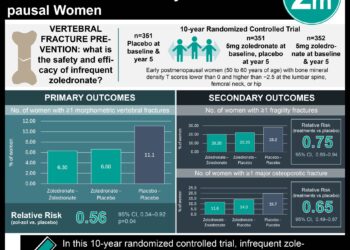
#VisualAbstract: Infrequent Zoledronate over 10 years Prevents Frcatures in Early Postmenopausal Women

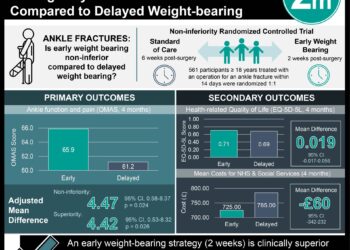
#VisualAbstract: Early Weight-Bearing Improves Outcomes in Surgically Treated Ankle Fractures Compared to Delayed Weight-Bearing

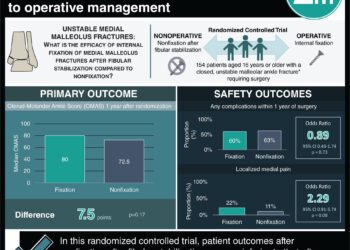
#VisualAbstract: Nonoperative management of unstable medial malleolus fractures is noninferior to operative management

In-Depth [prospective cohort]: A cohort of 462 pediatric patients diagnosed with ALL and treated with the Total Therapy Study SV chemotherapy protocol from 2000-2007 were included in this study. Hip MRI was performed at weeks 10 and 20 of treatment, approximately 6.5 and 9 months from diagnosis (early screen). Patients were scanned again at completion of therapy (final screen). Patients were surveyed on symptoms of osteonecrosis during weekly clinic visits for chemotherapy. At the completion of the trial, the early screen and final screen detected osteonecrosis of at least one hip in 17.1% and 21.7% of patients, respectively. Patients greater than 10 years of age had significantly greater risk of extensive osteonecrosis compared to patients 10 years or younger (HR: 15.6; 95% CI: 6.7 to 36.2; p<0.001). In the 10 years or older group, MRI screening detected 40 hips with severe osteonecrosis, with 19 hips requiring total hip arthroplasty. No hips required arthroplasty in the 10 years or younger cohort. Overall, hip MRI screening sensitivity was 84.1% and specificity was 99.4%.

More from this author: Rituximab linked with reduced chronic immune disease following stem cell transplantation, High-dose prophylaxis for hemophilia increases costs with minimal benefit, Ambrisentan found ineffective against idiopathic pulmonary fibrosis

Image: PD

©2015 2 Minute Medicine, Inc. All rights reserved. No works may be reproduced without expressed written consent from 2 Minute Medicine, Inc. No article should be construed as medical advice and is not intended as such by the authors, editors, staff or by 2 Minute Medicine, Inc.

Tags: avascular necrosisorthopedicspediatric oncology
Previous Post

Video therapy may improve behavioral outcomes in infants at risk for autism

Next Post

Maternal serum microRNAs not predictive of preterm birth

RelatedReports

#VisualAbstract: Infrequent Zoledronate over 10 years Prevents Frcatures in Early Postmenopausal Women
StudyGraphics

#VisualAbstract: Infrequent Zoledronate over 10 years Prevents Frcatures in Early Postmenopausal Women

January 22, 2025
#VisualAbstract: Early Weight-Bearing Improves Outcomes in Surgically Treated Ankle Fractures Compared to Delayed Weight-Bearing
StudyGraphics

#VisualAbstract: Early Weight-Bearing Improves Outcomes in Surgically Treated Ankle Fractures Compared to Delayed Weight-Bearing

July 4, 2024
#VisualAbstract: Nonoperative management of unstable medial malleolus fractures is noninferior to operative management
StudyGraphics

#VisualAbstract: Nonoperative management of unstable medial malleolus fractures is noninferior to operative management

January 24, 2024
ABCD2 Score: Predicting Early Stroke Risk After Transient Ischemic Attack (TIA) [Classics Series]
Neurology Classics

The OVIVA trial: Oral versus intravenous antibiotics for bone and joint infection [Classics Series]

September 14, 2022
Next Post
Women electing abortion more likely to be victims of domestic violence

Maternal serum microRNAs not predictive of preterm birth

Danish case control study links oral contraceptives with glioma

Danish case control study links oral contraceptives with glioma

Increased risk of non-melanoma skin cancer with subsequent keratinocytes carcinoma

Increased risk of non-melanoma skin cancer with subsequent keratinocytes carcinoma

2 Minute Medicine® is an award winning, physician-run, expert medical media company. Our content is curated, written and edited by practicing health professionals who have clinical and scientific expertise in their field of reporting. Our editorial management team is comprised of highly-trained MD physicians. Join numerous brands, companies, and hospitals who trust our licensed content.

Recent Reports

  • Placental abruption during pregnancy is not associated with increased risk of cardiovascular mortality in children
  • Pfizer’s Talzenna combo significantly delays prostate cancer progression
  • Bottom-vented bottles may not reduce gastrointestinal discomfort in infants
License Content
Terms of Use | Disclaimer
Cookie Policy
Privacy Statement (EU)
Disclaimer

The Classics in Medicine Paperback Released!

Over the past 30 years, the transition from print to digital media has contributed to an exponential increase in medical literature. In response, 2 Minute Medicine presents 160+ authoritative, physician-written summaries of the most cited landmark trials in medicine.

amazon-logo_blackGet-it-on-iBooks-badge

Click anywhere to close this announcement

  • Specialties
    • All Specialties, All Recent Reports
    • Cardiology
    • Chronic Disease
    • Dermatology
    • Emergency
    • Endocrinology
    • Gastroenterology
    • Imaging and Intervention
    • Infectious Disease
    • Nephrology
    • Neurology
    • Obstetrics
    • Oncology
    • Ophthalmology
    • Pediatrics
    • Pharma
    • Preclinical
    • Psychiatry
    • Public Health
    • Pulmonology
    • Rheumatology
    • Surgery
  • Tools
    • EvidencePulse™
    • RVU Search
    • NPI Registry Lookup
  • Pharma
  • AI News
  • The Scan
  • Classics™
    • 2MM+ Online Access
    • Paperback and Ebook
  • Rewinds
  • Partners
    • License Content
    • Submit Press Release
    • Advertise with Us
  • Account
    • Subscribe
    • Sign-in
    • My account
No Result
View All Result

© 2026 2 Minute Medicine, Inc. - Physician-written medical news.