• About
  • Masthead
  • License Content
  • Advertise
  • Submit Press Release
  • RSS/Email List
  • 2MM Podcast
  • Write for us
  • Contact Us
2 Minute Medicine
No Result
View All Result

No products in the cart.

SUBSCRIBE
  • Specialties
    • All Specialties, All Recent Reports
    • Cardiology
    • Chronic Disease
    • Dermatology
    • Emergency
    • Endocrinology
    • Gastroenterology
    • Imaging and Intervention
    • Infectious Disease
    • Nephrology
    • Neurology
    • Obstetrics
    • Oncology
    • Ophthalmology
    • Pediatrics
    • Pharma
    • Preclinical
    • Psychiatry
    • Public Health
    • Pulmonology
    • Rheumatology
    • Surgery
  • Tools
    • EvidencePulse™
    • RVU Search
    • NPI Registry Lookup
  • Pharma
  • AI News
  • The Scan+
  • Classics™+
    • 2MM+ Online Access
    • Paperback and Ebook
  • Rewinds
  • Partners
    • License Content
    • Submit Press Release
    • Advertise with Us
  • Account
    • Subscribe
    • Sign-in
    • My account
2 Minute Medicine
  • Specialties
    • All Specialties, All Recent Reports
    • Cardiology
    • Chronic Disease
    • Dermatology
    • Emergency
    • Endocrinology
    • Gastroenterology
    • Imaging and Intervention
    • Infectious Disease
    • Nephrology
    • Neurology
    • Obstetrics
    • Oncology
    • Ophthalmology
    • Pediatrics
    • Pharma
    • Preclinical
    • Psychiatry
    • Public Health
    • Pulmonology
    • Rheumatology
    • Surgery
  • Tools
    • EvidencePulse™
    • RVU Search
    • NPI Registry Lookup
  • Pharma
  • AI News
  • The Scan+
  • Classics™+
    • 2MM+ Online Access
    • Paperback and Ebook
  • Rewinds
  • Partners
    • License Content
    • Submit Press Release
    • Advertise with Us
  • Account
    • Subscribe
    • Sign-in
    • My account
SUBSCRIBE
2 Minute Medicine
Subscribe
Home All Specialties Imaging and Intervention

MRI-targeted biopsies alone may underestimate grade of prostate cancer 
byHarsh ShahandDeepti Shroff
March 19, 2020
in Imaging and Intervention, Oncology, Surgery, Urology
Reading Time: 3 mins read
0
Share on FacebookShare on Twitter

1. In this prospective cohort, MRI-targeted biopsies alone, underestimated the histologic grade of prostate cancer tumors.

2. The combination of MRI targeted biopsy and systematic biopsy led to greater detection of all prostate cancers, and the upgrade of tumors to grade 3 or higher on histopathological analysis, upon radical prostatectomy, were lower in the group.

Evidence Rating Level: 1 (Excellent)

Study Rundown: Systematic biopsies for the initial diagnosis and grading of prostate cancer have resulted in undertreatment of patients with high-grade disease. Prostate multiparametric MRI allows for MRI-targeted biopsies which has been shown to improve detection of high-grade cancers than systematic biopsy. Prostate multiparametric MRI allowed for MRI-targeted biopsies which resulted in a larger rate of detection of high-grade cancers than systematic biopsy. The Trio Study, a sub-study within the Tracking Devices of Locate Abnormalities During Invasive Procedures clinical trial, assessed the MRI-targeted, systematic, and combined biopsy to define the most effective method for prostate cancer diagnosis. The primary outcome of cancer detection for each biopsy method, as assessed by grade group, indicated a more accurate prediction of a patient’s true pathological grade group with the combined biopsy detection. Using histopathology, after radical prostatectomy, the combined biopsy detection showed fewer upgrade reclassification to grade 3 or higher. The prospective cohort study provided evidence the combined biopsy detection method more accurately predicted the patient’s true pathological grade group when compared to the gold standard of whole-mount histopathological analysis. Limitations included reproducibility of results with less experienced practitioners, referral basis of patients participating in the study not mirroring the disease in the general population, and potential MRI scan labelling errors resulting in bias.

Click to read the study in NEJM

Relevant Reading: Comparison of Targeted vs Systematic Prostate Biopsy in Men Who Are Biopsy Naive: The Prospective Assessment of Image Registration in the Diagnosis of Prostate Cancer (PAIREDCAP) Study

RELATED REPORTS

Pfizer’s Talzenna combo significantly delays prostate cancer progression

2 Minute Medicine: Pharma Roundup – Pfizer’s Talzenna delays prostate cancer progression, apixaban lowers VTE bleeding risk, Lilly’s retatrutide hits Phase III metabolic targets, and FDA warns Novo Nordisk over safety reporting violations [March 2026]

New model enhances prediction of prostate cancer-specific mortality

In-Depth [prospective cohort]: The prospective cohort study enrolled 2103 men at the National Cancer Institute (NCI) from 2007 to 2019. Inclusion criteria included adult men (≥ 18 years of age), elevated serum prostate-specific antigen (PSA) level, abnormal digital rectal exam, and the presence of a prostate lesion on MRI. Exclusion criteria included previous treatment for prostate cancer, the absence of visible prostate lesions on MRI, or the inability to undergo an MRI. All patients underwent the MRI-targeted and systematic biopsies. One physician conducted the MRI-targeted biopsy by superimposing the T2-weighted MRI images onto real-time prostate ultrasonographic scans. Another physician performed the 12-core systematic biopsy with ultrasonographic guidance. The biopsies were classified into grade groups ranging from 1 to 5 for systematic, MRI-targeted, and combined (systematic and MRI-targeted) biopsies. Clinically significant disease was classified as grade group 3 or higher. When compared to systematic biopsies, MRI-targeted biopsy detection led to more diagnoses in grade 3 (p=0.004), 4 (p<0.001), and 5 (p=0.003). No detection of cancer for grade group 3 or higher would have occurred for 41 patients with MRI-targeted detection alone, without additional systematic biopsy. Of the 466 patient lesions classified as grade group 3 or higher, 175 were detected by MRI-targeted biopsy only and 41 were detected by systematic biopsy alone. Among the group of patients undergoing a radical prostatectomy after their biopsies, upgrading occurred on histopathological analysis to clinically significant disease (grade group ≥3) for systematic (41.6%), MRI-targeted (30.9%), and combined (14.4%) biopsies.

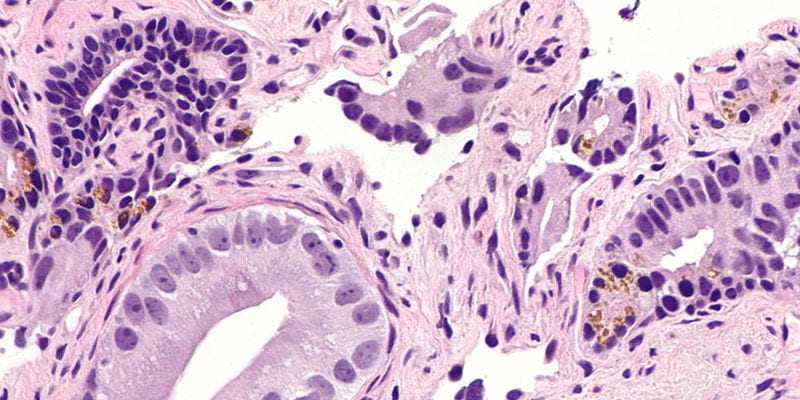
Image: PD

©2020 2 Minute Medicine, Inc. All rights reserved. No works may be reproduced without expressed written consent from 2 Minute Medicine, Inc. Inquire about licensing here. No article should be construed as medical advice and is not intended as such by the authors or by 2 Minute Medicine, Inc.

Tags: histopathologic gradingmriMRI-targeted biopsyprostate cancersystematic biopsy
Previous Post

Morbidity and mortality associated with gun violence in the United States

Next Post

Development and validation of PEN-FAST clinical prediction tool for possible penicillin allergy

RelatedReports

Radiation plus hormone therapy may improve prostate cancer survival
Oncology

Pfizer’s Talzenna combo significantly delays prostate cancer progression

April 9, 2026
2 Minute Medicine: Pharma Roundup: Price Hikes, Breakthrough Approvals, Legal Showdowns, Biotech Expansion, and Europe’s Pricing Debate [May 12nd, 2025]
Endocrinology

2 Minute Medicine: Pharma Roundup – Pfizer’s Talzenna delays prostate cancer progression, apixaban lowers VTE bleeding risk, Lilly’s retatrutide hits Phase III metabolic targets, and FDA warns Novo Nordisk over safety reporting violations [March 2026]

March 30, 2026
Testosterone replacement in male cancer survivors helps improve body composition
Oncology

New model enhances prediction of prostate cancer-specific mortality

January 12, 2026
Population-based risk factors and geographical trends identified for vitiligo
Oncology

Increasing cancer incidence rates in younger and older adults worldwide

October 20, 2025
Next Post
Quick Take: Effect of Pregabalin on Radiotherapy-Related Neuropathic Pain in Patients With Head and Neck Cancer: A Randomized Controlled Trial

Development and validation of PEN-FAST clinical prediction tool for possible penicillin allergy

Intensive blood pressure control may decrease risk of mild cognitive impairment

Variation in blood pressure and long-term risk of dementia: A population-based cohort study

Novel coronavirus identified from patients with pneumonia in Wuhan, China

Large study describes characteristics of children with COVID-19 in China

2 Minute Medicine® is an award winning, physician-run, expert medical media company. Our content is curated, written and edited by practicing health professionals who have clinical and scientific expertise in their field of reporting. Our editorial management team is comprised of highly-trained MD physicians. Join numerous brands, companies, and hospitals who trust our licensed content.

Recent Reports

  • Delayed initiation of antibiotic therapy is associated with worse outcomes in skin and soft tissue infections
  • Caloric restriction and intermittent fasting show mixed human longevity data
  • Selective serotonin reuptake inhibitors may reduce risk of total joint arthroplasty in osteoarthritis
License Content
Terms of Use | Disclaimer
Cookie Policy
Privacy Statement (EU)
Disclaimer
  • Specialties
    • All Specialties, All Recent Reports
    • Cardiology
    • Chronic Disease
    • Dermatology
    • Emergency
    • Endocrinology
    • Gastroenterology
    • Imaging and Intervention
    • Infectious Disease
    • Nephrology
    • Neurology
    • Obstetrics
    • Oncology
    • Ophthalmology
    • Pediatrics
    • Pharma
    • Preclinical
    • Psychiatry
    • Public Health
    • Pulmonology
    • Rheumatology
    • Surgery
  • Tools
    • EvidencePulse™
    • RVU Search
    • NPI Registry Lookup
  • Pharma
  • AI News
  • The Scan
  • Classics™
    • 2MM+ Online Access
    • Paperback and Ebook
  • Rewinds
  • Partners
    • License Content
    • Submit Press Release
    • Advertise with Us
  • Account
    • Subscribe
    • Sign-in
    • My account
No Result
View All Result

© 2026 2 Minute Medicine, Inc. - Physician-written medical news.