• About
  • Masthead
  • License Content
  • Advertise
  • Submit Press Release
  • RSS/Email List
  • 2MM Podcast
  • Write for us
  • Contact Us
2 Minute Medicine
No Result
View All Result

No products in the cart.

SUBSCRIBE
  • Specialties
    • All Specialties, All Recent Reports
    • Cardiology
    • Chronic Disease
    • Dermatology
    • Emergency
    • Endocrinology
    • Gastroenterology
    • Imaging and Intervention
    • Infectious Disease
    • Nephrology
    • Neurology
    • Obstetrics
    • Oncology
    • Ophthalmology
    • Pediatrics
    • Preclinical
    • Psychiatry
    • Public Health
    • Pulmonology
    • Rheumatology
    • Surgery
  • The Scan+
  • Wellness
  • Classicsâ„¢+
    • 2MM+ Online Access
    • Paperback and Ebook
  • Rewinds
  • Visual
  • Career
  • Podcasts
  • Partners
    • License Content
    • Submit Press Release
    • Advertise with Us
  • Account
    • Subscribe
    • Sign-in
    • My account
2 Minute Medicine
  • Specialties
    • All Specialties, All Recent Reports
    • Cardiology
    • Chronic Disease
    • Dermatology
    • Emergency
    • Endocrinology
    • Gastroenterology
    • Imaging and Intervention
    • Infectious Disease
    • Nephrology
    • Neurology
    • Obstetrics
    • Oncology
    • Ophthalmology
    • Pediatrics
    • Preclinical
    • Psychiatry
    • Public Health
    • Pulmonology
    • Rheumatology
    • Surgery
  • The Scan+
  • Wellness
  • Classicsâ„¢+
    • 2MM+ Online Access
    • Paperback and Ebook
  • Rewinds
  • Visual
  • Career
  • Podcasts
  • Partners
    • License Content
    • Submit Press Release
    • Advertise with Us
  • Account
    • Subscribe
    • Sign-in
    • My account
SUBSCRIBE
2 Minute Medicine
Subscribe
Home All Specialties Gastroenterology

Negative colonoscopy screening linked to reduced risk of colorectal cancer and colorectal cancer-related death
byJames EnglandandAnees Daud
December 20, 2018
in Gastroenterology, Oncology, Public Health, Surgery
Reading Time: 2 mins read
0
Share on FacebookShare on Twitter

1. Among average-risk adults, negative findings of a screening colonoscopy was linked to reduced risk of colorectal cancer and colorectal cancer related-deaths compared to individuals who had never been screened.

2. The risk reduction associated with negative findings at screening was attenuated with time but was still significantly lower at the guideline-recommended 10-year follow-up.

Evidence Rating Level: 2 (Good)           

Study Rundown: Colorectal cancer (CRC) screening programs have been well established to reduce cancer-related mortality by finding cancerous and pre-cancerous lesions that may be amenable to curative resection. Current guidelines recommend colorectal cancer screening at 10-year intervals following negative findings of a screening colonoscopy. However, the data supporting this 10-year time interval is limited and the true risk of colorectal cancer and related mortality following a negative screening colonoscopy is unknown. The current study sought to evaluate the risk of CRC and related mortality following a negative screening colonoscopy in average-risk adults compared to those who have never undergone screening. The study found that the risk of CRC and CRC-related mortality were reduced following a negative colonoscopy up to the 12 years of follow-up in the study. The magnitude of reduction decreased with time but was still significantly lower at the 10-year mark currently recommended by guidelines.

The strengths of the study include the large population of average-risk adults undergoing screening colonoscopies and data on cancer and mortality risk with long-term follow-up. The main limitation of the study was the retrospective cohort design with incomplete data on possible confounders including important exposures (smoking, diet) and family history of CRC.

Click to read the study in JAMA Internal Medicine

RELATED REPORTS

#VisualAbstract: Glucagon-like peptide 1 receptor agonists (GLP-1RAs) prescribed for type 2 diabetes are associated with reduced colorectal cancer (CRC) risk compared to other antidiabetic agents

#VisualAbstract: Preoperative Treatment of Locally Advanced Rectal Cancer

Multicancer early detection blood tests show promise but warrant further clinical evaluation

Relevant Reading: World Endoscopy Organization Consensus Statements on Post-Colonoscopy and Post-Imaging Colorectal Cancer

In-Depth [retrospective cohort]: This was a retrospective cohort study of health plan members from Kaiser Permanente Northern California and included adults aged 50-75 years from 1998 to 2015. Patients were included if they had more than one year of continuous health-care coverage, and were excluded if they were higher-than-average-risk for colon cancer. The primary outcome was the hazard ratio for CRC and cancer-related mortality after adjustment for age, sex, race, BMI, and comorbidity.

The study included 1,251,318 patients with a combined 9,339,345 person-years of follow-up. In the unscreened cohort, the rates of CRC ranged from 62.9 per 100,000 person-years (95% CI, 55.7-70.0) in the first year to 224.8 per 100,000 person-years (95% CI, 202.5-247.0) after 12 years. The rates of CRC in the negative colonoscopy group was 16.6 per 100,000 person-years (95% CI, 6.7-26.6) in the first year to a high of 133.2 per 100,000 person-years (95% CI, 70.9-227.8). At the guideline recommended 10-year mark the negative colonoscopy group had a lower risk of CRC (hazard ratio, 0.54; 95%CI, 0.31-0.94) and cancer-related mortality (hazard ratio, 0.12; 95%CI, 0.02-0.82).

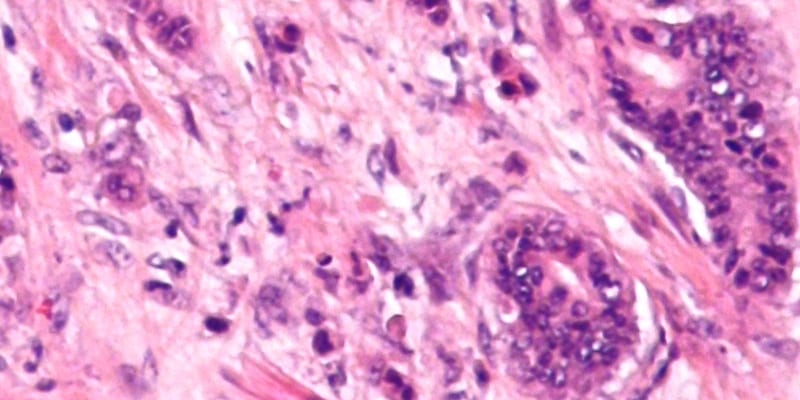
Image: PD

©2018 2 Minute Medicine, Inc. All rights reserved. No works may be reproduced without expressed written consent from 2 Minute Medicine, Inc. Inquire about licensing here. No article should be construed as medical advice and is not intended as such by the authors or by 2 Minute Medicine, Inc.

 

Tags: colonscopycolorectal cancer
Previous Post

Opioids unlikely to provide clinically meaningful reduction in chronic non-cancer pain

Next Post

Fleischner Society Guidelines, 2017 Update: Consolidated follow-up recommendations for incidental solid and subsolid pulmonary nodules [Classics Series]

RelatedReports

#VisualAbstract: Glucagon-like peptide 1 receptor agonists (GLP-1RAs) prescribed for type 2 diabetes are associated with reduced colorectal cancer (CRC) risk compared to other antidiabetic agents
StudyGraphics

#VisualAbstract: Glucagon-like peptide 1 receptor agonists (GLP-1RAs) prescribed for type 2 diabetes are associated with reduced colorectal cancer (CRC) risk compared to other antidiabetic agents

December 21, 2023
#VisualAbstract: Decolonization in Nursing Homes to Prevent Infection and Hospitalization
StudyGraphics

#VisualAbstract: Preoperative Treatment of Locally Advanced Rectal Cancer

October 20, 2023
Chronic Disease

Multicancer early detection blood tests show promise but warrant further clinical evaluation

October 18, 2023
Racial differences in colorectal cancer survival linked to health at initial diagnosis
Chronic Disease

Computer-aided detection does not improve neoplasm detection with colonoscopy

October 9, 2023
Next Post

Fleischner Society Guidelines, 2017 Update: Consolidated follow-up recommendations for incidental solid and subsolid pulmonary nodules [Classics Series]

Paternal factors associated with short interpregnancy interval

Operative vaginal delivery associated with higher risk of anal incontinence and pelvic organ prolapse

Using HEART score to risk stratify patients with chest pain is safe but underutilized in the ED

Quick Take: Christmas, National Holidays, Sport Events, and Time Factors as Triggers of Acute Myocardial Infarction: SWEDEHEART Observational Study 1998-2013

License Our Award-Winning Physician-Written Medical News and Visual Abstracts

2 Minute Medicine is the leading authoritative medical news licensing service, and the only with reports written by practicing doctors.

LICENSE CONTENT

2MM+ Premium Access

No ads & unlimited access to all current reports, over 9000 searchable archived reports, visual abstracts, Weekly Rewinds, and the online edition of The Classics Seriesâ„¢ textbook.

Subscription Options

2 Minute Medicine® is an award winning, physician-run, expert medical media company. Our content is curated, written and edited by practicing health professionals who have clinical and scientific expertise in their field of reporting. Our editorial management team is comprised of highly-trained MD physicians. Join numerous brands, companies, and hospitals who trust our licensed content.

Recent Reports

  • Low-dose calcium noninferior to high-dose calcium in reducing rates of pre-eclampsia
  • ST-elevation myocardial infarction with nonobstructive coronary arteries associated with significant mortality
  • Improved long-term survival with resynchronization versus defibrillation for heart failure
License Content
Terms of Use | Disclaimer
Cookie Policy
Privacy Statement (EU)
Disclaimer

© 2021 2 Minute Medicine, Inc. - Physician-written medical news.

  • Specialties
    • All Specialties, All Recent Reports
    • Cardiology
    • Chronic Disease
    • Dermatology
    • Emergency
    • Endocrinology
    • Gastroenterology
    • Imaging and Intervention
    • Infectious Disease
    • Nephrology
    • Neurology
    • Obstetrics
    • Oncology
    • Ophthalmology
    • Pediatrics
    • Preclinical
    • Psychiatry
    • Public Health
    • Pulmonology
    • Rheumatology
    • Surgery
  • The Scan
  • Wellness
  • Classicsâ„¢
    • 2MM+ Online Access
    • Paperback and Ebook
  • Rewinds
  • Visual
  • Career
  • Podcasts
  • Partners
    • License Content
    • Submit Press Release
    • Advertise with Us
  • Account
    • Subscribe
    • Sign-in
    • My account
No Result
View All Result

© 2021 2 Minute Medicine, Inc. - Physician-written medical news.

Want more physician-written
medical news?

Join over 10 million yearly readers and numerous companies. For healthcare professionals
and the public.

Subscribe for free today!

Subscription options