• About
  • Masthead
  • License Content
  • Advertise
  • Submit Press Release
  • RSS/Email List
  • 2MM Podcast
  • Write for us
  • Contact Us
2 Minute Medicine
No Result
View All Result

No products in the cart.

SUBSCRIBE
  • Specialties
    • All Specialties, All Recent Reports
    • Cardiology
    • Chronic Disease
    • Dermatology
    • Emergency
    • Endocrinology
    • Gastroenterology
    • Imaging and Intervention
    • Infectious Disease
    • Nephrology
    • Neurology
    • Obstetrics
    • Oncology
    • Ophthalmology
    • Pediatrics
    • Pharma
    • Preclinical
    • Psychiatry
    • Public Health
    • Pulmonology
    • Rheumatology
    • Surgery
  • Tools
    • EvidencePulse™
    • RVU Search
    • NPI Registry Lookup
  • Pharma
  • AI News
  • The Scan+
  • Classics™+
    • 2MM+ Online Access
    • Paperback and Ebook
  • Rewinds
  • Partners
    • License Content
    • Submit Press Release
    • Advertise with Us
  • Account
    • Subscribe
    • Sign-in
    • My account
2 Minute Medicine
  • Specialties
    • All Specialties, All Recent Reports
    • Cardiology
    • Chronic Disease
    • Dermatology
    • Emergency
    • Endocrinology
    • Gastroenterology
    • Imaging and Intervention
    • Infectious Disease
    • Nephrology
    • Neurology
    • Obstetrics
    • Oncology
    • Ophthalmology
    • Pediatrics
    • Pharma
    • Preclinical
    • Psychiatry
    • Public Health
    • Pulmonology
    • Rheumatology
    • Surgery
  • Tools
    • EvidencePulse™
    • RVU Search
    • NPI Registry Lookup
  • Pharma
  • AI News
  • The Scan+
  • Classics™+
    • 2MM+ Online Access
    • Paperback and Ebook
  • Rewinds
  • Partners
    • License Content
    • Submit Press Release
    • Advertise with Us
  • Account
    • Subscribe
    • Sign-in
    • My account
SUBSCRIBE
2 Minute Medicine
Subscribe
Home All Specialties Cardiology

OCT-guided PCI results in larger minimum stent area than angiography-guided PCI
byGrace YinandKiera Liblik
December 4, 2023
in Cardiology, Chronic Disease
Reading Time: 2 mins read
0
Share on FacebookShare on Twitter

1. In this randomized controlled trial, the minimum stent area following percutaneous coronary intervention (PCI) was significantly higher with optical coherence tomography (OCT)-guided PCI than angiography-guided PCI. 

2. There were no significant differences in target-vessel failure between OCT-guided PCI and angiography-guided PCI at two years.

Evidence Rating Level: 1 (Excellent)

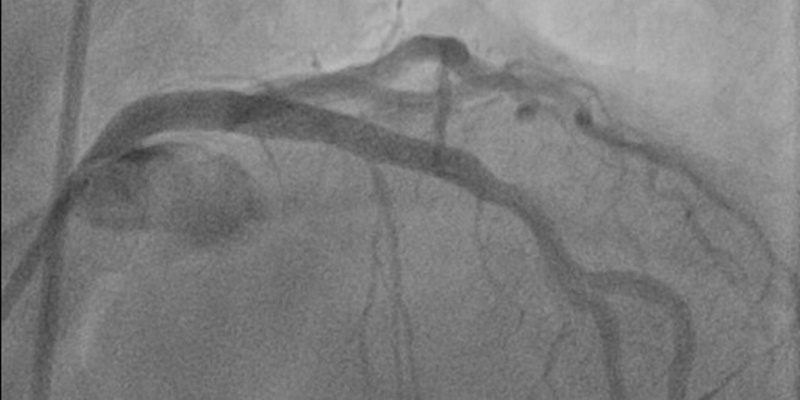
Study Rundown: PCI is currently the most commonly performed technique for PCI. However, it is associated with inherent limitations, such as the inability to identify underexpansion of implanted stents, malapposition to the vessel wall, and limited information about plaque morphology. OCT is a novel method of imaging that may allow for increased accuracy in plaque morphology identification, the size of vessel lumen determinations, and evaluating the outcomes of PCI post-operatively. This was a multi-center randomized trial comparing the efficacy of OCT-guided PCI against angiography-guided PCI in patients with medication-treated diabetes and high-risk features. Results of the analysis found that OCT-guided PCI resulted in a larger minimum stent area than angiography-guided PCI and that there were no significant differences in target-vessel failure two years after the primary intervention. Similarly, there were no significant differences in death attributable to cardiac causes between the two groups. A key limitation of this study was the lack of treatment concealment from investigators and cauterization staff. However, the outcome assessors were blinded to the treatment of choice. Further, the results were unable to account for systematic differences introduced by operator skill and experience. Overall, this study presented evidence that OCT-guided PCI results in a larger minimum stent area than angiography-guided PCI.

Click to read the study in NEJM

In-Depth [randomized controlled trial]: This was an international randomized controlled trial investigating the efficacy of OCT-guided versus angiography-guided PCI amongst patients with evidence of myocardial ischemia, being high-risk for developing myocardial ischemia, or having high-risk coronary-artery lesions. The primary outcomes of interest were the final minimum stent area following PCI, as well as target-vessel failure at two years. All adult participants with medication-treated diabetes were included. Those who were not deemed to have high-risk lesions were excluded. After applying the inclusion and exclusion criteria, 2,487 participants were randomized in a 1:1 ratio to receive OCT-guided PCI (n=1,233), or angiography-guided PCI (n=1,254). Results of the primary analysis found that the minimum stent area following PCI was significantly higher in the OCT group compared to the angiography group (mean difference, 0.36mm2; 95% Confidence Interval [CI], 0.21-0.51; p<0.001). There were no significant differences in target-vessel failure within two years between the OCT and angiography groups (p=0.45). However, the angiography group demonstrated a marginally elevated rate of stent thrombosis (1.4%) compared to the OCT group (0.5%).  In summary, this study provided evidence that OCT-guided PCI results in a larger minimum stent area compared to angiography-guided PCI, without significant differences in target-vessel failure at two years.

RELATED REPORTS

Three vs 12-month DAPT after implantation of biodegradable-polymer sirolimus-eluting coronary stent: a randomised clinical trial

2 Minute Medicine Rewind December 29th, 2025

Analysis of arrhythmia and its risk factors in patients with COVID-19

Image: PD

©2023 2 Minute Medicine, Inc. All rights reserved. No works may be reproduced without expressed written consent from 2 Minute Medicine, Inc. Inquire about licensing here. No article should be construed as medical advice and is not intended as such by the authors or by 2 Minute Medicine, Inc.

Tags: cardiologychronic diseasediabetesoctOCT-guided PCIPCIpercutaneous coronary intervention (PCI)stent
Previous Post

Sleep time may mediate the relationship between body fat and hepatic steatosis in young people

Next Post

Zinc supplementation may improve metabolic outcomes in patients with non-alcoholic fatty liver disease

RelatedReports

Using HEART score to risk stratify patients with chest pain is safe but underutilized in the ED
Cardiology

Three vs 12-month DAPT after implantation of biodegradable-polymer sirolimus-eluting coronary stent: a randomised clinical trial

December 31, 2025
Admission may not be needed following sleep apnea surgery
Weekly Rewinds

2 Minute Medicine Rewind December 29th, 2025

December 29, 2025
Novel coronavirus identified from patients with pneumonia in Wuhan, China
Cardiology

Analysis of arrhythmia and its risk factors in patients with COVID-19

December 3, 2025
Lariat device for left atrial appendage exclusion associated with adverse events
Cardiology

Incidence of atrial fibrillation after coronary artery bypass graft surgery and percutaneous coronary intervention: a prospective 2-year follow-up observational study

December 2, 2025
Next Post
Low free sugar diet reduces hepatic steatosis in nonalcoholic fatty liver disease in adolescent males

Zinc supplementation may improve metabolic outcomes in patients with non-alcoholic fatty liver disease

Decline in adolescent sleep duration over past 20 years

Weekend catch-up sleep may be associated with reduced cardiovascular disease prevalence in people with low weekday sleep

#VisualAbstract: Ross procedure associated with long-term survival outcomes into third postoperative decade

#VisualAbstract: Ross procedure associated with long-term survival outcomes into third postoperative decade

2 Minute Medicine® is an award winning, physician-run, expert medical media company. Our content is curated, written and edited by practicing health professionals who have clinical and scientific expertise in their field of reporting. Our editorial management team is comprised of highly-trained MD physicians. Join numerous brands, companies, and hospitals who trust our licensed content.

Recent Reports

  • Obstructive Sleep Apnea Risk and Mental Health Conditions Among Older Canadian Adults in the Canadian Longitudinal Study on Aging
  • Neighborhood Deprivation and Days Spent at Home After Fall-Related Hip Fracture
  • Three vs 12-month DAPT after implantation of biodegradable-polymer sirolimus-eluting coronary stent: a randomised clinical trial
License Content
Terms of Use | Disclaimer
Cookie Policy
Privacy Statement (EU)
Disclaimer

© 2025 2 Minute Medicine, Inc. - Physician-written medical news.

  • Specialties
    • All Specialties, All Recent Reports
    • Cardiology
    • Chronic Disease
    • Dermatology
    • Emergency
    • Endocrinology
    • Gastroenterology
    • Imaging and Intervention
    • Infectious Disease
    • Nephrology
    • Neurology
    • Obstetrics
    • Oncology
    • Ophthalmology
    • Pediatrics
    • Pharma
    • Preclinical
    • Psychiatry
    • Public Health
    • Pulmonology
    • Rheumatology
    • Surgery
  • Tools
    • EvidencePulse™
    • RVU Search
    • NPI Registry Lookup
  • Pharma
  • AI News
  • The Scan
  • Classics™
    • 2MM+ Online Access
    • Paperback and Ebook
  • Rewinds
  • Partners
    • License Content
    • Submit Press Release
    • Advertise with Us
  • Account
    • Subscribe
    • Sign-in
    • My account
No Result
View All Result

© 2025 2 Minute Medicine, Inc. - Physician-written medical news.