
• About
  • Masthead
  • License Content
  • Advertise
  • Press Releases
  • Newsroom
  • RSS/Email List
  • 2MM Podcast
  • Write for us
  • Contact Us
2 Minute Medicine
No Result
View All Result

No products in the cart.

Sign in
SUBSCRIBE
  • About
  • Specialties
    • All Specialties, All Recent Reports
    • Cardiology
    • Chronic Disease
    • Dermatology
    • Emergency
    • Endocrinology
    • Gastroenterology
    • Imaging and Intervention
    • Infectious Disease
    • Nephrology
    • Neurology
    • Obstetrics
    • Oncology
    • Ophthalmology
    • Pediatrics
    • Pharma
    • Preclinical
    • Psychiatry
    • Public Health
    • Pulmonology
    • Rheumatology
    • Surgery
    • Rewinds
    • The Scan
  • EvidencePulse™
  • HypeCheck™
  • AI News
  • Classics™
    • 2MM+ Online Access
    • Paperback and Ebook
  • Tools
    • NPI Registry Lookup
    • RVU Search
    • Physician Pay by Specialty
    • ICD-10 Code Lookup
    • FDA Drug Approvals
    • Drug Safety for Breastfeeding/Pregnancy
    • Clinical Guidelines
    • Medical Calculators
    • ECG Reference
      • QTc Calculator
      • Sgarbossa Criteria
      • ECG Axis Calculator
      • AV Block Helper
  • Rankings
    • Medical School Rankings
    • Residency Rankings
  • Partners
    • License Content
    • Advertise with Us
2 Minute Medicine
  • About
  • Specialties
    • All Specialties, All Recent Reports
    • Cardiology
    • Chronic Disease
    • Dermatology
    • Emergency
    • Endocrinology
    • Gastroenterology
    • Imaging and Intervention
    • Infectious Disease
    • Nephrology
    • Neurology
    • Obstetrics
    • Oncology
    • Ophthalmology
    • Pediatrics
    • Pharma
    • Preclinical
    • Psychiatry
    • Public Health
    • Pulmonology
    • Rheumatology
    • Surgery
    • Rewinds
    • The Scan
  • EvidencePulse™
  • HypeCheck™
  • AI News
  • Classics™
    • 2MM+ Online Access
    • Paperback and Ebook
  • Tools
    • NPI Registry Lookup
    • RVU Search
    • Physician Pay by Specialty
    • ICD-10 Code Lookup
    • FDA Drug Approvals
    • Drug Safety for Breastfeeding/Pregnancy
    • Clinical Guidelines
    • Medical Calculators
    • ECG Reference
      • QTc Calculator
      • Sgarbossa Criteria
      • ECG Axis Calculator
      • AV Block Helper
  • Rankings
    • Medical School Rankings
    • Residency Rankings
  • Partners
    • License Content
    • Advertise with Us
Sign in
SUBSCRIBE
2 Minute Medicine
Sign in
Subscribe
2 Minute MedicineFree on Google PlayGet
✦EvidencePulse™by 2 Minute Medicine3 reportsYou askedtop stroke trials 2026Synthesizing medical evidence...Top 2026 stroke trial results:OCEANIC — ischemic stroke: 6.2% vs 8.4%OPTION* — mRS 0–1: 43.6% vs 34.2%ORIENTAL* — mRS 0–2: 58.6% vs 46.6%*Higher sICH in intervention armsParticipants randomizedNOCEANIC12,327OPTION570ORIENTAL564Ask about guidelines or landmark trials...↑Try EvidencePulse™Ask the evidence. Get the signal.Try it now →
Home Health A to Z

Patient Basics: Chronic Fatigue Syndrome (ME/CFS)
by2 Minute Medicine
October 30, 2026
in Health A to Z
Reading Time: 6 mins read
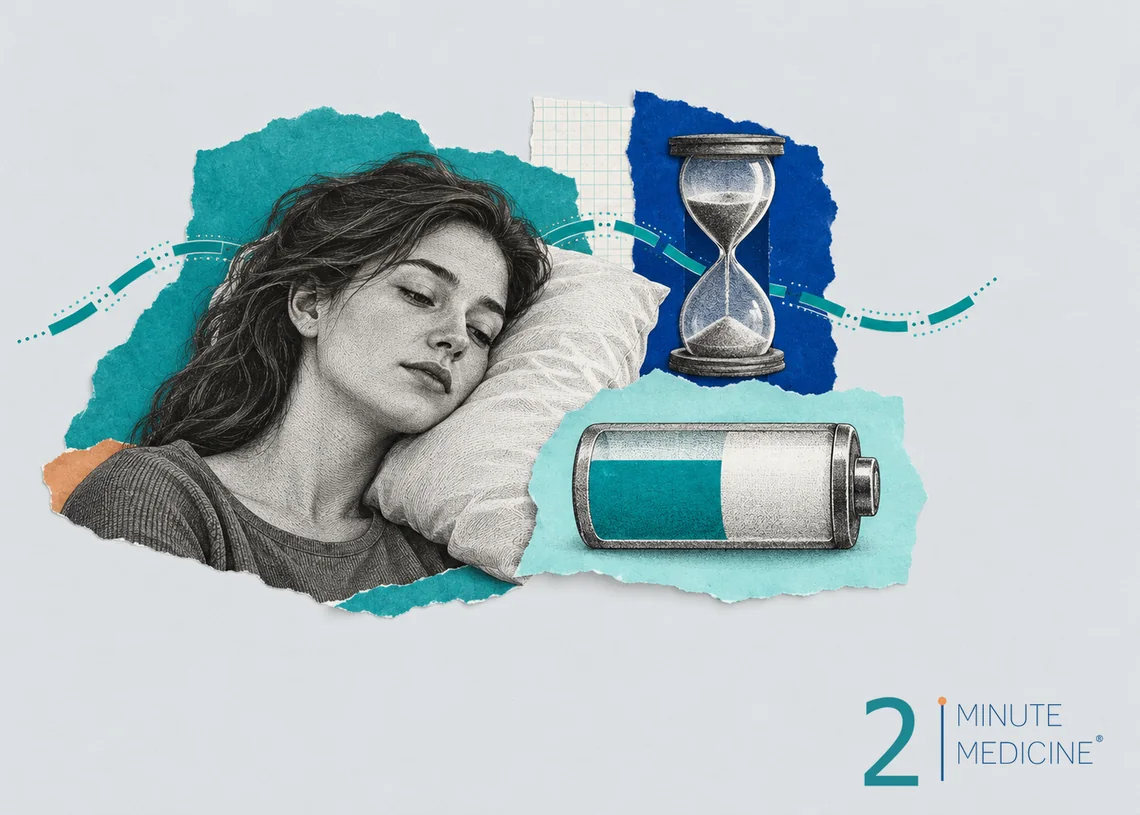
Chronic fatigue syndrome collage: a young woman resting beside a half-full battery, an hourglass and a soft pillow
Share on FacebookShare on TwitterShare on LinkedIn

Myalgic encephalomyelitis/chronic fatigue syndrome (ME/CFS) is a long-term illness that causes deep exhaustion that rest doesn’t fix. Its main feature is a crash of worse symptoms after even small amounts of physical or mental effort. It often starts after an infection. There’s no single test or cure, but a diagnosis, careful pacing and treatment of symptoms help many people manage it.

Key points

  • The hallmark is post-exertional malaise (PEM), a flare of symptoms that starts hours to a day or two after effort and can last days or weeks.
  • Doctors diagnose it when symptoms have lasted at least 6 months and other causes have been ruled out.
  • Women are diagnosed more often than men. It can affect people of any age, including teens.
  • Pacing, which means staying within your energy limits, is the main self-care tool. Pushing through can make it worse.
  • Long COVID can look very much like ME/CFS.

Chronic fatigue syndrome symptoms

Doctors in the US look for these three core symptoms:

  • Greatly reduced ability to do the work, school, social or home activities you did before, lasting 6 months or more, with deep fatigue that is new and not relieved by rest
  • Post-exertional malaise. A walk, a shower, a busy day or even a long conversation can trigger a crash that comes on later and takes days or longer to settle.
  • Unrefreshing sleep. You wake up feeling as tired as when you went to bed.

Plus at least one of these:

  • Trouble thinking, often called brain fog: slow thinking, poor memory and trouble focusing
  • Feeling worse when upright. Standing or sitting up can cause dizziness, lightheadedness, a racing heart or fainting. Some people have postural orthostatic tachycardia syndrome (POTS).

Many people also have muscle or joint pain, headaches, a sore throat, tender glands, chills, stomach problems, and sensitivity to light, noise, smells, foods or medicines. Severity varies a lot. Some people can work part-time, while others are housebound or bedbound for long periods.

What causes chronic fatigue syndrome

The cause isn’t known, and there may be more than one. Many people trace their illness to an infection, such as mononucleosis (Epstein-Barr virus), COVID-19 or another virus. Others link it to surgery, an injury or a stressful event. Research has found changes in the immune system, in how cells make energy, and in the nerves that control heart rate and blood pressure. Genes may also play a part.

ME/CFS is a physical illness. It is not laziness, and it is not depression, although depression and anxiety can develop alongside any long illness. Many people who have it have never been diagnosed.

RELATED REPORTS

Fluvoxamine improves fatigue and quality of life in long COVID

Chronic fatigue is a common symptom associated with transient ischemic attack

How it’s diagnosed

No lab test can confirm ME/CFS. Your doctor will ask about your symptoms, when they began, and how activity affects you over the next day or two. A symptom diary helps. Because fatigue has many causes, your doctor will check for other conditions first.

Blood tests for fatigue

Common tests include:

  • A complete blood count, to look for anemia or infection
  • Blood sugar, kidney and liver tests, and salts such as sodium and potassium
  • Thyroid tests
  • Iron stores, vitamin B12 and vitamin D
  • Markers of inflammation
  • A celiac disease test and a urine test

Depending on your symptoms, you may also have tests for HIV, hepatitis or Lyme disease, a sleep study, or a standing test that tracks your heart rate and blood pressure while you stand for 10 minutes.

Other causes of ongoing fatigue

Your doctor will think about anemia, an underactive thyroid, sleep apnea, depression, diabetes, heart, lung, kidney or liver disease, autoimmune diseases such as lupus or multiple sclerosis, cancer, long COVID, and the side effects of medicines such as antihistamines, sleep aids and some blood pressure drugs. Some of these can occur along with ME/CFS.

Treatment and self-care

There is no cure and no FDA-approved medicine for ME/CFS. Treatment aims to prevent crashes and ease the symptoms that bother you most.

Pacing

  • Learn how much you can do without triggering a crash, and stay within that limit even on good days.
  • Break tasks into small pieces, and rest before you feel exhausted.
  • Track your activity and symptoms to spot your triggers. Some people use a heart rate monitor.
  • Count mental and emotional effort as well as physical activity.

Graded exercise therapy, which steadily increases exercise regardless of symptoms, is no longer recommended by the CDC or the UK’s NICE because it can make people worse. Any activity plan should follow your symptoms and be guided by a clinician who knows ME/CFS.

Treating symptoms

  • Dizziness when upright. More fluids and salt, if your doctor agrees, plus compression stockings. Medicines such as fludrocortisone or midodrine can help some people.
  • Sleep. A steady routine, treatment of any sleep disorder, and sometimes a short-term sleep medicine.
  • Pain. Heat, gentle stretching, massage, acetaminophen or anti-inflammatory pills. Low doses of some antidepressants or nerve pain medicines may also help.
  • Brain fog. Lists, phone reminders, and doing hard tasks at your best time of day.
  • Mood. Counseling can help with the stress of a long illness. It is support, not a cure.

People with ME/CFS are often sensitive to medicines, so doctors usually start with low doses. Ask about changes at work or school, such as flexible hours, working from home or rest breaks, and about disability benefits if you can’t work.

Outlook

The course varies. Many people have ups and downs for years. Some improve a lot, especially children and teens, but full recovery is less common in adults. Getting a diagnosis early and avoiding repeated crashes may help keep the illness from getting worse.

When to see a doctor

  • Tiredness that lasts more than a few weeks without a clear reason
  • Fatigue with weight loss, fever, night sweats or swollen glands
  • Feeling much worse a day after activity, brain fog, or dizziness when you stand

Call 911 for chest pain, severe shortness of breath or fainting. If you have thoughts of harming yourself, call or text 988, the Suicide & Crisis Lifeline.

Common questions about chronic fatigue syndrome

Is chronic fatigue syndrome the same as adrenal fatigue?

No. “Adrenal fatigue” is not a recognized medical diagnosis, and the tests and supplements sold for it are unproven. Some supplements contain hidden hormones. A real adrenal problem, called adrenal insufficiency, does exist. It is a different disease, and blood tests can find it.

Is long COVID the same as ME/CFS?

They overlap. Some people with long COVID develop the same pattern of crashes after effort, unrefreshing sleep and brain fog, and they meet the criteria for ME/CFS. Others with long COVID have different problems, such as lung or heart effects. Pacing helps both groups avoid crashes.

Does chronic fatigue syndrome cause high blood pressure?

It isn’t a typical feature. People with ME/CFS more often have a drop in blood pressure or a racing heart when they stand. High blood pressure usually has other causes and should be checked and treated in its own right, with medicines chosen carefully if you also get dizzy.

Questions to ask your doctor

  • What else could be causing my fatigue, and which tests do I need?
  • Do my symptoms fit ME/CFS?
  • How can I pace myself day to day?
  • What can help my sleep, pain or dizziness?
  • Can you refer me to a clinic that treats ME/CFS or long COVID?

Learn more

  • ME/CFS basics (CDC)
  • Myalgic encephalomyelitis/chronic fatigue syndrome (MedlinePlus, U.S. National Library of Medicine)

This guide is general information and doesn’t replace advice from your own doctor. Last updated October 2026.

Tags: Chronic Fatigue
Previous Post

Patient Basics: Chronic Prostatitis

Next Post

Patient Basics: Chronic Hepatitis

RelatedReports

Decreased expression of nasal ACE2 may be correlated with lower prevalence of COVID-19 in children
Chronic Disease

Fluvoxamine improves fatigue and quality of life in long COVID

March 30, 2026
Frailty in older adults collage: a smiling older woman in a cardigan beside a wheeled walker with an exercise band on it
Chronic Disease

Chronic fatigue is a common symptom associated with transient ischemic attack

May 19, 2025
Next Post
Collage on chondromalacia: a knee joint with the kneecap in its groove, running shoes, a stair step and an ice pack

Patient Basics: Chondromalacia (Softening of Kneecap Cartilage)

Choroidal melanoma collage: a side view of the eye with a small dark patch at the back, a gold disc and reading glasses

Patient Basics: Choroidal Melanoma

Chronic mastoiditis collage: an older woman in profile, a middle ear and honeycomb mastoid bone, an otoscope and ear drops

Patient Basics: Chronic Otitis Media, Cholesteatoma and Mastoiditis

✦ EvidencePulse™ by 2 Minute Medicine 3 reports You asked top stroke trials 2026 Synthesizing medical evidence... Top 2026 stroke trial results: OCEANIC — ischemic stroke: 6.2% vs 8.4% OPTION* — mRS 0–1: 43.6% vs 34.2% ORIENTAL* — mRS 0–2: 58.6% vs 46.6% *Higher sICH in intervention arms Participants randomizedN OCEANIC 12,327 OPTION 570 ORIENTAL 564 Ask about guidelines or landmark trials... Try EvidencePulse™ Get the signal. Try it now → Physician-trained medical AI by 2 Minute Medicine

2MM+ All Access

Full details →
$4.99 /month

3-day free trial · cancel anytime

  • ✓100+ physician-written reports
  • ✓EvidencePulse™ + HypeCheck™
  • ✓Ad-free reading + newsletters
Start 3-day free trial

Then $4.99/month. Manage renewal in your account.

2 Minute Medicine® is an award winning, physician-run, expert medical media company. Our content is curated, written and edited by practicing health professionals who have clinical and scientific expertise in their field of reporting. Our editorial management team is comprised of highly-trained MD physicians. Join numerous brands, companies, and hospitals who trust our licensed content.

Recent Reports

  • Use of colchicine is not associated with reduced cardiovascular events among Chinese adults starting urate-lowering therapy
  • ARO-DIMER-PA can Significantly Lower LDL-C and Triglycerides in Patients with Mixed Hyperlipidemia
  • CCTA-guided PCI noninferior to IVUS-guided PCI for target-vessel failure
License Content
Terms of Use | Disclaimer
Cookie Policy

Get the app

Read 2 Minute Medicine on iPhone, iPad and Android.

Download on the App StoreGet it on Google Play
QR code for www.2minutemedicine.com/app
On a computer? Scan this with your phone’s camera.
2MM+ All Access Full details →

The medical literature, distilled daily.

Monthly plan selected: $4.99 /month.

$4.99/month

3-day free trial · cancel anytime

Start 3-day free trial

Then $4.99/month. Manage renewal in your account.

Yearly plan selected: $49.90 /year.

$49.90/year

2 months free

Start 3-day free trial

Then $49.90/year.

Membership benefits

  • ✓100+ new physician-written study summaries monthly, 12,000+ searchable
  • ✓AI EvidencePulse™ + HypeCheck™
  • ✓Ad-free reading + newsletters
  • ✓FDA drug approvals + clinical calculators

Already a member? Sign in

  • Get the app
  • About
  • Specialties
    • All Specialties, All Recent Reports
    • Cardiology
    • Chronic Disease
    • Dermatology
    • Emergency
    • Endocrinology
    • Gastroenterology
    • Imaging and Intervention
    • Infectious Disease
    • Nephrology
    • Neurology
    • Obstetrics
    • Oncology
    • Ophthalmology
    • Pediatrics
    • Pharma
    • Preclinical
    • Psychiatry
    • Public Health
    • Pulmonology
    • Rheumatology
    • Surgery
    • Rewinds
    • The Scan
  • EvidencePulse™
  • HypeCheck™
  • AI News
  • Classics™
    • 2MM+ Online Access
    • Paperback and Ebook
  • Tools
    • NPI Registry Lookup
    • RVU Search
    • Physician Pay by Specialty
    • ICD-10 Code Lookup
    • FDA Drug Approvals
    • Drug Safety for Breastfeeding/Pregnancy
    • Clinical Guidelines
    • Medical Calculators
    • ECG Reference
      • QTc Calculator
      • Sgarbossa Criteria
      • ECG Axis Calculator
      • AV Block Helper
  • Rankings
    • Medical School Rankings
    • Residency Rankings
  • Partners
    • License Content
    • Advertise with Us
No Result
View All Result

© 2026 2 Minute Medicine, Inc. - Physician-written medical news.


