

Patient Basics: Heel Pain
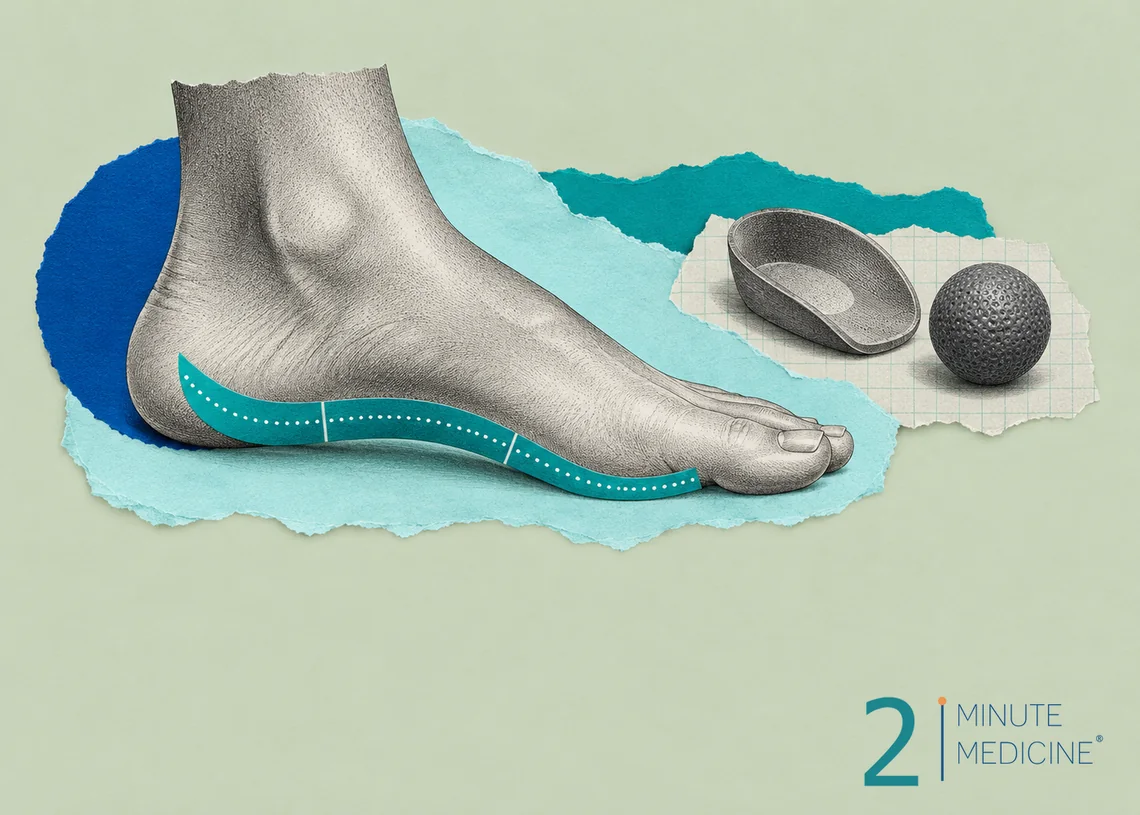
Heel pain is one of the most common foot problems in adults. Most of the time it comes from plantar fasciitis, an irritated band of tough tissue under the foot, and the pain is worst with the first steps in the morning. Stretching, good shoes and a break from pounding activities help most people get better without surgery, though it can take several months.
Key points
- Pain under the heel is usually plantar fasciitis. Pain at the back of the heel often comes from the Achilles tendon.
- Heel spurs seen on X-rays are common and usually aren’t the cause of the pain.
- Daily stretches, supportive shoes and heel cushions are the main treatment.
- Most people improve within 6 to 12 months with home care.
- Numbness, swelling, redness or pain after a fall or a sudden “pop” needs a doctor’s visit.
Common causes of heel pain
Pain under the heel
- Plantar fasciitis. The plantar fascia is a thick band that runs from the heel bone to the base of the toes and supports the arch. Too much strain causes tiny tears and irritation where it joins the heel. It’s most common between ages 40 and 60, and in runners, people who stand all day, and people with extra body weight, tight calves, flat feet or high arches.
- Thinning of the heel pad. The fatty cushion under the heel gets thinner with age, leaving a deep bruised feeling when you walk on hard floors.
- Stress fracture. A small crack in the heel bone (calcaneus) can come from a sudden jump in running or marching, or from weak bones (osteoporosis). The heel hurts when squeezed from the sides. A hard landing on the heel from a height can also bruise or break the bone.
- Nerve problems. A pinched nerve on the inside of the ankle (tarsal tunnel syndrome) can cause burning, tingling or numbness in the heel and sole.
Pain at the back of the heel
- Achilles tendinopathy. Wear and tear of the large tendon that connects the calf muscles to the heel. It causes pain and stiffness at the back of the heel or just above it, often after running or jumping.
- Bursitis and bony bumps. A small fluid sac behind the heel can swell, often with a bony bump (Haglund’s deformity) that rubs on the back of stiff shoes.
- Sever’s disease. In active children around 8 to 14 years old, the growth plate at the back of the heel can get sore. It goes away once the bone stops growing.
Less often, heel pain comes from arthritis that affects the places where tendons attach to bone, gout, or an infection.
Symptoms of plantar fasciitis
- Sharp or stabbing pain under the heel with the first steps out of bed
- Pain that eases as you walk, then returns after sitting a while or standing a long time
- Soreness when you press on the inner (medial) part of the heel
- Pain that’s often worse after exercise rather than during it
How it’s diagnosed
A doctor can usually find the cause by asking where and when it hurts and pressing on different spots of your foot and ankle. They’ll check how far your ankle bends and how tight your calf is, and may watch you walk. X-rays can look for a stress fracture or arthritis. Ultrasound or MRI is sometimes used when the cause isn’t clear or the pain isn’t getting better.
Heel pain treatment
Home care
- Stretch every day. Calf stretches against a wall, and pulling your toes back toward your shin before you stand up in the morning, take the pull off the plantar fascia.
- Roll and ice. Roll the sole of your foot over a firm ball or a frozen water bottle for a few minutes, once or twice a day.
- Wear supportive shoes. Choose shoes with a cushioned heel and good arch support, at home as well as outside. Avoid going barefoot on hard floors and wearing flat sandals.
- Add inserts. Store-bought heel cups or arch supports work about as well as custom ones for most people.
- Cut back on pounding. Swap running or jumping for cycling or swimming until the pain eases.
- Ease the pain with ibuprofen or naproxen for short periods, if they’re safe for you.
For Achilles pain, a physical therapist can teach slow strengthening exercises, such as lowering your heels off a step. A small heel lift in the shoe can also help.
If pain lasts
- Physical therapy with stretching, strengthening and taping
- A night splint that keeps the foot flexed while you sleep
- A steroid shot into the heel can bring short-term relief. Repeated shots can weaken the plantar fascia or thin the heel pad, so they’re used sparingly. Steroid shots are not given into the Achilles tendon.
- Shockwave therapy, which sends sound waves into the heel, can help some people with long-lasting pain.
- Surgery to release part of the plantar fascia or lengthen a tight calf muscle is an option only after many months of other treatment.
Lowering your risk
- Replace running shoes when the cushioning wears down.
- Increase running distance or speed slowly.
- Keep your calves flexible with regular stretching.
- Stay at a healthy weight, which lowers the load on your heels.
- If you stand at work, use cushioned shoes or a padded mat.
When to see a doctor
- Heel pain that hasn’t improved after a few weeks of home care
- Pain that’s there at night or when you’re resting
- Numbness, tingling or burning in the foot
- Swelling, redness or warmth in the heel, or a fever
- Pain after a fall or injury, or trouble putting weight on the foot
- Heel pain in a child that makes them limp
- Any foot pain if you have diabetes
Get care the same day if you felt a sudden snap or pop at the back of your ankle and now have trouble walking or standing on tiptoe. This can mean a torn Achilles tendon.
Common questions about heel pain
Why does my left or right heel hurt?
The side doesn’t change the likely cause. Pain in one heel is usually plantar fasciitis or an Achilles problem from overuse, new shoes or favoring one leg. Both heels can be affected too, and pain in both, especially with stiff joints elsewhere, can point to arthritis, so mention it to your doctor.
How can I get rid of heel pain fast?
There’s no instant cure, but you can ease it within days. Stretch your calf and the sole of your foot before standing, roll your foot on a frozen water bottle, and wear cushioned shoes with arch support. Ibuprofen or naproxen can help for a few days if they’re safe for you.
Why does my heel hurt to touch?
Tenderness under the inner heel is typical of plantar fasciitis. Pain when you squeeze the heel from both sides suggests a stress fracture of the heel bone, and tenderness at the back points to the Achilles tendon or a swollen bursa. Redness and warmth along with the pain need a doctor’s look.
Questions to ask your doctor
- What’s causing my heel pain?
- Which stretches should I do, and how often?
- What kind of shoes or inserts should I buy?
- Can I keep running or walking for exercise?
- If this doesn’t get better, what would we try next?
Learn more
- Plantar fasciitis (MedlinePlus, U.S. National Library of Medicine)
- Heel pain (NHS)
This guide is general information and doesn’t replace advice from your own doctor. Last updated October 2026.






 Get the app