• About
  • Masthead
  • License Content
  • Advertise
  • Press Releases
  • Newsroom
  • RSS/Email List
  • 2MM Podcast
  • Write for us
  • Contact Us
2 Minute Medicine
No Result
View All Result

No products in the cart.

Sign in
SUBSCRIBE
  • About
  • Specialties
    • All Specialties, All Recent Reports
    • Cardiology
    • Chronic Disease
    • Dermatology
    • Emergency
    • Endocrinology
    • Gastroenterology
    • Imaging and Intervention
    • Infectious Disease
    • Nephrology
    • Neurology
    • Obstetrics
    • Oncology
    • Ophthalmology
    • Pediatrics
    • Pharma
    • Preclinical
    • Psychiatry
    • Public Health
    • Pulmonology
    • Rheumatology
    • Surgery
    • Rewinds
    • The Scan
  • EvidencePulse™
  • HypeCheck™
  • AI News
  • Classics™
    • 2MM+ Online Access
    • Paperback and Ebook
  • Tools
    • NPI Registry Lookup
    • RVU Search
    • Physician Pay by Specialty
    • ICD-10 Code Lookup
    • FDA Drug Approvals
    • Drug Safety for Breastfeeding/Pregnancy
    • Clinical Guidelines
    • Medical Calculators
    • ECG Reference
      • QTc Calculator
      • Sgarbossa Criteria
      • ECG Axis Calculator
      • AV Block Helper
  • Rankings
    • Medical School Rankings
    • Residency Rankings
  • Partners
    • License Content
    • Advertise with Us
2 Minute Medicine
  • About
  • Specialties
    • All Specialties, All Recent Reports
    • Cardiology
    • Chronic Disease
    • Dermatology
    • Emergency
    • Endocrinology
    • Gastroenterology
    • Imaging and Intervention
    • Infectious Disease
    • Nephrology
    • Neurology
    • Obstetrics
    • Oncology
    • Ophthalmology
    • Pediatrics
    • Pharma
    • Preclinical
    • Psychiatry
    • Public Health
    • Pulmonology
    • Rheumatology
    • Surgery
    • Rewinds
    • The Scan
  • EvidencePulse™
  • HypeCheck™
  • AI News
  • Classics™
    • 2MM+ Online Access
    • Paperback and Ebook
  • Tools
    • NPI Registry Lookup
    • RVU Search
    • Physician Pay by Specialty
    • ICD-10 Code Lookup
    • FDA Drug Approvals
    • Drug Safety for Breastfeeding/Pregnancy
    • Clinical Guidelines
    • Medical Calculators
    • ECG Reference
      • QTc Calculator
      • Sgarbossa Criteria
      • ECG Axis Calculator
      • AV Block Helper
  • Rankings
    • Medical School Rankings
    • Residency Rankings
  • Partners
    • License Content
    • Advertise with Us
Sign in
SUBSCRIBE
2 Minute Medicine
Sign in
Subscribe
2 Minute MedicineFree on Google PlayGet
✦EvidencePulse™by 2 Minute Medicine3 reportsYou askedtop stroke trials 2026Synthesizing medical evidence...Top 2026 stroke trial results:OCEANIC — ischemic stroke: 6.2% vs 8.4%OPTION* — mRS 0–1: 43.6% vs 34.2%ORIENTAL* — mRS 0–2: 58.6% vs 46.6%*Higher sICH in intervention armsParticipants randomizedNOCEANIC12,327OPTION570ORIENTAL564Ask about guidelines or landmark trials...↑Try EvidencePulse™Ask the evidence. Get the signal.Try it now →
Home Health A to Z

Patient Basics: Hot Flashes
by2 Minute Medicine
October 30, 2026
in Health A to Z, Uncategorized
Reading Time: 5 mins read
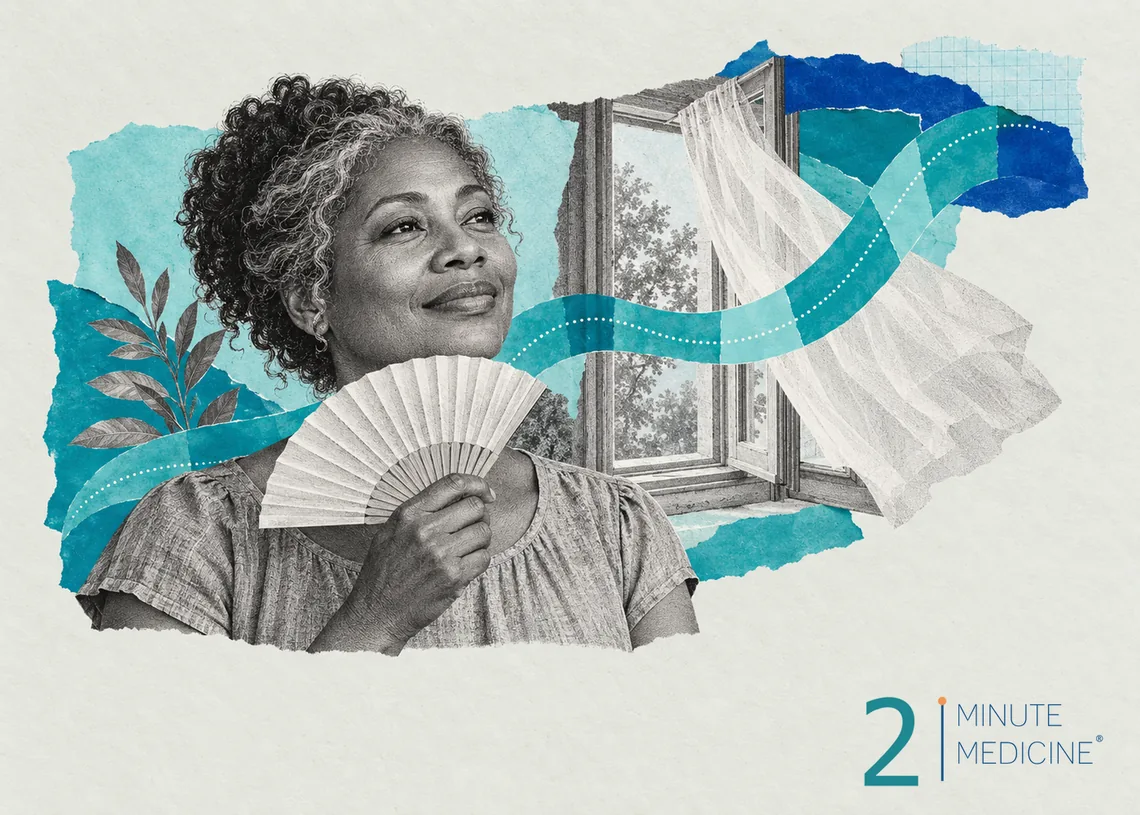
Collage for hot flashes: a calm woman about 50 with a paper fan, an open window with a curtain and a rising teal ribbon
Share on FacebookShare on TwitterShare on LinkedIn

Hot flashes are sudden waves of heat that spread over the face, neck and chest, often with flushing and sweating. They are the most common symptom of menopause, and they can also come from some cancer treatments and other health conditions. Hot flashes aren’t dangerous, but they can disrupt sleep and daily life. Several treatments, with and without hormones, work well.

Key points

  • Most women have hot flashes in the years around menopause. Hot flashes at night are called night sweats.
  • They’re linked to falling estrogen levels, which affect the brain’s temperature control.
  • Hormone therapy is the most effective treatment for many healthy women under 60.
  • Non-hormone options include fezolinetant, some antidepressants, gabapentin and cognitive behavioral therapy.
  • Hot flashes before 40, or with fever or weight loss, should be checked by a doctor.

What hot flashes feel like

A hot flash often starts with a sudden feeling of warmth in the chest, neck and face. The skin may turn red and blotchy, and you may sweat, feel your heart racing, or feel anxious. As it fades, you may feel chilled, and some people get cold flashes with shivering instead. Each one usually lasts 1 to 5 minutes. Some people have a few a week. Others have many a day.

Night sweats can soak your sheets and wake you up, which leads to poor sleep, tiredness and trouble concentrating.

What causes hot flashes

Menopause

Menopause is when periods stop for good, usually around age 51. In the years before and after, estrogen levels drop. This affects a group of brain cells in the hypothalamus that control body temperature. The body’s comfort zone narrows, so a tiny rise in temperature sets off flushing and sweating to cool you down.

Hot flashes are more common and tend to last longer in women who smoke or have obesity. On average, Black women keep having them for longer than women of other backgrounds.

Other causes

  • Pregnancy, and the weeks after giving birth
  • The days before a period, especially in your 40s as perimenopause begins
  • Surgery to remove both ovaries, which brings on sudden menopause
  • Chemotherapy, which can bring on menopause early
  • Breast cancer medicines, such as tamoxifen and aromatase inhibitors
  • Hormone therapy for prostate cancer in men
  • An overactive thyroid
  • Some medicines, such as niacin, opioids and certain antidepressants
  • Alcohol and anxiety
  • Rarely, an infection like tuberculosis, or certain tumors

Common triggers

Hot drinks, spicy food, alcohol, caffeine, warm rooms, hot weather, tight clothing, smoking and stress can all bring on a hot flash.

RELATED REPORTS

Fexofenadine and famotidine lack clinical trial evidence for menopausal symptoms

Self-administered hypnosis may improve hot flashes among postmenopausal women

How it’s diagnosed

For women in their mid-40s or older with typical symptoms, the pattern is usually enough. Blood tests aren’t needed to diagnose menopause at that age. Your doctor may check your thyroid, or look for other causes, if hot flashes start early, come with other symptoms, or occur in a man.

How hot flashes are treated

Things you can try at home

  • Dress in layers you can take off, and choose cotton or moisture-wicking fabrics.
  • Keep your bedroom cool. Use a fan, light bedding and a cool pillow.
  • Sip cold water when a hot flash starts.
  • Notice and cut back on your triggers.
  • If you smoke, quitting helps.
  • Losing extra weight eases hot flashes for some women.

Cognitive behavioral therapy (CBT) and clinical hypnosis have good evidence for making hot flashes less frequent or less bothersome. Both are available in person and online.

Hormone therapy

No treatment works better than estrogen. It comes as pills, skin patches, gels or sprays. Women who still have a uterus also take a progestogen to protect the lining of the uterus from cancer. For healthy women under 60, or within 10 years of their last period, the benefits often outweigh the risks.

Risks depend on your age, health, and the type and dose of hormone. They include blood clots, stroke and, with combined estrogen and progestogen over several years, a small rise in breast cancer risk. Patches and gels carry a lower clot risk than pills. Hormone therapy usually isn’t advised if you’ve had breast cancer, a blood clot, a stroke, heart disease or liver disease.

Non-hormone medicines

  • Fezolinetant (Veozah) is a daily pill that blocks a brain signal involved in hot flashes. It needs blood tests to check the liver.
  • Antidepressants such as low-dose paroxetine, venlafaxine, escitalopram or citalopram reduce hot flashes even in people who aren’t depressed. Paroxetine isn’t a good choice with tamoxifen.
  • Gabapentin, taken at bedtime, can help with night sweats.
  • Oxybutynin, a bladder medicine, also eases hot flashes.

Herbal products such as black cohosh, red clover and soy supplements haven’t been shown to work much better than a placebo. Some herbal products have caused liver damage. Tell your doctor about anything you take.

When to see a doctor

  • Hot flashes or night sweats that keep you from sleeping or affect your work or mood
  • Hot flashes before age 40, which can be a sign of early menopause (primary ovarian insufficiency)
  • Night sweats with fever, weight loss or swollen glands
  • Hot flashes in a man who isn’t on hormone treatment
  • Any vaginal bleeding after your periods have stopped for a year

Common questions about hot flashes

How long do hot flashes last?

Each hot flash usually lasts 1 to 5 minutes. As a phase of life, hot flashes often continue for about 7 years, and some women have them for 10 years or longer. They tend to become milder and less frequent over time, and treatment can help in the meantime.

Can you have hot flashes without menopause?

Yes. Hot flashes can come from cancer treatments, an overactive thyroid, some medicines, alcohol and anxiety, and rarely from infections or tumors. Men can get them during hormone therapy for prostate cancer. Hot flashes that start before age 40, or come with weight loss or fever, should be checked.

Are hot flashes a sign of something serious?

Usually not. In women in their 40s and 50s, hot flashes are a normal part of the change to menopause. They’re worth checking if they start before age 40, happen in a man who isn’t on hormone treatment, or come with fever, weight loss or drenching sweats.

Are hot flashes normal during pregnancy?

Yes, they’re common. Higher hormone levels, extra blood flow and a faster metabolism make many pregnant people feel hot and sweaty, and night sweats are common in the weeks after birth. Dress lightly, drink plenty of water and keep rooms cool. A temperature of 100.4°F or higher is a fever, so call your doctor.

Why do I feel hot all the time without a fever?

Feeling hot often without a fever can come from perimenopause, pregnancy, an overactive thyroid, some medicines, anxiety, caffeine or alcohol. Extra body weight and a warm bedroom play a part too. If the feeling is new and bothers you, ask your doctor about a thyroid blood test and a review of your medicines.

Questions to ask your doctor

  • Are my hot flashes from menopause, or could something else be causing them?
  • Is hormone therapy safe for me, and for how long?
  • Which non-hormone treatment would suit me best?
  • Could any of my current medicines be making them worse?
  • What can I do about night sweats and poor sleep?

Learn more

  • Hot flashes: what can I do? (National Institute on Aging)
  • Menopause (MedlinePlus, U.S. National Library of Medicine)

This guide is general information and doesn’t replace advice from your own doctor. Last updated October 2026.

Tags: Hot Flashes
Previous Post

Patient Basics: Hearing Loss in Children

Next Post

Patient Basics: Biofeedback

RelatedReports

Perimenopause collage: a calm woman in her 50s beside a uterus and ovaries, an open hand fan and a paper crescent moon
Obstetrics

Fexofenadine and famotidine lack clinical trial evidence for menopausal symptoms

September 3, 2026
Collage for hot flashes: a calm woman about 50 with a paper fan, an open window with a curtain and a rising teal ribbon
Imaging and Intervention

Self-administered hypnosis may improve hot flashes among postmenopausal women

January 13, 2026
The Scan by 2 Minute Medicine®:  Ultra-Trail du Mont-Blanc, Taylor Swift, NBA rookie Chet Holmgren and Magic Mushrooms!
The Scan by 2 Minute Medicine®

The Scan by 2 Minute Medicine®: Veozah for Hot Flashes, Affordable Care Act Mandate for Preventive Care, Pride Month, and RSV Drug for Infants

June 29, 2023
Collage for hot flashes: a calm woman about 50 with a paper fan, an open window with a curtain and a rising teal ribbon
Chronic Disease

Fezolinetant significantly reduces vasomotor symptoms in post-menopausal women

April 11, 2023
Next Post
Biofeedback collage: a young woman with eyes closed and a small sensor on her temple, a teal pulse wave and a white feather

Patient Basics: Biofeedback

Cardiac catheterization collage: a heart with coronary arteries, a thin coiled catheter, a blank X-ray card and a woman

Patient Basics: Cardiac Catheterization

EEG collage: a young woman resting with eyes closed in an electrode cap, wires leading to a recorder and teal brain waves

Patient Basics: Electroencephalogram (EEG)

✦ EvidencePulse™ by 2 Minute Medicine 3 reports You asked top stroke trials 2026 Synthesizing medical evidence... Top 2026 stroke trial results: OCEANIC — ischemic stroke: 6.2% vs 8.4% OPTION* — mRS 0–1: 43.6% vs 34.2% ORIENTAL* — mRS 0–2: 58.6% vs 46.6% *Higher sICH in intervention arms Participants randomizedN OCEANIC 12,327 OPTION 570 ORIENTAL 564 Ask about guidelines or landmark trials... Try EvidencePulse™ Get the signal. Try it now → Physician-trained medical AI by 2 Minute Medicine

2MM+ All Access

Full details →
$4.99 /month

3-day free trial · cancel anytime

  • ✓100+ physician-written reports
  • ✓EvidencePulse™ + HypeCheck™
  • ✓Ad-free reading + newsletters
Start 3-day free trial

Then $4.99/month. Manage renewal in your account.

2 Minute Medicine® is an award winning, physician-run, expert medical media company. Our content is curated, written and edited by practicing health professionals who have clinical and scientific expertise in their field of reporting. Our editorial management team is comprised of highly-trained MD physicians. Join numerous brands, companies, and hospitals who trust our licensed content.

Recent Reports

  • Pelacarsen lowers lipoprotein(a) but does not reduce major cardiovascular events in patients with established cardiovascular disease
  • Durvalumab plus enfortumab vedotin was approved for perioperative treatment of muscle-invasive bladder cancer
  • CDC reports 5,412 confirmed measles cases in the United States in 2026
License Content
Terms of Use | Disclaimer
Cookie Policy

Get the app

Read 2 Minute Medicine on iPhone, iPad and Android.

Download on the App StoreGet it on Google Play
QR code for www.2minutemedicine.com/app
On a computer? Scan this with your phone’s camera.
2MM+ All Access Full details →

The medical literature, distilled daily.

Monthly plan selected: $4.99 /month.

$4.99/month

3-day free trial · cancel anytime

Start 3-day free trial

Then $4.99/month. Manage renewal in your account.

Yearly plan selected: $49.90 /year.

$49.90/year

2 months free

Start 3-day free trial

Then $49.90/year.

Membership benefits

  • ✓100+ new physician-written study summaries monthly, 12,000+ searchable
  • ✓AI EvidencePulse™ + HypeCheck™
  • ✓Ad-free reading + newsletters
  • ✓FDA drug approvals + clinical calculators

Already a member? Sign in

  • Get the app
  • About
  • Specialties
    • All Specialties, All Recent Reports
    • Cardiology
    • Chronic Disease
    • Dermatology
    • Emergency
    • Endocrinology
    • Gastroenterology
    • Imaging and Intervention
    • Infectious Disease
    • Nephrology
    • Neurology
    • Obstetrics
    • Oncology
    • Ophthalmology
    • Pediatrics
    • Pharma
    • Preclinical
    • Psychiatry
    • Public Health
    • Pulmonology
    • Rheumatology
    • Surgery
    • Rewinds
    • The Scan
  • EvidencePulse™
  • HypeCheck™
  • AI News
  • Classics™
    • 2MM+ Online Access
    • Paperback and Ebook
  • Tools
    • NPI Registry Lookup
    • RVU Search
    • Physician Pay by Specialty
    • ICD-10 Code Lookup
    • FDA Drug Approvals
    • Drug Safety for Breastfeeding/Pregnancy
    • Clinical Guidelines
    • Medical Calculators
    • ECG Reference
      • QTc Calculator
      • Sgarbossa Criteria
      • ECG Axis Calculator
      • AV Block Helper
  • Rankings
    • Medical School Rankings
    • Residency Rankings
  • Partners
    • License Content
    • Advertise with Us
No Result
View All Result

© 2026 2 Minute Medicine, Inc. - Physician-written medical news.