
• About
  • Masthead
  • License Content
  • Advertise
  • Press Releases
  • Newsroom
  • RSS/Email List
  • 2MM Podcast
  • Write for us
  • Contact Us
2 Minute Medicine
No Result
View All Result

No products in the cart.

Sign in
SUBSCRIBE
  • About
  • Specialties
    • All Specialties, All Recent Reports
    • Cardiology
    • Chronic Disease
    • Dermatology
    • Emergency
    • Endocrinology
    • Gastroenterology
    • Imaging and Intervention
    • Infectious Disease
    • Nephrology
    • Neurology
    • Obstetrics
    • Oncology
    • Ophthalmology
    • Pediatrics
    • Pharma
    • Preclinical
    • Psychiatry
    • Public Health
    • Pulmonology
    • Rheumatology
    • Surgery
    • Rewinds
    • The Scan
  • EvidencePulse™
  • HypeCheck™
  • AI News
  • Classics™
    • 2MM+ Online Access
    • Paperback and Ebook
  • Tools
    • Medical Calculators
    • Clinical Guidelines
    • Physician Pay by Specialty
    • FDA Drug Approvals
    • RVU Search
    • ICD-10 Code Lookup
    • Drug Safety for Breastfeeding/Pregnancy
    • ECG Reference
      • QTc Calculator
      • Sgarbossa Criteria
      • ECG Axis Calculator
      • AV Block Helper
    • NPI Registry Lookup
  • Rankings
    • Medical School Rankings
    • Residency Rankings
  • Partners
    • License Content
    • Advertise with Us
2 Minute Medicine
  • About
  • Specialties
    • All Specialties, All Recent Reports
    • Cardiology
    • Chronic Disease
    • Dermatology
    • Emergency
    • Endocrinology
    • Gastroenterology
    • Imaging and Intervention
    • Infectious Disease
    • Nephrology
    • Neurology
    • Obstetrics
    • Oncology
    • Ophthalmology
    • Pediatrics
    • Pharma
    • Preclinical
    • Psychiatry
    • Public Health
    • Pulmonology
    • Rheumatology
    • Surgery
    • Rewinds
    • The Scan
  • EvidencePulse™
  • HypeCheck™
  • AI News
  • Classics™
    • 2MM+ Online Access
    • Paperback and Ebook
  • Tools
    • Medical Calculators
    • Clinical Guidelines
    • Physician Pay by Specialty
    • FDA Drug Approvals
    • RVU Search
    • ICD-10 Code Lookup
    • Drug Safety for Breastfeeding/Pregnancy
    • ECG Reference
      • QTc Calculator
      • Sgarbossa Criteria
      • ECG Axis Calculator
      • AV Block Helper
    • NPI Registry Lookup
  • Rankings
    • Medical School Rankings
    • Residency Rankings
  • Partners
    • License Content
    • Advertise with Us
Sign in
SUBSCRIBE
2 Minute Medicine
Sign in
Subscribe
2 Minute MedicineFree on Google PlayGet
✦EvidencePulse™by 2 Minute Medicine3 reportsYou askedtop stroke trials 2026Synthesizing medical evidence...Top 2026 stroke trial results:OCEANIC — ischemic stroke: 6.2% vs 8.4%OPTION* — mRS 0–1: 43.6% vs 34.2%ORIENTAL* — mRS 0–2: 58.6% vs 46.6%*Higher sICH in intervention armsParticipants randomizedNOCEANIC12,327OPTION570ORIENTAL564Ask about guidelines or landmark trials...↑Try EvidencePulse™Ask the evidence. Get the signal.Try it now →
Home Health A to Z

Patient Basics: Keloids (Keloid Scars)
by2 Minute Medicine
October 30, 2026
in Health A to Z
Reading Time: 5 mins read
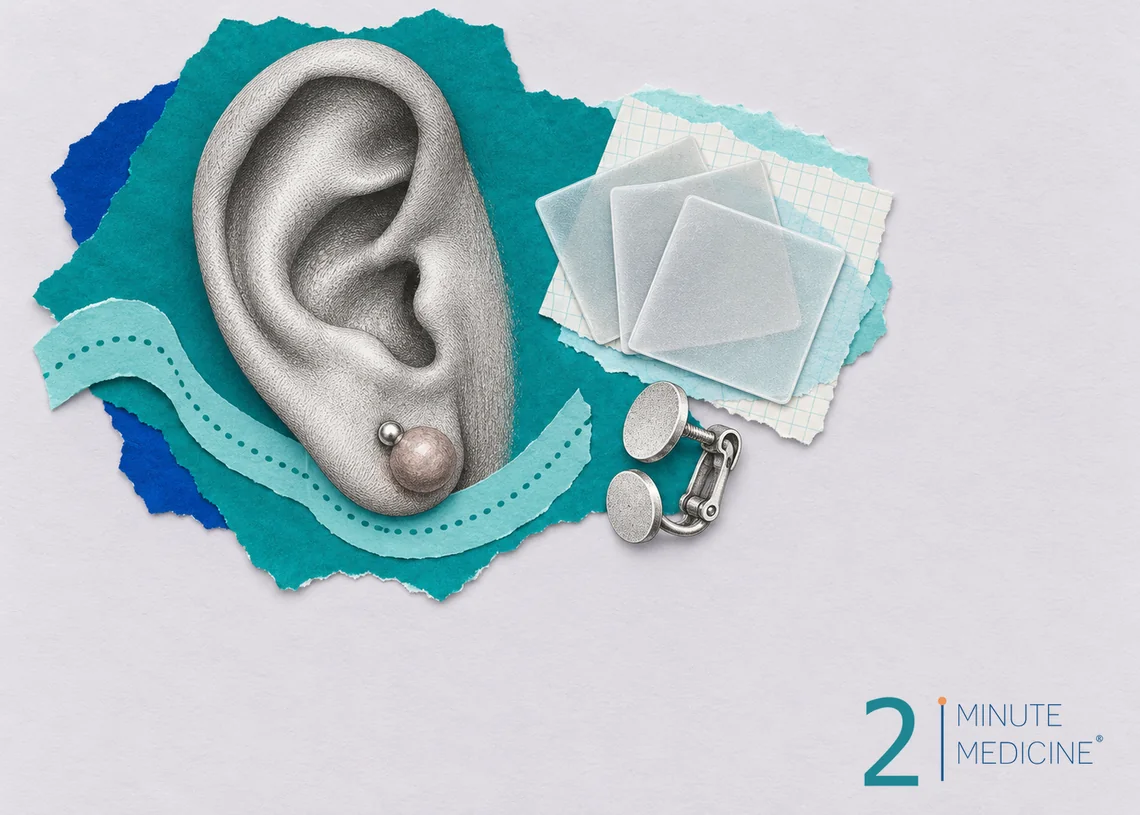
Keloid collage: an earlobe with a smooth raised keloid behind a stud earring, silicone gel sheets and a pressure clip
Share on FacebookShare on TwitterShare on LinkedIn

A keloid is a thick, raised scar that keeps growing past the edges of the wound that caused it. It can form after a piercing, surgery, acne or even a small scratch. Keloids aren’t cancer and aren’t dangerous, but they can itch, hurt and bother people because of how they look. They are easier to treat while small, and they often come back if they are simply cut off.

Key points

  • A keloid is an overgrowth of scar tissue, made mostly of a protein called collagen.
  • Earlobes, the chest, shoulders and upper back are the most common spots.
  • People with darker skin and those with a family history get keloids more often.
  • Steroid shots and silicone gel sheets are the usual first treatments.
  • Surgery alone often leads to a bigger keloid. It works better when combined with other treatments.

What a keloid is made of

When skin heals, cells called fibroblasts lay down collagen to close the wound. Normally they slow down once the gap is filled. In a keloid, they keep going for months or years, piling up thick bands of collagen into a firm, rubbery lump.

A keloid differs from a hypertrophic scar, which is raised but stays within the line of the original wound and usually flattens over a year or two. Keloids spread beyond that line and rarely shrink on their own.

What causes keloids

Almost any break in the skin can lead to a keloid in someone who is prone to them:

  • Ear and body piercings
  • Surgical cuts, including C-sections and chest surgery
  • Acne and infected hair bumps, such as razor bumps on the beard area
  • Burns, cuts and scrapes
  • Chickenpox and insect bites
  • Vaccinations and tattoos

Some keloids appear with no injury you remember, most often on the chest.

Who is more likely to get keloids

  • People with Black, Asian or Hispanic heritage
  • People aged about 10 to 30
  • People with a parent or sibling who has keloids
  • People who have had a keloid before

Hormone changes during puberty and pregnancy can make keloids grow faster.

RELATED REPORTS

No Content Available

What a keloid looks like

  • A raised, smooth, shiny lump that feels firm or rubbery
  • Pink, red or purple at first, often turning darker than the skin around it over time
  • Spreads past the edges of the original wound, sometimes in a claw-like shape
  • Often itchy, tender or painful, especially while growing

Signs that a keloid may be starting to form: a scar that keeps getting thicker or wider after the first month or two, or one that itches and spreads instead of fading. Keloids usually start weeks to months after the injury. They can stay small or grow large over several years.

How it’s diagnosed

A doctor can usually tell by looking at it and asking how it started. If the growth looks unusual, bleeds or appeared without any injury, the doctor may remove a small piece to check under a microscope. This rules out rare skin growths that can look like a keloid.

How keloids are treated

Treatment can flatten a keloid, soften it and ease itching and pain. It rarely makes the skin look as if there was never an injury. Most people need more than one treatment, often for several months.

  • Steroid injections. A steroid such as triamcinolone is injected into the keloid every few weeks. This is the most common treatment. It can thin the skin or leave a lighter patch.
  • Silicone gel sheets or gel. Worn or applied every day for several months, they can flatten and soften scars. They are also used to help prevent keloids after surgery.
  • Pressure. Special clip-on earrings or tight garments press on the area for many hours a day, often after an earlobe keloid is removed.
  • Freezing (cryotherapy). Works best on small keloids. It can lighten darker skin.
  • Other injections. 5-fluorouracil, a medicine that slows cell growth, is sometimes injected alone or with a steroid.
  • Laser. Can reduce redness and help other treatments work.
  • Surgery. Cutting out the keloid alone often leads to a new, sometimes larger keloid. Surgeons usually follow it with steroid shots, pressure or a few doses of radiation to lower the chance it comes back.

Creams sold for scars, such as onion extract, have little proof of helping keloids. Never try to cut, tie off or burn a keloid at home.

Preventing keloids

If you’ve had a keloid before, or they run in your family:

  • Think carefully before getting piercings, tattoos or cosmetic surgery.
  • Treat acne early so it doesn’t scar.
  • Tell any surgeon you form keloids. They may use special stitching, steroid shots or silicone sheets after surgery.
  • Start silicone gel or sheets once a new wound has closed, and keep new scars out of the sun.
  • See a doctor at the first sign that a scar is thickening.

When to see a doctor

  • A scar keeps growing or spreading
  • A scar itches or hurts enough to bother you
  • A keloid limits how you move, for example over a joint
  • A lump appears without an injury, changes quickly, bleeds or opens up

Common questions about keloids

Do keloids go away on their own?

Rarely. Most keloids stay the same or grow slowly for years. Some soften and become less itchy over time, especially in older adults. Treatment works best on small, young keloids, so see a doctor early rather than waiting for it to fade.

Is the bump on my piercing a keloid?

Not always. Many bumps on new nose or ear piercings are irritation bumps or hypertrophic scars, which stay small and often shrink once the cause is removed. A keloid is firm, keeps growing and spreads beyond the piercing hole. A dermatologist can tell the difference.

Are there foods to avoid if you have keloids?

No food is known to cause keloids or make them grow. You don’t need a special diet. A healthy diet helps wounds heal well in general, but treatments like steroid shots and silicone sheets are what make a difference for keloids.

Can a keloid turn into cancer?

No, keloids are not cancer and almost never become cancer. Rarely, a skin cancer or another growth can look like a keloid at first. Have a doctor check any lump that grows quickly, bleeds, breaks open or appears without an injury.

Questions to ask your doctor

  • Is this a keloid or a different kind of scar?
  • Which treatment would work best for its size and location?
  • How many treatments will I need?
  • Will treatment change my skin color?
  • How can I lower my risk if I need surgery in the future?

Learn more

  • Keloids (MedlinePlus, U.S. National Library of Medicine)
  • Hypertrophic scars and keloids (DermNet)

This guide is general information and doesn’t replace advice from your own doctor. Last updated October 2026.

Tags: Keloids
Previous Post

Patient Basics: Kaposi Sarcoma (Kaposi’s Sarcoma)

Next Post

Patient Basics: Kidney Cancer

RelatedReports

No Content Available
Next Post
Collage for fever: a digital thermometer, a round thermostat dial, a damp washcloth in a bowl and a folded light sheet

Patient Basics: Fever

Ingrown toenail collage: a big toe with the nail edge curving into skin, straight nail clippers, a warm basin and a sandal

Patient Basics: Ingrown Toenail

Hydrocephalus collage: a brain with enlarged teal ventricles, a thin shunt tube with a valve, and a blank measuring tape

Patient Basics: Hydrocephalus (Water on the Brain)

✦ EvidencePulse™ by 2 Minute Medicine 3 reports You asked top stroke trials 2026 Synthesizing medical evidence... Top 2026 stroke trial results: OCEANIC — ischemic stroke: 6.2% vs 8.4% OPTION* — mRS 0–1: 43.6% vs 34.2% ORIENTAL* — mRS 0–2: 58.6% vs 46.6% *Higher sICH in intervention arms Participants randomizedN OCEANIC 12,327 OPTION 570 ORIENTAL 564 Ask about guidelines or landmark trials... Try EvidencePulse™ Get the signal. Try it now → Physician-trained medical AI by 2 Minute Medicine

2MM+ All Access

Full details →
$4.99 /month

3-day free trial · cancel anytime

  • ✓100+ physician-written reports
  • ✓EvidencePulse™ + HypeCheck™
  • ✓Ad-free reading + newsletters
Start 3-day free trial

Then $4.99/month. Manage renewal in your account.

2 Minute Medicine® is an award winning, physician-run, expert medical media company. Our content is curated, written and edited by practicing health professionals who have clinical and scientific expertise in their field of reporting. Our editorial management team is comprised of highly-trained MD physicians. Join numerous brands, companies, and hospitals who trust our licensed content.

Recent Reports

  • Pediatric mental health care utilization varied by climate vulnerability and historical redlining
  • The Scan by 2 Minute Medicine®: Light therapy offers hope for seasonal depression, measles cases highlight vaccination gaps, prostate screening guidelines evolve, and social media use affects young adults’ mental health
  • HMS1005 showed generally good tolerability and improved glucose measures in topline phase 1b results
License Content
Terms of Use | Disclaimer
Cookie Policy

Get the app

Read 2 Minute Medicine on iPhone, iPad and Android.

Download on the App StoreGet it on Google Play
QR code for www.2minutemedicine.com/app
On a computer? Scan this with your phone’s camera.
2MM+ All Access Full details →

The medical literature, distilled daily.

Monthly plan selected: $4.99 /month.

$4.99/month

3-day free trial · cancel anytime

Start 3-day free trial

Then $4.99/month. Manage renewal in your account.

Yearly plan selected: $49.90 /year.

$49.90/year

2 months free

Start 3-day free trial

Then $49.90/year.

Membership benefits

  • ✓100+ new physician-written study summaries monthly, 12,000+ searchable
  • ✓AI EvidencePulse™ + HypeCheck™
  • ✓Ad-free reading + newsletters
  • ✓FDA drug approvals + clinical calculators

Already a member? Sign in

  • Get the app
  • About
  • Specialties
    • All Specialties, All Recent Reports
    • Cardiology
    • Chronic Disease
    • Dermatology
    • Emergency
    • Endocrinology
    • Gastroenterology
    • Imaging and Intervention
    • Infectious Disease
    • Nephrology
    • Neurology
    • Obstetrics
    • Oncology
    • Ophthalmology
    • Pediatrics
    • Pharma
    • Preclinical
    • Psychiatry
    • Public Health
    • Pulmonology
    • Rheumatology
    • Surgery
    • Rewinds
    • The Scan
  • EvidencePulse™
  • HypeCheck™
  • AI News
  • Classics™
    • 2MM+ Online Access
    • Paperback and Ebook
  • Tools
    • Medical Calculators
    • Clinical Guidelines
    • Physician Pay by Specialty
    • FDA Drug Approvals
    • RVU Search
    • ICD-10 Code Lookup
    • Drug Safety for Breastfeeding/Pregnancy
    • ECG Reference
      • QTc Calculator
      • Sgarbossa Criteria
      • ECG Axis Calculator
      • AV Block Helper
    • NPI Registry Lookup
  • Rankings
    • Medical School Rankings
    • Residency Rankings
  • Partners
    • License Content
    • Advertise with Us
No Result
View All Result

© 2026 2 Minute Medicine, Inc. - Physician-written medical news.


