

Patient Basics: Smallpox
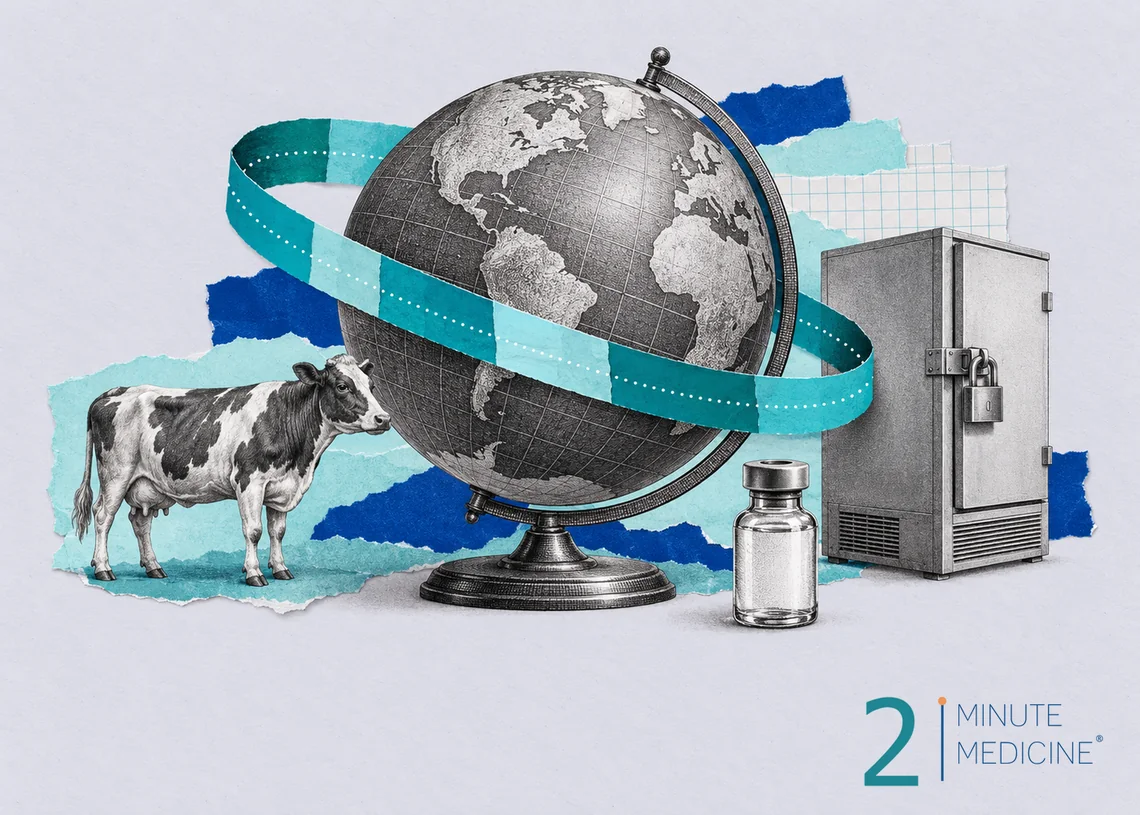
Smallpox was a deadly disease caused by the variola virus. Worldwide vaccination wiped it out, and the World Health Organization declared it gone in 1980. No one has caught it naturally since 1977, but stored virus still exists in two labs, so the US keeps plans and vaccines ready in case it is ever released on purpose.
Key points
- Smallpox is the only human disease that has been wiped out everywhere.
- It spread from person to person and killed about 3 in 10 people who caught the most common form.
- Routine smallpox vaccination in the US stopped in 1972. Most people today aren’t protected.
- The US keeps vaccines and antiviral medicines in a national stockpile.
- A rash with blisters and fever today is almost always something else, such as chickenpox or mpox.
How smallpox ended
For thousands of years, smallpox caused huge outbreaks. In the late 1700s, the English doctor Edward Jenner showed that people infected with cowpox, a mild disease of cows, were protected from smallpox. This led to the first vaccine. The word “vaccine” comes from the Latin word for cow.
In 1967, the World Health Organization began a global push to end smallpox. Health workers found each new case, then vaccinated everyone around that person. This “ring vaccination” stopped the virus from finding new people to infect. The last natural case was in Somalia in 1977. One more person died in 1978 after the virus escaped from a lab in England.
Today, samples of the virus are stored in two high-security labs, one at the CDC in Atlanta and one in Russia.
How it spread
Smallpox spread mainly through droplets from the nose and mouth during long, face-to-face contact. It could also spread through fluid from the sores and through bedding or clothing that touched them. A person was most contagious once the rash appeared and stayed contagious until all the scabs fell off. Animals and insects didn’t carry it.
Symptoms
Symptoms began about 7 to 19 days after exposure, most often around 12 days.
- First stage. High fever, headache, back pain, severe tiredness and sometimes vomiting, lasting 2 to 4 days.
- Rash. Small red spots appeared in the mouth and throat, then on the face, arms and legs, and finally the hands and feet, including the palms and soles.
- Bumps and blisters. The spots became raised bumps, then deep, firm blisters filled with thick fluid. In one area, all the sores were at the same stage.
- Scabs. After about 2 weeks the sores crusted over. Scabs fell off over the next few weeks and often left deep, pitted scars.
Some people also became blind. Rarer forms of the disease caused bleeding into the skin and were almost always fatal.
How it differed from chickenpox
Chickenpox spots come in waves, so a person has new spots, blisters and scabs at the same time. They show up most on the chest, back and belly and rarely on the palms or soles. Smallpox sores were deeper, all at one stage in each area, and thickest on the face, arms and legs.
Could smallpox come back?
The main worry is that someone could use the virus as a weapon. A single case anywhere would be treated as a public health emergency. Scientists also study related viruses in animals, such as mpox, which can spread to people and cause a milder illness.
Vaccines
Smallpox vaccines are made from a related virus called vaccinia, not from variola itself. Two vaccines are approved in the US:
- ACAM2000 uses live vaccinia virus. It is given by poking the skin several times with a two-pronged needle, and it leaves a small scar. It can cause serious side effects in some people, such as heart inflammation, so it is used only when needed.
- JYNNEOS uses a weakened form of vaccinia that can’t multiply in the body. It is given as two shots and is also used to prevent mpox.
If smallpox ever appeared, people who had been exposed would be offered a vaccine. Getting it within 3 days of exposure can prevent the disease or make it much milder. Today, routine smallpox vaccine is given only to some lab workers, health workers and military members. The US keeps a large stockpile of smallpox vaccine for emergencies.
Treatment
The FDA has approved two antiviral pills for smallpox, tecovirimat and brincidofovir. They were tested in animals and in healthy volunteers, since there have been no human cases to study. Treatment would also include fluids, fever control and care for skin infections. People with smallpox would be kept apart from others to stop the spread.
What to do if you’re worried
A fever and a rash with blisters are far more likely to be chickenpox, shingles, mpox, a drug reaction or another common illness. Call your doctor or clinic before you go in, so staff can take steps to protect others. If you think you were exposed to smallpox on purpose, contact your local health department or call 911.
Common questions about smallpox
How can I tell if I had the smallpox vaccine?
Most Americans born before 1972 were vaccinated as children. The old vaccine usually left a small, round, slightly sunken scar on the upper arm. People born later usually weren’t vaccinated unless they served in the military or worked in certain labs or health jobs.
Does a smallpox vaccine from childhood still protect me?
Probably only in part. Strong protection is thought to last about 3 to 5 years and then fade, though some protection may last much longer. If smallpox ever returned, health officials would offer vaccine to people who were exposed, whatever their age or vaccine history.
Is mpox the same as smallpox?
No. Mpox (formerly called monkeypox) is caused by a related virus, but it is usually much milder and far less deadly, and it spreads mainly through close skin-to-skin contact, including sex. Vaccines made for smallpox, such as JYNNEOS, also protect against mpox.
Questions to ask your doctor
- What is likely causing my rash, if it isn’t smallpox?
- Was I vaccinated against smallpox as a child, and does that still protect me?
- Should I get the JYNNEOS vaccine for mpox?
- Does my job put me at risk of contact with smallpox-like viruses?
Learn more
- About smallpox (Centers for Disease Control and Prevention)
This guide is general information and doesn’t replace advice from your own doctor. Last updated October 2026.






 Get the app