

Patient Basics: Tick Bites
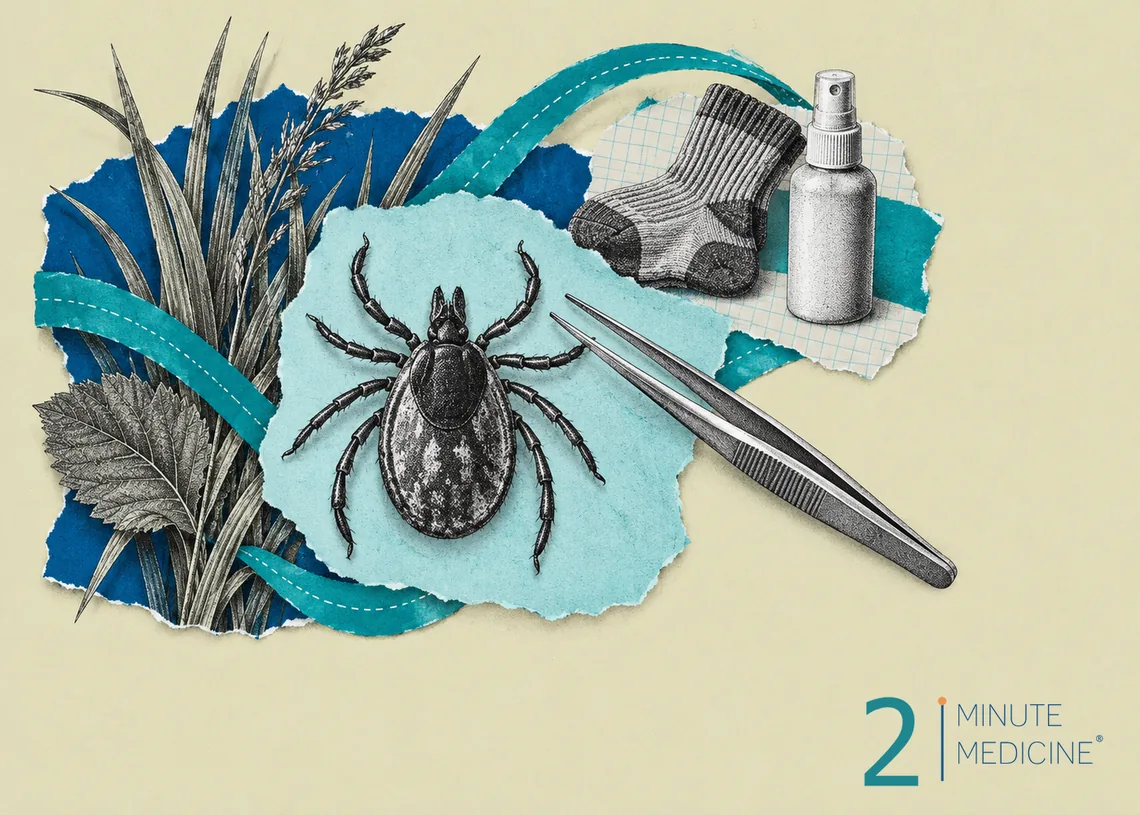
A tick bite happens when a tick, a small bug related to spiders, latches onto your skin to feed on blood. Most tick bites are harmless, but some ticks carry germs that cause Lyme disease, Rocky Mountain spotted fever and other illnesses. Removing a tick quickly and watching for fever or rash over the next month are the two most useful things you can do.
Key points
- Pull a tick off with fine-tipped tweezers as soon as you find it. The longer it stays attached, the higher the chance of infection.
- Don’t use matches, petroleum jelly or nail polish to make a tick let go.
- Watch for fever, rash, headache or body aches for 30 days after a bite.
- A single dose of an antibiotic can sometimes prevent Lyme disease after a high-risk bite.
- Insect repellent, treated clothing and daily tick checks prevent most bites.
Where ticks live and what they spread
Ticks wait on grass, brush and leaf litter and climb onto people and pets who brush past. They are most active from spring through fall, but in warm areas they can bite all year. Young ticks (nymphs) are barely bigger than a pinhead, so many bites go unnoticed. Most ticks that bite people in the US are hard ticks (the Ixodidae family). Soft ticks bite less often, mainly at night in rustic cabins in the West.
Each type of tick carries different germs:
- Blacklegged (deer) ticks in the Northeast, mid-Atlantic and upper Midwest, and a related tick on the Pacific coast, spread Lyme disease, anaplasmosis and babesiosis.
- Lone star ticks, common in the Southeast, South and East, spread ehrlichiosis. Their bites can also trigger alpha-gal syndrome, an allergy to red meat such as beef and pork.
- American dog ticks, Rocky Mountain wood ticks and brown dog ticks can spread Rocky Mountain spotted fever.
Germs usually take time to pass from tick to person. For Lyme disease, the tick generally needs to be attached for more than a day. Some viruses, such as Powassan virus, pass faster, but they are rare.
How to remove a tick
- Use clean, fine-tipped tweezers. Grasp the tick as close to the skin as you can.
- Pull straight out slowly and steadily. Don’t twist, jerk or squeeze the tick’s body.
- If part of the mouth stays in the skin, try to lift it out with the tweezers. If you can’t, leave it. The skin will push it out as it heals.
- Wash the bite and your hands with soap and water or rubbing alcohol.
- Drop the tick in rubbing alcohol, seal it in a bag or tape, or flush it. Don’t crush it with your fingers.
It can help to note the date and where you were, or to take a photo of the tick, in case you get sick later. Testing the tick itself isn’t usually needed, because the result doesn’t change what you should do.
A small red bump at the bite for a day or two is a normal reaction to the bite.
Symptoms to watch for after a tick bite
Call a doctor if any of these show up within a month of a bite, even if you never saw a tick:
- An expanding red rash at least 2 inches across, sometimes with a clear center like a bull’s-eye. It usually appears 3 to 30 days after the bite and is a sign of Lyme disease. On darker skin it can look like a bruise.
- Fever, chills, headache, tiredness or muscle and joint aches
- A rash of small flat pink or red spots that starts on the wrists and ankles. With fever, this can mean Rocky Mountain spotted fever, which can be deadly if treatment is delayed.
- Hives, swelling or stomach upset a few hours after eating red meat, which can point to alpha-gal syndrome
- Weakness or trouble walking that gets worse, especially in a child, which can be tick paralysis. It goes away once the tick is found and removed.
Treatment
Preventing Lyme disease. If a blacklegged tick was attached for 36 hours or more in an area where Lyme disease is common, your doctor may offer a single dose of the antibiotic doxycycline. It works best within 72 hours after you remove the tick.
Treating infection. Most tick-borne infections caused by bacteria are treated with doxycycline. Rocky Mountain spotted fever needs doxycycline right away, in children too, without waiting for test results. Lyme disease is also treated with amoxicillin or cefuroxime in some cases. Babesiosis, a parasite, needs different medicines.
Alpha-gal syndrome is managed by avoiding red meat and sometimes other mammal products. People with severe reactions may need to carry an epinephrine auto-injector.
Preventing tick bites
- Use an insect repellent registered with the EPA, such as DEET, picaridin, IR3535 or oil of lemon eucalyptus. Don’t use oil of lemon eucalyptus on children under 3.
- Treat shoes, socks and outdoor clothing with permethrin, or buy clothing already treated. Don’t put permethrin on skin.
- Wear light-colored long pants tucked into socks in grassy or wooded areas. Walk in the center of trails.
- Shower within two hours of coming inside.
- Check your whole body, especially the scalp, ears, armpits, belly button, waist, groin and behind the knees. Check children and pets too.
- Put dry outdoor clothes in the dryer on high heat for at least 10 minutes to kill ticks.
- Ask your vet about tick prevention for dogs and cats.
When to see a doctor
- You can’t remove the whole tick
- The tick was attached for more than a day, or you live where Lyme disease is common
- Fever, rash, aches or tiredness start within a month of a bite
- The bite area becomes more red, warm, painful or oozes
Get emergency care for trouble breathing, swelling of the face or throat, a stiff neck with fever, confusion, or new weakness or trouble walking.
Common questions about tick bites
What does a tick bite look like?
Most tick bites look like a small red bump, a bit like a mosquito bite, often with the tick still attached. The redness usually fades in a day or two. A red patch that keeps spreading over several days, to more than 2 inches across, is different and may be the start of Lyme disease.
How long does a tick bite take to heal?
The small red bump usually fades within a few days to a week. Some bites leave an itchy lump that lasts a few weeks. Redness that grows instead of shrinking, or fever and aches in the month after the bite, point to an infection rather than slow healing.
Do all ticks carry Lyme disease?
No. In the US, only blacklegged (deer) ticks spread Lyme disease, and many of them aren’t infected. Even an infected tick usually has to stay attached for more than a day to pass it on. Other ticks spread different illnesses, so watch for symptoms after any bite.
Questions to ask your doctor
- Should I take a dose of antibiotic to prevent Lyme disease?
- Which symptoms should I watch for, and for how long?
- Do I need blood tests now or later?
- Which diseases do ticks carry where I live?
- Which repellent is safe for my children?
Learn more
- Ticks (Centers for Disease Control and Prevention)
- Tick bites (MedlinePlus, U.S. National Library of Medicine)
This guide is general information and doesn’t replace advice from your own doctor. Last updated October 2026.







 Get the app