
• About
  • Masthead
  • License Content
  • Advertise
  • Press Releases
  • Newsroom
  • RSS/Email List
  • 2MM Podcast
  • Write for us
  • Contact Us
2 Minute Medicine
No Result
View All Result

No products in the cart.

Sign in
SUBSCRIBE
  • About
  • Specialties
    • All Specialties, All Recent Reports
    • Cardiology
    • Chronic Disease
    • Dermatology
    • Emergency
    • Endocrinology
    • Gastroenterology
    • Imaging and Intervention
    • Infectious Disease
    • Nephrology
    • Neurology
    • Obstetrics
    • Oncology
    • Ophthalmology
    • Pediatrics
    • Pharma
    • Preclinical
    • Psychiatry
    • Public Health
    • Pulmonology
    • Rheumatology
    • Surgery
    • Rewinds
    • The Scan
  • EvidencePulse™
  • HypeCheck™
  • AI News
  • Classics™
    • 2MM+ Online Access
    • Paperback and Ebook
  • Tools
    • NPI Registry Lookup
    • RVU Search
    • Physician Pay by Specialty
    • ICD-10 Code Lookup
    • FDA Drug Approvals
    • Drug Safety for Breastfeeding/Pregnancy
    • Clinical Guidelines
    • Medical Calculators
    • ECG Reference
      • QTc Calculator
      • Sgarbossa Criteria
      • ECG Axis Calculator
      • AV Block Helper
  • Rankings
    • Medical School Rankings
    • Residency Rankings
  • Partners
    • License Content
    • Advertise with Us
2 Minute Medicine
  • About
  • Specialties
    • All Specialties, All Recent Reports
    • Cardiology
    • Chronic Disease
    • Dermatology
    • Emergency
    • Endocrinology
    • Gastroenterology
    • Imaging and Intervention
    • Infectious Disease
    • Nephrology
    • Neurology
    • Obstetrics
    • Oncology
    • Ophthalmology
    • Pediatrics
    • Pharma
    • Preclinical
    • Psychiatry
    • Public Health
    • Pulmonology
    • Rheumatology
    • Surgery
    • Rewinds
    • The Scan
  • EvidencePulse™
  • HypeCheck™
  • AI News
  • Classics™
    • 2MM+ Online Access
    • Paperback and Ebook
  • Tools
    • NPI Registry Lookup
    • RVU Search
    • Physician Pay by Specialty
    • ICD-10 Code Lookup
    • FDA Drug Approvals
    • Drug Safety for Breastfeeding/Pregnancy
    • Clinical Guidelines
    • Medical Calculators
    • ECG Reference
      • QTc Calculator
      • Sgarbossa Criteria
      • ECG Axis Calculator
      • AV Block Helper
  • Rankings
    • Medical School Rankings
    • Residency Rankings
  • Partners
    • License Content
    • Advertise with Us
Sign in
SUBSCRIBE
2 Minute Medicine
Sign in
Subscribe
2 Minute MedicineFree on Google PlayGet
✦EvidencePulse™by 2 Minute Medicine3 reportsYou askedtop stroke trials 2026Synthesizing medical evidence...Top 2026 stroke trial results:OCEANIC — ischemic stroke: 6.2% vs 8.4%OPTION* — mRS 0–1: 43.6% vs 34.2%ORIENTAL* — mRS 0–2: 58.6% vs 46.6%*Higher sICH in intervention armsParticipants randomizedNOCEANIC12,327OPTION570ORIENTAL564Ask about guidelines or landmark trials...↑Try EvidencePulse™Ask the evidence. Get the signal.Try it now →
Home Health A to Z

Patient Basics: Tropical Sprue
by2 Minute Medicine
October 30, 2026
in Health A to Z
Reading Time: 5 mins read
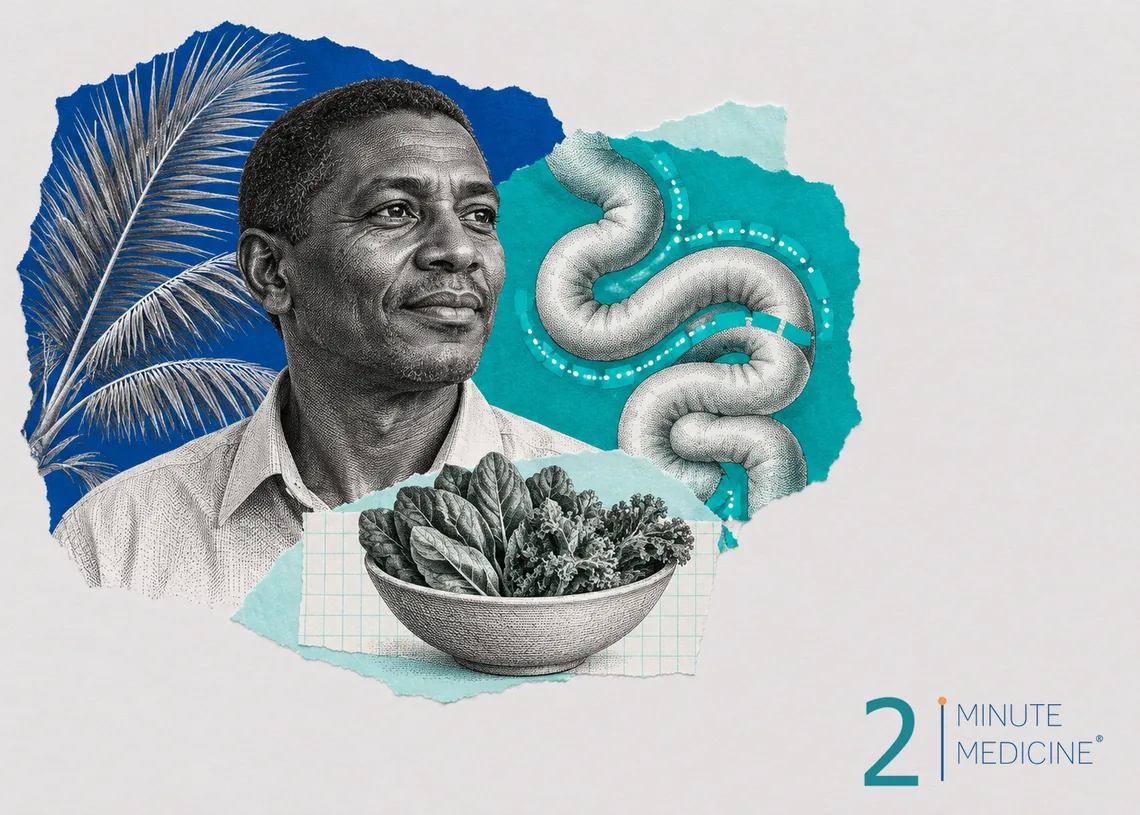
Tropical sprue collage: a man beside an engraved loop of small intestine, a palm frond and a bowl of leafy greens
Share on FacebookShare on TwitterShare on LinkedIn

Tropical sprue is a rare illness of the small intestine in people who live in, or have spent a long time in, tropical regions such as the Caribbean, India and Southeast Asia. The gut lining becomes inflamed and can’t take in food well. This causes long-lasting diarrhea, weight loss and low levels of vitamins, especially folate and vitamin B12. It usually clears up with an antibiotic and folic acid taken for several months.

Key points

  • Symptoms often start after a month or more in the tropics, and sometimes only after you return home.
  • The main signs are diarrhea lasting more than a few weeks, pale greasy stools, weight loss and tiredness.
  • Doctors first rule out parasites, celiac disease and other causes of the same symptoms.
  • Treatment is folic acid plus a tetracycline antibiotic, such as doxycycline, for 3 to 6 months.
  • Most people recover fully once treated.

What causes tropical sprue

The exact cause isn’t known. Most experts think a gut infection sets it off. Bacteria may then overgrow in the small intestine and keep the lining inflamed. The tiny finger-like folds that line the intestine (villi) become short and flat, so there is less surface to absorb food and vitamins. Food may also move through the gut more slowly, which lets bacteria build up further. A diet low in folate may make things worse.

Tropical sprue has struck groups of people at the same time, which also suggests an infection. It is much less common than it was a few decades ago, possibly because of cleaner water and wider use of antibiotics. Short vacations rarely lead to it.

Tropical sprue symptoms

It often begins like a bout of traveler’s diarrhea that never fully goes away. Over weeks or months, signs of poor absorption appear:

  • Diarrhea that lasts for weeks or months
  • Pale, bulky, oily stools that smell bad and may float
  • Gas, bloating and belly cramps
  • Loss of appetite and weight loss
  • Tiredness, weakness and shortness of breath from anemia (low red blood cells)
  • A sore, red, smooth tongue and cracks at the corners of the mouth
  • Numbness or tingling in the hands and feet, and muscle cramps
  • Swollen ankles, when protein levels drop

How it’s diagnosed

No single test proves tropical sprue. Your doctor will ask where you have lived and traveled, and for how long. Tests then look for the effects of poor absorption and rule out other causes:

  • Stool tests for parasites such as giardia and for bacteria, which can cause the same symptoms
  • Blood tests for anemia, folate, vitamin B12, iron, protein and vitamin D. Anemia with unusually large red blood cells is a common clue.
  • A celiac disease blood test, because celiac disease damages the intestine in a similar way
  • An HIV test, since HIV can also cause long-term diarrhea
  • Upper endoscopy. A thin, flexible tube with a camera goes through the mouth into the small intestine while you are sedated. The doctor takes tiny samples (biopsies) of the lining to look for flattened villi and inflammation.

How tropical sprue is treated

  • Folic acid. This vitamin often helps quickly. The sore tongue, appetite and anemia can improve within days to weeks.
  • An antibiotic. Tetracycline or doxycycline is usually taken for 3 to 6 months. Doxycycline can make your skin burn easily in the sun, so use sun protection. Take it with plenty of water and stay upright afterward. Pregnant women and young children are usually given a different antibiotic.
  • Vitamin B12 by shot or pill if your level is low, plus iron, vitamin D or other supplements as needed.
  • Fluids and salts to replace what diarrhea has taken out.
  • Food changes for a while. Small, frequent meals are easier on the gut. Cutting back on fat and milk products can ease diarrhea until the lining heals.

Most people feel better within a few weeks. The gut lining takes several months to heal fully.

RELATED REPORTS

No Content Available

Recovery and outlook

With treatment, most people recover completely. Without it, tropical sprue can lead to severe weight loss, anemia and nerve problems from low vitamin B12. It can come back, especially if you stay in or return to the tropics. Tell your doctor if diarrhea or weight loss returns.

Lowering your risk

There is no vaccine and no proven way to prevent tropical sprue. While living in or visiting the tropics, the usual food and water safety steps lower your chance of gut infections in general:

  • Drink bottled, boiled or treated water.
  • Eat food that is freshly cooked and served hot.
  • Peel fruit yourself, and avoid raw salads where water may be unsafe.
  • Wash your hands with soap before eating.

When to see a doctor

  • Diarrhea that lasts more than 2 weeks, during or after time in the tropics
  • Greasy, floating stools or weight loss you can’t explain
  • Ongoing tiredness, pale skin or shortness of breath
  • A sore tongue, or numbness and tingling in your hands or feet

Get emergency care for signs of severe dehydration, such as dizziness, confusion or very little urine, or for blood in your stool with a high fever.

Common questions about tropical sprue

How is tropical sprue different from celiac disease?

Celiac disease, once called celiac sprue, is an immune reaction to gluten that can happen anywhere in the world. It is treated with a gluten-free diet for life. Tropical sprue is tied to living in the tropics and is treated with an antibiotic and folic acid. A gluten-free diet doesn’t help it.

Can you get tropical sprue after a short trip?

It’s uncommon. Most people with tropical sprue have spent at least a month in the tropics, and many have lived there for years. Symptoms can start months after you return home, so tell your doctor about past travel if you have diarrhea that won’t go away.

How long does it take to recover from tropical sprue?

Many people feel better within a few weeks of starting folic acid and an antibiotic. The full course usually lasts 3 to 6 months, and sometimes longer if you were ill for a long time. The intestine’s lining keeps healing for several months after symptoms ease.

Questions to ask your doctor

  • How sure are you that this is tropical sprue and not another cause?
  • Which vitamins and minerals are low, and how will we fix them?
  • How long will I need to take the antibiotic?
  • Should I change what I eat while I heal?
  • What should I do if symptoms come back?

Learn more

  • Tropical sprue (MedlinePlus, U.S. National Library of Medicine)
  • Malabsorption (MedlinePlus, U.S. National Library of Medicine)

This guide is general information and doesn’t replace advice from your own doctor. Last updated October 2026.

Tags: Tropical Sprue
Previous Post

Patient Basics: Epidermoid Cyst (Sebaceous Cyst)

Next Post

Patient Basics: Scleritis

RelatedReports

No Content Available
Next Post
Contact dermatitis collage: an earlobe with a metal stud, a poison ivy sprig, a belt buckle and a plain cream tube

Patient Basics: Contact Dermatitis

Conversion disorder collage of a young woman beside an old telephone switchboard with crossed cables and a walking cane

Patient Basics: Functional Neurological Disorder (Conversion Disorder)

Dandruff collage: a young woman with dark hair, pale flakes on her dark sweater, a wide-tooth comb and a shampoo bottle

Patient Basics: Dandruff

✦ EvidencePulse™ by 2 Minute Medicine 3 reports You asked top stroke trials 2026 Synthesizing medical evidence... Top 2026 stroke trial results: OCEANIC — ischemic stroke: 6.2% vs 8.4% OPTION* — mRS 0–1: 43.6% vs 34.2% ORIENTAL* — mRS 0–2: 58.6% vs 46.6% *Higher sICH in intervention arms Participants randomizedN OCEANIC 12,327 OPTION 570 ORIENTAL 564 Ask about guidelines or landmark trials... Try EvidencePulse™ Get the signal. Try it now → Physician-trained medical AI by 2 Minute Medicine

2MM+ All Access

Full details →
$4.99 /month

3-day free trial · cancel anytime

  • ✓100+ physician-written reports
  • ✓EvidencePulse™ + HypeCheck™
  • ✓Ad-free reading + newsletters
Start 3-day free trial

Then $4.99/month. Manage renewal in your account.

2 Minute Medicine® is an award winning, physician-run, expert medical media company. Our content is curated, written and edited by practicing health professionals who have clinical and scientific expertise in their field of reporting. Our editorial management team is comprised of highly-trained MD physicians. Join numerous brands, companies, and hospitals who trust our licensed content.

Recent Reports

  • In At-Risk Patients With Moderate Aortic Stenosis, TAVR Reduced 2-Year Death or Heart-Failure Events
  • Nipocalimab patient interviews identify mouth dryness as the most important symptom to improve in phase 2 Sjögren’s disease data
  • CDC reports 5,182 confirmed measles cases in the United States in 2026
License Content
Terms of Use | Disclaimer
Cookie Policy

Get the app

Read 2 Minute Medicine on iPhone, iPad and Android.

Download on the App StoreGet it on Google Play
QR code for www.2minutemedicine.com/app
On a computer? Scan this with your phone’s camera.
2MM+ All Access Full details →

The medical literature, distilled daily.

Monthly plan selected: $4.99 /month.

$4.99/month

3-day free trial · cancel anytime

Start 3-day free trial

Then $4.99/month. Manage renewal in your account.

Yearly plan selected: $49.90 /year.

$49.90/year

2 months free

Start 3-day free trial

Then $49.90/year.

Membership benefits

  • ✓100+ physician-written reports
  • ✓AI EvidencePulse™ + HypeCheck™
  • ✓Ad-free reading + newsletters
  • ✓FDA drug approvals + clinical calculators

Already a member? Sign in

  • Get the app
  • About
  • Specialties
    • All Specialties, All Recent Reports
    • Cardiology
    • Chronic Disease
    • Dermatology
    • Emergency
    • Endocrinology
    • Gastroenterology
    • Imaging and Intervention
    • Infectious Disease
    • Nephrology
    • Neurology
    • Obstetrics
    • Oncology
    • Ophthalmology
    • Pediatrics
    • Pharma
    • Preclinical
    • Psychiatry
    • Public Health
    • Pulmonology
    • Rheumatology
    • Surgery
    • Rewinds
    • The Scan
  • EvidencePulse™
  • HypeCheck™
  • AI News
  • Classics™
    • 2MM+ Online Access
    • Paperback and Ebook
  • Tools
    • NPI Registry Lookup
    • RVU Search
    • Physician Pay by Specialty
    • ICD-10 Code Lookup
    • FDA Drug Approvals
    • Drug Safety for Breastfeeding/Pregnancy
    • Clinical Guidelines
    • Medical Calculators
    • ECG Reference
      • QTc Calculator
      • Sgarbossa Criteria
      • ECG Axis Calculator
      • AV Block Helper
  • Rankings
    • Medical School Rankings
    • Residency Rankings
  • Partners
    • License Content
    • Advertise with Us
No Result
View All Result

© 2026 2 Minute Medicine, Inc. - Physician-written medical news.


