Perianal lidocaine may improve comfort and efficiency during unsedated adult colonoscopy
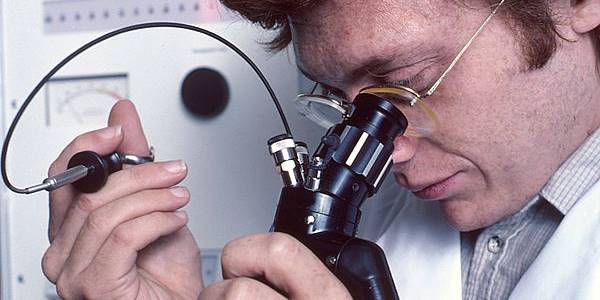
1. Perianal 2% lidocaine gel significantly reduced anal pain and shortened cecal intubation time during unsedated colonoscopy in adults aged 18–40 years.
2. The intervention appeared safe in this small trial and may be especially useful for junior endoscopists, but generalizability is limited by the single-centre design, modest sample size, and exclusion of patients older than 40.
Evidence Rating Level: 1 (Excellent)
Study Rundown: Wang et al. performed a prospective, double-blind randomized controlled trial assessing whether perianal lidocaine improves comfort and procedural outcomes during unsedated colonoscopy. The study enrolled 122 patients aged 18–40 years at a tertiary-care hospital in China and randomized them to 5 mL of 2% lidocaine gel or normal saline applied around the anus before colonoscopy. Primary outcomes were anal and abdominal pain during and after colonoscopy using a visual analogue scale. Secondary outcomes included cecal intubation time, polyp detection, adenoma detection, and adverse events. Lidocaine significantly reduced anal pain during and after colonoscopy, lowered post-procedure abdominal pain, and shortened cecal intubation time. Polyp and adenoma detection rates were also higher in the lidocaine group. No adverse events were reported. The authors concluded that perianal lidocaine may improve comfort and efficiency during unsedated colonoscopy, particularly for junior endoscopists, but larger multicentre studies are needed.
Click to read the study in PLoS
Relevant Reading: Anxiety Associated with Colonoscopy and Flexible Sigmoidoscopy: A Systematic Review
In-Depth [Randomized Controlled Trial]:
Wang et al. conducted a prospective, double-blind, randomized controlled trial evaluating whether perianal lidocaine improves patient comfort and procedural outcomes during unsedated colonoscopy. The clinical rationale was that unsedated colonoscopy remains common in settings where sedation is unavailable, costly, or resource-intensive, but discomfort and anxiety can reduce patient tolerance and make the procedure technically more difficult. The authors focused specifically on young adults, reasoning that this group may be more prone to anal sphincter contraction during unsedated colonoscopy, which can increase friction, pain, procedural resistance, and potentially reduce examination efficiency. double-blind, randomized controlled trial evaluating whether perianal lidocaine improves patient comfort and procedural outcomes during unsedated colonoscopy.
The trial was conducted at a tertiary-care hospital in China and enrolled 122 patients aged 18–40 years. Eligible patients had no perianal disease, no prior colorectal or perianal surgery, no coagulation disorder, no serious cardiopulmonary disease, no mental illness, and no lidocaine allergy. Participants were randomized 1:1 to receive either 5 mL of 2% lidocaine gel or 5 mL of normal saline applied around the anus immediately before unsedated colonoscopy. Randomization used a computer-generated sequence with allocation concealment through sealed envelopes. Patients, endoscopists, outcome assessors, and data analysts were blinded to group allocation. Colonoscopies were performed by both junior and senior endoscopists, allowing subgroup analysis by operator experience.
The primary outcomes were anal pain and abdominal pain during and after colonoscopy, measured using a 0–10 visual analogue scale. Secondary outcomes included cecal intubation time, polyp detection rate, adenoma detection rate, and adverse events. Baseline characteristics were similar between groups, including age, sex, body mass index, indication for colonoscopy, previous abdominal surgery, bowel preparation quality, and distribution of junior versus senior endoscopists. All 122 randomized patients completed the intervention and outcome assessment.
Perianal lidocaine significantly reduced anal pain both during and after colonoscopy. Median anal pain during colonoscopy was 2 in the lidocaine group compared with 6 in the saline group, with a mean difference of −3.36. Median anal pain after colonoscopy was 2 versus 5, with a mean difference of −3.10. Abdominal pain during colonoscopy did not differ significantly between groups, suggesting that perianal local anesthetic did not meaningfully alter pain related to colonic distension, looping, or visceral discomfort during the procedure. However, abdominal pain after colonoscopy was lower in the lidocaine group, with median scores of 3 versus 5 and a mean difference of −1.75.
The lidocaine group also had improved procedural outcomes. Median cecal intubation time was shorter with lidocaine than saline, at 6.89 versus 10.09 minutes. Polyp detection was higher in the lidocaine group, occurring in 36.1% versus 13.1% of patients, and adenoma detection was also higher, occurring in 19.7% versus 6.6%. No adverse events were reported in either group. Subgroup analysis suggested that the benefits were more pronounced among junior endoscopists, particularly for reduced cecal intubation time and increased polyp detection, although some subgroup comparisons were limited by small sample size.
The authors concluded that perianal lidocaine may be a safe, simple intervention to reduce anal pain and improve procedural efficiency during unsedated colonoscopy, especially for younger patients and less experienced endoscopists. However, the findings should be interpreted cautiously because this was a single-centre study, included only patients aged 18–40 years, had a modest sample size, and did not directly assess the mechanisms underlying the observed improvements. Larger multicentre studies are needed before broad implementation.
Image: PD
©2026 2 Minute Medicine, Inc. All rights reserved. No works may be reproduced without expressed written consent from 2 Minute Medicine, Inc. Inquire about licensing here. No article should be construed as medical advice and is not intended as such by the authors or by 2 Minute Medicine, Inc.