• About
  • Masthead
  • License Content
  • Advertise
  • Submit Press Release
  • RSS/Email List
  • 2MM Podcast
  • Write for us
  • Contact Us
2 Minute Medicine
No Result
View All Result

No products in the cart.

SUBSCRIBE
  • Specialties
    • All Specialties, All Recent Reports
    • Cardiology
    • Chronic Disease
    • Dermatology
    • Emergency
    • Endocrinology
    • Gastroenterology
    • Imaging and Intervention
    • Infectious Disease
    • Nephrology
    • Neurology
    • Obstetrics
    • Oncology
    • Ophthalmology
    • Pediatrics
    • Pharma
    • Preclinical
    • Psychiatry
    • Public Health
    • Pulmonology
    • Rheumatology
    • Surgery
  • Tools
    • EvidencePulse™
    • RVU Search
    • NPI Registry Lookup
  • Pharma
  • AI News
  • The Scan+
  • Classics™+
    • 2MM+ Online Access
    • Paperback and Ebook
  • Rewinds
  • Partners
    • License Content
    • Submit Press Release
    • Advertise with Us
  • Account
    • Subscribe
    • Sign-in
    • My account
2 Minute Medicine
  • Specialties
    • All Specialties, All Recent Reports
    • Cardiology
    • Chronic Disease
    • Dermatology
    • Emergency
    • Endocrinology
    • Gastroenterology
    • Imaging and Intervention
    • Infectious Disease
    • Nephrology
    • Neurology
    • Obstetrics
    • Oncology
    • Ophthalmology
    • Pediatrics
    • Pharma
    • Preclinical
    • Psychiatry
    • Public Health
    • Pulmonology
    • Rheumatology
    • Surgery
  • Tools
    • EvidencePulse™
    • RVU Search
    • NPI Registry Lookup
  • Pharma
  • AI News
  • The Scan+
  • Classics™+
    • 2MM+ Online Access
    • Paperback and Ebook
  • Rewinds
  • Partners
    • License Content
    • Submit Press Release
    • Advertise with Us
  • Account
    • Subscribe
    • Sign-in
    • My account
SUBSCRIBE
2 Minute Medicine
Subscribe
Home All Specialties Cardiology

Relative risk of heart failure from traditional risk factors is greater in younger than in older adults
byCyrus AyubchaandTeddy Guo
April 23, 2021
in Cardiology, Chronic Disease
Reading Time: 3 mins read
0
Share on FacebookShare on Twitter

1. Hypertension, diabetes, smoking, atrial fibrillation, and previous myocardial infarction were associated with a higher risk of incident heart failure in younger adults (<55 years) compared to elderly participants (≥75 years).

2. There were no interactions between age and body-mass index or glomerular filtration rate with respect to the incidence of heart failure.

Evidence Rating Level: 2 (Good)

Study Rundown: Heart failure is one of the most prevalent causes of mortality in the United States. While the risk factors of heart failure are well characterized, the temporal relevance of such risk factors are not well understood. This study found that traditional risk factors, such as hypertension, diabetes, current smoking status, atrial fibrillation, and previous myocardial infarction, led to higher risks of heart failure in younger individuals as compared to elderly individuals. Though the higher absolute risk of heart failure in older populations has led to a greater emphasis on care in this population, these findings show potential value in directing some clinical focus to the alteration of modifiable risks in younger individuals. This study uses data from three large observational cohorts such that the study population is quite large and allows for a significant length of follow-up for the study cohort. Nevertheless, this study was observational in nature meaning the association between age, traditional risk factors, and incidence of heart failure remains correlational. Furthermore, heart failure was a relatively rare outcome in younger populations so the prevalence of such disease incidence may harm the certainty of risk estimations.

Click to read the study in the BMJ

Relevant Reading: Epidemiology and risk profile of heart failure

RELATED REPORTS

Sodium-glucose cotransporter 2 inhibitors may improve left ventricular diastolic function in hypertrophic cardiomyopathy

2 Minute Medicine Rewind February 16, 2026

The Scan by 2 Minute Medicine®: Oral GLP 1 reshapes obesity visits, deepfake doctors fuel DIY injectables, home longevity scales overwhelm clinics, and TV CPR scripts leave bystanders unprepared

In-Depth [retrospective cohort]: This study utilized three cohorts including the Framingham Heart Study (FHS, n=9877), the Prevention of Renal and Vascular Endstage Disease (PREVEND, n=8115) study, and the Multi-Ethnic Study of Atherosclerosis (MESA, n=6683) all of which included baseline examinations where all individuals were followed for at least 15 years. Survival and heart failure incidence was analyzed via Kaplan-Meier curves and further assessed via log-rank tests. Multivariable Cox models, accounting for several covariables (e.g. body mass index, sex, lipid levels, smoking status, atrial fibrillation), were used to derive mean hazard ratios with 95% confidence intervals as a means of examining the association of risk factors with incident heart failure.

Of the 24,675 individuals observed in this study, the median follow-up was approximately 13 years. In total, 138/11,599 (1%), 293/5,587 (5%), 538/5,190 (10%), and 412/2,299 (18%) of young (<55 years), middle aged (55-64 years), old (65-74 years), and elderly (≥75 years) individuals, respectively, developed heart failure. Hypertension (hazard ratio [HR]: 3.02 [2.10-4.34] in young vs. 2.19 [1.76-2.73] in elderly), diabetes (HR: 3.86 [2.39-6.23] in young vs. 1.98 [2.59-2.46] in elderly), current smoking (HR: 2.58 [1.83-3.63] in young vs. 1.43 [1.15-1.177] in elderly), atrial fibrillation (HR: 4.74 [1.44-15.6] in young vs. 2.31 [1.67-3.21] in elderly), and previous myocardial infarction (HR: 3.30 [1.77-6.14] in young vs. 2.92 [2.28-3.74] in elderly) all conferred a greater relative risk of heart failure incidence in younger adults compared to elderly participants. While absolute risk of heart failure was higher in elderly participants compared to younger (18% vs. 1%, respectively), the overall population attributable risk of heart failure due to traditional risk factors was higher in younger (75%) than elderly participants (53%).

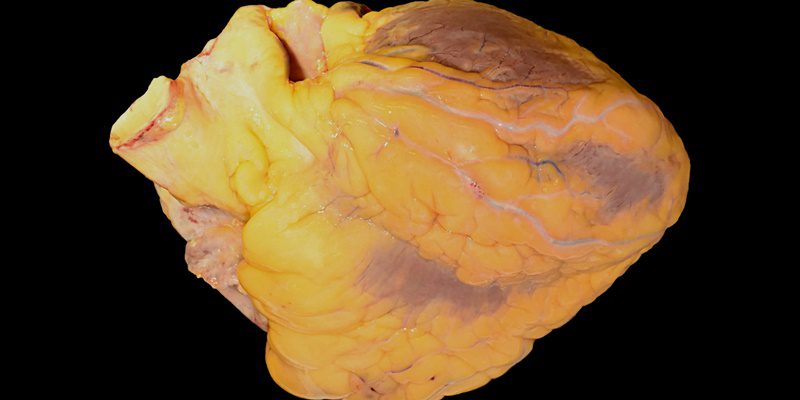
Image: PD

©2020 2 Minute Medicine, Inc. All rights reserved. No works may be reproduced without expressed written consent from 2 Minute Medicine, Inc. Inquire about licensing here. No article should be construed as medical advice and is not intended as such by the authors or by 2 Minute Medicine, Inc.

Tags: cardiologycongestive heart failureheart failurehfpefHFpEF (heart failure with preserved ejection fractionhfrefHFrEF (heart failure with reduced ejection fraction)risk factors
Previous Post

#VisualAbstract Ivosidenib or enasidenib combined with intensive chemotherapy were well-tolerated and showed encouraging clinical activity in newly diagnosed mIDH1/mIDH2 acute myeloid leukemia

Next Post

Hospitalizations for pediatric abusive head trauma decline during the COVID-19 pandemic

RelatedReports

Remote patient monitoring did not reduce heart failure readmissions: The BEAT-HF trial
Cardiology

Sodium-glucose cotransporter 2 inhibitors may improve left ventricular diastolic function in hypertrophic cardiomyopathy

February 17, 2026
Mutation linked with decrease in cutaneous diffuse large B-cell lymphoma
Weekly Rewinds

2 Minute Medicine Rewind February 16, 2026

February 16, 2026
The Scan by 2 Minute Medicine®:  Ultra-Trail du Mont-Blanc, Taylor Swift, NBA rookie Chet Holmgren and Magic Mushrooms!
Chronic Disease

The Scan by 2 Minute Medicine®: Oral GLP 1 reshapes obesity visits, deepfake doctors fuel DIY injectables, home longevity scales overwhelm clinics, and TV CPR scripts leave bystanders unprepared

January 26, 2026
Remote patient monitoring did not reduce heart failure readmissions: The BEAT-HF trial
Weekly Rewinds

2 Minute Medicine Rewind

January 13, 2026
Next Post
Abusive head trauma results in fewer productive life-years

Hospitalizations for pediatric abusive head trauma decline during the COVID-19 pandemic

2 Minute Medicine Rewind April 26, 2021

Neonatal neuroimaging with strong negative predictive value for developmental outcomes: The NEURO study

Epidemiological and virological characteristics of respiratory tract infections in children during COVID-19 outbreak

2 Minute Medicine® is an award winning, physician-run, expert medical media company. Our content is curated, written and edited by practicing health professionals who have clinical and scientific expertise in their field of reporting. Our editorial management team is comprised of highly-trained MD physicians. Join numerous brands, companies, and hospitals who trust our licensed content.

Recent Reports

  • Elevated blood pressure at discharge from delivery hospitalization predicts earlier admission postpartum
  • Physicians slightly more likely to die at home or hospice
  • Prenatal depression and gestational diabetes are associated with increased risk of childhood obesity
License Content
Terms of Use | Disclaimer
Cookie Policy
Privacy Statement (EU)
Disclaimer

© 2025 2 Minute Medicine, Inc. - Physician-written medical news.

  • Specialties
    • All Specialties, All Recent Reports
    • Cardiology
    • Chronic Disease
    • Dermatology
    • Emergency
    • Endocrinology
    • Gastroenterology
    • Imaging and Intervention
    • Infectious Disease
    • Nephrology
    • Neurology
    • Obstetrics
    • Oncology
    • Ophthalmology
    • Pediatrics
    • Pharma
    • Preclinical
    • Psychiatry
    • Public Health
    • Pulmonology
    • Rheumatology
    • Surgery
  • Tools
    • EvidencePulse™
    • RVU Search
    • NPI Registry Lookup
  • Pharma
  • AI News
  • The Scan
  • Classics™
    • 2MM+ Online Access
    • Paperback and Ebook
  • Rewinds
  • Partners
    • License Content
    • Submit Press Release
    • Advertise with Us
  • Account
    • Subscribe
    • Sign-in
    • My account
No Result
View All Result

© 2025 2 Minute Medicine, Inc. - Physician-written medical news.