• About
  • Masthead
  • License Content
  • Advertise
  • Press Releases
  • Newsroom
  • RSS/Email List
  • 2MM Podcast
  • Write for us
  • Contact Us
2 Minute Medicine
No Result
View All Result

No products in the cart.

Sign in
SUBSCRIBE
  • About
  • Specialties
    • All Specialties, All Recent Reports
    • Cardiology
    • Chronic Disease
    • Dermatology
    • Emergency
    • Endocrinology
    • Gastroenterology
    • Imaging and Intervention
    • Infectious Disease
    • Nephrology
    • Neurology
    • Obstetrics
    • Oncology
    • Ophthalmology
    • Pediatrics
    • Pharma
    • Preclinical
    • Psychiatry
    • Public Health
    • Pulmonology
    • Rheumatology
    • Surgery
    • Rewinds
    • The Scan
  • EvidencePulse™
  • HypeCheck™
  • AI News
  • Classics™
    • 2MM+ Online Access
    • Paperback and Ebook
  • Tools
    • NPI Registry Lookup
    • RVU Search
    • ICD-10 Code Lookup
    • Medical School Rankings
    • FDA Drug Approvals
    • Drug Safety for Breastfeeding/Pregnancy
    • Clinical Guidelines
    • Medical Calculators
    • ECG Reference
      • QTc Calculator
      • Sgarbossa Criteria
      • ECG Axis Calculator
      • AV Block Helper
  • Partners
    • License Content
    • Advertise with Us
2 Minute Medicine
  • About
  • Specialties
    • All Specialties, All Recent Reports
    • Cardiology
    • Chronic Disease
    • Dermatology
    • Emergency
    • Endocrinology
    • Gastroenterology
    • Imaging and Intervention
    • Infectious Disease
    • Nephrology
    • Neurology
    • Obstetrics
    • Oncology
    • Ophthalmology
    • Pediatrics
    • Pharma
    • Preclinical
    • Psychiatry
    • Public Health
    • Pulmonology
    • Rheumatology
    • Surgery
    • Rewinds
    • The Scan
  • EvidencePulse™
  • HypeCheck™
  • AI News
  • Classics™
    • 2MM+ Online Access
    • Paperback and Ebook
  • Tools
    • NPI Registry Lookup
    • RVU Search
    • ICD-10 Code Lookup
    • Medical School Rankings
    • FDA Drug Approvals
    • Drug Safety for Breastfeeding/Pregnancy
    • Clinical Guidelines
    • Medical Calculators
    • ECG Reference
      • QTc Calculator
      • Sgarbossa Criteria
      • ECG Axis Calculator
      • AV Block Helper
  • Partners
    • License Content
    • Advertise with Us
Sign in
SUBSCRIBE
2 Minute Medicine
Sign in
Subscribe
2 Minute MedicineFree on Google PlayGet
✦EvidencePulse™by 2 Minute Medicine3 reportsYou askedtop stroke trials 2026Synthesizing medical evidence...Top 2026 stroke trial results:OCEANIC — ischemic stroke: 6.2% vs 8.4%OPTION* — mRS 0–1: 43.6% vs 34.2%ORIENTAL* — mRS 0–2: 58.6% vs 46.6%*Higher sICH in intervention armsParticipants randomizedNOCEANIC12,327OPTION570ORIENTAL564Ask about guidelines or landmark trials...↑Try EvidencePulse™Ask the evidence. Get the signal.Try it now →
Home All Specialties Chronic Disease

Updated Pap smear screening guidelines may delay diagnosis of cervical adenocarcinoma in situ

bys25qthea
March 9, 2013
in Chronic Disease, Obstetrics, Oncology
Reading Time: 4 mins read
Updated Pap smear screening guidelines may delay diagnosis of cervical adenocarcinoma in situ
Share on FacebookShare on TwitterShare on LinkedIn

[tabs tab1=”2MM Rundown” tab2= “2MM Full Report”]

[tab]

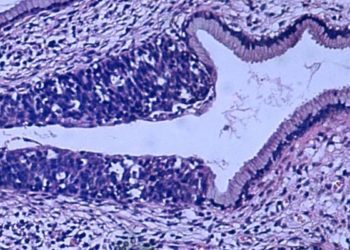
Image: PD

1. Among patients with cervical adenocarcinoma in situ (AIS), >85% of women were diagnosed subsequent to an abnormal Pap test result.

2. Mean time from abnormal Pap test to AIS diagnosis was less than 3 years.

Revised Pap test screening guidelines, which recommend Pap smears every 3 years beginning at age 21, may result in delayed diagnosis of cervical adenocarcinoma in situ (AIS). In this study, the majority of Pap test abnormalities in women later diagnosed with AIS were squamous, not glandular, dysplasia. As such, most AIS cases were diagnosed by cervical biopsy or other procedure subsequent to an abnormal Pap result. Mean time from abnormal Pap test result to AIS diagnosis was 14 months in women age 30 and younger. Among women age 30 or less, those less than 21 (n=17) had an even higher incidence of pure squamous cytology (94.1%) and a mean time of 21 months between abnormal Pap and AIS diagnosis. With updated guidelines recommending no Pap tests for women under age 21 and Pap testing every 3 years for women ages 21-30, younger women may develop AIS between screenings.

RELATED REPORTS

An artificial intelligence system for human papillomavirus-positive dual stain cervical cancer screening reads p16-Ki67 slides

Adjuvant chemotherapy not linked to improved outcomes in localized appendiceal adenocarcinoma

Strengths of this study include a diverse study population. Limitations include those of a retrospective analysis and the lack of a comparison group to quantify what percentage of cases are missed. Ideally, this research question would be investigated in a randomized controlled trial where women are randomized by demographics to either current screening guidelines or previous screening guidelines to allow for direct comparison of morbidity, mortality and cost.

Click to read the study in Obstetrics & Gynecology

[/tab]

[tab]

Image: PD

1. Among patients with cervical adenocarcinoma in situ (AIS), >85% of women were diagnosed subsequent to an abnormal Pap test result.

2. Mean time from abnormal Pap test to AIS diagnosis was less than 3 years.

This [retrospective cohort] study included 242 women with an ICD-9 code diagnosis of cervical adenocarcinoma in situ (AIS) between 1998 and 2010 at Brigham and Women’s Hospital. Authors confirmed diagnosis with pathology reports and reviewed medical records for patient demographic information, clinical and treatment history.

In patients age 30 years and younger, (n=112), 85.7% had abnormal Pap smear results. In these women, 82.3% of abnormal results demonstrated pure squamous dysplasia. In patients older than 30 years (n=130), about 95% had abnormal Pap results, with 51.8% exhibiting squamous dysplasia. The mean time between abnormal Pap result and AIS diagnosis was 14 months in women 30 years and younger and 29 months in women older than 30 years. While the majority (73.7%) of AIS cases were diagnosed by cervical biopsy in patients older than 21 (n=225), patients under 21 (n=17) required additional procedures prior to diagnosis.

In sum: Revised Pap test screening guidelines, which recommend Pap smears every 3 years beginning at age 21, may result in delayed diagnosis of cervical adenocarcinoma in situ (AIS). In this study, the majority of Pap test abnormalities in women later diagnosed with AIS were squamous, not glandular, dysplasia. As such, most AIS cases were diagnosed by cervical biopsy or other procedure subsequent to an abnormal Pap result. Mean time from abnormal Pap test result to AIS diagnosis was 14 months in women age 30 and younger. Among women age 30 or less, those less than 21 (n=17) had an even higher incidence of pure squamous cytology (94.1%) and a mean time of 21 months between abnormal Pap and AIS diagnosis. With updated guidelines recommending no Pap tests for women under age 21 and Pap testing every 3 years for women ages 21-30, younger women may develop AIS between screenings.

Strengths of this study include a diverse study population. Limitations include those of a retrospective analysis and the lack of a comparison group to quantify what percentage of cases are missed. Ideally, this research question would be investigated in a randomized controlled trial where women are randomized by demographics to either current screening guidelines or previous screening guidelines to allow for direct comparison of morbidity, mortality and cost.

Click to read the study in Obstetrics & Gynecology

By Denise Pong and Leah Hawkins

More from this author: Maternal asthma associated with increased odds of spontaneous abortion, Short course progesterone therapy treats abnormal uterine bleeding, Prescription corticosteroid use in pregnancy linked to diabetes in offspring

© 2013 2minutemedicine.com. All rights reserved. No works may be reproduced without written consent from 2minutemedicine.com. Disclaimer: We present factual information directly from peer reviewed medical journals. No post should be construed as medical advice and is not intended as such by the authors or by 2minutemedicine.com. PLEASE SEE A HEALTHCARE PROVIDER IN YOUR AREA IF YOU SEEK MEDICAL ADVICE OF ANY SORT. Content is produced in accordance with fair use copyrights solely and strictly for the purpose of teaching, news and criticism. No benefit, monetary or otherwise, is realized by any participants or the owner of this domain.

[/tab]

[/tabs]

Tags: adenocarcinomacervical cancerpap smearscreening guidelines
Previous Post

Deep Brain Stimulation appears safe and may be effective for refractory anorexia nervosa [Physician Comment]

Next Post

Reminder intervention increases colorectal cancer screening rates

RelatedReports

A calendar, a specimen jar, and a brush are depicted alongside a microscopic view of cervical cells, indicating cervical cancer screening.
All Specialties

An artificial intelligence system for human papillomavirus-positive dual stain cervical cancer screening reads p16-Ki67 slides

October 23, 2026
An illustration featuring a large intestine surrounded by various silhouettes of heads, representing demographics, alongside abstract elements.
Chronic Disease

Adjuvant chemotherapy not linked to improved outcomes in localized appendiceal adenocarcinoma

September 18, 2026
Cervical cancer screening practices less cost-effective than suggested guidelines
Oncology

Delayed CIN2 treatment does not increase cancer risk 

June 22, 2026
Colorectal cancer collage: a young man in a denim shirt with a blue awareness ribbon pin beside an engraved colon
Chronic Disease

The incidence of early-onset metastatic adenocarcinoma may be higher among patients with multiple metastatic sites and peritoneal involvement

April 30, 2026
Next Post
Reminder intervention increases colorectal cancer screening rates

Reminder intervention increases colorectal cancer screening rates

Pertussis immunity decreases after 5 DTaP doses [Researcher Comment]

Teen asthma controller medication adherence affected by risk tolerance

✦ EvidencePulse™ by 2 Minute Medicine 3 reports You asked top stroke trials 2026 Synthesizing medical evidence... Top 2026 stroke trial results: OCEANIC — ischemic stroke: 6.2% vs 8.4% OPTION* — mRS 0–1: 43.6% vs 34.2% ORIENTAL* — mRS 0–2: 58.6% vs 46.6% *Higher sICH in intervention arms Participants randomizedN OCEANIC 12,327 OPTION 570 ORIENTAL 564 Ask about guidelines or landmark trials... Try EvidencePulse™ Get the signal. Try it now → Physician-trained medical AI by 2 Minute Medicine

2MM+ All Access

Full details →
$4.99 /month

3-day free trial · cancel anytime

  • ✓100+ physician-written reports
  • ✓EvidencePulse™ + HypeCheck™
  • ✓Ad-free reading + newsletters
Start 3-day free trial

Then $4.99/month. Manage renewal in your account.

NPI Lookup · Free

Look up any US clinician

Search by name or NPI number, live from the CMS NPI Registry.

  • OIG exclusion check
  • Licenses and specialties
  • No account needed
Open NPI Lookup →

2 Minute Medicine® is an award winning, physician-run, expert medical media company. Our content is curated, written and edited by practicing health professionals who have clinical and scientific expertise in their field of reporting. Our editorial management team is comprised of highly-trained MD physicians. Join numerous brands, companies, and hospitals who trust our licensed content.

Recent Reports

  • Early mitral valve surgery may improve long-term survival in asymptomatic severe mitral regurgitation
  • CDC reports increasing early-season influenza activity and at least 900 deaths nationwide
  • A concentrated exposure therapy intervention may be more effective than digital cognitive behavioural therapy in obsessive-compulsive disorder
License Content
Terms of Use | Disclaimer
Cookie Policy

Get the app

Read 2 Minute Medicine on iPhone, iPad and Android.

Download on the App StoreGet it on Google Play
QR code for www.2minutemedicine.com/app
On a computer? Scan this with your phone’s camera.
2MM+ All Access Full details →

The medical literature, distilled daily.

Monthly plan selected: $4.99 /month.

$4.99/month

3-day free trial · cancel anytime

Start 3-day free trial

Then $4.99/month. Manage renewal in your account.

Yearly plan selected: $49.90 /year.

$49.90/year

2 months free

Start 3-day free trial

Then $49.90/year.

Membership benefits

  • ✓100+ physician-written reports
  • ✓AI EvidencePulse™ + HypeCheck™
  • ✓Ad-free reading + newsletters
  • ✓NPI watchlist + bulk NPI verification

Already a member? Sign in

  • Get the app
  • About
  • Specialties
    • All Specialties, All Recent Reports
    • Cardiology
    • Chronic Disease
    • Dermatology
    • Emergency
    • Endocrinology
    • Gastroenterology
    • Imaging and Intervention
    • Infectious Disease
    • Nephrology
    • Neurology
    • Obstetrics
    • Oncology
    • Ophthalmology
    • Pediatrics
    • Pharma
    • Preclinical
    • Psychiatry
    • Public Health
    • Pulmonology
    • Rheumatology
    • Surgery
    • Rewinds
    • The Scan
  • EvidencePulse™
  • HypeCheck™
  • AI News
  • Classics™
    • 2MM+ Online Access
    • Paperback and Ebook
  • Tools
    • NPI Registry Lookup
    • RVU Search
    • ICD-10 Code Lookup
    • Medical School Rankings
    • FDA Drug Approvals
    • Drug Safety for Breastfeeding/Pregnancy
    • Clinical Guidelines
    • Medical Calculators
    • ECG Reference
      • QTc Calculator
      • Sgarbossa Criteria
      • ECG Axis Calculator
      • AV Block Helper
  • Partners
    • License Content
    • Advertise with Us
No Result
View All Result

© 2026 2 Minute Medicine, Inc. - Physician-written medical news.