• About
  • Masthead
  • License Content
  • Advertise
  • Press Releases
  • Newsroom
  • RSS/Email List
  • 2MM Podcast
  • Write for us
  • Contact Us
2 Minute Medicine
No Result
View All Result

No products in the cart.

Sign in
SUBSCRIBE
  • About
  • Specialties
    • All Specialties, All Recent Reports
    • Cardiology
    • Chronic Disease
    • Dermatology
    • Emergency
    • Endocrinology
    • Gastroenterology
    • Imaging and Intervention
    • Infectious Disease
    • Nephrology
    • Neurology
    • Obstetrics
    • Oncology
    • Ophthalmology
    • Pediatrics
    • Pharma
    • Preclinical
    • Psychiatry
    • Public Health
    • Pulmonology
    • Rheumatology
    • Surgery
    • Rewinds
    • The Scan
  • EvidencePulse™
  • HypeCheck™
  • AI News
  • Classics™
    • 2MM+ Online Access
    • Paperback and Ebook
  • Tools
    • NPI Registry Lookup
    • RVU Search
    • Physician Pay by Specialty
    • ICD-10 Code Lookup
    • FDA Drug Approvals
    • Drug Safety for Breastfeeding/Pregnancy
    • Clinical Guidelines
    • Medical Calculators
    • ECG Reference
      • QTc Calculator
      • Sgarbossa Criteria
      • ECG Axis Calculator
      • AV Block Helper
  • Rankings
    • Medical School Rankings
    • Residency Rankings
  • Partners
    • License Content
    • Advertise with Us
2 Minute Medicine
  • About
  • Specialties
    • All Specialties, All Recent Reports
    • Cardiology
    • Chronic Disease
    • Dermatology
    • Emergency
    • Endocrinology
    • Gastroenterology
    • Imaging and Intervention
    • Infectious Disease
    • Nephrology
    • Neurology
    • Obstetrics
    • Oncology
    • Ophthalmology
    • Pediatrics
    • Pharma
    • Preclinical
    • Psychiatry
    • Public Health
    • Pulmonology
    • Rheumatology
    • Surgery
    • Rewinds
    • The Scan
  • EvidencePulse™
  • HypeCheck™
  • AI News
  • Classics™
    • 2MM+ Online Access
    • Paperback and Ebook
  • Tools
    • NPI Registry Lookup
    • RVU Search
    • Physician Pay by Specialty
    • ICD-10 Code Lookup
    • FDA Drug Approvals
    • Drug Safety for Breastfeeding/Pregnancy
    • Clinical Guidelines
    • Medical Calculators
    • ECG Reference
      • QTc Calculator
      • Sgarbossa Criteria
      • ECG Axis Calculator
      • AV Block Helper
  • Rankings
    • Medical School Rankings
    • Residency Rankings
  • Partners
    • License Content
    • Advertise with Us
Sign in
SUBSCRIBE
2 Minute Medicine
Sign in
Subscribe
2 Minute MedicineFree on Google PlayGet
✦EvidencePulse™by 2 Minute Medicine3 reportsYou askedtop stroke trials 2026Synthesizing medical evidence...Top 2026 stroke trial results:OCEANIC — ischemic stroke: 6.2% vs 8.4%OPTION* — mRS 0–1: 43.6% vs 34.2%ORIENTAL* — mRS 0–2: 58.6% vs 46.6%*Higher sICH in intervention armsParticipants randomizedNOCEANIC12,327OPTION570ORIENTAL564Ask about guidelines or landmark trials...↑Try EvidencePulse™Ask the evidence. Get the signal.Try it now →
Home StudyGraphics

#VisualAbstract: Oral methylprednisolone may reduce risk of progressive renal failure in patients with IgA nephropathy: TESTING Trial
byMinjee Kim
June 2, 2022
in StudyGraphics
Reading Time: 3 mins read
#VisualAbstract: Oral methylprednisolone may reduce risk of progressive renal failure in patients with IgA nephropathy: TESTING Trial
Share on FacebookShare on TwitterShare on LinkedIn

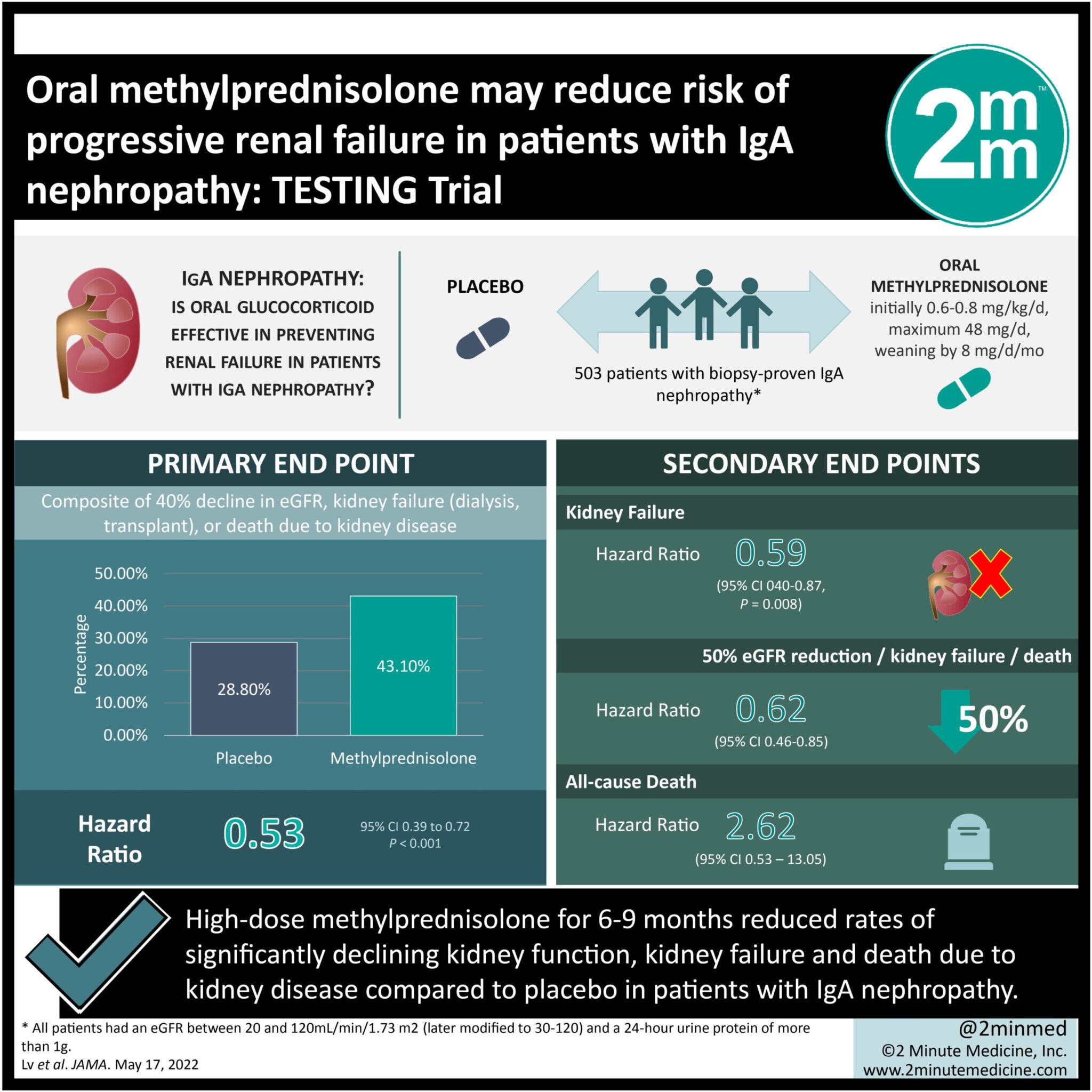
1. This randomized controlled trial found that high dose methylprednisolone for 6-9 months reduced rates of significantly declining kidney function, kidney failure and death due to kidney disease compared to placebo in patients with IgA nephropathy.

2. Significant morbidity was associated with high dose methylprednisolone use.

Level of Evidence Rating: 1 (Excellent)

Study Rundown: IgA nephropathy remains poorly understood despite being the most common primary glomerular disease. Glucocorticoids are commonly used in clinical practice to manage IgA nephropathy, although the evidence in support of this is controversial, particularly with regards to the risk of immunosuppression in patients with advanced kidney disease. The present randomized controlled trial sought to determine the effect of oral methylprednisolone on renal function and related outcomes in patients with IgA nephropathy. The TESTING randomized controlled clinical trial consisted of 503 patients randomized with 257 in the treatment group and 246 in the placebo group. Mean baseline characteristics of the enrolled group included an estimated glomerular filtration rate (eGFR) of 61.5mL/min/1.73m2 and 24-hour urine protein of 2.46g/day. 74 primary outcome events (7.3% per year) occurred in the treatment group and 106 (12.1% per year) occurred in the placebo group; this difference was significant in favor of the methylprednisolone group. The treatment group fared better in all kidney-related outcomes; however there was an increased rate of adverse events (i.e., serious infections) in this group and all-cause mortality was particularly higher prior to the methylprednisolone dose reduction. This randomized controlled trial concluded that high dose methylprednisolone administered over a 6-9 month period may be protective against progressive kidney failure in the setting of IgA nephropathy. However, high dose glucocorticoids were associated with significant adverse effects and must be used with caution. Strengths of this study include the large sample size and diverse study population which make it more feasible to apply these results to the general population of IgA nephropathy patients. Additionally, the randomized controlled trial study design does well to minimize risk of bias, particularly confounding bias. A primary limitation of this work is the dose reduction which took place midway through the trial for safety reasons, which although necessary may have reduced the efficacy of blinding and certainly reduced trial consistency.

Click here to read this study in JAMA

RELATED REPORTS

Telitacicept may reduce proteinuria in patients with high-risk IgA nephropathy

Dietary changes and pharmacologic interventions may prevent recurrent nephrolithiasis

Click here to read an accompanying editorial in JAMA

FDA approvedFor IgA nephropathy: Trutakna (atacicept-vymj), Jul 7, 2026→

In Depth [randomized controlled trial]: This study is a placebo-controlled, double-blinded randomized controlled trial known as the Therapeutic Effects of Steroids in IgA Nephropathy Global (TESTING) study. Several centers around the world were involved in data collection. Of note, the original trial protocol was modified three years after the initiation of the study for safety reasons: more than 200 participants had developed severe infections on high dose methylprednisolone and in lieu of this, new participants were recruited to receive a lower dose of the study drug. Eligible participants had biopsy-proven IgA nephropathy, an eGFR between 20 and 120mL/min/1.73 m2 (later modified to 30-120) and a 24 hour urine protein of more than 1g. Patients were ineligible if they were considered unsafe to receive glucocorticoid therapy as assessed by their physician. All included patients participated in a health optimization period of 3 months prior to randomization (i.e., ensuring medication compliance). Participants received either 0.6-0.8mg/kg/day (max. 48mg/day) of methylprednisolone per day for 2 months which was tapered over the following 4-6 months or placebo; notably, the reduced-dose protocol prescribed 0.4mg/kg/day (max. 32mg/day). The composite primary outcome was achieved with one of the following: a 40% reduction in eGFR, kidney failure or death due to kidney disease. The hazard ratio for the primary outcome in the intervention versus control group was 0.53 (95% confidence interval 0.39 to 0.72); p<0.001. Hazard ratios and 95% confidence intervals for a number of secondary outcomes are as follows: kidney failure (0.59; 0.40-0.87, p 0.008); 50% eGFR reduction/kidney failure/death (0.62; 0.46-0.85); all cause death (2.62; 0.53 to 13.05). Finally, the difference in the mean rate of eGFR decline was 2.46 (0.94 to 3.99) favoring the treatment group across all study visits (p=0.002). The serious adverse event rate reported in the high dose methylprednisolone group was 10.9% compared to 2.8% in the placebo group. 78% of the serious adverse events occurring in the methylprednisolone group occurred prior to the dose reduction.

©2022 2 Minute Medicine, Inc. All rights reserved. No works may be reproduced without expressed written consent from 2 Minute Medicine, Inc. Inquire about licensing here. No article should be construed as medical advice and is not intended as such by the authors or by 2 Minute Medicine, Inc.

Tags: eGFRIgA nephropathykidneykidney failuremethylprednisolonenephropathyoral methylprednisoloneoral steroidsrenal failuresteroidsTESTING trial
Previous Post

Late and moderate preterm birth associated with increased cardiometabolic risk scores in young children

Next Post

Rare APOE missense variants V236E and R251G associated with substantial reduction in risk of Alzheimer disease

RelatedReports

Kidney disease collage: a pair of engraved kidneys above three smooth gray pebbles and a teal water droplet
Chronic Disease

Telitacicept may reduce proteinuria in patients with high-risk IgA nephropathy

May 26, 2026
Kidney disease collage: a pair of engraved kidneys above three smooth gray pebbles and a teal water droplet
Nephrology

Dietary changes and pharmacologic interventions may prevent recurrent nephrolithiasis

March 23, 2026
Tinnitus and hearing loss collage: a young man in profile with eyes closed beside an engraved inner ear and a seashell
Chronic Disease

Short-course personalized acoustic therapy may increase tinnitus remission in patients with idiopathic sudden sensorineural hearing loss

January 13, 2026
Solitary kidney not associated with contrast-induced nephropathy
Chronic Disease

Albuminuria shows a stronger association with kidney failure than proteinuria

November 20, 2025
Next Post

Rare APOE missense variants V236E and R251G associated with substantial reduction in risk of Alzheimer disease

Paternal factors associated with short interpregnancy interval

Prenatal exposure to antiseizure medication associated with increased risk of autism and intellectual disability

Limits to screen use associated with increased non-sedentary behavior in children

✦ EvidencePulse™ by 2 Minute Medicine 3 reports You asked top stroke trials 2026 Synthesizing medical evidence... Top 2026 stroke trial results: OCEANIC — ischemic stroke: 6.2% vs 8.4% OPTION* — mRS 0–1: 43.6% vs 34.2% ORIENTAL* — mRS 0–2: 58.6% vs 46.6% *Higher sICH in intervention arms Participants randomizedN OCEANIC 12,327 OPTION 570 ORIENTAL 564 Ask about guidelines or landmark trials... Try EvidencePulse™ Get the signal. Try it now → Physician-trained medical AI by 2 Minute Medicine

2MM+ All Access

Full details →
$4.99 /month

3-day free trial · cancel anytime

  • ✓100+ physician-written reports
  • ✓EvidencePulse™ + HypeCheck™
  • ✓Ad-free reading + newsletters
Start 3-day free trial

Then $4.99/month. Manage renewal in your account.

2 Minute Medicine® is an award winning, physician-run, expert medical media company. Our content is curated, written and edited by practicing health professionals who have clinical and scientific expertise in their field of reporting. Our editorial management team is comprised of highly-trained MD physicians. Join numerous brands, companies, and hospitals who trust our licensed content.

Recent Reports

  • Medicaid status, race and ethnicity are independently associated with increased odds of severe maternal morbidity
  • Artificial intelligence-generated pre-visit summaries improved communication outcomes in neurosurgical consultations
  • Midline catheters may reduce catheter-related bloodstream infections compared with peripherally inserted central catheters in intensive care unit patients
License Content
Terms of Use | Disclaimer
Cookie Policy

Get the app

Read 2 Minute Medicine on iPhone, iPad and Android.

Download on the App StoreGet it on Google Play
QR code for www.2minutemedicine.com/app
On a computer? Scan this with your phone’s camera.
2MM+ All Access Full details →

The medical literature, distilled daily.

Monthly plan selected: $4.99 /month.

$4.99/month

3-day free trial · cancel anytime

Start 3-day free trial

Then $4.99/month. Manage renewal in your account.

Yearly plan selected: $49.90 /year.

$49.90/year

2 months free

Start 3-day free trial

Then $49.90/year.

Membership benefits

  • ✓100+ physician-written reports
  • ✓AI EvidencePulse™ + HypeCheck™
  • ✓Ad-free reading + newsletters
  • ✓FDA drug approvals + clinical calculators

Already a member? Sign in

  • Get the app
  • About
  • Specialties
    • All Specialties, All Recent Reports
    • Cardiology
    • Chronic Disease
    • Dermatology
    • Emergency
    • Endocrinology
    • Gastroenterology
    • Imaging and Intervention
    • Infectious Disease
    • Nephrology
    • Neurology
    • Obstetrics
    • Oncology
    • Ophthalmology
    • Pediatrics
    • Pharma
    • Preclinical
    • Psychiatry
    • Public Health
    • Pulmonology
    • Rheumatology
    • Surgery
    • Rewinds
    • The Scan
  • EvidencePulse™
  • HypeCheck™
  • AI News
  • Classics™
    • 2MM+ Online Access
    • Paperback and Ebook
  • Tools
    • NPI Registry Lookup
    • RVU Search
    • Physician Pay by Specialty
    • ICD-10 Code Lookup
    • FDA Drug Approvals
    • Drug Safety for Breastfeeding/Pregnancy
    • Clinical Guidelines
    • Medical Calculators
    • ECG Reference
      • QTc Calculator
      • Sgarbossa Criteria
      • ECG Axis Calculator
      • AV Block Helper
  • Rankings
    • Medical School Rankings
    • Residency Rankings
  • Partners
    • License Content
    • Advertise with Us
No Result
View All Result

© 2026 2 Minute Medicine, Inc. - Physician-written medical news.