Wellness Check: Exercise
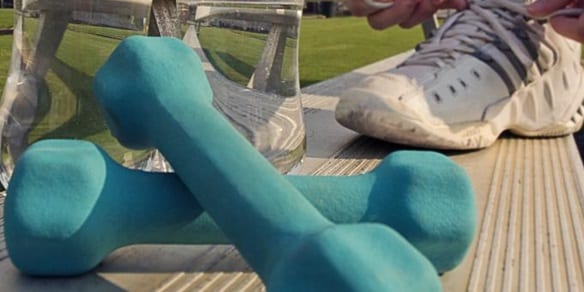
Only a small proportion of individuals worldwide meet physical activity guidelines
1. In this systematic review and meta-analysis, only 1/5th of adolescents and adults met the recommended combined aerobic and muscle strengthening activity (MSA) guidelines.
2. Several factors were associated with lower adherence to the physical activity guidelines, such as older age and female sex.
Evidence Rating Level: 1 (Excellent)
Many previous studies have demonstrated that several countries had poor overall adherence to physical activity guidelines. However, in many of these studies, only aerobic guidelines were considered, and muscle strengthening activities (MSA) were often overlooked. As a result, the objective of the present systematic review and meta-analysis was to determine the global prevalence of meeting both aerobic and MSA guidelines in the general population.
Of 3777 screened records, 21 (n=3 390 001 participants; 51.1% women) studies, from 32 countries, were included in the final analysis. Studies were included from the time of database inception to September 2022. Studies were included if aerobic and MSA guidelines were assessed in individuals aged ≥5 years old. Risk of bias was assessed using a 10-item tool. Statistical analyses were performed using random effects models. Preferred Reporting Items for Systematic Reviews and Meta-Analysis (PRISMA) guidelines were followed.
Results demonstrated that the overall adherence of physical activity guidelines was 17.12% in adults ≥18 years. In adolescents aged 12-17, adherence was slightly greater at 19.45%. No study reported data for children aged 5-11 years. Factors that led to lower adherence included: older age, female sex, low/medium educational levels, underweight or obesity, and poor or moderate self-rated health. The study was limited in its investigation of the adolescent population, as studies from only two countries were included for this demographic. Therefore, the generalizability of the findings in the adolescent population may be limited. Nonetheless, the study shows that globally, only a small proportion of individuals meet physical activity guidelines.
Transform-Us! reduces sedentary behavior and adiposity indicators in children
1. In this randomized control trial, Transform-Us! had stronger effects on sedentary behavior (SB) than physical activity (PA) habits in children.
2. Additionally, the intervention showed a decrease in children’s body mass index (BMI) but demonstrated mixed effects on blood parameters.
Evidence Rating Level: 1 (Excellent)
Many children do not get the recommended amount of physical activity, despite the knowledge that regular physical activity is beneficial for many aspects of children’s health. Prior studies have demonstrated the effectiveness of school-based interventions in improving this outcome. Currently long-term interventions delivered at school and at home to increase children’s physical activity (PA) and reduce sedentary behavior (SB) are lacking. As a result, the objective of the present study was to determine the efficacy of the Transform-Us! school and home-based intervention to improve health outcomes in children compared with usual practice.
Transform-Us! was a 30-month cluster randomized controlled trial delivered in 20 (n=148 year 3 classes) primary schools in Australia between February 2010-December 2022. It consisted of a mix of educational, pedagogical, behavioral, social, and environmental strategies delivered by classroom teachers to either increase PA, reduce SB, or both in children. Additionally, newsletters were sent home to encourage family involvement. Schools from various socioeconomic areas were randomly ordered with probabilistic weighting according to enrolment number. Primary outcomes were sedentary time and physical activity time, which were assessed at baseline, 18 months, and 30 months. Secondary outcomes included body mass index (BMI), blood pressure (BP). Data was analyzed using Generalized Linear Mixed Models.
Results demonstrated that at 18 months, there was a decrease in children’s weekday SB for the PA intervention group, and an increase in children’s average day PA for the SB intervention group. Furthermore, BMI was lower in both the SB and PA groups, and positive effects were seen on waist circumference at both 18 and 30 months in the SB group. However, there were mixed effects on various blood parameters. The study was limited by the high attrition rate, which may have impacted the results. Nonetheless, these findings provide initial data to consider adopting and implementing programs to promote children’s PA and reduce SB through active pedagogy.
Return to sport following COVID-19 may improve adolescent athlete wellbeing
1. In this comparative cohort study, early COVID-19 sports restrictions negatively impacted the mental health of adolescent athletes.
2. However, return to sports improved overall well-being of adolescent athletes during the pandemic.
Evidence Rating Level: 2 (Good)
The COVID-19 pandemic has led to the cancellation of organized sports across the United States which has disrupted one of the primary ways in which adolescent athletes remain physically active. Currently, the wellbeing of adolescent athletes has not been evaluated following the re-initiation of organized sports following the initial cancellations in response to the COVID-19 pandemic. As a result, the objective of the present study was to evaluate the changes in mental health, quality of life, and physical activity among adolescent athletes.
4346 athletes from grades 9-12 (age = 16.1 ±1.3 years, 52.1% female) who self-identified as having participated in organized sports before the COVID-19 pandemic completed anonymous online surveys distributed through social media postings and emails between April and June 2021. This cohort was compared to a Spring 2020 cohort of 13 002 athletes (age=16.3 ± 1.2, female= 53%). Participants were excluded if they did not complete the entire survey. Mental health, quality of life and physical activity were evaluated using validated measures and compared between the 2020 and 2021 cohorts.
Results demonstrated that the Spring 2021 cohort reported lower scores and symptom severity for both anxiety and depression compared to the 2020 cohort. Furthermore, the Spring 2021 cohort reported significantly improved quality of life and higher levels of physical activity. Despite these findings, the study was limited by the fact that both cohorts were composed of different individuals thereby increasing the risk of confounding variables. However, these results demonstrate the importance or organized sports for the overall mental and physical wellbeing in adolescent athletes and how this effect should be taken into account when creating public policy.
Image: PD
©2022 2 Minute Medicine, Inc. All rights reserved. No works may be reproduced without expressed written consent from 2 Minute Medicine, Inc. Inquire about licensing here. No article should be construed as medical advice and is not intended as such by the authors or by 2 Minute Medicine, Inc.