• About
  • Masthead
  • License Content
  • Advertise
  • Press Releases
  • Newsroom
  • RSS/Email List
  • 2MM Podcast
  • Write for us
  • Contact Us
2 Minute Medicine
No Result
View All Result

No products in the cart.

Sign in
SUBSCRIBE
  • About
  • Specialties
    • All Specialties, All Recent Reports
    • Cardiology
    • Chronic Disease
    • Dermatology
    • Emergency
    • Endocrinology
    • Gastroenterology
    • Imaging and Intervention
    • Infectious Disease
    • Nephrology
    • Neurology
    • Obstetrics
    • Oncology
    • Ophthalmology
    • Pediatrics
    • Pharma
    • Preclinical
    • Psychiatry
    • Public Health
    • Pulmonology
    • Rheumatology
    • Surgery
    • Rewinds
    • The Scan
  • EvidencePulse™
  • HypeCheck™
  • AI News
  • Classics™
    • 2MM+ Online Access
    • Paperback and Ebook
  • Tools
    • Medical Calculators
    • Clinical Guidelines
    • Physician Pay by Specialty
    • FDA Drug Approvals
    • RVU Search
    • ICD-10 Code Lookup
    • Drug Safety for Breastfeeding/Pregnancy
    • ECG Reference
      • QTc Calculator
      • Sgarbossa Criteria
      • ECG Axis Calculator
      • AV Block Helper
    • NPI Registry Lookup
  • Rankings
    • Medical School Rankings
    • Residency Rankings
  • Partners
    • License Content
    • Advertise with Us
2 Minute Medicine
  • About
  • Specialties
    • All Specialties, All Recent Reports
    • Cardiology
    • Chronic Disease
    • Dermatology
    • Emergency
    • Endocrinology
    • Gastroenterology
    • Imaging and Intervention
    • Infectious Disease
    • Nephrology
    • Neurology
    • Obstetrics
    • Oncology
    • Ophthalmology
    • Pediatrics
    • Pharma
    • Preclinical
    • Psychiatry
    • Public Health
    • Pulmonology
    • Rheumatology
    • Surgery
    • Rewinds
    • The Scan
  • EvidencePulse™
  • HypeCheck™
  • AI News
  • Classics™
    • 2MM+ Online Access
    • Paperback and Ebook
  • Tools
    • Medical Calculators
    • Clinical Guidelines
    • Physician Pay by Specialty
    • FDA Drug Approvals
    • RVU Search
    • ICD-10 Code Lookup
    • Drug Safety for Breastfeeding/Pregnancy
    • ECG Reference
      • QTc Calculator
      • Sgarbossa Criteria
      • ECG Axis Calculator
      • AV Block Helper
    • NPI Registry Lookup
  • Rankings
    • Medical School Rankings
    • Residency Rankings
  • Partners
    • License Content
    • Advertise with Us
Sign in
SUBSCRIBE
2 Minute Medicine
Sign in
Subscribe
2 Minute MedicineFree on Google PlayGet
✦EvidencePulse™by 2 Minute Medicine3 reportsYou askedtop stroke trials 2026Synthesizing medical evidence...Top 2026 stroke trial results:OCEANIC — ischemic stroke: 6.2% vs 8.4%OPTION* — mRS 0–1: 43.6% vs 34.2%ORIENTAL* — mRS 0–2: 58.6% vs 46.6%*Higher sICH in intervention armsParticipants randomizedNOCEANIC12,327OPTION570ORIENTAL564Ask about guidelines or landmark trials...↑Try EvidencePulse™Ask the evidence. Get the signal.Try it now →
Home Health A to Z

Patient Basics: Atherosclerosis
by2 Minute Medicine
October 30, 2026
in Health A to Z
Reading Time: 6 mins read
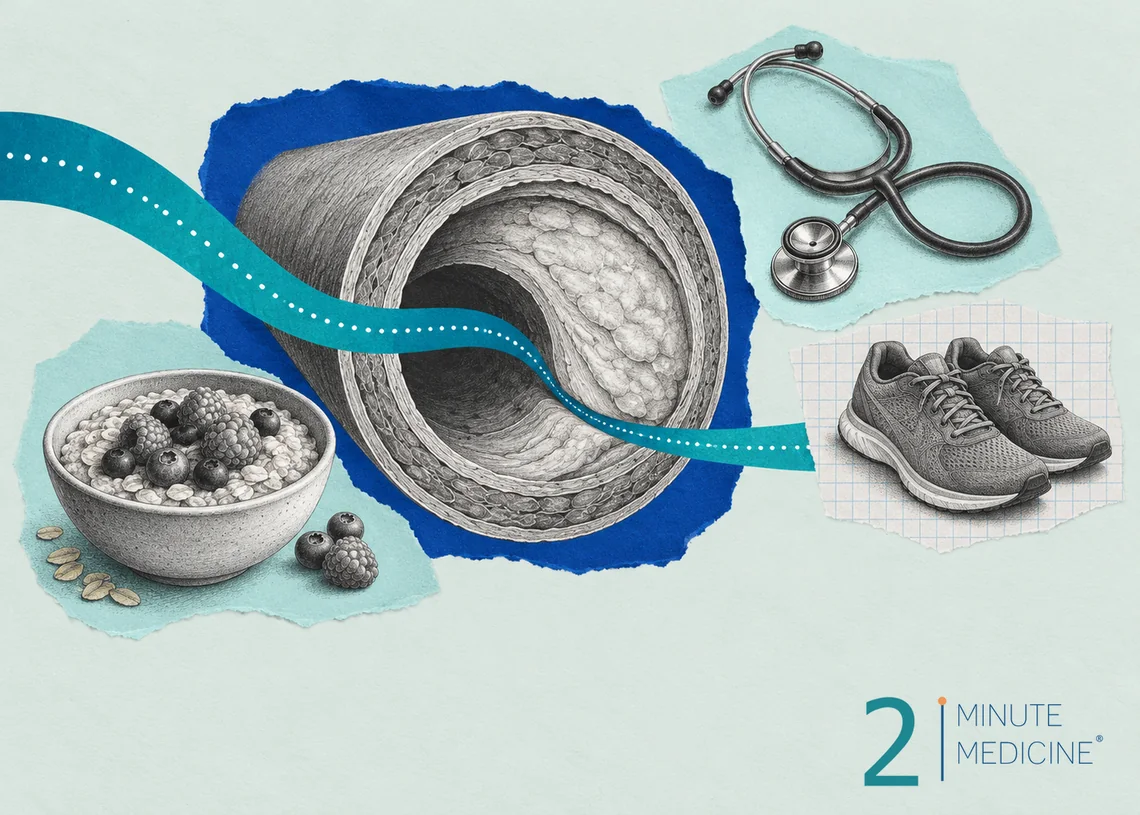
Atherosclerosis collage: an artery narrowed by plaque, a stethoscope, a bowl of oats with berries and running shoes
Share on FacebookShare on TwitterShare on LinkedIn

Atherosclerosis is a slow buildup of fatty plaque inside the walls of arteries, the blood vessels that carry blood from the heart to the rest of the body. Plaque narrows and stiffens the arteries and reduces blood flow. It’s the main cause of heart attacks, strokes and poor circulation in the legs. It often causes no symptoms for decades, but lowering cholesterol and blood pressure and not smoking can slow it down or stop it.

Key points

  • Plaque is made of cholesterol, fat, calcium, scar tissue and immune cells.
  • High LDL cholesterol, high blood pressure, smoking and diabetes are the biggest risk factors.
  • Most people have no symptoms until an artery is badly narrowed or suddenly blocked by a clot.
  • Statins and other medicines, plus healthy habits, lower the risk of heart attack and stroke.
  • Chest pain or pressure, sudden weakness on one side, or trouble speaking need a 911 call.

How plaque builds up

Healthy arteries have a smooth inner lining. High blood pressure, smoking, high blood sugar and high LDL (“bad”) cholesterol damage that lining. LDL particles then slip into the artery wall. The body sends immune cells to clean them up, which causes inflammation. Over years, a plaque forms, covered by a cap of scar tissue. Calcium can collect in it and harden it.

Plaque causes problems in two ways:

  • Slow narrowing. As plaque grows, less blood gets through. Tissue that doesn’t get enough blood is said to have ischemia. It may hurt only when it needs more blood, such as during exercise.
  • Sudden blockage. A plaque can crack open. A blood clot forms on it within minutes and can block the artery completely. Tissue starved of blood begins to die, which doctors call an infarction. This is how most heart attacks and many strokes happen, often from plaques that weren’t very large.

Narrow, stiff arteries also push blood pressure up, and high blood pressure in turn speeds up plaque growth.

What causes atherosclerosis

Plaque starts forming as early as childhood and builds over a lifetime. Things that speed it up include:

  • Dyslipidemia, meaning unhealthy blood fat levels: high LDL cholesterol, high triglycerides, low HDL (“good”) cholesterol, or a high level of an inherited particle called lipoprotein(a)
  • High blood pressure
  • Smoking and other tobacco use
  • Diabetes and prediabetes
  • Extra weight, especially around the waist
  • Little physical activity and a diet high in processed foods, red meat and saturated fat
  • Family history of early heart disease, in a father or brother before 55 or a mother or sister before 65
  • Older age
  • Long-term conditions such as chronic kidney disease, rheumatoid arthritis, lupus, psoriasis, HIV and sleep apnea

Atherosclerosis symptoms

Symptoms depend on which arteries are affected:

RELATED REPORTS

Obicetrapib and ezetimibe combination therapy lowers LDL cholesterol in high-risk patients

Semaglutide reduces heart failure events in patients with preserved ejection fraction

  • Heart (coronary artery disease). Chest pain, pressure or tightness with activity or stress (angina), shortness of breath, or a heart attack.
  • Neck and brain (carotid artery disease). A stroke, or a “mini-stroke” (TIA) with brief numbness, weakness, trouble speaking or vision loss.
  • Legs (peripheral artery disease). Cramping pain in the calves, thighs or buttocks when walking that eases with rest, weak pulses in the feet or behind the knee, cold feet, and sores on the toes or feet that heal slowly.
  • Kidneys. High blood pressure that is hard to control, or declining kidney function.
  • Intestines. Belly pain after meals and weight loss, which is uncommon.
  • Penis. Erectile dysfunction can be an early sign of narrowed arteries.

Aortic atherosclerosis means plaque in the aorta, the body’s main artery. It’s often mentioned on a chest X-ray or CT report and is common with age. It usually causes no symptoms itself, but it’s a sign that other arteries likely have plaque too.

How atherosclerosis is diagnosed

  • Checkups: blood pressure, cholesterol (lipid panel), blood sugar or A1C, and a one-time lipoprotein(a) test
  • Coronary artery calcium score: a quick CT scan that measures calcium in the heart’s arteries, used to fine-tune risk
  • Ankle-brachial index: blood pressure readings at the ankles and arms to check leg circulation
  • Ultrasound of the neck or leg arteries
  • Stress test, CT angiogram or catheter angiogram to look at the heart’s arteries when symptoms suggest a blockage

Atherosclerosis treatment

Healthy habits

  • Stop smoking and vaping. This is the single most helpful step for smokers.
  • Eat mostly vegetables, fruit, whole grains, beans, nuts, fish and olive oil, with less red and processed meat, salt and sugar.
  • Aim for about 150 minutes of brisk walking or other moderate exercise each week.
  • Lose extra weight, sleep well and limit alcohol.

Medicines

  • Statins, such as atorvastatin and rosuvastatin, lower LDL cholesterol and calm plaque. They cut the risk of heart attack and stroke.
  • Other cholesterol medicines, such as ezetimibe, PCSK9 inhibitors (evolocumab, alirocumab), inclisiran and bempedoic acid, when a statin isn’t enough or can’t be taken
  • Blood pressure medicines to reach your target
  • Aspirin or clopidogrel to prevent clots in people who’ve had a heart attack, stroke or stent. Don’t start daily aspirin on your own, since it raises bleeding risk.
  • Diabetes medicines that also protect the heart, such as GLP-1 drugs (semaglutide) and SGLT2 inhibitors (empagliflozin)

Procedures

When an artery is badly narrowed or causing symptoms, options include angioplasty with a stent, bypass surgery to route blood around the blockage, or surgery to remove plaque from a neck artery (carotid endarterectomy).

When to see a doctor

  • You haven’t had your cholesterol, blood pressure or blood sugar checked recently
  • You have chest discomfort or shortness of breath with activity
  • Your legs cramp when you walk and ease when you rest
  • A sore on your foot or toe isn’t healing
  • Close relatives had heart disease at a young age

Call 911 for chest pain or pressure lasting more than a few minutes, sudden weakness or numbness on one side, a drooping face, trouble speaking, sudden vision loss, or a cold, pale, painful leg.

Common questions about atherosclerosis

Can atherosclerosis be reversed?

Partly. Lowering LDL cholesterol a lot, with statins or other medicines, stops most plaque from growing and can shrink it slightly. It also makes plaque more stable and less likely to rupture. Calcium in plaque doesn’t go away, but your risk of heart attack and stroke still falls.

What is the difference between arteriosclerosis and atherosclerosis?

Arteriosclerosis is a general term for thick, stiff arteries, sometimes called hardening of the arteries. Atherosclerosis is its most common type, caused specifically by fatty plaque. People often use the two words to mean the same thing.

How does atherosclerosis affect blood pressure?

Plaque makes arteries narrower and stiffer, so the heart must push harder to move blood through them. This usually raises blood pressure, especially the top number. High blood pressure in turn damages artery walls and speeds plaque growth, so treating both together matters.

Questions to ask your doctor

  • What is my risk of a heart attack or stroke over the next 10 years?
  • What should my LDL cholesterol and blood pressure targets be?
  • Would a coronary calcium score help decide on treatment?
  • Should I take a statin, and what side effects should I watch for?
  • Do my legs or neck arteries need checking?

Learn more

  • Atherosclerosis (National Heart, Lung, and Blood Institute)
  • Atherosclerosis (MedlinePlus, U.S. National Library of Medicine)

This guide is general information and doesn’t replace advice from your own doctor. Last updated October 2026.

Tags: atherosclerosis
Previous Post

Patient Basics: Back Pain

Next Post

Patient Basics: Athlete’s Foot (Tinea Pedis)

RelatedReports

Pain relief collage: an engraved nerve cell with a fading teal signal, a willow sprig with catkins and over-ear headphones
Cardiology

Obicetrapib and ezetimibe combination therapy lowers LDL cholesterol in high-risk patients

June 10, 2025
Parental conceptions of weight are becoming increasingly inaccurate
Cardiology

Semaglutide reduces heart failure events in patients with preserved ejection fraction

September 24, 2024
Cardiology

Assessment of lipid biomarker distribution in dried blood spots for newborn screening

June 15, 2023
Cardiology

C-reactive protein may have superior prognostic value compared to low-density lipoprotein cholesterol for patients on statin therapy

April 26, 2023
Next Post
Astigmatism collage: eyeglasses, an American football beside a round ball, and a streetlight with streaks of glare

Patient Basics: Astigmatism

Asymptomatic bacteriuria collage: a bladder and kidneys drawing, a blank urine cup, a lab dish and test tubes

Patient Basics: Asymptomatic Bacteriuria

Appendicitis collage of a young man, a large intestine with the appendix marked in blue, a CT scanner and a wristband

Patient Basics: Appendicitis

✦ EvidencePulse™ by 2 Minute Medicine 3 reports You asked top stroke trials 2026 Synthesizing medical evidence... Top 2026 stroke trial results: OCEANIC — ischemic stroke: 6.2% vs 8.4% OPTION* — mRS 0–1: 43.6% vs 34.2% ORIENTAL* — mRS 0–2: 58.6% vs 46.6% *Higher sICH in intervention arms Participants randomizedN OCEANIC 12,327 OPTION 570 ORIENTAL 564 Ask about guidelines or landmark trials... Try EvidencePulse™ Get the signal. Try it now → Physician-trained medical AI by 2 Minute Medicine

2MM+ All Access

Full details →
$4.99 /month

3-day free trial · cancel anytime

  • ✓100+ physician-written reports
  • ✓EvidencePulse™ + HypeCheck™
  • ✓Ad-free reading + newsletters
Start 3-day free trial

Then $4.99/month. Manage renewal in your account.

2 Minute Medicine® is an award winning, physician-run, expert medical media company. Our content is curated, written and edited by practicing health professionals who have clinical and scientific expertise in their field of reporting. Our editorial management team is comprised of highly-trained MD physicians. Join numerous brands, companies, and hospitals who trust our licensed content.

Recent Reports

  • Long-term use of mometasone (Asmanex) in adults with sickle cell disease without formal diagnosis of asthma may worsen disease activity
  • Few patients had ED lumbar CT or MRI within 30 days after low-acuity back-pain radiography at urgent care centers
  • A 34-circular RNA blood signature predicted Alzheimer’s disease progression and improved prediction when combined with pTau217
License Content
Terms of Use | Disclaimer
Cookie Policy

Get the app

Read 2 Minute Medicine on iPhone, iPad and Android.

Download on the App StoreGet it on Google Play
QR code for www.2minutemedicine.com/app
On a computer? Scan this with your phone’s camera.
2MM+ All Access Full details →

The medical literature, distilled daily.

Monthly plan selected: $4.99 /month.

$4.99/month

3-day free trial · cancel anytime

Start 3-day free trial

Then $4.99/month. Manage renewal in your account.

Yearly plan selected: $49.90 /year.

$49.90/year

2 months free

Start 3-day free trial

Then $49.90/year.

Membership benefits

  • ✓100+ new physician-written study summaries monthly, 12,000+ searchable
  • ✓AI EvidencePulse™ + HypeCheck™
  • ✓Ad-free reading + newsletters
  • ✓FDA drug approvals + clinical calculators

Already a member? Sign in

  • Get the app
  • About
  • Specialties
    • All Specialties, All Recent Reports
    • Cardiology
    • Chronic Disease
    • Dermatology
    • Emergency
    • Endocrinology
    • Gastroenterology
    • Imaging and Intervention
    • Infectious Disease
    • Nephrology
    • Neurology
    • Obstetrics
    • Oncology
    • Ophthalmology
    • Pediatrics
    • Pharma
    • Preclinical
    • Psychiatry
    • Public Health
    • Pulmonology
    • Rheumatology
    • Surgery
    • Rewinds
    • The Scan
  • EvidencePulse™
  • HypeCheck™
  • AI News
  • Classics™
    • 2MM+ Online Access
    • Paperback and Ebook
  • Tools
    • Medical Calculators
    • Clinical Guidelines
    • Physician Pay by Specialty
    • FDA Drug Approvals
    • RVU Search
    • ICD-10 Code Lookup
    • Drug Safety for Breastfeeding/Pregnancy
    • ECG Reference
      • QTc Calculator
      • Sgarbossa Criteria
      • ECG Axis Calculator
      • AV Block Helper
    • NPI Registry Lookup
  • Rankings
    • Medical School Rankings
    • Residency Rankings
  • Partners
    • License Content
    • Advertise with Us
No Result
View All Result

© 2026 2 Minute Medicine, Inc. - Physician-written medical news.