

Patient Basics: Encopresis (Fecal Soiling)
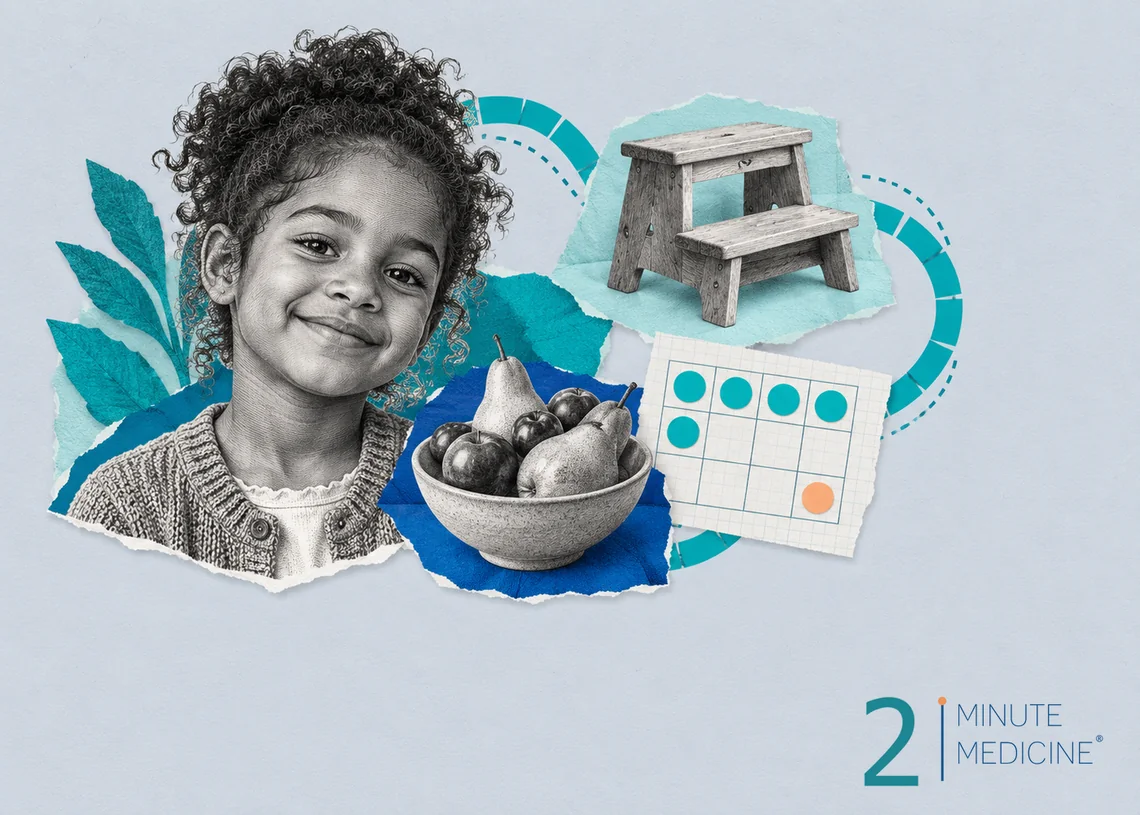
Encopresis (fecal soiling) is the medical term for repeatedly passing stool into underwear after about age 4, when most children are toilet trained. In most children, the cause is long-term constipation. A mass of hard stool collects and stretches the bowel, and softer stool leaks around it without the child feeling it. Children aren’t doing it on purpose. With a clear-out, a daily stool softener and a toilet routine, most get better, though it often takes months.
Key points
- Constipation that has lasted a long time is behind most cases.
- Many children can’t feel or smell the leaks, because the stretched bowel has lost some of its normal feeling.
- Treatment has three parts: clearing out the hard stool, keeping stools soft every day, and regular toilet sits after meals.
- Blame and punishment make things worse. Praise and patience help.
- Setbacks are common. Many children need treatment for six months or longer.
How encopresis happens
It often starts with one hard, painful bowel movement. The child then holds stool in to avoid the pain. Some children hold it because they don’t want to use school bathrooms, are busy playing, feel pressure during toilet training, or are going through a change such as a move or a new sibling.
The longer stool stays in the colon, the more water the body pulls out of it. The stool gets bigger and harder, so the next bowel movement hurts even more, and the child holds on again. Over time the rectum (the last part of the bowel) stretches around a hard lump of stool (a fecal impaction). Its muscles weaken, and the signal that says “time to go” fades. Loose stool from higher up then seeps around the hard mass and into the underwear.
A smaller group of children soil without being constipated. This is more often linked to stress, anxiety or behavior, and it’s treated with a different plan.
Rarely, a medical problem is the cause. Examples include Hirschsprung disease (missing nerves in part of the bowel), a problem with the lower spinal cord, an underactive thyroid or celiac disease.
Signs to look for
- Stains or stool in the underwear, from small streaks to larger amounts
- Bowel movements that are rare and hard, come out as small balls like pebbles, or are so large they clog the toilet
- Belly pain, bloating or a poor appetite
- Holding behaviors, such as crossing the legs, standing on tiptoes, rocking or hiding in a corner
- Hiding soiled underwear, or saying they don’t need to go
- Daytime or nighttime wetting, or bladder infections, because a full rectum presses on the bladder
Children with encopresis are often teased and may feel ashamed. Some become withdrawn or upset.
How it’s diagnosed
Your child’s doctor will ask about bowel habits, diet, toilet training and what’s going on at home and school. They will feel your child’s belly, which can often find a large amount of stool. They will also check the lower back and the skin around the bottom. Sometimes a gentle rectal exam is done. An X-ray of the belly is not usually needed. If one is done, the report may describe a “moderate” or “large stool burden,” which means stool has built up in the colon. Blood tests or a referral to a specialist are done if there are signs of a rarer cause.
Encopresis treatment
Step 1: Clear out the bowel
The first goal is to empty the hard, stuck stool. This is usually done at home over a few days, often a weekend, with a high dose of a stool softener by mouth, as your doctor directs. Some children need an enema or a suppository instead. Expect large, messy bowel movements during this time.
Step 2: Keep stools soft
- A daily stool softener keeps stools soft so they pass without pain. Polyethylene glycol (MiraLAX) is the most common choice. Children often take it for several months, with the dose set by their doctor. Your doctor may add other medicines.
- The aim is one soft bowel movement a day, about as soft as toothpaste.
- Keep going even when things look better. Stopping too soon is the most common reason soiling comes back. Your doctor will help you lower the medicine slowly.
Step 3: Build a toilet routine
- Two or three times a day, about 15 to 30 minutes after a meal, give your child 5 to 10 minutes of toilet time. Eating naturally pushes the bowel to move.
- Put a stool under their feet so their knees are higher than their hips. This makes it easier to push.
- Use a sticker chart to reward sitting and trying, not clean underwear. Children can control the trying.
- Stay calm about accidents. Have your child help with cleanup in a matter-of-fact way, without anger or shame.
Other help
- Food and drink. Offer fruit, vegetables, beans and whole grains, and plenty of water. Large amounts of cow’s milk can add to constipation in some children. Diet changes help, but they usually aren’t enough on their own.
- School. Ask for a bathroom pass, access to a private bathroom and a spare set of clothes at school.
- Counseling. A psychologist can help if your child feels anxious, sad or ashamed, if soiling doesn’t improve, or if behavior is part of the problem.
What to expect
Most children get better, but it takes time. The stretched bowel needs months to return to its normal size and feeling. Relapses often happen during illness, travel or a change in routine, so restart the plan quickly if stools get hard again. By the teen years, very few children still have soiling.
Lowering the risk
- Start toilet training when your child shows they’re ready, and keep it low-pressure.
- Treat constipation early, before a pattern of holding sets in.
- Keep regular mealtimes and toilet times, with enough fiber and water.
When to see a doctor
- A child age 4 or older who soils their underwear
- Constipation that lasts more than two weeks
- Pain with bowel movements, or blood on the stool or toilet paper
- Belly swelling, vomiting, weight loss or poor growth
- Weakness in the legs, or a dimple, patch of hair or lump on the lower back
- A newborn who didn’t pass their first stool within the first two days
- Your child seems very sad, anxious or withdrawn
Get emergency care for severe belly pain, or a swollen belly with vomiting.
Common questions about encopresis
Why does my child poop their pants and not seem to care?
Usually because they can’t feel it. A stretched rectum sends weak signals, and children get used to the smell, so leaks happen without warning. Acting as if they don’t care is often a way to cope with shame. Even when soiling looks deliberate, constipation is usually behind it, so start with a doctor’s visit.
What is a fecal impaction?
A fecal impaction is a large, hard mass of stool stuck in the rectum or lower colon that a child can’t pass. It is the usual starting point of encopresis, and the clear-out step of treatment removes it. Get urgent care if your child has severe belly pain, a swollen belly or vomiting.
Does fiber help a child with encopresis?
It helps, but it is rarely enough on its own. Fruit, vegetables, beans and whole grains, plus plenty of water, make stools softer and easier to pass. Most children with encopresis also need a daily stool softener for months. Add fiber slowly, because a sudden increase can cause gas and bloating.
Questions to ask your doctor
- Is constipation causing my child’s soiling?
- How do we do the clear-out at home, and what should we expect?
- How long will my child need a stool softener?
- What should we tell my child’s school?
- Would my child benefit from seeing a counselor?
Learn more
- Encopresis (MedlinePlus, U.S. National Library of Medicine)
- Constipation in children (National Institute of Diabetes and Digestive and Kidney Diseases)
This guide is general information and doesn’t replace advice from your own doctor. Last updated October 2026.






 Get the app