

Patient Basics: Encephalitis
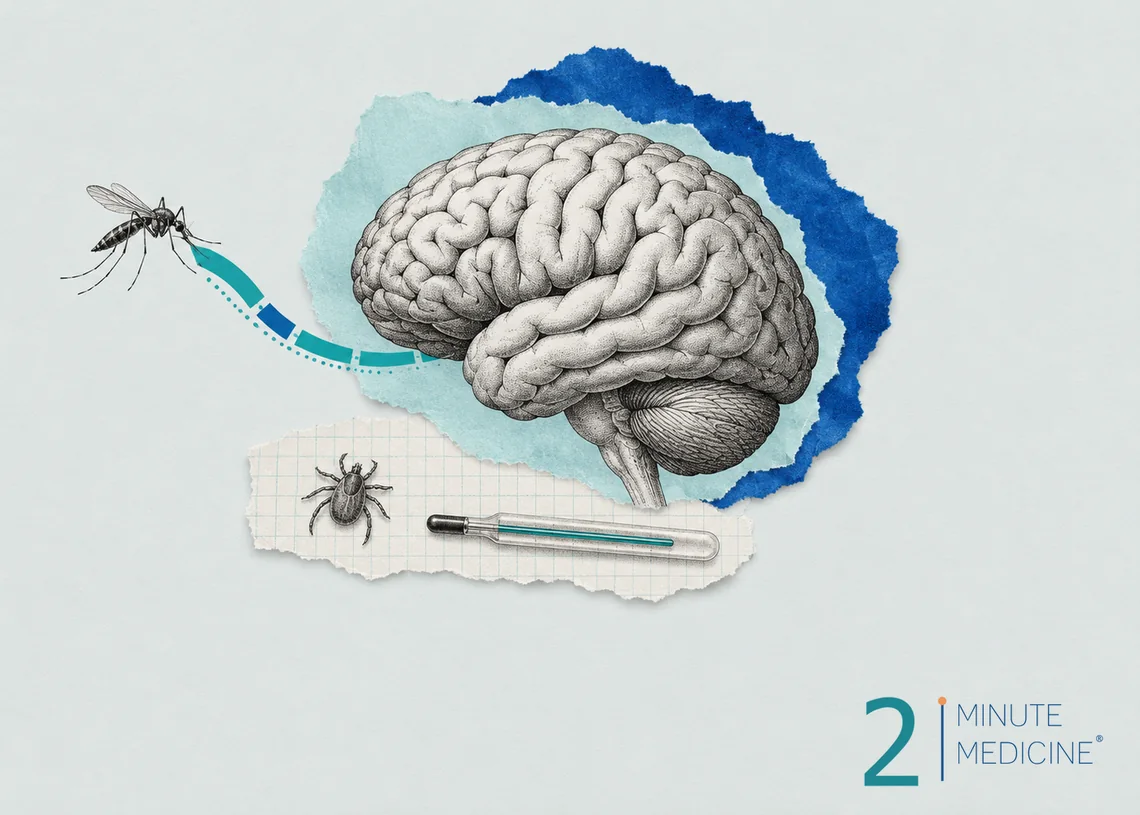
Encephalitis is swelling (inflammation) of the brain itself, most often caused by a virus. Sometimes the immune system attacks the brain by mistake. It can start like the flu and then quickly lead to confusion, strange behavior or seizures. Encephalitis is a medical emergency, and early treatment gives the best chance of a good recovery.
Key points
- Fever and headache with confusion, personality changes, trouble speaking or a seizure need emergency care.
- Herpes simplex virus is the most common known cause of severe viral encephalitis in the US. In the US, West Nile virus is the most common one spread by mosquitoes.
- Doctors usually start the antiviral medicine acyclovir right away, before test results come back.
- An MRI scan and a spinal tap are the key tests.
- Recovery can take months. Some people have lasting problems with memory, mood or energy, and rehab helps.
What causes encephalitis
Infections
- Herpes simplex virus (HSV). The same virus that causes cold sores can, rarely, reach the brain. It can affect anyone at any age.
- Mosquito-borne viruses. West Nile virus, La Crosse virus (mostly in children), St. Louis encephalitis virus and eastern equine encephalitis (EEE, rare but often severe) occur in the US. Japanese encephalitis is a risk for travelers to parts of Asia.
- Tick-borne viruses. Powassan virus occurs in the northern US and Canada. Tick-borne encephalitis occurs in Europe and Asia.
- Other viruses. Chickenpox and shingles virus, enteroviruses, measles, mumps, HIV and rabies can all cause it.
- Bacteria, fungi and parasites. These are less common. Examples are TB that spreads to the brain (brain TB), Lyme disease and syphilis. A parasite called toxoplasma can cause it in people with a weak immune system.
Autoimmune encephalitis
Here the immune system makes antibodies that attack brain cells. The best-known type, anti-NMDA receptor encephalitis, often affects young women and is sometimes linked to a small growth on an ovary. It tends to build over days to weeks. Signs include anxiety, odd behavior, memory loss, seizures or unusual movements. Doctors now find it more often than they used to, and it can be treated.
In many people, no cause is ever found.
Encephalitis symptoms
Many cases begin with flu-like signs, such as fever, headache, tiredness and aches. Brain symptoms can follow within hours to days:
- Confusion, drowsiness or being hard to wake
- Changes in personality or behavior, agitation or seeing things that aren’t there
- Seizures
- Trouble speaking or understanding speech
- Weakness, numbness or loss of balance
- Memory problems
- A stiff neck or pain with bright light
In adults, herpes encephalitis often causes fever with confusion and odd behavior. People may struggle to find words. Some notice strange smells or tastes, because the virus tends to hit the parts of the brain near the temples. In babies, watch for fever, poor feeding, vomiting, constant crying, floppiness and a bulging soft spot on the head.
Encephalitis vs meningitis
Meningitis is inflammation of the thin layers (meninges) that wrap the brain and spinal cord. It typically causes fever, a bad headache and a stiff neck, while thinking often stays clear at first. Encephalitis affects the brain tissue, so confusion, behavior changes and seizures are more common. Bacteria cause most severe meningitis, while viruses cause most encephalitis. The two can happen together, which doctors call meningoencephalitis. Both need urgent care, and the same tests help tell them apart.
How it’s diagnosed
- Exam and history. The doctor checks alertness, speech, strength and reflexes, and asks about travel, insect or tick bites, animal contact and recent illness.
- MRI scan. This shows swelling in the brain and where it is.
- Spinal tap (lumbar puncture). A thin needle in the lower back takes a small sample of the fluid around the brain and spinal cord. The lab looks for signs of inflammation, tests for viruses such as herpes, and checks for antibodies.
- EEG. Small sensors on the scalp record the brain’s electrical activity and can pick up seizures that aren’t obvious.
- Blood tests look for infection, antibodies and other causes of confusion.
How encephalitis is treated
Treatment happens in the hospital, often in an intensive care unit. Herpes encephalitis does best when treated early. So doctors usually start acyclovir through a vein (IV) as soon as they suspect encephalitis. They stop it if tests rule herpes out. Antibiotics may also be given until bacterial infection is ruled out.
Most mosquito-borne and tick-borne viruses have no specific antiviral drug. Care focuses on supporting the body while the brain heals:
- Fluids and nutrition
- Medicines to prevent or stop seizures
- Treatment to lower pressure from brain swelling
- A breathing machine for a while if needed
For autoimmune encephalitis, doctors calm the immune system. They may use steroids, IV immunoglobulin (IVIG), plasma exchange or rituximab. If a tumor is linked to the antibodies, removing it helps.
Recovery
Recovery depends on the cause, how severe the illness was and how quickly treatment began. Some people recover fully in weeks. Others have lasting tiredness, memory and concentration problems, mood changes, seizures or weakness. Improvement can continue for a year or more. Physical, speech and occupational therapy can help a lot, as can a brain and memory specialist (neuropsychologist). Family members often notice changes first, so bring them to follow-up visits.
Lowering your risk
- Keep up with vaccines, including measles, mumps, rubella (MMR) and chickenpox.
- Ask about Japanese encephalitis or tick-borne encephalitis vaccines before travel to areas where they occur.
- Use an EPA-registered insect repellent, wear long sleeves and pants outdoors, and empty standing water around your home.
- Check yourself, children and pets for ticks after time in woods or tall grass.
- Avoid touching bats and wild animals. Get care right away after any animal bite, because rabies shots work only if given before symptoms start.
Get emergency care
Call 911 or go to an emergency department for:
- Fever or headache with confusion, sudden behavior changes or trouble waking
- A seizure
- Severe headache with a stiff neck
- New trouble speaking, weakness or loss of balance
- In a baby, a bulging soft spot, floppiness or poor feeding with fever
Common questions about encephalitis
Is encephalitis contagious?
Encephalitis itself doesn’t spread from person to person, but some of the germs behind it can. Herpes, enteroviruses and measles can pass between people, though most who catch them never get encephalitis. Mosquito-borne and tick-borne viruses don’t spread through everyday contact with someone who is sick.
What is the difference between encephalitis and encephalopathy?
Encephalopathy is a broad word for any problem with how the brain is working, such as confusion or drowsiness. It has many causes, including liver failure, low sodium, infections elsewhere in the body and some drugs. Encephalitis is one specific cause, where the brain itself is inflamed.
Can a sinus infection spread to the brain?
Rarely, yes. A bacterial sinus infection can spread to cause meningitis or a pocket of pus in the brain (abscess). Warning signs include a severe headache that keeps getting worse, high fever, swelling or redness around an eye, double vision, a stiff neck or confusion. These need emergency care.
Can you fully recover from encephalitis?
Many people do, especially with mild illness or early treatment. Others have lasting effects, such as memory problems or tiredness, that improve slowly over months to years. Rehab therapies and support groups for brain injury help people adjust and keep improving.
Questions to ask your doctor
- What caused my encephalitis, or is the cause still unknown?
- Do I need to keep taking seizure medicine, and for how long?
- Which therapies would help my recovery?
- When can I drive or go back to work or school?
- Can my family catch anything from me?
Learn more
- Encephalitis (MedlinePlus, U.S. National Library of Medicine)
- Preventing mosquito bites (Centers for Disease Control and Prevention)
This guide is general information and doesn’t replace advice from your own doctor. Last updated October 2026.
RelatedReports








 Get the app