

Patient Basics: Endocarditis
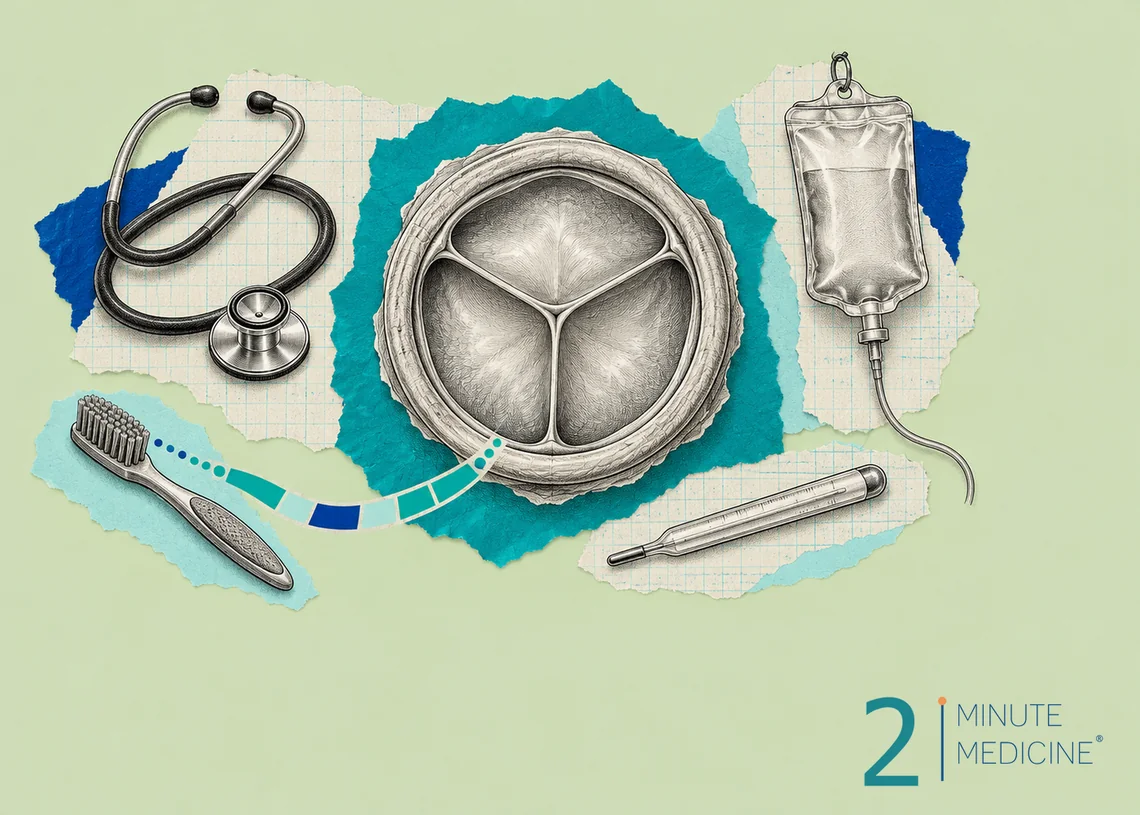
Endocarditis, also called infective endocarditis, is an infection of the inner lining of the heart, most often the heart valves. Germs in the blood, usually bacteria, stick to a valve and grow into clumps that can damage it or break off and travel to the brain, lungs or other organs. It is a serious illness that needs weeks of antibiotics and sometimes heart surgery. People with an artificial heart valve or a past episode of endocarditis are at highest risk.
Key points
- Fever is the most common symptom. It may come with chills, night sweats, tiredness and shortness of breath.
- Blood cultures and an ultrasound of the heart (echocardiogram) are the key tests.
- Treatment is IV antibiotics, usually for 4 to 6 weeks. Many people also need surgery to repair or replace a valve.
- Good care of your teeth and gums lowers the risk, since mouth bacteria are a common cause.
- If you are at high risk, you may need an antibiotic before some dental work.
What causes endocarditis
Small numbers of bacteria enter the bloodstream fairly often, such as during tooth brushing or dental work, or through a cut or a needle. Usually the immune system clears them. Endocarditis happens when they settle on a heart valve or other spot inside the heart, often where the surface is rough or damaged. There they form clumps of germs and blood clot called vegetations. The most common germs are staph (Staphylococcus aureus), strep from the mouth, and enterococcus from the gut or urinary tract. Fungi are a rare cause.
The mitral and aortic valves, on the left side of the heart, are infected most often. In people who inject drugs, the tricuspid valve on the right side is often involved.
Who is at higher risk
- An artificial (prosthetic) heart valve or valve repair material
- Endocarditis in the past
- Some types of heart disease present at birth
- Damaged or scarred valves, for example from rheumatic fever or aging
- A pacemaker or implanted defibrillator
- Injecting drugs
- A long-term IV line or catheter, or hemodialysis
- Poor dental health, diabetes or a weakened immune system
Endocarditis symptoms
Endocarditis can start suddenly over a few days, or creep up over weeks or months.
- Fever and chills
- Night sweats
- Tiredness, weakness and loss of appetite or weight
- Aching muscles and joints
- Shortness of breath or a cough
- Swelling in the feet, legs or belly
- A new or changed heart murmur, heard by a doctor through a stethoscope
- Tiny red or purple dots on the skin, inside the mouth or on the whites of the eyes
- Thin dark lines under the nails, or tender red bumps on the fingers or toes
- Blood in the urine
A piece of vegetation can break off and block a blood vessel. In the brain, this causes a stroke. Other complications include heart failure from a leaking valve, a pocket of pus in the heart, kidney damage, and infection that spreads to the lungs, spine or other organs.
How it’s diagnosed
- Blood cultures. Several samples are drawn, ideally before antibiotics start, to grow the germ and find which antibiotic will kill it. Anyone with staph bacteria in the blood usually gets an echocardiogram to check the valves.
- Echocardiogram. Sound waves show the heart valves. A standard one is done from the chest. A more detailed view comes from a transesophageal echo (TEE), in which a small probe is passed down the throat while you are sedated.
- Other blood tests, such as a blood count, kidney function and signs of inflammation.
- Imaging such as CT, MRI or a PET scan to look for infection around an artificial valve or spread to other organs.
Treatment
Antibiotics
Treatment starts in the hospital with high-dose antibiotics through a vein. The drug is chosen to match the germ found in the blood cultures. A full course usually lasts 4 to 6 weeks. Once you are stable, you may finish at home through a long-term IV line (a PICC line). Some people can switch to antibiotic pills for the last part of treatment. Take every dose and keep all follow-up blood tests.
Surgery
Surgery to repair or replace the infected valve is needed when:
- The damaged valve is causing heart failure
- The infection keeps going despite antibiotics, or forms a pocket of pus (abscess) in the heart
- Large vegetations are likely to break off, or already have
- The infection is caused by a fungus or a germ that is hard to treat
- An artificial valve or a pacemaker is infected. Pacemaker and defibrillator wires are usually removed.
Care for people who inject drugs
Treatment for opioid use disorder, such as buprenorphine or methadone, can be started in the hospital and lowers the chance of another infection. Ask about sterile syringe programs. For free, private help any time, call the SAMHSA National Helpline at 1-800-662-4357.
Recovery
Recovery takes several weeks to months. Your doctors will check your heart with repeat echocardiograms. After one bout of endocarditis, the chance of another is higher, so call your doctor about any unexplained fever.
Lowering your risk
- Brush twice a day, floss, and see a dentist regularly.
- If you have an artificial valve, past endocarditis, certain heart conditions present at birth, or a heart transplant with valve problems, ask whether you need an antibiotic before dental work. Most other people don’t.
- Get skin infections treated promptly.
- Avoid tattoos and piercings from unlicensed places.
- Never share needles or other drug equipment.
When to see a doctor
- A fever lasting more than a few days with no clear cause, especially if you are at higher risk
- Night sweats, tiredness and weight loss without a reason
Call 911 for signs of stroke (face drooping, arm weakness, trouble speaking), chest pain, or severe shortness of breath.
Common questions about endocarditis
What is the difference between acute and subacute endocarditis?
Acute endocarditis comes on over days, with high fever, and makes people very sick quickly. It is often caused by staph and can wreck even a healthy valve. Subacute bacterial endocarditis builds over weeks to months, with low fevers, tiredness and weight loss, often from mouth bacteria on a valve that was already damaged.
Can you die from endocarditis?
Yes, without treatment it is almost always fatal, and even with treatment about 1 in 6 people die in the hospital. The risk is higher with staph, an artificial valve, older age, a stroke or heart failure. Early antibiotics and timely surgery improve the odds, and most people survive.
Can a staph infection in the blood spread to the heart?
Yes. Staph in the blood is one of the most common routes to endocarditis, and it can infect a normal valve. That’s why doctors check the heart with an echocardiogram and give IV antibiotics for at least 2 weeks, often longer, whenever staph grows in a blood culture.
Questions to ask your doctor
- Which germ caused my infection, and which antibiotic am I on?
- How long will I need treatment, and can I finish it at home?
- Has my valve been damaged, and will I need surgery?
- Do I need antibiotics before dental work in the future?
- What signs should make me call you after I go home?
Learn more
- Endocarditis (MedlinePlus, U.S. National Library of Medicine)
- Heart inflammation (National Heart, Lung, and Blood Institute)
This guide is general information and doesn’t replace advice from your own doctor. Last updated October 2026.
RelatedReports






 Get the app