

Patient Basics: Hematuria (Blood in the Urine)
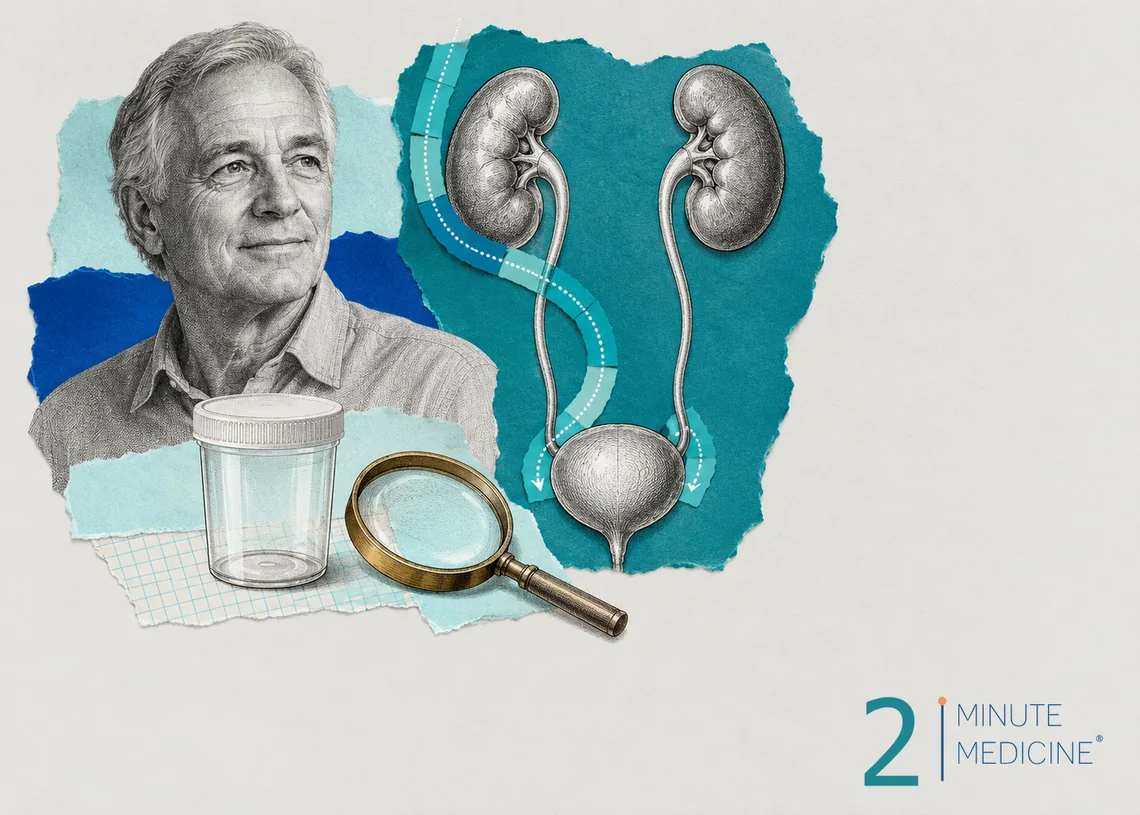
Hematuria means blood in the urine. Sometimes you can see it, and the urine looks pink, red or cola-colored. Other times the blood shows up only on a urine test. It often comes from something simple, like an infection, but it can be an early sign of kidney disease or a bladder or kidney cancer. Always tell a doctor if you see blood in your urine, even if it stops.
Key points
- Common causes are urinary tract infections, kidney stones and an enlarged prostate.
- Painless, visible blood in the urine needs a checkup, especially in adults over 40 and people who smoke.
- Tests usually include a urine test, a scan of the kidneys and a look inside the bladder with a thin scope.
- Treatment depends on the cause. There’s no single medicine that stops the bleeding itself.
- Get care quickly for fever with back pain, or if clots stop you from peeing.
Types of hematuria
- Visible (gross) hematuria. You can see the blood. Even a teaspoon of blood can turn urine red. You may also pass small clots.
- Microscopic hematuria. The urine looks normal, but red blood cells show up when a sample is checked under a microscope. It’s often found during a routine checkup.
Some foods and medicines can turn urine red, pink or orange without any blood. Examples include beets, blackberries, rhubarb, food dyes, the bladder pain medicine phenazopyridine, and the antibiotic rifampin. A urine test tells the difference.
What causes hematuria
- Bladder infection. Burning when you pee, needing to go often and urgently, and cloudy or bloody urine. More common in women.
- Kidney infection (pyelonephritis). Fever, chills, pain in the back or side, nausea and vomiting, often with bladder infection symptoms.
- Kidney stones. Sudden, severe pain in the side or back that may spread to the groin, often with blood in the urine.
- Enlarged prostate. In older men, swollen prostate tissue can bleed. It also causes a weak stream and frequent peeing at night.
- Cancer of the bladder, kidney or prostate. Painless blood that comes and goes is the most common first sign of bladder cancer. Smoking is the biggest risk factor.
- Kidney disease. Inflammation of the kidney’s filters (glomerulonephritis), including IgA nephropathy, can cause cola-colored urine, often after a cold. Foamy urine, swelling and high blood pressure may come with it.
- Hard exercise. Long runs and other intense workouts can cause blood in the urine that clears within a few days.
- Injury to the kidneys or bladder, or a recent procedure on the urinary tract
- Other causes include sickle cell trait, inherited kidney conditions, and some medicines
Blood thinners can make bleeding more likely, but they rarely cause hematuria by themselves. Doctors still look for an underlying cause.
Blood in urine in women and men
Women more often have blood from a bladder infection. Blood from a period or vaginal spotting can mix with a urine sample, so tell your doctor where you are in your cycle. A little blood on the toilet paper after peeing can come from the urethra, the vagina, or the anus (from hemorrhoids or a small tear).
Men rarely get bladder infections without another problem, so blood in a man’s urine always needs a closer look. Sudden, painless blood in the urine in a man over 40 should be checked promptly for bladder or kidney cancer, even if it clears up.
How hematuria is diagnosed
Your doctor will ask about pain, fever, recent exercise, medicines, smoking and family history, and will examine you. For men, this may include a prostate exam.
- Urine tests confirm the blood, check for infection and look for protein or cell shapes that point to the kidneys.
- Blood tests check kidney function.
- Imaging. A CT scan of the urinary tract (CT urogram) or an ultrasound looks for stones, tumors and blockages.
- Cystoscopy. A urologist passes a thin, flexible scope through the urethra to look inside the bladder. It’s done in the office with numbing gel and takes a few minutes.
Your age, sex, smoking history and how much blood is present decide which tests you need. Someone young with microscopic blood and no risk factors may just need a repeat urine test.
Hematuria treatment
Treatment aims at the cause:
- Antibiotics for a bladder or kidney infection
- Fluids, pain medicine and sometimes a procedure for kidney stones
- Medicines or surgery for an enlarged prostate
- Surgery and other treatments for cancer
- Blood pressure medicines and other treatment for kidney disease, usually from a kidney specialist
If no cause is found, which is common with microscopic hematuria, your doctor may simply repeat a urine test later.
Signs of a kidney infection
A kidney infection usually starts as a bladder infection that travels up. Watch for:
- Fever and chills
- Pain in your back, side or groin
- Nausea or vomiting
- Burning, frequent peeing, and cloudy, bloody or bad-smelling urine
- In older adults, confusion may be the main sign
It needs antibiotics soon. Some people need IV antibiotics in the hospital. Untreated, it can spread to the blood.
When to see a doctor
- Any visible blood in your urine, even once
- Microscopic blood found on a urine test
- Burning, frequent or urgent peeing
- Blood in your urine while taking a blood thinner
Get emergency care if you can’t pee, are passing large clots, have fever with back pain and vomiting, have severe pain in your side, or feel faint.
Common questions about hematuria
Can blood in urine go away on its own?
Yes, it can, but that doesn’t mean it’s harmless. Blood from hard exercise often clears within a few days. Bleeding from a bladder tumor can also stop for weeks and then return. That’s why visible blood in the urine needs a checkup even after it clears.
Is blood in the urine without pain serious?
It can be. Painless, visible blood is the most common first sign of bladder cancer, especially in people over 40 and in smokers. It can also come from an enlarged prostate or kidney disease. See a doctor soon, even if you feel fine.
Can hematuria be cured?
Usually, yes, once the cause is treated. Antibiotics clear blood from an infection, and the bleeding stops once a stone passes. Some causes, such as long-term kidney disease, can be controlled but not cured. Often no cause is found, and the blood is harmless.
Is there medicine for hematuria?
There’s no pill that treats hematuria itself. Doctors treat what is causing it, for example with antibiotics for an infection or medicines for an enlarged prostate. Drinking plenty of water helps flush small clots, but it doesn’t replace a checkup.
Questions to ask your doctor
- What do you think is causing the blood?
- Do I need a scan, a cystoscopy or both?
- Could any of my medicines be involved?
- Should I see a urologist or a kidney specialist?
- If no cause is found, how often should my urine be retested?
Learn more
- Hematuria (blood in the urine) (National Institute of Diabetes and Digestive and Kidney Diseases)
- Urine, bloody (MedlinePlus, U.S. National Library of Medicine)
This guide is general information and doesn’t replace advice from your own doctor. Last updated October 2026.
RelatedReports






 Get the app