

Patient Basics: Graves’ Disease
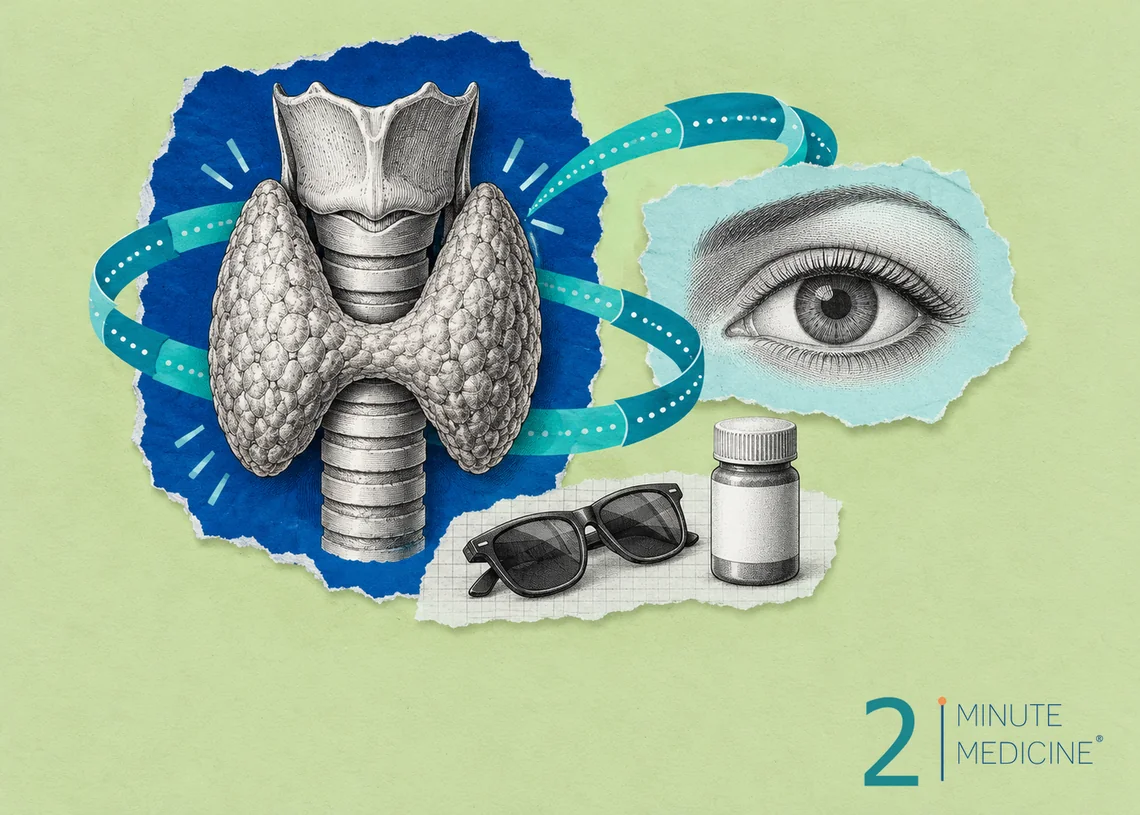
Graves’ disease is an autoimmune condition that makes the thyroid gland produce too much thyroid hormone. The immune system makes an antibody that switches the gland on and keeps it running. It’s the most common cause of an overactive thyroid (hyperthyroidism) in the US, and it can be treated well with medicine, radioactive iodine or surgery.
Key points
- Symptoms include a fast heartbeat, shaky hands, weight loss, feeling hot and anxious, and trouble sleeping.
- Up to 1 in 3 people with Graves’ disease have eye problems, such as bulging, gritty or red eyes.
- Blood tests for thyroid hormones and antibodies confirm the diagnosis.
- The main treatments are antithyroid pills, radioactive iodine and surgery. Each has trade-offs.
- Smoking makes the eye disease worse, and quitting helps.
What causes Graves’ disease
The thyroid is a butterfly-shaped gland in the front of the neck. Its hormones set the pace of many body processes, including heart rate, body temperature and how quickly you burn energy. Normally, the pituitary gland in the brain sends a hormone called TSH to tell the thyroid how much to make. In Graves’ disease, the immune system makes an antibody that copies TSH. The thyroid responds by growing and making extra hormone, no matter what the body needs.
Things that raise the risk include:
- Being female. Women get it several times more often than men.
- Age, most often between 30 and 50, though it can start at any age
- A family history of thyroid disease
- Other autoimmune conditions, such as type 1 diabetes, rheumatoid arthritis, vitiligo or celiac disease
- Smoking
- Having given birth in the past year
Graves’ disease symptoms
- A fast or pounding heartbeat, sometimes irregular (atrial fibrillation), especially in older adults
- Shaky hands
- Weight loss even though you’re eating more
- Feeling hot and sweating more
- Nervousness, irritability or anxiety
- Trouble sleeping
- Tiredness and weak muscles, especially in the upper arms and thighs
- More frequent bowel movements
- Lighter or less frequent periods
- Swelling in the front of the neck from an enlarged thyroid (goiter)
Older adults may have only a few of these, such as weight loss, tiredness or an irregular heartbeat.
Thyroid eye disease
- Eyes that bulge or seem to stare
- Gritty, dry, watery or red eyes
- Puffy eyelids
- Sensitivity to light
- Double vision
- Rarely, blurred or dimmed vision from pressure on the nerve at the back of the eye, which is an emergency
Eye disease can start before, during or after the thyroid symptoms, and it follows its own course. A few people also get thick, reddish skin on the shins.
How it’s diagnosed
- Blood tests show a low TSH and high levels of the thyroid hormones T4 and T3.
- An antibody test (TRAb or TSI) confirms Graves’ disease.
- A radioactive iodine uptake scan shows how much iodine the thyroid takes in. In Graves’ disease, uptake is high across the whole gland. This test isn’t done during pregnancy or breastfeeding.
- An ultrasound of the thyroid is sometimes used.
- An ECG (heart tracing) may show a fast heartbeat or atrial fibrillation.
Tell your doctor if you take biotin, a supplement found in many hair, skin and nail products. It can throw off thyroid test results, so you may need to stop it for a few days before testing.
Treatment
Quick symptom relief
Beta-blockers such as propranolol, atenolol or metoprolol slow the heart rate and ease shaking and anxiety within hours to days. They don’t lower hormone levels, so they’re used alongside other treatments.
Antithyroid medicine
Methimazole is the most widely used medicine. It lowers the amount of hormone the thyroid makes. Propylthiouracil (PTU) is used in the first months of pregnancy. Treatment usually lasts 12 to 18 months. For some people the disease then goes quiet (remission) and the medicine can stop. For others it comes back. Some people choose to stay on a low dose for years.
Side effects include rash, itching and joint pain. Rarely, these medicines harm the liver or cause a dangerous drop in white blood cells. Call your doctor right away for a fever, sore throat, mouth sores, yellow skin or eyes, or dark urine.
Radioactive iodine
You swallow a capsule or liquid. The thyroid soaks up the iodine, and its radiation slowly shrinks the gland over weeks to months. Most people end up with an underactive thyroid and take a daily thyroid hormone pill (levothyroxine) for life. It isn’t used during pregnancy or breastfeeding, and you’ll need to avoid pregnancy for at least 6 months afterward. It can worsen eye disease, so it’s often avoided when eye disease is more than mild. You’ll get instructions to limit close contact with others, especially children and pregnant people, for a few days.
Surgery
A thyroidectomy removes the whole gland. It’s a good choice for a large goiter, moderate or severe eye disease, a suspicious lump, or a pregnancy planned soon. Risks include a hoarse voice from nerve injury and low calcium if the nearby parathyroid glands are harmed. You’ll take levothyroxine for life afterward.
Eye care
For mild eye disease, artificial tears, sunglasses and raising the head of your bed can help, and a selenium supplement may be suggested. Moderate or severe eye disease may be treated with steroids, an IV medicine called teprotumumab (Tepezza), radiation to the eye socket, or surgery. An eye doctor who treats thyroid eye disease should be part of your care.
Living with Graves’ disease
- Get regular blood tests so your treatment can be adjusted.
- If you’re planning a pregnancy, talk to your doctor first. An overactive thyroid and some treatments can affect a pregnancy, and the antibodies can reach the baby.
- Don’t smoke, and avoid secondhand smoke.
- Skip kelp and other high-iodine supplements unless your doctor says otherwise.
- Ask about bone health, since a long-term overactive thyroid can weaken bones.
When to see a doctor
- Symptoms of an overactive thyroid
- Eye pain, redness, bulging or double vision
- Fever or sore throat while taking methimazole or PTU
Get emergency care for a very fast or irregular heartbeat with chest pain or fainting, sudden loss of vision, or a high fever with confusion, agitation, vomiting or diarrhea. That last group of symptoms can signal thyroid storm, a rare but life-threatening flare.
Common questions about Graves’ disease
What are the names of thyroid medicines?
For an overactive thyroid, the main medicines are methimazole and propylthiouracil (PTU), often with a beta-blocker such as propranolol for symptoms. For an underactive thyroid, including after radioactive iodine or surgery, the usual pill is levothyroxine (Synthroid, Levoxyl and others). Liothyronine (Cytomel) is used less often.
Is Graves’ disease curable?
It can be controlled well, though the immune problem behind it usually stays. Some people go into lasting remission after a course of antithyroid medicine. Radioactive iodine or surgery ends the overactive thyroid for good, but most people then need a daily thyroid hormone pill.
Can Graves’ disease kill you?
Rarely, and treatment makes serious problems unlikely. Left untreated, it can lead to an irregular heartbeat, heart failure, weak bones and, rarely, thyroid storm, a sudden severe flare that can be fatal without emergency care. With treatment, most people live a normal life span.
Is Graves’ disease contagious?
No. You can’t catch it from anyone or pass it on. It’s an autoimmune condition, in which the immune system targets your own thyroid. It does run in families, so let your parents, siblings and children know, especially if they have symptoms.
Questions to ask your doctor
- Which treatment do you recommend for me, and why?
- How long will I take antithyroid medicine?
- Will I need thyroid hormone pills later?
- Should I see an eye specialist?
- How could Graves’ disease affect a future pregnancy?
Learn more
- Graves’ disease (National Institute of Diabetes and Digestive and Kidney Diseases)
- Graves disease (MedlinePlus Medical Encyclopedia)
This guide is general information and doesn’t replace advice from your own doctor. Last updated October 2026.






 Get the app