

• About
  • Masthead
  • License Content
  • Advertise
  • Submit Press Release
  • RSS/Email List
  • 2MM Podcast
  • Write for us
  • Contact Us
2 Minute Medicine
No Result
View All Result

No products in the cart.

SUBSCRIBE
  • About
  • Specialties
    • All Specialties, All Recent Reports
    • Cardiology
    • Chronic Disease
    • Dermatology
    • Emergency
    • Endocrinology
    • Gastroenterology
    • Imaging and Intervention
    • Infectious Disease
    • Nephrology
    • Neurology
    • Obstetrics
    • Oncology
    • Ophthalmology
    • Pediatrics
    • Pharma
    • Preclinical
    • Psychiatry
    • Public Health
    • Pulmonology
    • Rheumatology
    • Surgery
  • Tools+
    • EvidencePulse™
    • HypeCheck™
    • NPI Registry Lookup
    • RVU Search
  • Pharma
  • AI Roundup
  • The Scan+
  • Classics™+
    • 2MM+ Online Access
    • Paperback and Ebook
  • Rewinds
  • Partners
    • License Content
    • Submit Press Release
    • Advertise with Us
  • Account
    • Subscribe
    • My account
    • Cart
    • Sign-in
2 Minute Medicine
  • About
  • Specialties
    • All Specialties, All Recent Reports
    • Cardiology
    • Chronic Disease
    • Dermatology
    • Emergency
    • Endocrinology
    • Gastroenterology
    • Imaging and Intervention
    • Infectious Disease
    • Nephrology
    • Neurology
    • Obstetrics
    • Oncology
    • Ophthalmology
    • Pediatrics
    • Pharma
    • Preclinical
    • Psychiatry
    • Public Health
    • Pulmonology
    • Rheumatology
    • Surgery
  • Tools+
    • EvidencePulse™
    • HypeCheck™
    • NPI Registry Lookup
    • RVU Search
  • Pharma
  • AI Roundup
  • The Scan+
  • Classics™+
    • 2MM+ Online Access
    • Paperback and Ebook
  • Rewinds
  • Partners
    • License Content
    • Submit Press Release
    • Advertise with Us
  • Account
    • Subscribe
    • My account
    • Cart
    • Sign-in
SUBSCRIBE
2 Minute Medicine
Subscribe
Home All Specialties Obstetrics

The SOLO1 trial: Olaparib significantly delays progression of advanced ovarian cancer
byJames RoebkerandDayton McMillan
December 28, 2018
in Obstetrics, Oncology
Reading Time: 3 mins read
The SOLO1 trial: Olaparib significantly delays progression of advanced ovarian cancer
Share on FacebookShare on Twitter

1. In women with BRCA-associated, newly diagnosed advanced ovarian cancer, olaparib significantly prolonged progression-free survival (PFS) at three years compared to placebo.

2. The majority of adverse events reported in the olaparib group were low-grade. Among high-grade adverse events, anemia and neutropenia were the most common.

Evidence Rating Level: 1 (Excellent)      

Study Rundown: Though many women with advanced (stage III or IV) ovarian cancer achieve clinical remission with first-line surgical cytoreduction and platinum-based chemotherapy, the majority will relapse within three years. The poly(adenosine diphosphate-ribose) polymerase (PARP) inhibitor olaparib has been approved as maintenance therapy in BRCA-associated cancers after failure with several chemotherapy agents; however, its use earlier in treatment is under investigation. This study reports results from the SOLO1 trial, which assessed the PARP inhibitor olaparib as maintenance therapy in women with newly diagnosed, BRCA-associated, advanced ovarian cancer. At three years, there was a significantly prolonged PFS – the primary outcome – for women treated with olaparib compared to placebo. Among secondary endpoints, olaparib significantly prolonged the rate of second PFS and time to first subsequent therapy or death. The results suggest that olaparib may become a standard of care following platinum-based chemotherapy in this patient population.

This was the first phase III trial to evaluate a PARP inhibitor as maintenance therapy in BRCA-associated, newly diagnosed advanced ovarian cancer, and the results demonstrate a clear benefit with olaparib in this population. However, since most patients had a germline BRCA mutation and a complete response to initial chemotherapy, more data is needed before the results can be generalized to the entire ovarian cancer population. In addition, longer-term analysis is required to determine the impact on overall survival and provide more toxicity data.

Click to read the study in NEJM

RELATED REPORTS

Earlier Genetic Testing Predicts Bilateral Mastectomy in Young BRCA Carriers

Early menarche and later menopause are associated with increased ovarian cancer risk

2 Minute Medicine Rewind February 9, 2026

Relevant Reading: Oral poly(ADP-ribose) polymerase inhibitor olaparib in patients with BRCA1 or BRCA2 mutations and recurrent ovarian cancer: a proof-of-concept trial

In-Depth [randomized controlled trial]: Patients (n=391) with stage III or IV epithelial ovarian cancer (serous or epithelioid ovarian cancer, primary peritoneal cancer, and/or fallopian-tube cancer) were randomized in a 2:1 ratio to olaparib (n=260) or placebo (n=131, one of which withdrew). All patients had a confirmed germline (99% of patients) or somatic BRCA1/2 mutation, had underwent cytoreductive surgery, received platinum-based chemotherapy without bevacizumab, and demonstrated complete (82%) or partial (18%) clinical response. The primary endpoint was estimated PFS at three years. Secondary endpoints included second PFS, overall survival (OS), time to first subsequent therapy or death, and health-related quality of life. Adverse events were reported and graded with the National Cancer Institute Common Terminology Criteria.

The primary endpoint was calculated after 198 of the 391 patients had disease progression or had died (data maturity, 51%) and a median duration of follow-up of 40.7 months in the olaparib group and 41.2 months in the placebo group. The estimated rate of investigator-assessed progression-free survival at three years was 60% with olaparib and 27% with placebo (hazard ratio [HR], 0.30; 95% confidence interval [CI], 0.23 to 0.41; P<0.001). The estimated second PFS rate at three years was 75% with olaparib vs. 60% with placebo (HR, 0.50; 95% CI, 0.35 to 0.72; P<0.001). The interim analysis of three-year OS was 84% with olaparib and 80% with placebo (HR, 0.95%; 95% CI, 0.60 to 1.53). The median time to first subsequent therapy or death was 51.8 months with olaparib vs. 15.1 months with placebo (HR, 0.30; 95% CI, 0.22 to 0.40). Most reported adverse events were grade 1 or 2. In the olaparib group 21% of patients experienced serious adverse events vs. 12% of patients with placebo (the most common being anemia). Three women (1%) developed acute myeloid leukemia that required olaparib discontinuation. No clinically significant difference in health-related quality of life was reported.

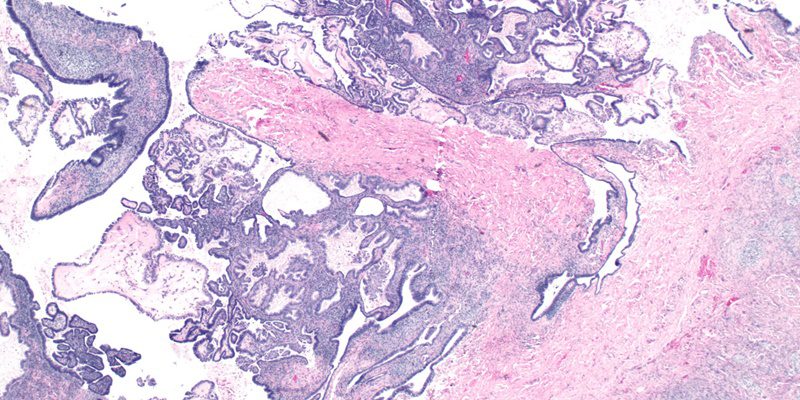
Image: PD

©2018 2 Minute Medicine, Inc. All rights reserved. No works may be reproduced without expressed written consent from 2 Minute Medicine, Inc. Inquire about licensing here. No article should be construed as medical advice and is not intended as such by the authors or by 2 Minute Medicine, Inc.

Tags: BRCA mutationOlaparibovarian cancer
Previous Post

Quick Take: Long-term Outcomes of Tetralogy of Fallot: A Study From the Pediatric Cardiac Care Consortium

Next Post

Neither haloperidol nor ziprasidone significantly shortens delirium in the ICU

RelatedReports

USPSTF recommends chemoprevention for women at high risk for breast cancer
Surgery

Earlier Genetic Testing Predicts Bilateral Mastectomy in Young BRCA Carriers

September 4, 2026
Assessment of Combined Nivolumab and Bevacizumab in Relapsed Ovarian Cancer: A Phase 2 Clinical Trial
Chronic Disease

Early menarche and later menopause are associated with increased ovarian cancer risk

February 13, 2026
Assessment of Combined Nivolumab and Bevacizumab in Relapsed Ovarian Cancer: A Phase 2 Clinical Trial
Weekly Rewinds

2 Minute Medicine Rewind February 9, 2026

February 9, 2026
Assessment of Combined Nivolumab and Bevacizumab in Relapsed Ovarian Cancer: A Phase 2 Clinical Trial
Chronic Disease

An ultrasound test may more reliably detect ovarian cancer in premenopausal women than the Risk of Malignancy Index

February 6, 2026
Next Post

Neither haloperidol nor ziprasidone significantly shortens delirium in the ICU

Quick Take: Influence of HIV Infection on the Natural History of Hepatocellular Carcinoma: Results From a Global Multicohort Study

Quick Take: Influence of HIV Infection on the Natural History of Hepatocellular Carcinoma: Results From a Global Multicohort Study

Being overweight and obese associated with increased incidence of chronic kidney disease

Exome sequencing yields genetic diagnoses among patients with chronic kidney disease

EvidencePulse™ by 2 Minute Medicine 2026 evidence scan 3 reports You asked top stroke trials 2026 Synthesizing medical evidence... Top 2026 stroke trial results: OCEANIC — ischemic stroke: 6.2% vs 8.4% OPTION* — mRS 0–1: 43.6% vs 34.2% ORIENTAL* — mRS 0–2: 58.6% vs 46.6% *Higher sICH in intervention arms Participants randomizedN OCEANIC 12,327 OPTION 570 ORIENTAL 564 Ask about guidelines or landmark trials... ↑ Try EvidencePulse™ Ask the evidence.
Get the signal.
Try it now → Physician-trained medical AI by 2 Minute Medicine

2MM+ All Access

Full details →
$4.99 /month

5-day free trial · cancel anytime

  • ✓100+ physician-written reports
  • ✓EvidencePulse™ + HypeCheck™
  • ✓Ad-free reading + newsletters
Start 5-day free trial

Then $4.99/month. Manage renewal in your account.

2 Minute Medicine® is an award winning, physician-run, expert medical media company. Our content is curated, written and edited by practicing health professionals who have clinical and scientific expertise in their field of reporting. Our editorial management team is comprised of highly-trained MD physicians. Join numerous brands, companies, and hospitals who trust our licensed content.

Recent Reports

  • Molecularly guided therapy may improve outcomes in patients with unfavourable cancer of unknown primary compared with standard chemotherapy
  • Methadone initiation linked to lower mortality compared to buprenorphine-naloxone after opioid overdose
  • Continuous femoral nerve block is not superior to continuous adductor canal block for postoperative pain following ACL reconstruction
License Content
Terms of Use | Disclaimer
Cookie Policy
Cleantalk Pixel
  • About
  • Specialties
    • All Specialties, All Recent Reports
    • Cardiology
    • Chronic Disease
    • Dermatology
    • Emergency
    • Endocrinology
    • Gastroenterology
    • Imaging and Intervention
    • Infectious Disease
    • Nephrology
    • Neurology
    • Obstetrics
    • Oncology
    • Ophthalmology
    • Pediatrics
    • Pharma
    • Preclinical
    • Psychiatry
    • Public Health
    • Pulmonology
    • Rheumatology
    • Surgery
  • Tools
    • EvidencePulse™
    • HypeCheck™
    • NPI Registry Lookup
    • RVU Search
  • Pharma
  • AI Roundup
  • The Scan
  • Classics™
    • 2MM+ Online Access
    • Paperback and Ebook
  • Rewinds
  • Partners
    • License Content
    • Submit Press Release
    • Advertise with Us
  • Account
    • Subscribe
    • My account
    • Cart
    • Sign-in
No Result
View All Result

© 2026 2 Minute Medicine, Inc. - Physician-written medical news.

2MM+ All Access Full details →

The medical literature, distilled daily.

Monthly plan selected: $4.99 /month.

$4.99/month

5-day free trial · cancel anytime

Start 5-day free trial

Then $4.99/month. Manage renewal in your account.

Yearly plan selected: $49.90 /year.

$49.90/year

2 months free · only $4.16/month

Start 5-day free trial

Then $49.90/year. Manage renewal in your account.

Membership benefits

  • ✓100+ physician-written reports
  • ✓AI EvidencePulse™ + HypeCheck™
  • ✓Ad-free reading + newsletters

Already a member? Sign in