• About
  • Masthead
  • License Content
  • Advertise
  • Submit Press Release
  • RSS/Email List
  • 2MM Podcast
  • Write for us
  • Contact Us
2 Minute Medicine
No Result
View All Result

No products in the cart.

SUBSCRIBE
  • Specialties
    • All Specialties, All Recent Reports
    • Cardiology
    • Chronic Disease
    • Dermatology
    • Emergency
    • Endocrinology
    • Gastroenterology
    • Imaging and Intervention
    • Infectious Disease
    • Nephrology
    • Neurology
    • Obstetrics
    • Oncology
    • Ophthalmology
    • Pediatrics
    • Pharma
    • Preclinical
    • Psychiatry
    • Public Health
    • Pulmonology
    • Rheumatology
    • Surgery
  • Tools
    • EvidencePulse™
    • RVU Search
    • NPI Registry Lookup
  • Pharma
  • AI News
  • The Scan+
  • Classics™+
    • 2MM+ Online Access
    • Paperback and Ebook
  • Rewinds
  • Partners
    • License Content
    • Submit Press Release
    • Advertise with Us
  • Account
    • Subscribe
    • Sign-in
    • My account
2 Minute Medicine
  • Specialties
    • All Specialties, All Recent Reports
    • Cardiology
    • Chronic Disease
    • Dermatology
    • Emergency
    • Endocrinology
    • Gastroenterology
    • Imaging and Intervention
    • Infectious Disease
    • Nephrology
    • Neurology
    • Obstetrics
    • Oncology
    • Ophthalmology
    • Pediatrics
    • Pharma
    • Preclinical
    • Psychiatry
    • Public Health
    • Pulmonology
    • Rheumatology
    • Surgery
  • Tools
    • EvidencePulse™
    • RVU Search
    • NPI Registry Lookup
  • Pharma
  • AI News
  • The Scan+
  • Classics™+
    • 2MM+ Online Access
    • Paperback and Ebook
  • Rewinds
  • Partners
    • License Content
    • Submit Press Release
    • Advertise with Us
  • Account
    • Subscribe
    • Sign-in
    • My account
SUBSCRIBE
2 Minute Medicine
Subscribe
Home All Specialties Cardiology

Machine learning-based PRAISE score may aid in the prediction of adverse events following an acute coronary syndrome
byNeel MistryandTeddy Guo
June 25, 2021
in Cardiology, Chronic Disease
Reading Time: 3 mins read
0
Share on FacebookShare on Twitter

1. The PRAISE score showed accurate discriminative capabilities for the prediction of all-cause death, acute myocardial infarction, and major bleeding after an acute coronary syndrome.

2. Compared with low risk stratification, a high-risk PRAISE score was associated with a 58.8-times increase in death, 27.7-times increase in myocardial infarction, and a 32.7-times increase in major bleeding events.

Evidence Rating Level: 2 (Good)

 Study Rundown: Patients with acute coronary syndrome (ACS) are at an increased risk for ischemic and bleeding events. Although several predictive tools have been developed to predict adverse events, the accuracy of these scores remains modest. It is believed that machine learning may overcome some of the limitations of current analytical approaches. This study aimed to develop and validate a machine learning-based risk stratification model to predict all-cause death, recurrent acute myocardial infarction, and major bleeding after ACS. Four machine learning models were developed to predict the occurrence of each of the three outcomes one year after discharge. According to study results, the PRAISE score showed accurate discriminative abilities for the prediction of all three outcomes, even when externally validated. Specifically, the risk of myocardial infarction was greater than the risk of major bleeding among patients classified by the PRAISE score as being high risk for myocardial infarction. In contrast, the risk of myocardial infarction was lower than the risk of major bleeding among patients classified as being low risk for infarction. This study was limited by the retrospective design of the registries used to compose the derivation cohort. Perhaps, a prospective design could have been chosen to increase the validity of the PRAISE model. Overall, this study showed that a machine learning-based approach may accurately predict the occurrence of adverse events and aid in optimizing care for patients following an ACS.

Click to read the study in The Lancet

Relevant Reading: Artificial Intelligence to Detect Papilledema from Ocular Fundus Photographs

RELATED REPORTS

The Scan by 2 Minute Medicine®: Oral GLP 1 reshapes obesity visits, deepfake doctors fuel DIY injectables, home longevity scales overwhelm clinics, and TV CPR scripts leave bystanders unprepared

2 Minute Medicine Rewind

The preoperative combination of evolocumab and rosuvastatin may not reduce major adverse cardiovascular events

In-depth [prospective cohort]: Patients for the derivation cohort were obtained from two registries: the BleeMACS registry (comprising 15 401 patients with ACS at 15 tertiary hospitals in America, Europe, and Asia), and the RENAMI registry (comprising 4425 patients admitted at 12 European hospitals). Altogether, the derivation cohort consisted of 19 826 patients (≥18 years) with ACS and 1 year follow-up data. The derivation cohort was split into two groups: a training cohort (80%) and an internal validation cohort (20%). To assess the performance of the PRAISE score, an external validation cohort of 3444 adult patients admitted to the hospital with ACS with 2 years of follow-up was used.

Area under the receiver operating characteristic curves (AUCs) of the PRAISE model (training and internal validation cohort) for all three outcomes were similar to the external validation cohort. In the internal validation cohort, AUCs for 1-year all-cause death, 1-year myocardial infarction, and 1-year major bleeding were 0.82 (95% confidence interval [CI], 0.78-0.85), 0.74 (95% CI, 0.70-0.78), and 0.70 (95% CI, 0.66-0.75), respectively. For the external validation cohort, AUCs for 1-year all-cause death, 1-year myocardial infarction, and 1-year major bleeding were 0.92 (95% CI, 0.90-0.93), 0.81 (95% CI, 0.76-0.85), and 0.86 (95% CI, 0.82-0.89), respectively. Compared to the low-risk group, being in the high-risk group increased the risk of death by 58.8 times, myocardial infarction by 27.7 times, and major bleeding events by 32.7 times. While predictors varied based on study outcomes, left ventricular ejection fraction (LVEF), age, hemoglobin level, and statin therapy were important predictors for 1-year all-cause death. Meanwhile, hemoglobin level, age, LVEF, and estimated glomerular filtration rate (EGFR) were important predictors of both 1-year myocardial infarction and major bleeding risk. Findings from this study show that a machine learning-based approach for the identification of predictors of events after an ACS is effective and may help guide clinical decision making.

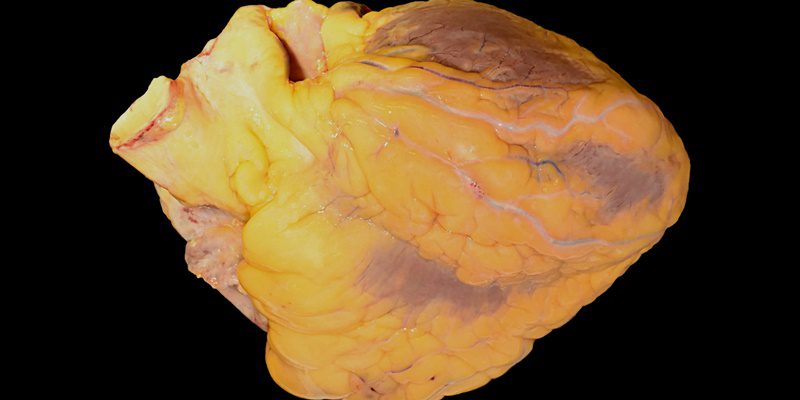
Image: PD

©2021 2 Minute Medicine, Inc. All rights reserved. No works may be reproduced without expressed written consent from 2 Minute Medicine, Inc. Inquire about licensing here. No article should be construed as medical advice and is not intended as such by the authors or by 2 Minute Medicine, Inc.

Tags: ACSacute coronary syndromeacute coronary syndrome (ACS)acute myocardial infarctioncardiac eventscardiologymyocardial infarction
Previous Post

#VisualAbstract Lenalidomide shows improvement in progression-free survival over bortezomib maintenance following autologous stem cell transplantation for multiple myeloma

Next Post

Tamsulosin therapy associated with significant reduction of symptoms of overactive bladder

RelatedReports

The Scan by 2 Minute Medicine®:  Ultra-Trail du Mont-Blanc, Taylor Swift, NBA rookie Chet Holmgren and Magic Mushrooms!
Chronic Disease

The Scan by 2 Minute Medicine®: Oral GLP 1 reshapes obesity visits, deepfake doctors fuel DIY injectables, home longevity scales overwhelm clinics, and TV CPR scripts leave bystanders unprepared

January 26, 2026
Remote patient monitoring did not reduce heart failure readmissions: The BEAT-HF trial
Weekly Rewinds

2 Minute Medicine Rewind

January 13, 2026
Using HEART score to risk stratify patients with chest pain is safe but underutilized in the ED
Cardiology

The preoperative combination of evolocumab and rosuvastatin may not reduce major adverse cardiovascular events

January 12, 2026
Using HEART score to risk stratify patients with chest pain is safe but underutilized in the ED
Cardiology

Late ventricular fibrillation following myocardial infarction is associated with increased risk of 1-year mortality

January 12, 2026
Next Post

Tamsulosin therapy associated with significant reduction of symptoms of overactive bladder

Insurance status linked to transfer decisions in trauma cases

Laryngeal mask airway may not be superior for neonate resuscitation

RTS,SA/S01 anti-malarial vaccine efficacy wanes significantly over time

Dihydroartemisinin-piperaquine reduces children death or readmission with severe anemia

2 Minute Medicine® is an award winning, physician-run, expert medical media company. Our content is curated, written and edited by practicing health professionals who have clinical and scientific expertise in their field of reporting. Our editorial management team is comprised of highly-trained MD physicians. Join numerous brands, companies, and hospitals who trust our licensed content.

Recent Reports

  • An ultrasound test may more reliably detect ovarian cancer in premenopausal women than the Risk of Malignancy Index
  • Chimeric antigen receptor T-cell therapy may induce sustained remission in multirefractory autoimmune hemolytic anemia
  • Neonatal Hyperbilirubinemia and navigating the 2022 AAP guideline updates
License Content
Terms of Use | Disclaimer
Cookie Policy
Privacy Statement (EU)
Disclaimer

© 2025 2 Minute Medicine, Inc. - Physician-written medical news.

  • Specialties
    • All Specialties, All Recent Reports
    • Cardiology
    • Chronic Disease
    • Dermatology
    • Emergency
    • Endocrinology
    • Gastroenterology
    • Imaging and Intervention
    • Infectious Disease
    • Nephrology
    • Neurology
    • Obstetrics
    • Oncology
    • Ophthalmology
    • Pediatrics
    • Pharma
    • Preclinical
    • Psychiatry
    • Public Health
    • Pulmonology
    • Rheumatology
    • Surgery
  • Tools
    • EvidencePulse™
    • RVU Search
    • NPI Registry Lookup
  • Pharma
  • AI News
  • The Scan
  • Classics™
    • 2MM+ Online Access
    • Paperback and Ebook
  • Rewinds
  • Partners
    • License Content
    • Submit Press Release
    • Advertise with Us
  • Account
    • Subscribe
    • Sign-in
    • My account
No Result
View All Result

© 2025 2 Minute Medicine, Inc. - Physician-written medical news.