• About
  • Masthead
  • License Content
  • Advertise
  • Submit Press Release
  • RSS/Email List
  • 2MM Podcast
  • Write for us
  • Contact Us
2 Minute Medicine
No Result
View All Result

No products in the cart.

SUBSCRIBE
  • About
  • Specialties
    • All Specialties, All Recent Reports
    • Cardiology
    • Chronic Disease
    • Dermatology
    • Emergency
    • Endocrinology
    • Gastroenterology
    • Imaging and Intervention
    • Infectious Disease
    • Nephrology
    • Neurology
    • Obstetrics
    • Oncology
    • Ophthalmology
    • Pediatrics
    • Pharma
    • Preclinical
    • Psychiatry
    • Public Health
    • Pulmonology
    • Rheumatology
    • Surgery
  • Tools+
    • EvidencePulse™
    • HypeCheck™
    • NPI Registry Lookup
    • RVU Search
  • Pharma
  • AI Roundup
  • The Scan+
  • Classics™+
    • 2MM+ Online Access
    • Paperback and Ebook
  • Rewinds
  • Partners
    • License Content
    • Submit Press Release
    • Advertise with Us
  • Account
    • Subscribe
    • My account
    • Cart
    • Sign-in
2 Minute Medicine
  • About
  • Specialties
    • All Specialties, All Recent Reports
    • Cardiology
    • Chronic Disease
    • Dermatology
    • Emergency
    • Endocrinology
    • Gastroenterology
    • Imaging and Intervention
    • Infectious Disease
    • Nephrology
    • Neurology
    • Obstetrics
    • Oncology
    • Ophthalmology
    • Pediatrics
    • Pharma
    • Preclinical
    • Psychiatry
    • Public Health
    • Pulmonology
    • Rheumatology
    • Surgery
  • Tools+
    • EvidencePulse™
    • HypeCheck™
    • NPI Registry Lookup
    • RVU Search
  • Pharma
  • AI Roundup
  • The Scan+
  • Classics™+
    • 2MM+ Online Access
    • Paperback and Ebook
  • Rewinds
  • Partners
    • License Content
    • Submit Press Release
    • Advertise with Us
  • Account
    • Subscribe
    • My account
    • Cart
    • Sign-in
SUBSCRIBE
2 Minute Medicine
Subscribe
EvidencePulse™ by 2 Minute Medicine 2026 evidence scan 3 reports You asked top stroke trials 2026 Synthesizing medical evidence... Top 2026 stroke trial results: OCEANIC — ischemic stroke: 6.2% vs 8.4% OPTION* — mRS 0–1: 43.6% vs 34.2% ORIENTAL* — mRS 0–2: 58.6% vs 46.6% *Higher sICH in intervention arms Participants randomizedN OCEANIC 12,327 OPTION 570 ORIENTAL 564 Ask about guidelines or landmark trials... ↑ Try EvidencePulse™ Ask the evidence.
Get the signal.
Try it now → Physician-trained medical AI by 2 Minute Medicine
Home All Specialties Chronic Disease

Urine bicarbonate excretion associated with cystic fibrosis transmembrane conductance regulator function
byAndrew LeeandKiera Liblik
November 17, 2022
in Chronic Disease, Nephrology, Pulmonology
Reading Time: 3 mins read
Pulmonary MRI with ultrashort echo time is comparable to pulmonary CT
Share on FacebookShare on Twitter

1. In this prospective cohort study, carbonate excretion levels in cystic fibrosis (CF) patients were correlated with various disease severity markers.

2. At six months after treatment with elexacaftor/tezacaftor/ivacaftor, improvements were seen in bicarbonate excretion, predicted forced expiratory volume in one second (ppFEV1), and sweat chloride concentrations.

Evidence Rating Level: 2 (Good)

Study Rundown: CF is a genetic condition caused by mutations in the cystic fibrosis transmembrane conductance regulator (CFTR) anion channel, leading to multiorgan disease. Patients with CF have an impaired ability to excrete excess bicarbonate. The chloride-bicarbonate exchanger in the kidney is affected by an impaired CFTR, which leads to CF patients being unable to excrete excess bicarbonate. In the present study, participants were given an oral sodium bicarbonate challenge test in the morning and urine was collected hourly for three hours. Baseline bicarbonate levels in CF patients were correlated with mutation type, ppFEV1, pancreatic insufficiency, and risk for chronic pseudomonas infection. Six months after treatment with elexacaftor/tezacaftor/ivacaftor, improvements were seen in bicarbonate excretion, ppFEV1, and sweat chloride concentrations. At the individual patient level, an increase in bicarbonate excretion was not associated with improvement in ppFEV1 or larger decrease in sweat chloride concentration. After treatment, there was no association observed between bicarbonate excretion and ppFEV1. A limitation of this study is that bicarbonate excretion can potentially be affected by numerous variables including hydration status, diet, acid-base status, and medications. Additionally, not all participants were treatment naïve before taking part in this study.

Click to read the study in AIM

Relevant Reading: Survival comparison of patients with cystic fibrosis in Canada and the United States: A population-based cohort study

RELATED REPORTS

Perioperative vitamin C supplementation may not reduce bleeding in percutaneous renal biopsy patients

An intradialytic exercise intervention did not improve dialysis adequacy

Point-of-care ultrasound may be effective at identifying nephrolithiasis in the emergency department

In-Depth [prospective cohort]: This prospective cohort study examined the correlation between bicarbonate excretion and markers of disease severity in CF patients. The inclusion criteria for the study were a confirmed diagnosis of CF, estimated glomerular filtration rate greater than 90mL/min/1.73 m2, and age greater than 17 years. Participants received an oral sodium bicarbonate challenge test before and six months after treatment with elexacaftor/texacaftor/ivacaftor. The oral sodium bicarbonate challenge involved obtaining urine levels before ingestion and every hour for three hours. Participants consumed 79 mg/kg of sodium bicarbonate dissolved in 200 mL of tap water. Sweat chloride concentration was also measured at baseline and after follow-up. A total of 50 patients completed the baseline bicarbonate challenge test and no adverse effects were reported. An increase of bicarbonate excretion by 1 mmol/3 h was associated with a 33% higher likelihood of pancreatic insufficiency (95% Confidence Interval [CI], 16% to 53%). A 1 mmol/3 h increase in bicarbonate excretion was associated with a 2.4% higher ppFEV1 (95% CI, 1% to 3.8%). A 1 mmol/3 h higher bicarbonate excretion was associated with an 8.5% lower risk of having pseudomonas aeruginosa infection (95% CI, 2.3% to 15%). At six-month follow-up, bicarbonate excretion increased by 3.9 mmol/3 h (95% CI, 1.6 to 6.1 mmol/ 3 h). ppFEV1 increased by 10.8% (95% CI, 8.7% to 12.9%), and sweat chloride concentration decreased by 47.2 mmol/L (95% CI, -51.9 to -42.5 mmol/L) after treatment. Following treatment, the relationship between baseline bicarbonate excretion and ppFEV1 was no longer observed. In summary, the present study suggests that bicarbonate excretion in CF patients is a marker of disease severity.

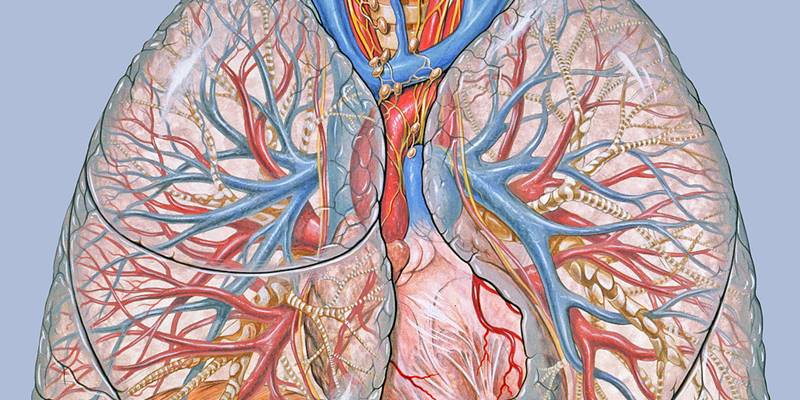
Image: PD

©2022 2 Minute Medicine, Inc. All rights reserved. No works may be reproduced without expressed written consent from 2 Minute Medicine, Inc. Inquire about licensing here. No article should be construed as medical advice and is not intended as such by the authors or by 2 Minute Medicine, Inc.
Tags: bicarbonateCFTRchronic diseasecystic fibrosiselexacaftorivacaftornephrologypulmonologytexacaftorurine bicarbonate excretion
Previous Post

The 2 Minute Medicine Podcast Episode 2

Next Post

Daily low dose aspirin may be associated with increased fall risk for geriatric patients

RelatedReports

Blood type correlates with egg reserve in infertile women
Nephrology

Perioperative vitamin C supplementation may not reduce bleeding in percutaneous renal biopsy patients

July 10, 2026
Fish oil and aspirin did not reduce arteriovenous fistula failure: The FAVOURED trail
Chronic Disease

An intradialytic exercise intervention did not improve dialysis adequacy

May 18, 2026
Renal stones in women linked with increased risk of coronary heart disease
Emergency

Point-of-care ultrasound may be effective at identifying nephrolithiasis in the emergency department

May 11, 2026
Tenofovir disoprovil fumarate HIV prophylaxis linked with minimal kidney impact
Nephrology

Sparsentan (Filspari) becomes first approved treatment for focal segmental glomerulosclerosis

May 6, 2026
Next Post

Daily low dose aspirin may be associated with increased fall risk for geriatric patients

Increased complications associated with emergent repeat cesarean

The use of liquefied petroleum gas versus biomass cookstoves during pregnancy does not influence infant birth weight

E-interventions linked to short-term reduction in alcohol consumption in college students

Heavy smoking and alcohol use may be associated with insomnia and sleep dissatisfaction

EvidencePulse™ by 2 Minute Medicine 2026 evidence scan 3 reports You asked top stroke trials 2026 Synthesizing medical evidence... Top 2026 stroke trial results: OCEANIC — ischemic stroke: 6.2% vs 8.4% OPTION* — mRS 0–1: 43.6% vs 34.2% ORIENTAL* — mRS 0–2: 58.6% vs 46.6% *Higher sICH in intervention arms Participants randomizedN OCEANIC 12,327 OPTION 570 ORIENTAL 564 Ask about guidelines or landmark trials... ↑ Try EvidencePulse™ Ask the evidence.
Get the signal.
Try it now → Physician-trained medical AI by 2 Minute Medicine

2MM+ All Access

Full details →
$4.99 /month

5-day free trial · cancel anytime

  • ✓100+ physician-written reports
  • ✓EvidencePulse™ + HypeCheck™
  • ✓Ad-free reading + newsletters
Start 5-day free trial

Then $4.99/month. Manage renewal in your account.

2 Minute Medicine® is an award winning, physician-run, expert medical media company. Our content is curated, written and edited by practicing health professionals who have clinical and scientific expertise in their field of reporting. Our editorial management team is comprised of highly-trained MD physicians. Join numerous brands, companies, and hospitals who trust our licensed content.

Recent Reports

  • Transanastomotic tubes not linked to anastomotic stricture after esophageal atresia repair
  • Artificial intelligence (AI) chatbot reduced depression, anxiety, and eating disorder risk symptoms
  • Real-time AI guidance enters live brain tumor surgery
License Content
Terms of Use | Disclaimer
Cookie Policy
Cleantalk Pixel
2MM+ All Access Full details →

The medical literature, distilled daily.

Monthly plan selected: $4.99 /month.

$4.99/month

5-day free trial · cancel anytime

Start 5-day free trial

Then $4.99/month. Manage renewal in your account.

Yearly plan selected: $49.90 /year.

$49.90/year

2 months free · only $4.16/month

Start 5-day free trial

Then $49.90/year. Manage renewal in your account.

Membership benefits

  • ✓100+ physician-written reports
  • ✓AI EvidencePulse™ + HypeCheck™
  • ✓Ad-free reading + newsletters

Already a member? Sign in

  • About
  • Specialties
    • All Specialties, All Recent Reports
    • Cardiology
    • Chronic Disease
    • Dermatology
    • Emergency
    • Endocrinology
    • Gastroenterology
    • Imaging and Intervention
    • Infectious Disease
    • Nephrology
    • Neurology
    • Obstetrics
    • Oncology
    • Ophthalmology
    • Pediatrics
    • Pharma
    • Preclinical
    • Psychiatry
    • Public Health
    • Pulmonology
    • Rheumatology
    • Surgery
  • Tools
    • EvidencePulse™
    • HypeCheck™
    • NPI Registry Lookup
    • RVU Search
  • Pharma
  • AI Roundup
  • The Scan
  • Classics™
    • 2MM+ Online Access
    • Paperback and Ebook
  • Rewinds
  • Partners
    • License Content
    • Submit Press Release
    • Advertise with Us
  • Account
    • Subscribe
    • My account
    • Cart
    • Sign-in
No Result
View All Result

© 2026 2 Minute Medicine, Inc. - Physician-written medical news.