• About
  • Masthead
  • License Content
  • Advertise
  • Submit Press Release
  • RSS/Email List
  • 2MM Podcast
  • Write for us
  • Contact Us
2 Minute Medicine
No Result
View All Result

No products in the cart.

SUBSCRIBE
  • Specialties
    • All Specialties, All Recent Reports
    • Cardiology
    • Chronic Disease
    • Dermatology
    • Emergency
    • Endocrinology
    • Gastroenterology
    • Imaging and Intervention
    • Infectious Disease
    • Nephrology
    • Neurology
    • Obstetrics
    • Oncology
    • Ophthalmology
    • Pediatrics
    • Pharma
    • Preclinical
    • Psychiatry
    • Public Health
    • Pulmonology
    • Rheumatology
    • Surgery
  • Tools
    • EvidencePulse™
    • RVU Search
    • NPI Registry Lookup
  • Pharma
  • AI News
  • The Scan+
  • Classics™+
    • 2MM+ Online Access
    • Paperback and Ebook
  • Rewinds
  • Partners
    • License Content
    • Submit Press Release
    • Advertise with Us
  • Account
    • Subscribe
    • Sign-in
    • My account
2 Minute Medicine
  • Specialties
    • All Specialties, All Recent Reports
    • Cardiology
    • Chronic Disease
    • Dermatology
    • Emergency
    • Endocrinology
    • Gastroenterology
    • Imaging and Intervention
    • Infectious Disease
    • Nephrology
    • Neurology
    • Obstetrics
    • Oncology
    • Ophthalmology
    • Pediatrics
    • Pharma
    • Preclinical
    • Psychiatry
    • Public Health
    • Pulmonology
    • Rheumatology
    • Surgery
  • Tools
    • EvidencePulse™
    • RVU Search
    • NPI Registry Lookup
  • Pharma
  • AI News
  • The Scan+
  • Classics™+
    • 2MM+ Online Access
    • Paperback and Ebook
  • Rewinds
  • Partners
    • License Content
    • Submit Press Release
    • Advertise with Us
  • Account
    • Subscribe
    • Sign-in
    • My account
SUBSCRIBE
2 Minute Medicine
Subscribe
Home All Specialties Cardiology

Digitoxin improves outcomes in heart failure with reduced ejection fraction
byNhat Hung (Benjamin) LamandKiera Liblik
October 14, 2025
in Cardiology, Chronic Disease
Reading Time: 3 mins read
0
Share on FacebookShare on Twitter

1. Among patients with symptomatic chronic heart failure already on guideline-directed medical therapy (GDMT), digitoxin lowered all-cause mortality and hospital admission for heart failure progression compared to placebo.

2. Digitoxin was associated with a small increase in serious adverse events compared to placebo.

Evidence Rating Level: 1 (Excellent)

Study Rundown: Cardiac glycosides, namely digoxin and digitoxin, are longstanding parts of heart failure therapies. Although evidence for their benefits in patients with heart failure and reduced ejection is limited, this evidence arose before the arrival of advanced GDMT agents and cardiac devices. Additionally, while digoxin, which is cleared renally and can reach high serum levels in those with impaired renal function, is eliminated by enterohepatic excretion, digitoxin levels remain stable without dose adjustments. This study assessed digitoxin in adult patients with symptomatic chronic heart failure, stratified by left ventricular ejection fraction (LVEF) and New York Heart Association (NYHA) functional class. Compared to placebo, digitoxin resulted in a lower composite risk of death from any cause or hospital admission from heart failure progression by 36 months, overall and across prespecified subgroups. The number needed to treat to prevent one primary outcome was 22. Overall, despite lacking statistical power for its subgroup analyses, digitoxin lowered the composite risk of all-cause mortality and hospital admission from heart failure progression among patients with symptomatic chronic heart failure.

Click here to read the study in NEJM

In-Depth [randomized controlled trial]: This double-blind, randomized, placebo-controlled trial evaluated the efficacy of digitoxin in the treatment of symptomatic heart failure. Adult patients with heart failure, who had a LVEF ≤40% with NYHA functional class III or IV, or a LVEF ≤30% with NYHA functional class II, and had been receiving stable GDMT, were eligible for inclusion. 1240 patients were randomized 1:1 to receive either daily digitoxin (starting dose 0.07mg) or a matching placebo. The primary outcome was a composite of death from any cause or hospital admission for worsening heart failure, whichever occurred first. Secondary outcomes included components of the primary outcome, as well as death from cardiovascular causes, death from heart failure, any hospitalization, and hospitalization for cardiovascular causes. A primary-outcome event occurred in 39.5% of patients in the digitoxin group compared to 44.1% in the placebo group (hazard ratio [HR] 0.82, 95% confidence Interval [CI] 0.69-0.98; P=0.03). Secondary outcomes, however, did not meet statistical significance. Death from any cause occurred in 27.2% of the digitoxin group and 29.5% of the placebo group (HR 0.86, 95% CI 0.69-1.07); whereas first hospital admission for worsening heart failure occurred in 28.1% of the digitoxin group vs. 30.4% in the placebo group (HR 0.85, 95% CI 0.69-1.05). Similarly, the risk of death from cardiovascular causes (HR 0.87, 95% CI 0.67-1.11), death from heart failure (HR 0.86, 95% CI 0.57-1.31), any hospitalization (HR 0.90, 95% CI 0.78-1.03), and hospitalization for cardiovascular causes (HR 0.89, 95% CI 0.77-1.04). The effects of digitoxin on the primary outcome were consistent in patients with impaired renal function. At least one serious adverse event occurred in 4.7% of the digitoxin group and 2.8% of the placebo group, including cardiac disorders in 3.4% and 1.8% of patients, respectively. Although these results cannot be generalized to other cardiac glycosides, they suggest that digitoxin lowered the composite risk of death from any cause and hospitalization from heart failure progression among patients with symptomatic heart failure with reduced ejection fraction already receiving stable GDMT.

RELATED REPORTS

A medical care at home program following hospitalization with acute decompensated heart failure may offer a safe and effective alternative to continued hospitalization

Catheter ablation within 1 year of atrial fibrillation diagnosis is associated with reduced risk of recurrence

2 Minute Medicine Rewind July 20, 2026

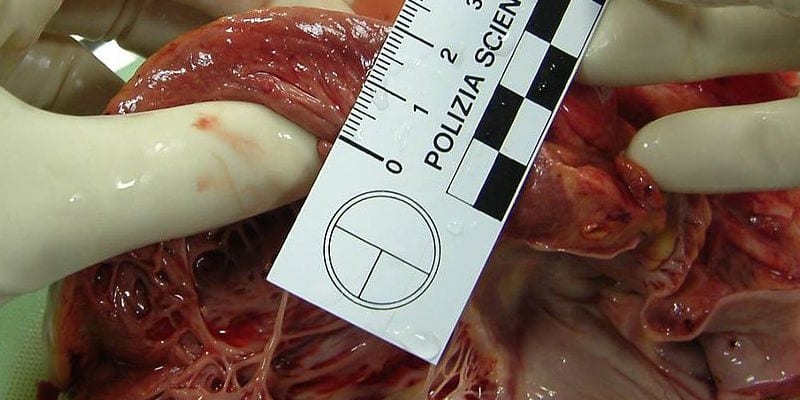
Image: PD

©2025 2 Minute Medicine, Inc. All rights reserved. No works may be reproduced without expressed written consent from 2 Minute Medicine, Inc. Inquire about licensing here. No article should be construed as medical advice and is not intended as such by the authors or by 2 Minute Medicine, Inc.

Tags: cardiologychronic diseaseDigitoxinGDMTheart failure with reduced ejection fractionHFrEF (heart failure with reduced ejection fraction)internal medicinepreventative medicine
Previous Post

A plant and dairy-based protein diet is associated with improved liver disease severity in cirrhosis

Next Post

Limiting antihypertensive use does not reduce mortality in nursing home residents with frailty

RelatedReports

Remote patient monitoring did not reduce heart failure readmissions: The BEAT-HF trial
Cardiology

A medical care at home program following hospitalization with acute decompensated heart failure may offer a safe and effective alternative to continued hospitalization

July 24, 2026
Rivaroxaban likely reduces risk of recurrent stroke in specific subgroup of patients with embolic stroke of undetermined source
Cardiology

Catheter ablation within 1 year of atrial fibrillation diagnosis is associated with reduced risk of recurrence

July 24, 2026
Remote patient monitoring did not reduce heart failure readmissions: The BEAT-HF trial
Weekly Rewinds

2 Minute Medicine Rewind July 20, 2026

July 20, 2026
Computed tomography improves diagnostic certainty in the emergency department
Cardiology

Two scores for risk stratification of adults presenting with syncope may be effective at identifying those with low risk

May 29, 2026
Next Post

Limiting antihypertensive use does not reduce mortality in nursing home residents with frailty

Antidepressant may reduce mental stress-induced myocardial ischemia (REMIT Trial)

Aficamten is superior to metoprolol in the management of obstructive hypertrophic cardiomyopathy

Few older adolescents meet recommended levels of physical activity

Moderate-to-vigorous physical activity is associated with reduced risk of dyslipidemia

2 Minute Medicine® is an award winning, physician-run, expert medical media company. Our content is curated, written and edited by practicing health professionals who have clinical and scientific expertise in their field of reporting. Our editorial management team is comprised of highly-trained MD physicians. Join numerous brands, companies, and hospitals who trust our licensed content.

Recent Reports

  • A digital mental health intervention may improve anxiety in breast cancer survivors
  • Praziquantel (Biltricide) is associated with higher cure rate than albendazole (Zentel) in the treatment of clonorchiasis
  • Use of semaglutide for weight control among women of reproductive age is more common in those using hormonal contraception
License Content
Terms of Use | Disclaimer
Cookie Policy
Privacy Statement (EU)
Disclaimer
  • Specialties
    • All Specialties, All Recent Reports
    • Cardiology
    • Chronic Disease
    • Dermatology
    • Emergency
    • Endocrinology
    • Gastroenterology
    • Imaging and Intervention
    • Infectious Disease
    • Nephrology
    • Neurology
    • Obstetrics
    • Oncology
    • Ophthalmology
    • Pediatrics
    • Pharma
    • Preclinical
    • Psychiatry
    • Public Health
    • Pulmonology
    • Rheumatology
    • Surgery
  • Tools
    • EvidencePulse™
    • RVU Search
    • NPI Registry Lookup
  • Pharma
  • AI News
  • The Scan
  • Classics™
    • 2MM+ Online Access
    • Paperback and Ebook
  • Rewinds
  • Partners
    • License Content
    • Submit Press Release
    • Advertise with Us
  • Account
    • Subscribe
    • Sign-in
    • My account
No Result
View All Result

© 2026 2 Minute Medicine, Inc. - Physician-written medical news.