


• About
  • Masthead
  • License Content
  • Advertise
  • Submit Press Release
  • RSS/Email List
  • 2MM Podcast
  • Write for us
  • Contact Us
2 Minute Medicine
No Result
View All Result

No products in the cart.

SUBSCRIBE
  • Specialties
    • All Specialties, All Recent Reports
    • Cardiology
    • Chronic Disease
    • Dermatology
    • Emergency
    • Endocrinology
    • Gastroenterology
    • Imaging and Intervention
    • Infectious Disease
    • Nephrology
    • Neurology
    • Obstetrics
    • Oncology
    • Ophthalmology
    • Pediatrics
    • Pharma
    • Preclinical
    • Psychiatry
    • Public Health
    • Pulmonology
    • Rheumatology
    • Surgery
  • Tools
    • EvidencePulse™
    • RVU Search
    • NPI Registry Lookup
  • Pharma
  • AI News
  • The Scan+
  • Classics™+
    • 2MM+ Online Access
    • Paperback and Ebook
  • Rewinds
  • Partners
    • License Content
    • Submit Press Release
    • Advertise with Us
  • Account
    • Subscribe
    • Sign-in
    • My account
2 Minute Medicine
  • Specialties
    • All Specialties, All Recent Reports
    • Cardiology
    • Chronic Disease
    • Dermatology
    • Emergency
    • Endocrinology
    • Gastroenterology
    • Imaging and Intervention
    • Infectious Disease
    • Nephrology
    • Neurology
    • Obstetrics
    • Oncology
    • Ophthalmology
    • Pediatrics
    • Pharma
    • Preclinical
    • Psychiatry
    • Public Health
    • Pulmonology
    • Rheumatology
    • Surgery
  • Tools
    • EvidencePulse™
    • RVU Search
    • NPI Registry Lookup
  • Pharma
  • AI News
  • The Scan+
  • Classics™+
    • 2MM+ Online Access
    • Paperback and Ebook
  • Rewinds
  • Partners
    • License Content
    • Submit Press Release
    • Advertise with Us
  • Account
    • Subscribe
    • Sign-in
    • My account
SUBSCRIBE
2 Minute Medicine
Subscribe
Home All Specialties Pediatrics

Apgar scores provide prognostic information for survival of preterm infants

byHarsh ShahandDeepti Shroff
July 1, 2020
in Pediatrics
Reading Time: 3 mins read
0
Share on FacebookShare on Twitter

1. Apgar scores at five and ten minutes after birth provided prognostic information for preterm infants regarding neonatal survival.

2. Lower Apgar scores for older gestational age infants were associated with increased neonatal death compared to younger gestational age infants with similar scores.

Evidence Rating Level: 2 (Good)

Study Rundown: Preterm birth is the leading cause of neonatal death. Current policies from the American Academy of Pediatrics do not recommend using the Apgar score to predict neonatal mortality. Moreover, there no specific recommendations for the use of the scoring system in assessing neonatal mortality of preterm infants. As such, this study investigated the association between risk of neonatal death and Apgar scores. Data from the Swedish Medical Birth Register was utilized to investigate the relationship between the risk of neonatal death and Apgar scores at five minutes, the change between five and ten minutes, and at ten minutes in infants stratified by gestational age. The study concluded the Apgar scores at five and ten minutes after birth were associated with neonatal mortality among preterm infants. This retrospective study was limited by the lack of information regarding interventions during initial stabilization of the infants. These life-saving interventions performed within the first five minutes after birth could have influenced Apgar scores and neonatal survival rates. Furthermore, another limitation to the study was the interobserver variability in the Apgar scores. Nonetheless, this study was strengthened by the large cohort of patients and the homogeneity of the study population.

Click to read the study, published today in NEJM

Relevant Reading: Apgar score and the risk of cause-specific infant mortality: a population-based cohort study

RELATED REPORTS

Both high and low maternal hemoglobin levels increase neonatal risk

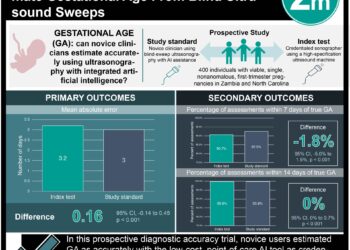
#VisualAbstract: Integrated AI Tool can Accurately Estimate Gestational Age From Blind Ultrasound Sweeps

Comparison of different types of ultrasound probes for lung ultrasound in neonates

In-Depth [retrospective cohort]: This retrospective study analyzed the records of 113,300 preterm infants born in Sweden. Patients included in this study were infants born between January 1, 1992 and December 31, 2016. Infants were excluded if they had a birth with a gestational completion age greater than 36 week and 6 days. In collaboration with the Swedish Medical Birth Register, this study was granted access to the medical records of the preterm infants. The medical records contained information on prenatal, delivery, and neonatal care. Preterm birth was defined as an infant born with a gestational age between 22 and 36 weeks. The following information was collected: Apgar scores at five and ten minutes after birth, birth characteristics, and information about maternal pregnancy. The gestational age was determined by the ultrasonography-based Swedish reference curve for normal fetal growth. The primary outcome was neonatal death, defined as death within the first 27 completed days of life. Apgar scores at five and ten minutes after birth were available for 98.1% and 92.1% of all preterm birth, respectively. Neonatal mortality increased with decreasing gestational age from 36 weeks (0.2%) to 22 weeks (76.5%). Similarly, neonatal mortality increased with decreasing Apgar scores. Infants born between 22 to 24 weeks with an Apgar score of 0 or 1 had a higher relative risk of neonatal death compared to infants with a score of 9 or 10 (relative risk, 4.7; 95% confidence interval [CI], 2.7 to 8.3). However, the neonatal mortality relative risk substantially increased with older gestational age and lower Apgar scores (relative risk at 35 or 36 weeks, 313.8; 95% CI, 192.5 to 511.4). Taken together, Apgar scores in the context of gestational age provided prognostic information regarding neonatal survival of preterm infants.

Image: PD

©2020 2 Minute Medicine, Inc. All rights reserved. No works may be reproduced without expressed written consent from 2 Minute Medicine, Inc. Inquire about licensing here. No article should be construed as medical advice and is not intended as such by the authors or by 2 Minute Medicine, Inc.

Tags: Apgar scoregestational ageneonatal mortalityneonatology
Previous Post

Three-day amoxicillin course effective for chest-indrawing pneumonia in Malawi children

Next Post

Steroids and opioids often inappropriately prescribed in the emergency department for pediatric pneumonia and sinusitis

RelatedReports

Large proportion of late preterm infants and older admitted to the NICU
Hematology

Both high and low maternal hemoglobin levels increase neonatal risk

February 2, 2026
#VisualAbstract: Integrated AI Tool can Accurately Estimate Gestational Age From Blind Ultrasound Sweeps
StudyGraphics

#VisualAbstract: Integrated AI Tool can Accurately Estimate Gestational Age From Blind Ultrasound Sweeps

August 12, 2024
Racial, ethnic differences in outcomes of extremely preterm infants decreasing but persistent
Emergency

Comparison of different types of ultrasound probes for lung ultrasound in neonates

July 12, 2024
Increasing C-section room temperature linked to reduced neonatal, maternal hypothermia
Gastroenterology

Nutrition source does not influence weight gain for moderate-to-late-preterm infants

June 12, 2024
Next Post
Steroids and opioids often inappropriately prescribed in the emergency department for pediatric pneumonia and sinusitis

Steroids and opioids often inappropriately prescribed in the emergency department for pediatric pneumonia and sinusitis

Healthy lifestyle for prevention of premature death among users and nonusers of common preventive medications

#VisualAbstact: Association Between Tumor Necrosis Factor Inhibitor Exposure and Inflammatory Central Nervous System Events

#VisualAbstact: Association Between Tumor Necrosis Factor Inhibitor Exposure and Inflammatory Central Nervous System Events

2 Minute Medicine® is an award winning, physician-run, expert medical media company. Our content is curated, written and edited by practicing health professionals who have clinical and scientific expertise in their field of reporting. Our editorial management team is comprised of highly-trained MD physicians. Join numerous brands, companies, and hospitals who trust our licensed content.

Recent Reports

  • Burr hole craniotomy for chronic subdural hematoma under local anesthesia may reduce risks of postoperative delirium compared to general anesthesia
  • Smallpox therapy tecovirimat not efficacious in treating clade II mpox  
  • Neoadjuvant therapy regimen improves outcomes in high-risk intrahepatic cholangiocarcinoma
License Content
Terms of Use | Disclaimer
Cookie Policy
Privacy Statement (EU)
Disclaimer

© 2025 2 Minute Medicine, Inc. - Physician-written medical news.

  • Specialties
    • All Specialties, All Recent Reports
    • Cardiology
    • Chronic Disease
    • Dermatology
    • Emergency
    • Endocrinology
    • Gastroenterology
    • Imaging and Intervention
    • Infectious Disease
    • Nephrology
    • Neurology
    • Obstetrics
    • Oncology
    • Ophthalmology
    • Pediatrics
    • Pharma
    • Preclinical
    • Psychiatry
    • Public Health
    • Pulmonology
    • Rheumatology
    • Surgery
  • Tools
    • EvidencePulse™
    • RVU Search
    • NPI Registry Lookup
  • Pharma
  • AI News
  • The Scan
  • Classics™
    • 2MM+ Online Access
    • Paperback and Ebook
  • Rewinds
  • Partners
    • License Content
    • Submit Press Release
    • Advertise with Us
  • Account
    • Subscribe
    • Sign-in
    • My account
No Result
View All Result

© 2025 2 Minute Medicine, Inc. - Physician-written medical news.