• About
  • Masthead
  • License Content
  • Advertise
  • Submit Press Release
  • RSS/Email List
  • 2MM Podcast
  • Write for us
  • Contact Us
2 Minute Medicine
No Result
View All Result

No products in the cart.

SUBSCRIBE
  • About
  • Specialties
    • All Specialties, All Recent Reports
    • Cardiology
    • Chronic Disease
    • Dermatology
    • Emergency
    • Endocrinology
    • Gastroenterology
    • Imaging and Intervention
    • Infectious Disease
    • Nephrology
    • Neurology
    • Obstetrics
    • Oncology
    • Ophthalmology
    • Pediatrics
    • Pharma
    • Preclinical
    • Psychiatry
    • Public Health
    • Pulmonology
    • Rheumatology
    • Surgery
  • Tools+
    • EvidencePulse™
    • HypeCheck™
    • NPI Registry Lookup
    • RVU Search
  • Pharma
  • AI Roundup
  • The Scan+
  • Classics™+
    • 2MM+ Online Access
    • Paperback and Ebook
  • Rewinds
  • Partners
    • License Content
    • Submit Press Release
    • Advertise with Us
  • Account
    • Subscribe
    • My account
    • Cart
    • Sign-in
2 Minute Medicine
  • About
  • Specialties
    • All Specialties, All Recent Reports
    • Cardiology
    • Chronic Disease
    • Dermatology
    • Emergency
    • Endocrinology
    • Gastroenterology
    • Imaging and Intervention
    • Infectious Disease
    • Nephrology
    • Neurology
    • Obstetrics
    • Oncology
    • Ophthalmology
    • Pediatrics
    • Pharma
    • Preclinical
    • Psychiatry
    • Public Health
    • Pulmonology
    • Rheumatology
    • Surgery
  • Tools+
    • EvidencePulse™
    • HypeCheck™
    • NPI Registry Lookup
    • RVU Search
  • Pharma
  • AI Roundup
  • The Scan+
  • Classics™+
    • 2MM+ Online Access
    • Paperback and Ebook
  • Rewinds
  • Partners
    • License Content
    • Submit Press Release
    • Advertise with Us
  • Account
    • Subscribe
    • My account
    • Cart
    • Sign-in
SUBSCRIBE
2 Minute Medicine
Subscribe
EvidencePulse™ by 2 Minute Medicine 2026 evidence scan 3 reports You asked top stroke trials 2026 Synthesizing medical evidence... Top 2026 stroke trial results: OCEANIC — ischemic stroke: 6.2% vs 8.4% OPTION* — mRS 0–1: 43.6% vs 34.2% ORIENTAL* — mRS 0–2: 58.6% vs 46.6% *Higher sICH in intervention arms Participants randomizedN OCEANIC 12,327 OPTION 570 ORIENTAL 564 Ask about guidelines or landmark trials... ↑ Try EvidencePulse™ Ask the evidence.
Get the signal.
Try it now → Physician-trained medical AI by 2 Minute Medicine
Home All Specialties Pulmonology

Midazolam reduces respiratory variability in women with fibromyalgia compared with S-ketamine
byPaary BalakumarandSimon Pan
January 13, 2026
in Pulmonology
Reading Time: 2 mins read
Share on FacebookShare on Twitter

1. Midazolam significantly reduces respiratory variability, leading to a more uniform and less adaptable breathing pattern, which may increase risk in patients with compromised respiratory function.

2. S-ketamine largely preserves respiratory variability, suggesting it may be a safer sedative option for patients who require maintenance of spontaneous breathing.

Evidence Rating Level: 1 (Excellent) 

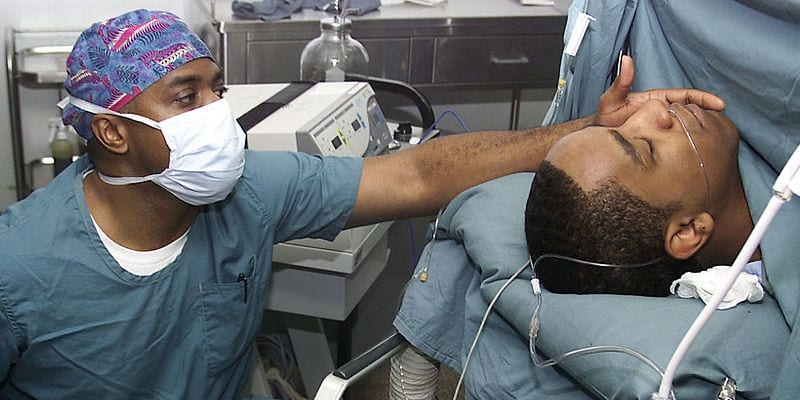
This randomized controlled pilot trial investigated the effects of s-ketamine and midazolam on respiratory variability, an indicator of adaptability of the respiratory system, in women with fibromyalgia. Twenty-eight participants were randomized to receive intravenous infusions of s-ketamine, midazolam, or saline in a blinded, crossover design across three visits. Respiratory parameters, including mean respiratory rate, variability of respiratory rate, and variability of tidal volume, were continuously measured non-invasively using a bio-impedance method. Data from 57 experimental sessions were analyzed with linear mixed models. Midazolam significantly reduced both respiratory rate variability by 37% and tidal volume variability by 51%, without affecting mean respiratory rate. S-ketamine produced a smaller reduction in tidal volume variability (27%) but did not affect respiratory rate variability. Post hoc analysis confirmed significant differences between the two drugs across all parameters. The findings suggest that midazolam induces a more regular and less adaptable breathing pattern, whereas s-ketamine largely preserves respiratory variability. These results have clinical implications in anesthesiology and critical care, as preserved variability may be advantageous for patients requiring sedation while maintaining spontaneous breathing. Further studies in larger and more diverse patient populations are needed to determine the clinical significance of these differential effects.

Click to read this study in PLOS One

Image: PD

RELATED REPORTS

Bougie-guided and stylet-guided intubation may have similar success rate in the intubation of trauma patients

Resuscitative endovascular balloon occlusion of the aorta may not improve outcomes in adults with non-traumatic out-of-hospital cardiac arrest

Fluoxetine may improve hemodynamic status and organ dysfunction in patients with severe sepsis

©2025 2 Minute Medicine, Inc. All rights reserved. No works may be reproduced without expressed written consent from 2 Minute Medicine, Inc. Inquire about licensing here. No article should be construed as medical advice and is not intended as such by the authors or by 2 Minute Medicine, Inc. 

Tags: anesthesiologycritical careesketaminemidazolampulmonology
Previous Post

2MM: AI Roundup –Dermatology accuracy, faster drug discovery, heart disease detection, and global medical training [September 11th,  2025]

Next Post

Artificial intelligence accelerates drug discovery and reduces animal testing

RelatedReports

Postextubation administration of high-flow oxygen leads to reduced reintubation and respiratory failure
Emergency

Bougie-guided and stylet-guided intubation may have similar success rate in the intubation of trauma patients

August 11, 2026
Antiarrhythmic drugs have no survival benefit in shock-refractory out-of-hospital cardiac arrest
Cardiology

Resuscitative endovascular balloon occlusion of the aorta may not improve outcomes in adults with non-traumatic out-of-hospital cardiac arrest

May 14, 2026
Obstetric scoring systems overestimate cases of severe sepsis
Infectious Disease

Fluoxetine may improve hemodynamic status and organ dysfunction in patients with severe sepsis

January 29, 2026
Obstetrics

Perioperative esketamine may improve postoperative pain and mood outcomes after cesarean section

January 28, 2026
Next Post
Variation noted across pre- and post-marketing studies for FDA approved devices

Artificial intelligence accelerates drug discovery and reduces animal testing

Physical therapy reduces pain in adults with knee osteoarthritis

Use of a valgus brace may reduce knee pain in knee osteoarthritis

2 Minute Medicine Rewind September 15, 2025

EvidencePulse™ by 2 Minute Medicine 2026 evidence scan 3 reports You asked top stroke trials 2026 Synthesizing medical evidence... Top 2026 stroke trial results: OCEANIC — ischemic stroke: 6.2% vs 8.4% OPTION* — mRS 0–1: 43.6% vs 34.2% ORIENTAL* — mRS 0–2: 58.6% vs 46.6% *Higher sICH in intervention arms Participants randomizedN OCEANIC 12,327 OPTION 570 ORIENTAL 564 Ask about guidelines or landmark trials... ↑ Try EvidencePulse™ Ask the evidence.
Get the signal.
Try it now → Physician-trained medical AI by 2 Minute Medicine

2MM+ All Access

Full details →
$4.99 /month

5-day free trial · cancel anytime

  • ✓100+ physician-written reports
  • ✓EvidencePulse™ + HypeCheck™
  • ✓Ad-free reading + newsletters
Start 5-day free trial

Then $4.99/month. Manage renewal in your account.

2 Minute Medicine® is an award winning, physician-run, expert medical media company. Our content is curated, written and edited by practicing health professionals who have clinical and scientific expertise in their field of reporting. Our editorial management team is comprised of highly-trained MD physicians. Join numerous brands, companies, and hospitals who trust our licensed content.

Recent Reports

  • FDA-cleared AI devices rarely have patient outcome data
  • Apixaban (Eliquis) is associated with reduced rates of ischemic stroke and bleeding in patients with atrial fibrillation and advanced chronic kidney disease compared with warfarin (Coumadin)
  • Artificial intelligence based clinical exam training significantly improved medical students’ standardized clinical exam performance
License Content
Terms of Use | Disclaimer
Cookie Policy
Cleantalk Pixel
2MM+ All Access Full details →

The medical literature, distilled daily.

Monthly plan selected: $4.99 /month.

$4.99/month

5-day free trial · cancel anytime

Start 5-day free trial

Then $4.99/month. Manage renewal in your account.

Yearly plan selected: $49.90 /year.

$49.90/year

2 months free · only $4.16/month

Start 5-day free trial

Then $49.90/year. Manage renewal in your account.

Membership benefits

  • ✓100+ physician-written reports
  • ✓AI EvidencePulse™ + HypeCheck™
  • ✓Ad-free reading + newsletters

Already a member? Sign in

  • About
  • Specialties
    • All Specialties, All Recent Reports
    • Cardiology
    • Chronic Disease
    • Dermatology
    • Emergency
    • Endocrinology
    • Gastroenterology
    • Imaging and Intervention
    • Infectious Disease
    • Nephrology
    • Neurology
    • Obstetrics
    • Oncology
    • Ophthalmology
    • Pediatrics
    • Pharma
    • Preclinical
    • Psychiatry
    • Public Health
    • Pulmonology
    • Rheumatology
    • Surgery
  • Tools
    • EvidencePulse™
    • HypeCheck™
    • NPI Registry Lookup
    • RVU Search
  • Pharma
  • AI Roundup
  • The Scan
  • Classics™
    • 2MM+ Online Access
    • Paperback and Ebook
  • Rewinds
  • Partners
    • License Content
    • Submit Press Release
    • Advertise with Us
  • Account
    • Subscribe
    • My account
    • Cart
    • Sign-in
No Result
View All Result

© 2026 2 Minute Medicine, Inc. - Physician-written medical news.