• About
  • Masthead
  • License Content
  • Advertise
  • Submit Press Release
  • RSS/Email List
  • 2MM Podcast
  • Write for us
  • Contact Us
2 Minute Medicine
No Result
View All Result

No products in the cart.

SUBSCRIBE
  • Specialties
    • All Specialties, All Recent Reports
    • Cardiology
    • Chronic Disease
    • Dermatology
    • Emergency
    • Endocrinology
    • Gastroenterology
    • Imaging and Intervention
    • Infectious Disease
    • Nephrology
    • Neurology
    • Obstetrics
    • Oncology
    • Ophthalmology
    • Pediatrics
    • Pharma
    • Preclinical
    • Psychiatry
    • Public Health
    • Pulmonology
    • Rheumatology
    • Surgery
  • AI EvidencePulse™
  • Pharma
  • AI News
  • The Scan+
  • Classics™+
    • 2MM+ Online Access
    • Paperback and Ebook
  • Rewinds
  • Podcasts
  • Partners
    • License Content
    • Submit Press Release
    • Advertise with Us
  • Account
    • Subscribe
    • Sign-in
    • My account
2 Minute Medicine
  • Specialties
    • All Specialties, All Recent Reports
    • Cardiology
    • Chronic Disease
    • Dermatology
    • Emergency
    • Endocrinology
    • Gastroenterology
    • Imaging and Intervention
    • Infectious Disease
    • Nephrology
    • Neurology
    • Obstetrics
    • Oncology
    • Ophthalmology
    • Pediatrics
    • Pharma
    • Preclinical
    • Psychiatry
    • Public Health
    • Pulmonology
    • Rheumatology
    • Surgery
  • AI EvidencePulse™
  • Pharma
  • AI News
  • The Scan+
  • Classics™+
    • 2MM+ Online Access
    • Paperback and Ebook
  • Rewinds
  • Podcasts
  • Partners
    • License Content
    • Submit Press Release
    • Advertise with Us
  • Account
    • Subscribe
    • Sign-in
    • My account
SUBSCRIBE
2 Minute Medicine
Subscribe
Home All Specialties Chronic Disease

Monoclonal antibody L9LS prevents malaria infection in adults
byBryant LimandKiera Liblik
August 11, 2022
in Chronic Disease, Infectious Disease, Public Health
Reading Time: 2 mins read
0
Share on FacebookShare on Twitter

1. In this small phase one clinical trial, L9LS administration protected healthy adults from contracting a malarial infection.

2. No significant adverse events were observed in the L9LS group.

Evidence Rating Level: 2 (Good)

Study Rundown: Malaria is a life-threatening, mosquito-borne disease affecting millions worldwide. In regions of West Africa that are disproportionately affected by Malaria, the standard of care consists of seasonal chemoprevention and antimalarial drugs. However, these options are associated with low efficacy, drug resistance, and nonadherence issues. This phase one clinical trial evaluated the efficacy, safety, and pharmacokinetics of the new antimalarial monoclonal antibody, L9LS. L9LS was administered intravenously or subcutaneously. Participants were then exposed to malaria-positive mosquitoes for controlled infection and monitored for 21 days to assess for parasitemia before being given standard malaria treatment. L9LS was protective against controlled malaria infection, especially with higher doses. There were no severe adverse events associated with L9LS administration. Pharmacokinetic modeling from limited clinical data suggested that the effective dose of L9LS would remain in circulation for six months in participants who received the medication subcutaneously. As a limitation, the small sample size and study population (healthy adults in the United States) may reduce the generalizability of the efficacy and safety results to the Sub-Saharan African population that is most affected by malaria.

Click here to read the study in NEJM

In-Depth [randomized control trial]: In the present phase one clinical trial, healthy adults in the United States between 18 and 50 years of age received antimalarial monoclonal antibodies L9LS (n = 18) or a placebo control (n = 6). L9LS was administered intravenously (1 mg per kg (n = 5), 5 mg per kg (n = 4), or 20 mg per kg (n = 4)) or subcutaneously at 5 mg per kg (n = 5). Participants then underwent controlled human malarial infection and were monitored for 21 days for parasitemia as determined by polymerase-chain-reaction (PCR) test. After this initial period, patients were given the standard malarial treatment, followed by a 24- and seven-week observation for the L9LS and control groups, respectively. Parasitemia developed in two of the 17 L9LS participants and in all six control participants. For safety, solicited symptoms were mild or moderate in severity and self-limiting. One unsolicited adverse event, a case of mild cervical lymphadenopathy, occurred in a participant who received 1 mg per kg L9LS intravenously, which was resolved after 29 days without intervention. Pharmacokinetic modeling from limited clinical data showed that serum L9LS concentration maintained in the range of 5 to 11 microgram per milliliter after six months in participants who received 5 mg per kg L9LS subcutaneously, suggesting prolonged protection against malaria. The current trial is a proof of principle for a new prevention strategy for malaria. Still, further randomized control studies with a larger and more representative cohort are necessary to determine the efficacy and safety of L9LS.

RELATED REPORTS

Risk of Parkinson’s disease after human papillomavirus infection: a nationwide cohort study

Center of Disease Control layoffs raise alarm over surveillance and preparedness

New York confirms first locally acquired chikungunya case in six years

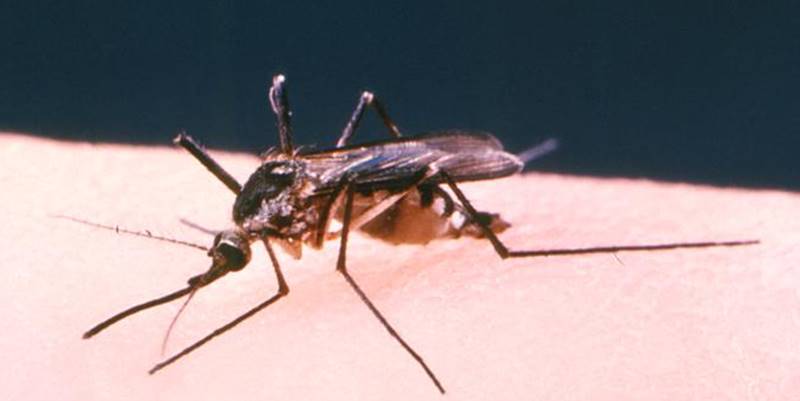
Image: PD

©2022 2 Minute Medicine, Inc. All rights reserved. No works may be reproduced without expressed written consent from 2 Minute Medicine, Inc. Inquire about licensing here. No article should be construed as medical advice and is not intended as such by the authors or by 2 Minute Medicine, Inc.

Tags: chronic diseaseinfectious diseaseL9LSmalariamosquitoneglected tropical diseasespreventative medicinepreventionpublic health
Previous Post

Breast density increases the risk of cancer and hinders mammographic detection [Classics Series]

Next Post

MRI offers an alternative to endoscopic assessment of disease activity and severity in ileocolonic Crohn’s disease [Classics Series]

RelatedReports

2 Minute Medicine Rewind August 19, 2019
Chronic Disease

Risk of Parkinson’s disease after human papillomavirus infection: a nationwide cohort study

November 13, 2025
Adding trained interventionists to primary care results in weight loss
The Scan by 2 Minute Medicine®

Center of Disease Control layoffs raise alarm over surveillance and preparedness

October 27, 2025
Intrauterine Zika virus infection associated with significant fetal brain abnormalities
The Scan by 2 Minute Medicine®

New York confirms first locally acquired chikungunya case in six years

October 24, 2025
The Scan by 2 Minute Medicine®:  Ultra-Trail du Mont-Blanc, Taylor Swift, NBA rookie Chet Holmgren and Magic Mushrooms!
Infectious Disease

The Scan by 2 Minute Medicine®: FDA clears Alzheimer’s blood test, WHO warns of antibiotic resistance, New York confirms chikungunya case, and CDC layoffs raise concern

October 21, 2025
Next Post
ABCD2 Score: Predicting Early Stroke Risk After Transient Ischemic Attack (TIA) [Classics Series]

MRI offers an alternative to endoscopic assessment of disease activity and severity in ileocolonic Crohn’s disease [Classics Series]

Radiofrequency catheter ablation effective as first-line therapy for atrial fibrillation [RAAFT-2 trial]

Postoperative and nonoperative atrial fibrillation have a similar risk of associated thromboembolism

Decreased expression of nasal ACE2 may be correlated with lower prevalence of COVID-19 in children

Baricitinib reduces mortality risk in patients hospitalized with COVID-19

2 Minute Medicine® is an award winning, physician-run, expert medical media company. Our content is curated, written and edited by practicing health professionals who have clinical and scientific expertise in their field of reporting. Our editorial management team is comprised of highly-trained MD physicians. Join numerous brands, companies, and hospitals who trust our licensed content.

Recent Reports

  • Self-Administered Hypnosis vs Sham Hypnosis for Hot Flashes: A Randomized Clinical Trial
  • Association between baseline BMI and in-hospital mortality in critically ill cardiac surgery patients: a retrospective cohort study
  • Wide awake local anesthesia no tourniquet (WALANT) versus ultrasound-guided axillary block in carpal tunnel release: a non-inferiority randomized controlled trial
License Content
Terms of Use | Disclaimer
Cookie Policy
Privacy Statement (EU)
Disclaimer

© 2025 2 Minute Medicine, Inc. - Physician-written medical news.

  • Specialties
    • All Specialties, All Recent Reports
    • Cardiology
    • Chronic Disease
    • Dermatology
    • Emergency
    • Endocrinology
    • Gastroenterology
    • Imaging and Intervention
    • Infectious Disease
    • Nephrology
    • Neurology
    • Obstetrics
    • Oncology
    • Ophthalmology
    • Pediatrics
    • Pharma
    • Preclinical
    • Psychiatry
    • Public Health
    • Pulmonology
    • Rheumatology
    • Surgery
  • AI EvidencePulse™
  • Pharma
  • AI News
  • The Scan
  • Classics™
    • 2MM+ Online Access
    • Paperback and Ebook
  • Rewinds
  • Podcasts
  • Partners
    • License Content
    • Submit Press Release
    • Advertise with Us
  • Account
    • Subscribe
    • Sign-in
    • My account
No Result
View All Result

© 2025 2 Minute Medicine, Inc. - Physician-written medical news.